DbcultAccessing Vault...
7.2/10
Senior Film Conservator
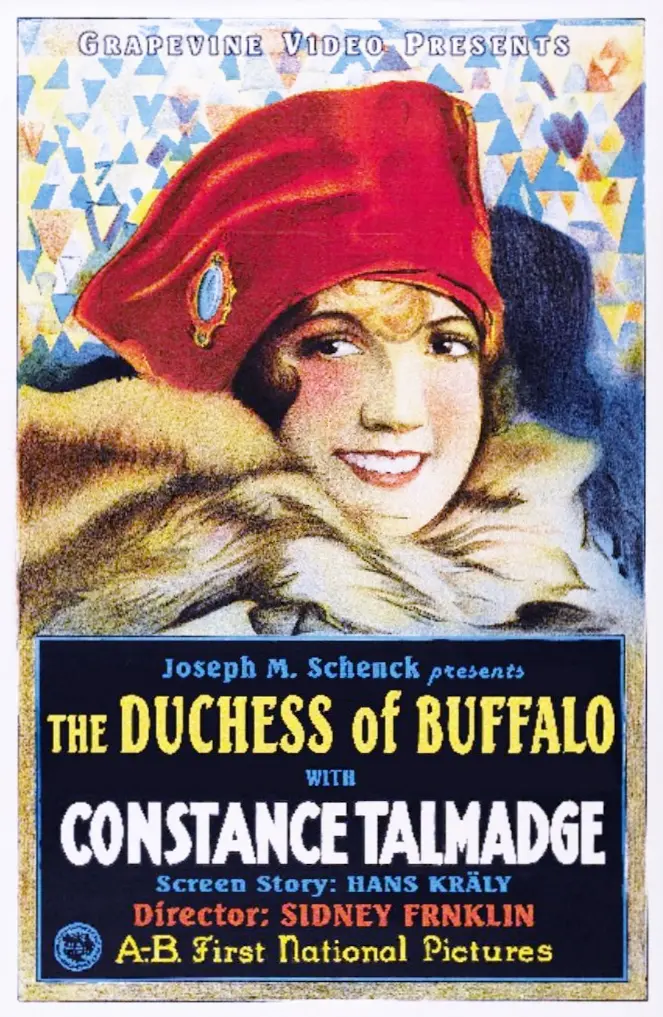
A definitive 7.2/10 rating for a film that redefined the boundaries of cult cinema. The Duchess of Buffalo remains a cornerstone of transgressive art.
Is The Duchess of Buffalo worth your time today? Short answer: Yes, but primarily as a masterclass in silent-era comedic timing rather than a historical document. This film is for the cinephile who misses the effervescence of the 1920s and anyone who appreciates a 'fish-out-of-water' story told with genuine wit; it is not for those who demand historical accuracy or the fast-paced editing of modern romantic comedies.
The Duchess of Buffalo is a fascinating relic that remains surprisingly watchable due to its lead performance. If you enjoy seeing the collision of American pragmatism and European tradition, this film offers a charming, if slightly sanitized, window into that world. It is a light, airy confection that mirrors the candy-making origins of its real-life inspiration.
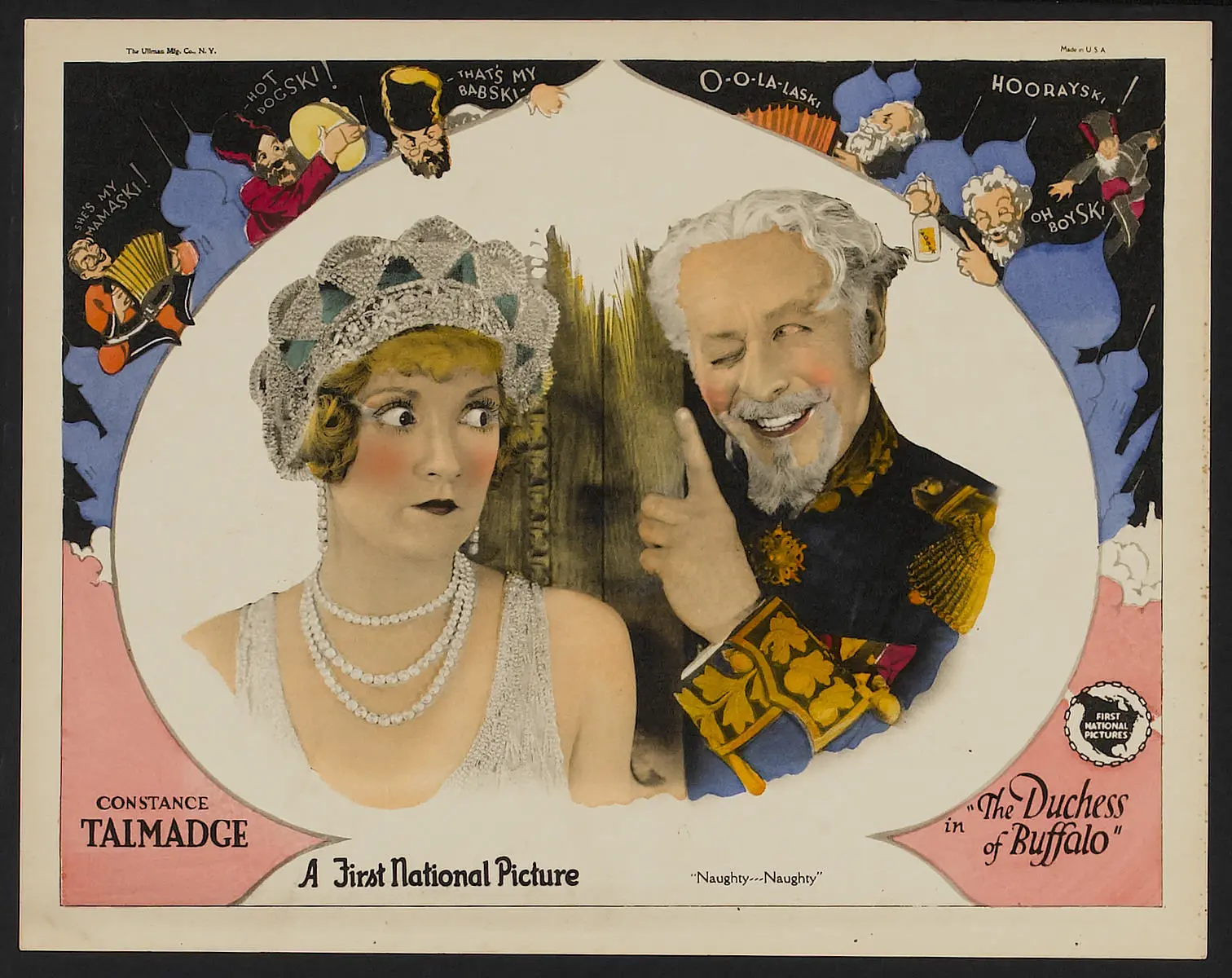
1) This film works because Constance Talmadge possesses an onscreen magnetism that transcends the lack of dialogue, making every social faux pas feel intentional and hilarious.
2) This film fails because the middle act becomes bogged down in repetitive slapstick that distracts from the unique 'Buffalo-to-Russia' narrative hook.
3) You should watch it if you want to see how the 1920s interpreted international politics through the lens of a romantic comedy.
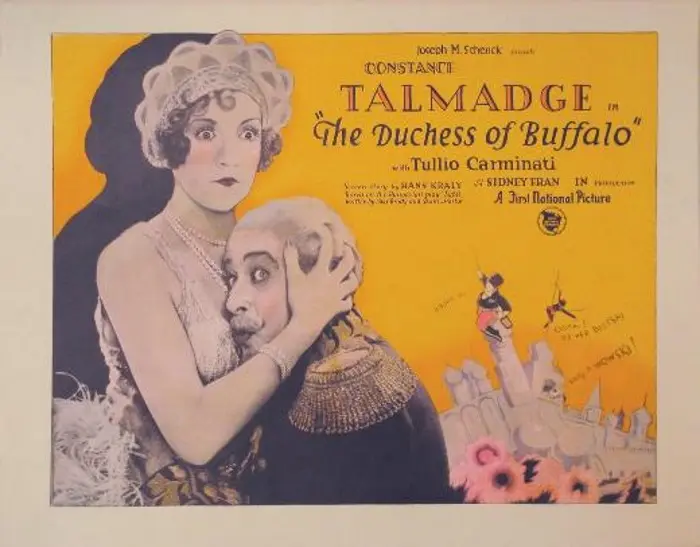
Constance Talmadge was often overshadowed by her sister Norma, but in The Duchess of Buffalo, she proves why she was the reigning queen of the light comedy. Her portrayal of Marian is not just that of a damsel in a foreign land; she brings a specific, New York-bred cynicism to the Russian court that feels remarkably modern. In one specific scene where she attempts to navigate a formal dinner with the stiff Russian elite, her facial expressions alone convey a level of sarcasm that would make a modern sitcom star envious.
Her chemistry with Tullio Carminati is palpable, even through the flickering grain of a century-old print. Carminati plays the straight man to Talmadge's whirlwind, and their back-and-forth illustrates the 'opposites attract' trope before it became a tired cliché. Unlike the heavier drama found in The Sea Master, this film keeps its stakes personal and its tone bright.
The writing credits for this film read like a 'who's who' of early 20th-century intellectualism and wit. With Max Brod—famous for preserving the works of Franz Kafka—and the legendary Hanns Kräly on the team, the script has a structural integrity that many silent comedies lacked. They take the true story of a Buffalo candy-maker's daughter and strip away the darker political realities of the Russian restoration to focus on the absurdity of the situation.
However, having four writers often leads to a disjointed pace. The first half of the film moves with the speed of a screwball comedy, while the latter half slows down into a more conventional romance. It lacks the singular vision found in contemporary works like Pals First, yet it compensates with a series of high-energy set pieces that keep the audience engaged. The dialogue titles are punchy, avoiding the flowery prose that plagued many films of 1926.
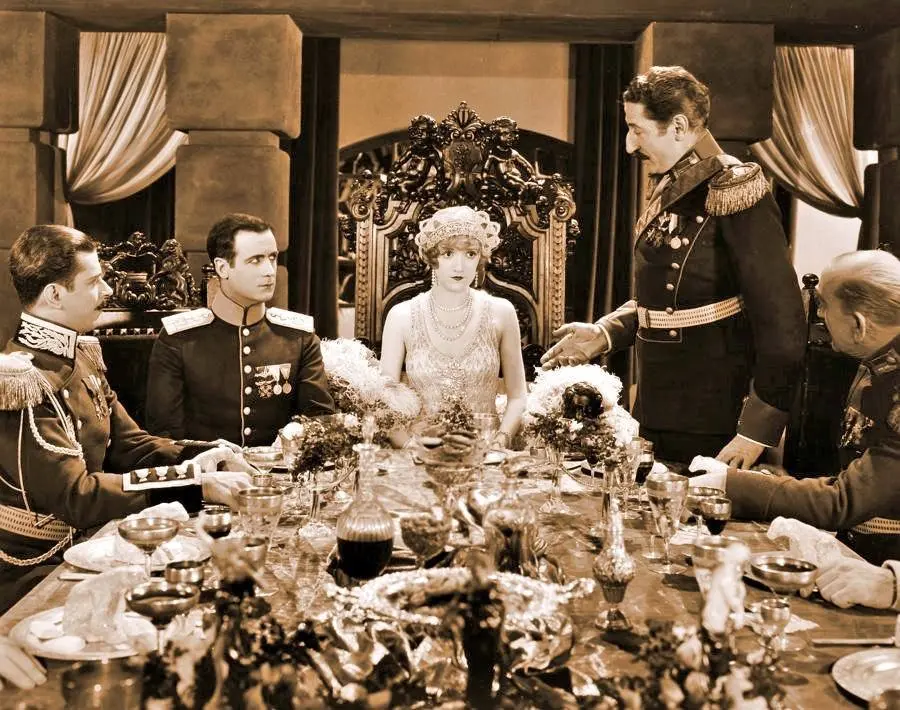
The production design is where the film's budget truly shines. The transition from the industrial, somewhat drab aesthetics of Buffalo to the opulent, gilded halls of the Russian aristocracy is handled with great visual care. The costumes, specifically Talmadge’s extravagant gowns, serve as a metaphor for her transformation—or perhaps her masquerade. The cinematography doesn't take many risks, but it is clean and effective, capturing the scale of the Russian settings without losing the intimacy of the central romance.
One standout moment involves a grand ball where the camera lingers on the contrast between Marian’s energetic movements and the rigid, statuesque posture of the Russian guards. It is a simple visual gag, but it works perfectly to highlight the cultural divide. This level of visual storytelling is a reminder of why the silent era was so potent; it didn't need words to explain the joke. For a different take on visual storytelling from the same era, one might look at Mystic Faces, though The Duchess of Buffalo is far more accessible.
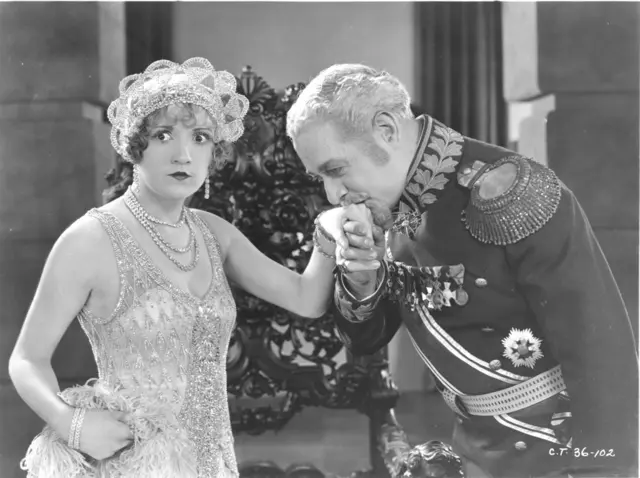
Yes, the film is loosely based on the life of the daughter of Buffalo candy magnate August Merckens. She became a Baroness and married a leader in the Russian monarchist movement. The film takes this real-life social climbing and turns it into a comedic romance, focusing more on the charm of the ascent than the gritty details of the political struggle. It is a 'truth is stranger than fiction' tale wrapped in Hollywood gold.
Chester Conklin provides the necessary slapstick ballast to the film’s romantic core. His performance is broad, occasionally too broad, but it provides a necessary bridge to the traditional silent comedy tropes that audiences of 1926 expected. While Talmadge handles the wit, Conklin handles the tumbles. This duality ensures the film never becomes too self-serious about its pseudo-historical backdrop.
Ellinor Vanderveer and Martha Franklin fill out the social circles with appropriate stiffness, providing the perfect foils for Talmadge's American exuberance. The ensemble works well, though few characters outside the leads are given much depth. This was a common trait of the era, where character actors were often used as living props to enhance the star's presence. In this regard, it shares some DNA with Sold at Auction, where the social commentary is secondary to the leading lady's journey.
Pros:
- Exceptional lead performance by Constance Talmadge.
- High production values for the era, especially in set and costume design.
- A unique, bizarre true-story foundation that adds a layer of interest.
- Sharp writing that avoids the typical melodrama of the mid-20s.
Cons:
- Inconsistent pacing in the second act.
- Supporting characters are largely one-dimensional.
- Some of the physical comedy feels dated compared to the sophisticated dialogue titles.
The Duchess of Buffalo is a sparkling, if slightly uneven, example of the silent era's ability to turn real-world intrigue into light entertainment. It isn't a masterpiece on the level of Keaton or Chaplin, but it is a vital piece of work for anyone interested in the career of Constance Talmadge. It works. But it’s flawed. The film’s greatest strength is its refusal to be a heavy historical epic, opting instead to be a sugary, delightful distraction. If you can find a restored version, it is well worth a Sunday afternoon viewing. It remains a testament to a time when a girl from Buffalo could conquer the world—or at least the silver screen version of it.
IMDb 6.5
1928
Community
Log in to comment.