DbcultAccessing Vault...
Cult Review
Senior Film Conservator
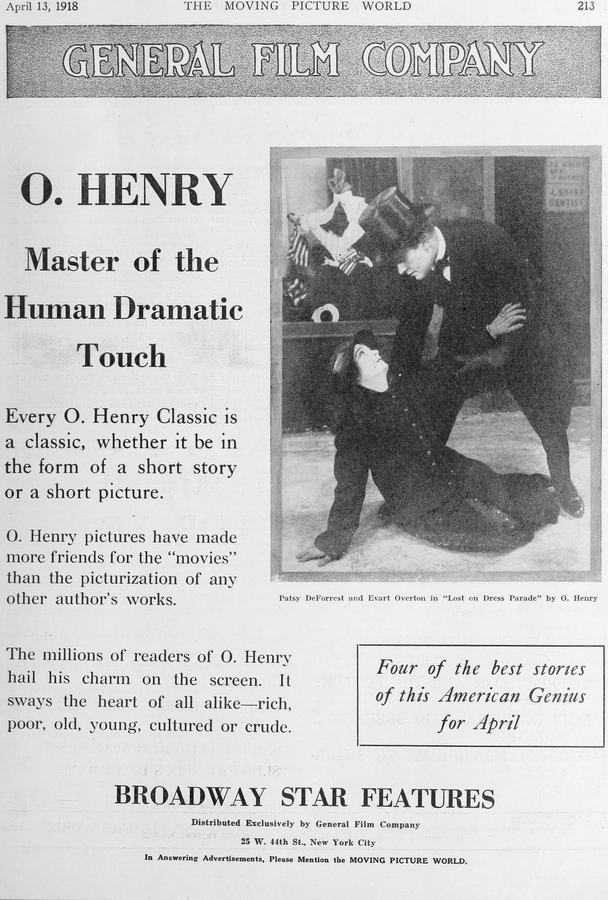
The flickering shadows of early cinema often serve as a fascinating conduit to societal anxieties and romantic ideals of a bygone era. Lost on Dress Parade, a silent film adaptation of O. Henry's celebrated short story, emerges from this period as a particularly piquant commentary on class performativity, mistaken identity, and the elusive nature of genuine purpose. At its core, this narrative, brought to life through the lens of F.R. Buckley and O. Henry's collaborative screenwriting, explores the intricate dance between outward appearance and intrinsic worth, a theme as relevant today as it was over a century ago. The film, though brief in its runtime, manages to encapsulate a rich tapestry of human aspiration and misjudgment, offering a window into the urban landscape where fortunes and identities were perpetually in flux.
Our protagonist, Towers Chandler, portrayed with a charming earnestness by Evart Overton, embodies the quintessential O. Henry character: a man caught between the prosaic realities of his station and the grander aspirations of his imagination. Chandler is not a villain, nor is he merely a fool; he is a dreamer, albeit one who expresses his dreams through an elaborate, self-funded charade. His weekly ritual of meticulously saving a portion of his meager architect's clerk salary isn't just about financial prudence; it's an investment in an alternate reality. These carefully hoarded funds are not for necessities or long-term security, but for a singular, extravagant night on the town every few weeks. This isn't just a night out; it's a performance, a brief but potent immersion into a world he believes he deserves, a world of affluence and consequence. He dons the attire, adopts the mannerisms, and cultivates the air of a gentleman of leisure, a man of yachts and polo ponies. This elaborate masquerade is a desperate attempt to bridge the chasm between his humble existence and the glittering society he observes from afar. It speaks to a universal human desire for recognition, for a life beyond the mundane, even if that life must be rented for a few fleeting hours.
The narrative truly ignites when Chandler, in full sartorial splendor and rhetorical flourish, encounters a young woman he perceives as a simple shop girl. Patsy De Forest, in her portrayal of this seemingly ordinary individual, imbues her with an understated intelligence that immediately sets her apart. Chandler, intoxicated by his own carefully constructed illusion, boasts of his fictitious wealth, his non-existent yachts, and his phantom polo ponies. He expects admiration, perhaps even envy, but what he receives is far more cutting: a cool, almost dismissive assessment of his character. The 'shop girl' disdains his perceived lack of a 'worthy purpose in life.' Her critique is not born of snobbery but of a deeper understanding of value, one that transcends superficial displays of wealth. This pivotal interaction highlights the film's central irony: the very act of trying to impress, of fabricating a life of ease, inadvertently reveals a perceived emptiness to the one person whose opinion, as it turns out, truly matters. This moment of misjudgment, both on Chandler's part and, initially, on the part of the audience, is a classic O. Henry setup, a prelude to the inevitable twist that will unravel these carefully woven deceptions.
The revelation that the 'shop girl' is, in fact, Miss Marian, the daughter of a powerful tycoon, is where the film truly leans into its O. Henry heritage. This dramatic irony is not merely a plot device; it's a profound commentary on the inherent biases of social perception. Both Chandler and Miss Marian operate under false pretenses, though their motivations differ dramatically. Chandler's deception is aspirational, a longing for a life he believes is superior. Miss Marian's, conversely, seems to be a deliberate choice, perhaps a desire to experience life unvarnished by her family's immense wealth, or simply a momentary escape from the gilded cage of her existence. This dual deception creates a symmetrical structure to the narrative, where both characters are, in their own ways, 'lost on dress parade.' The film subtly suggests that true connection can only occur when these masks are shed, or when circumstances force a re-evaluation of initial judgments. Similar themes of hidden identity and class-crossing romance can be seen in other silent era films like The Heir to the Hoorah or An Amateur Orphan, where characters navigate complex social landscapes under assumed guises, often leading to comedic or poignant revelations.
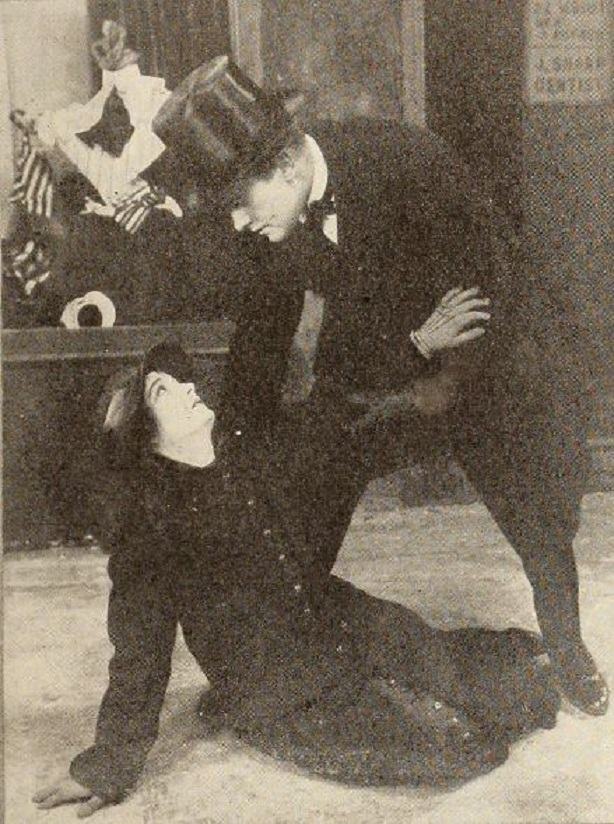
The climax of Lost on Dress Parade is a beautiful, understated moment of recognition. Miss Marian's father, the very tycoon whose daughter Chandler had inadvertently insulted, decides to build a lavish country house. By a stroke of narrative serendipity, he employs the architectural firm where Towers Chandler is employed. When Chandler arrives at the tycoon's magnificent estate, bearing the meticulously drafted architectural plans, the stage is set for an encounter that will redefine their perceptions of one another. Miss Marian sees him not in his borrowed finery, nor performing his elaborate charade, but genuinely engaged in his profession, demonstrating tangible skill and purpose. The sight of him, pencil in hand, blueprints unfurled, meticulously discussing the intricacies of design and construction, strips away all prior misconceptions. It is in this moment of authentic engagement that she realizes his true worth, recognizing that his aspirations, though perhaps awkwardly expressed in their earlier encounter, are rooted in a legitimate desire for contribution and achievement. The film subtly argues that true purpose isn't found in the accumulation of wealth or the display of leisure, but in the diligent application of one's talents and intellect.
As a silent film, Lost on Dress Parade relies heavily on visual storytelling, exaggerated gestures, and the emotional resonance conveyed through the actors' faces. Evart Overton, as Towers Chandler, masterfully navigates the character's dual existence. His initial scenes, where he meticulously prepares for his grand night out, are imbued with a blend of hopeful anticipation and nervous energy, conveying the weight of his self-imposed performance. His boasts to Miss Marian are delivered with a theatrical flourish that betrays his underlying insecurity, making his later humiliation all the more poignant. Patsy De Forest, on the other hand, gives a more restrained performance, her expressions hinting at a deeper understanding and a quiet assessment of Chandler's character. Her transformation from a seemingly unimpressed 'shop girl' to the discerning daughter of a tycoon is conveyed through subtle shifts in posture and gaze, rather than overt melodrama. The direction, while adhering to the conventions of early cinema, effectively builds the tension of mistaken identity and delivers the satisfying payoff characteristic of O. Henry's work. The use of intertitles is economical, allowing the visual narrative to carry the bulk of the storytelling, a testament to the filmmakers' confidence in their actors and their ability to convey complex emotions without dialogue.
The film stands as a faithful and effective adaptation of O. Henry's short story, capturing the author's signature blend of urban realism, romantic idealism, and ironic twists. O. Henry's fascination with the hidden lives of city dwellers, the veneer of class, and the unexpected turns of fate finds a natural home in the cinematic medium. His stories often explored characters who were not quite what they seemed, or situations that turned out to be far more complex than initially perceived. Lost on Dress Parade exemplifies this perfectly, presenting a narrative that challenges the audience's initial assumptions and rewards them with a clever resolution. The enduring appeal of O. Henry's work lies in its humanistic approach to these themes, recognizing the universal struggles for identity, acceptance, and purpose, regardless of social standing. The film, in its silent eloquence, manages to preserve this delicate balance, delivering a story that is both entertaining and thought-provoking. One could draw parallels to the social commentary in Old Wives for New, which also delves into the superficiality of appearances and the deeper truths beneath, though with a different thematic focus on marital disillusionment rather than romantic discovery.
Beyond its romantic entanglement, Lost on Dress Parade offers a subtle yet incisive commentary on the American Dream and the societal pressures to achieve or project success. Chandler's elaborate deception isn't merely a personal quirk; it reflects a broader cultural aspiration to transcend one's origins, to climb the social ladder, or at least to appear to have done so. The film suggests that while ambition is commendable, its genuine expression lies in productive work and authentic contribution, rather than in performative displays of inherited or fabricated wealth. Miss Marian's initial disdain for Chandler's 'lack of purpose' speaks volumes about the values of the era, where hard work and tangible achievement were often held in higher esteem than mere leisure. Her own decision to pose as a shop girl could be interpreted as a similar quest for authenticity, a desire to be valued for who she is rather than for her family's fortune. This exploration of class distinctions and the pursuit of a meaningful life resonates with the thematic undercurrents found in stories like The Kingdom of Youth or The New York Peacock, which often juxtaposed youthful idealism against the harsh realities of social stratification and the pursuit of status.
Though a product of early 20th-century cinema, Lost on Dress Parade retains a surprising resonance. Its exploration of identity, class, and the true meaning of purpose continues to echo in contemporary narratives. The film serves as a valuable artifact, not just for its historical significance as an early adaptation of a beloved American author, but also for its timeless themes. It reminds us that appearances can be deceiving, that true worth often lies beneath the surface, and that genuine connection is forged through authenticity rather than fabrication. The performances, while adhering to the more gestural style of the silent era, effectively convey the emotional arc of the story, making the characters relatable despite the passage of time. For enthusiasts of silent cinema, or those curious about the roots of narrative filmmaking, this film offers a charming and insightful viewing experience, a testament to the power of simple storytelling executed with wit and heart. It's a delightful reminder that sometimes, to be truly found, one must first be Lost on Dress Parade, navigating the intricate masquerade of societal expectations until true purpose and genuine connection reveal themselves in the most unexpected of circumstances. Its narrative structure, culminating in a satisfying reveal, is a masterclass in concise storytelling that many modern films could still learn from, demonstrating that a compelling story doesn't always require grand spectacle or verbose dialogue, but rather an astute understanding of human nature and a clever hand in its portrayal. The film, in essence, is a miniature gem, reflecting the sparkling wit of O. Henry in a cinematic mirror, proving that even without spoken words, a powerful and enduring message can be conveyed with remarkable clarity and charm.
IMDb 5.5
1935
Community
Log in to comment.