DbcultAccessing Vault...
Cult Review
Senior Film Conservator
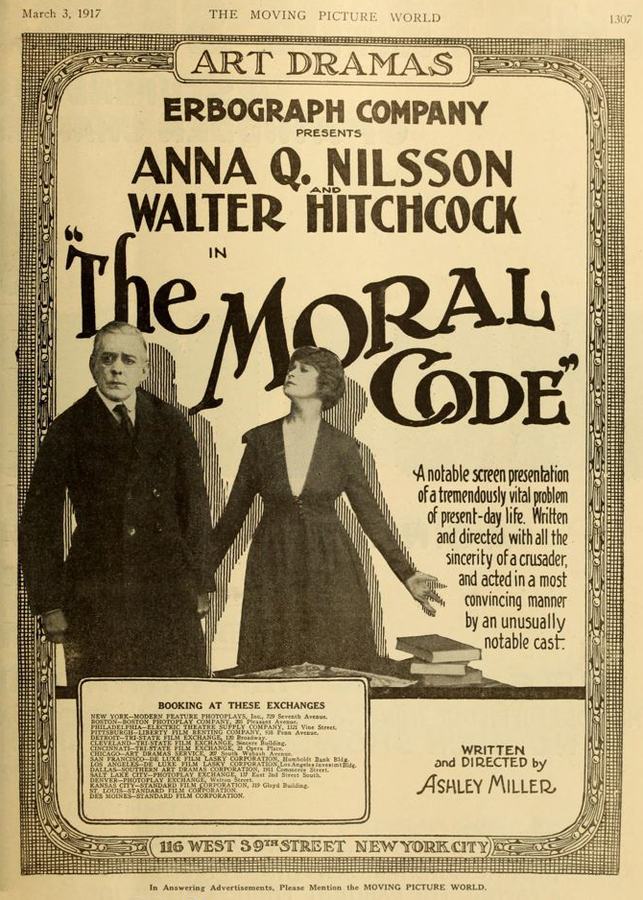
Step back into the nascent days of cinema, to an epoch where morality plays were not merely entertainment but vital reflections of societal anxieties and aspirations. Ashley Miller's 'The Moral Code', a silent film that, despite its age, resonates with a surprising contemporaneity in its exploration of human folly and the crushing weight of public perception, invites us to ponder the true cost of honor. This isn't just a story; it's a stark, unvarnished glimpse into a world where reputation was currency, and a single misstep could irrevocably tarnish a family's legacy. It’s a compelling piece that, even without spoken dialogue, articulates a profound human drama with remarkable clarity and emotional depth.
At the heart of this narrative stands a man, portrayed with exquisite sensitivity by Richard Barthelmess, whose very essence is defined by an unwavering moral compass. He is the embodiment of integrity, a pillar of his community, and the proud bearer of a distinguished family name. The film meticulously builds this character, establishing him as someone who values principle above all else, making his subsequent sacrifice all the more poignant. When his brother's reckless actions threaten to cast an indelible shadow upon their lineage, Barthelmess's character, driven by an almost archaic sense of duty, steps forward to absorb the scandal. He marries the young woman his brother has impregnated, not out of love or desire, but as a desperate, calculated maneuver to salvage what little honor remains. This act, while outwardly noble, is an internal crucifixion, a self-imposed prison built from the bricks of expectation and the mortar of societal pressure.
Barthelmess, a silent film icon, delivers a masterclass in understated acting. His eyes, often downcast or clouded with a profound sorrow, convey volumes that intertitles alone could never articulate. Every subtle gesture, every hesitant movement, speaks of a man trapped between his innate goodness and the agonizing reality of his circumstances. He is a tragic figure, a martyr to a code that demands everything and offers little in return but the hollow comfort of preserved appearances. His performance here reminds one of the stoic suffering seen in other dramatic silent features, where actors relied solely on physical expression to communicate complex emotional states. The intensity of his silent pleas to his new wife, the visible anguish etched across his face as her continued indiscretions become apparent, are truly captivating. It’s a performance that transcends the limitations of the medium, creating a character whose plight feels deeply, heartbreakingly real.
Opposite Barthelmess's principled protagonist is the young woman, presumably played by the formidable Anna Q. Nilsson, whose character embodies a stark contrast to her husband's rigid morality. She is not merely 'loose' as the plot summary suggests; she is a force of nature, a woman seemingly untouched by the societal constraints that bind her husband. Her actions, or rather her continued disregard for the sanctity of her new marriage and the honor of her rescuer, are the primary catalysts for the escalating tragedy. Nilsson, known for her strong, often independent portrayals, brings a fascinating complexity to this role. Is she truly oblivious to her husband's agony, or is her continued pursuit of pleasure a defiant act against a life she never chose? The film leaves room for interpretation, making her character less a simple villain and more a product of her own desires clashing violently with an imposed reality.

Her refusal to conform, even under the moral duress of her husband's desperate pleas, is a powerful, albeit destructive, assertion of individual will. While Barthelmess's character represents the dying embers of a patriarchal code, Nilsson’s character, whether intentionally or not, signals the burgeoning spirit of a new era, one where women might dare to defy the strictures placed upon them. This dichotomy is where 'The Moral Code' truly shines, presenting not just a plot, but a philosophical debate on screen. Her brazenness, her inability or unwillingness to comprehend the gravity of her husband's sacrifice, creates a continuous, agonizing tension that drives the narrative forward. It's a portrayal that challenges the audience to reconcile sympathy for the protagonist with a nascent understanding of the antagonist's perhaps misguided, yet undeniable, pursuit of personal freedom, however detrimental. This kind of character study, exploring the collision of duty and desire, can be seen in other films of the era that grappled with evolving gender roles, though perhaps not always with such stark contrast as presented here.
Ashley Miller, the writer behind this compelling drama, masterfully crafts a scenario that is both intensely personal and broadly resonant. The screenplay is a testament to the power of suggestion and unspoken conflict, relying heavily on visual cues and the nuanced performances of its cast to convey the intricate emotional landscape. Miller doesn't shy away from depicting the harsh realities of a society obsessed with appearances, where a man's honor could be shattered not by his own failings, but by the transgressions of others, or by the perceived moral laxity of his wife. The narrative arc is a slow, excruciating burn, meticulously building the protagonist's despair as his efforts to protect his name are continually undermined by the very person he sacrificed everything for.
The pacing of the film, characteristic of many silent dramas, allows for prolonged moments of emotional contemplation, giving the audience ample opportunity to absorb the characters' dilemmas. The use of intertitles is judicious, providing essential plot points and dialogue without over-explaining the palpable tension. Miller's work here showcases an understanding of dramatic irony and tragic inevitability, painting a picture where the 'moral code' itself becomes both the protagonist's guiding star and his ultimate undoing. It's a thoughtful piece of writing that explores the destructive nature of social expectations when they clash with individual will, a theme that echoes in other silent films dealing with societal judgment, like Das Laster (The Vice), which similarly delved into the public shaming of women.
The aesthetic of 'The Moral Code', while undoubtedly a product of its time, contributes significantly to its lasting impact. The cinematography, though perhaps simplistic by modern standards, effectively utilizes framing and composition to emphasize the isolation of Barthelmess's character and the often-frivolous world of Nilsson's. Close-ups on the actors' faces are employed sparingly but powerfully, allowing their expressions to carry the brunt of the emotional weight. The sets and costumes, while serving their practical purpose, also subtly reinforce the class distinctions and societal norms that dictate the characters' fates. The overall visual style is one of understated elegance, allowing the raw human drama to take center stage without unnecessary flourishes.
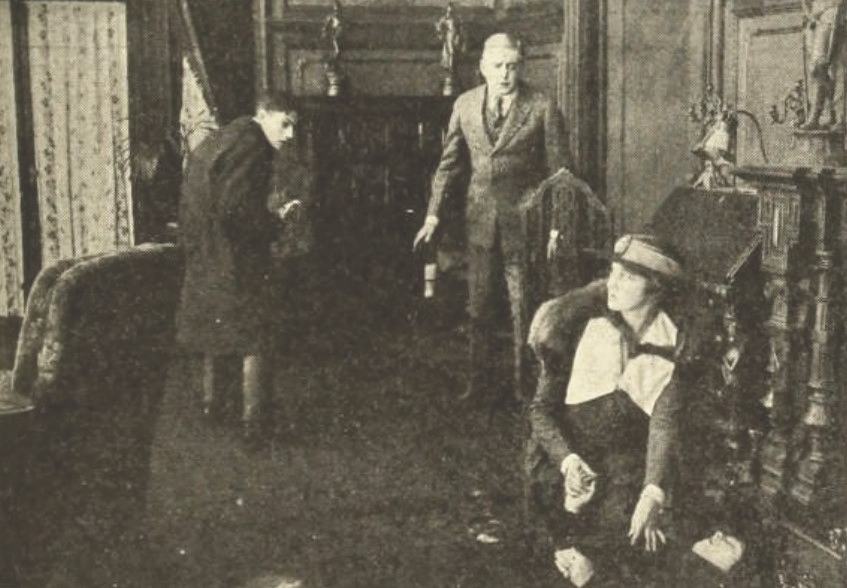
The lack of spoken dialogue, often perceived as a limitation, is in fact a strength here. It forces the viewer to engage more deeply with the visual narrative, to interpret the nuances of performance, and to project their own understanding onto the characters' unspoken thoughts. This immersive quality is a hallmark of truly effective silent cinema, creating a communal experience of empathy and contemplation. The film’s emotional resonance is thus amplified, transforming a simple plot into a profound exploration of human nature, sacrifice, and the often-cruel dictates of society. Comparing this to other silent dramas like The Conquest of Canaan, which also explored small-town morality and personal integrity, one can appreciate the consistent thread of social commentary woven through many films of this era.
While 'The Moral Code' is undeniably a product of its early 20th-century origins, reflecting the rigid social structures and gender expectations of that period, its core themes remain strikingly relevant. The conflict between individual desire and societal obligation, the burden of reputation, and the pain of unrequited sacrifice are universal human experiences. The film serves as a fascinating historical document, illustrating how dramatically public morality has shifted, yet how fundamentally human emotions persist. It prompts questions about what we value most: personal happiness or public perception? Integrity or convenience? The narrative, despite its period setting, offers a timeless commentary on the complexities of human relationships and the often-damaging power of ingrained social rules.
Walter Hitchcock and Florence Hamilton, though perhaps in supporting roles, undoubtedly contribute to the film's texture, filling out the world that Barthelmess and Nilsson inhabit. Their presence, whether as concerned family members or judgmental townspeople, would have served to underscore the societal pressures bearing down on the central figures. The collective strength of the cast, guided by Miller's vision, ensures that the film's message is delivered with clarity and impact. This enduring quality of silent films to transcend their historical context and still speak to contemporary audiences is a testament to the power of universal storytelling. Much like My Official Wife, which explored themes of deception and identity, 'The Moral Code' delves into the intricacies of personal and public facades, albeit with a focus on moral integrity. The film doesn't offer easy answers, nor does it preach; instead, it presents a dilemma and allows the audience to grapple with its implications, a hallmark of effective, thought-provoking cinema.
In conclusion, 'The Moral Code' stands as a powerful testament to the dramatic capabilities of early cinema. It is a film that, through its compelling narrative and the deeply felt performances of Richard Barthelmess and Anna Q. Nilsson, manages to transcend its silent origins and deliver a profound emotional punch. It is a story of a man caught in an impossible bind, a woman asserting her contentious freedom, and a society grappling with its own rigid definitions of right and wrong. Ashley Miller’s screenplay, brought to life by a talented cast, remains a poignant exploration of honor, sacrifice, and the relentless pursuit of individual desire, all against the backdrop of an unforgiving moral landscape. Watching it today is not just an exercise in historical appreciation; it is an invitation to reflect on the timeless struggle between personal integrity and the dictates of the world around us. It's a film that, despite its lack of audible dialogue, speaks volumes about the human condition, making it a valuable piece of cinematic heritage that continues to provoke thought and discussion. The film leaves an indelible mark, prompting viewers to consider the ethical frameworks that govern our lives and the often-heavy price paid for adherence to, or defiance of, societal expectations. It's a stark reminder that some codes, whether written or unwritten, can be both a sanctuary and a cage.
IMDb 5.5
1931
Community
Log in to comment.