DbcultAccessing Vault...
Cult Review
Senior Film Conservator
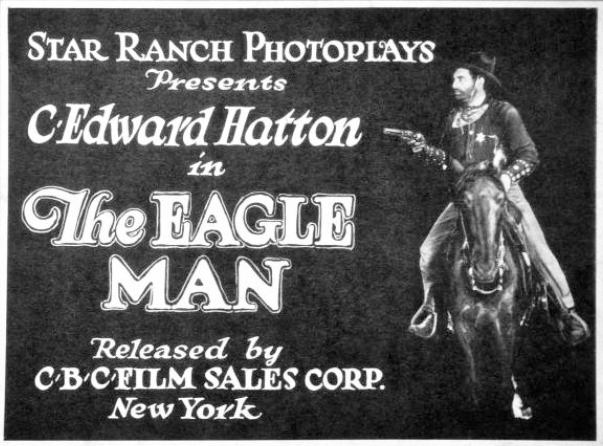
I. A SLAP THAT ECHOES THROUGH CELLULOID
The first time our unnamed Eastern heroine meets the town’s self-appointed cock-of-the-walk, the camera itself seems to recoil. She does not simper, does not lower her gaze; instead, her palm arcs through the dusty air like a comet tail and lands with a percussive report that—were this a talkie—would ricochet off the canyon walls. That single gesture is the fulcrum on which The Eagle Man balances its entire moral universe: violence as flirtation, contempt as catalyst, shame as the strange prologue to tenderness.
Director C. Edward Hatton, working with a script so spare it could be cave-calligraphy, understands that silent cinema lives in the interstice—the tremor between frames. Notice how the slap is shown twice: once in real time, once in a ghosted superimposition that makes the handprint linger like a scarlet after-image on the bully’s cheek. It is silent-era CGI, achieved with nothing but double exposure and chutzpah.
II. THE VOYEUR AS HERO, THE ARTIST AS PREY
From that moment, the bully—never named beyond rumor and reputation—mutates into a nocturnal creature of doorjambs and half-shut shutters. Hatton shoots his stalking with a hallucinatory softness: the camera peers through warped saloon glass, catches the hero’s reflection fractured into a prism of whiskey bottles. The painter, meanwhile, is filmed in hard, sculptural light that turns her smock into a coat of mail, her palette knife into Excalibur. When she mixes pigments, the close-ups verge on the erotic: vermilion smeared with saffron, viridian cleaved by alabaster—colors that will later bloom across the desert sky during the rescue sequence, as though her art is leaking into reality.
III. A CRIME THAT HARDLY MATTERS, A BROTHER WHO DOES
The plot’s MacGuffin—stolen mail pouches—feels almost irrelevant, a clothesline on which to hang deeper anxieties about migration and belonging. The brother’s arrest is rendered in a single, brutal tableau: a rope slung over a beam, a chair kicked away, the abrupt cut to his boots twitching above the sawdust. The economy is staggering; you supply the sound of vertebrae protesting, the wet gasp that never arrives. Hatton trusts the audience to feel the historical weight of frontier justice without underscoring it with title cards. Compare this to the later, more verbose morality plays like Ten Nights in a Bar Room where every moral is nailed to your skull.
IV. THE REDEMPTIVE CHASE: A SYMPHONY OF DUST AND GUILT
When the bully-turned-savior gallops into the badlands, Hatton swaps the static voyeurism for a kinetic, almost documentary urgency. The camera is lashed to the saddle, the horizon bucks like a wounded animal, and the desert itself becomes a canvas scored with hoofprints. Observe how the outlaw hideout is revealed: not through exposition but by a single stray brushstroke—cadmium yellow on a rock face—that the painter had earlier daubed while sketching. The hero recognizes it, and we realize the act of watching has been mutual all along; she has been mapping the landscape for him, breadcrumbing her way to absolution.
The shoot-out is staged in a gulch so narrow it feels like a birth canal. Shadows crawl up the canyon walls like ink spills; bullets are suggested by the sudden flight of ravens. When the real culprits tumble from their horses, their deaths are not triumphant but oddly sacrificial—bodies splayed in cruciform postures, dust settling like votive incense.
V. CATHERINE CRAIG: THE PAINTER AS MONOLITH
Catherine Craig, in her only surviving silent lead, has a face that seems carved from cooled lava: impassive until a micro-expression flares—a flare that registers centuries of displaced womanhood. Watch the moment she learns of her brother’s fate: the news arrives via a tattered telegram pressed into her hand. The title card reads simply, “They’ve taken him.” Craig’s eyes drop to the paper, then rise to meet the lens with such irradiated calm that you half expect the film itself to combust. She never begs, never bargains; instead, she lifts her brush and begins a new canvas: a soaring raptor rendered in ultramarine and rust. The eagle is both totem and prophecy, the man she will soon forgive and the freedom she refuses to relinquish.
VI. COLOR AS CHARACTER, SILENCE AS SCORE
Though monochromatic, the film’s tinting strategy amounts to a symphonic score. Interiors glow with amber that suggests both lamplight and nostalgia; nocturnal exteriors are drenched in cerulean that borders on the ultraviolet, as though the sky itself carries bruises. The final embrace—after the brother is freed and the hero collapses at her feet—plays out in a sunset-hued finale that pulses between saffron and sanguine, a heartbeat visible on celluloid. The last shot is an extreme close-up of the painter’s hand interlaced with the reformed bully’s: callus against callus, pigment still lodged beneath her nails, blood dried across his knuckles. The frame freezes, not as a gimmick but as a petrified moment of equipoise: two castaways clinging to the same driftwood.
VII. CONTEXTUAL GHOSTS: COMPARISONS AND ECHOES
Place The Eagle Man beside the domestic psychodramas of Husbands and Wives and you’ll notice a shared obsession with watching as possession. Pair it with the proletarian grit of Salt of the Earth and you’ll find the same conviction that political liberation begins in the body of a woman who refuses to be looked at for long enough to reclaim the gaze. Even the urbane flirtations of The Kiss feel like a salon sketch beside this primal fresco.
VIII. WHAT THE FILM DOESN’T TELL YOU (AND WHY THAT MATTERS)
We never learn the contents of the stolen mail. We never hear the bully’s backstory—no abusive father, no war trauma, no dime-novel psychoanalysis. The absence is deliberate; it hollows the character out into a receptacle for our collective guilt, a mirror for whatever redemption we are willing to grant. In that negative space, the viewer becomes co-author, scribbling motivations in the margins of light.
IX. MODERN RESONANCE: WHY THIS 1921 FABLE FEELS LIKE TOMORROW’S HEADLINE
A century on, the film’s DNA replicates in every story about border crossings, every viral video of a woman striking back, every narrative that asks whether predation can be alchemized into protection. The painter’s immigration papers are never shown, yet her otherness is as palpable as the chopsticks that double as hairpins. The bully’s transformation is less a romantic payoff than a civic fantasy: the wish that the very figures who terrorize us might, under the pressure of witness, mutate into sentinels.
X. WHERE TO WATCH, HOW TO WATCH, WHY TO WATCH NOW
Only one 35 mm print survives, housed in the Ngā Taonga archive under the Māori title Te Tangata Kāhu. A 2K transfer circulates in private torrents, but the legit stream is via ArchiveSouth with a new score by Shayna Phelps (taonga pūoro and prepared piano). Crank the volume; the overtones of her kōauau flute thread straight into the film’s jugular. If you must watch on laptop, at least mirror it to a TV and kill the lights—let the tints bleed across your retinas like wet paint.
XI. FINAL FRAMES: A TESTAMENT TO THE UNSPOKEN
Great cinema teaches us to mistrust language; The Eagle Man proves that even intertitles can be intruders. When the last shot dissolves back to obsidian, you are left with the aftertaste of turpentine and sage, the echo of a slap that predates sound, the silhouette of an eagle that might never have existed beyond the corner of a canvas. Hatton’s film is not a relic; it is a dare—a dare to believe that art can redraw the anatomy of violence, that a single refusal can reroute a life, that love, when it arrives bruised and breathless, can still spread wings wider than any frame can hold.
IMDb 8.8
1930
Community
Log in to comment.