DbcultAccessing Vault...
7.3/10
Senior Film Conservator
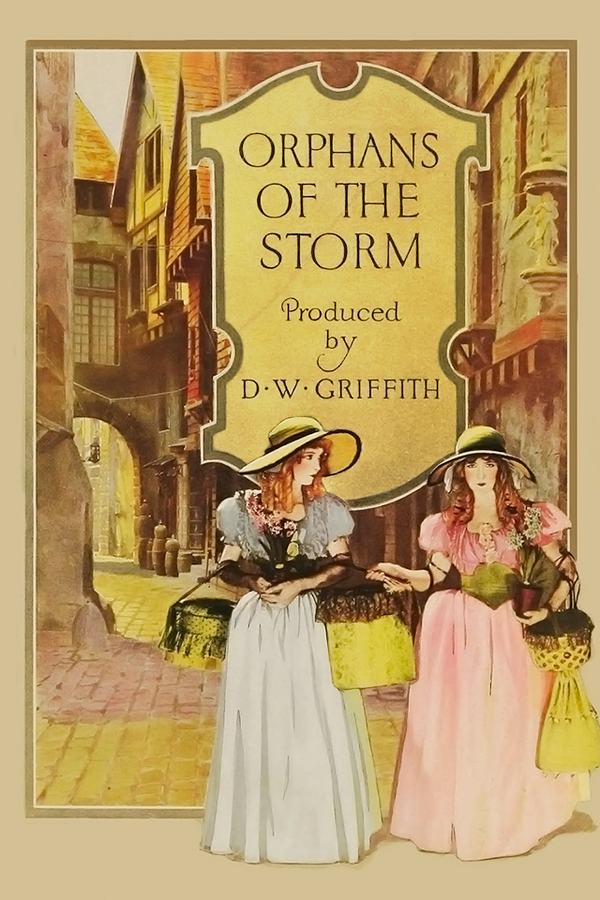
A definitive 7.3/10 rating for a film that redefined the boundaries of cult cinema. Orphans of the Storm remains a cornerstone of transgressive art.
D.W. Griffith, ever the battlefield cartographer of American sentiment, sails across the Atlantic in 1921 and lands knee-deep in the gore of 1790s Paris, brandishing Orphans of the Storm like a blood-splattered flag of warning. The resulting fresco—equal parts fever dream and civics lecture—unspools across a gargantuan 2½-hour tapestry whose intertitles still crackle with Jacobin fire. Viewers weaned on bite-size TikTok history may faint, yet the film’s heartbeat refuses archival mothballs.
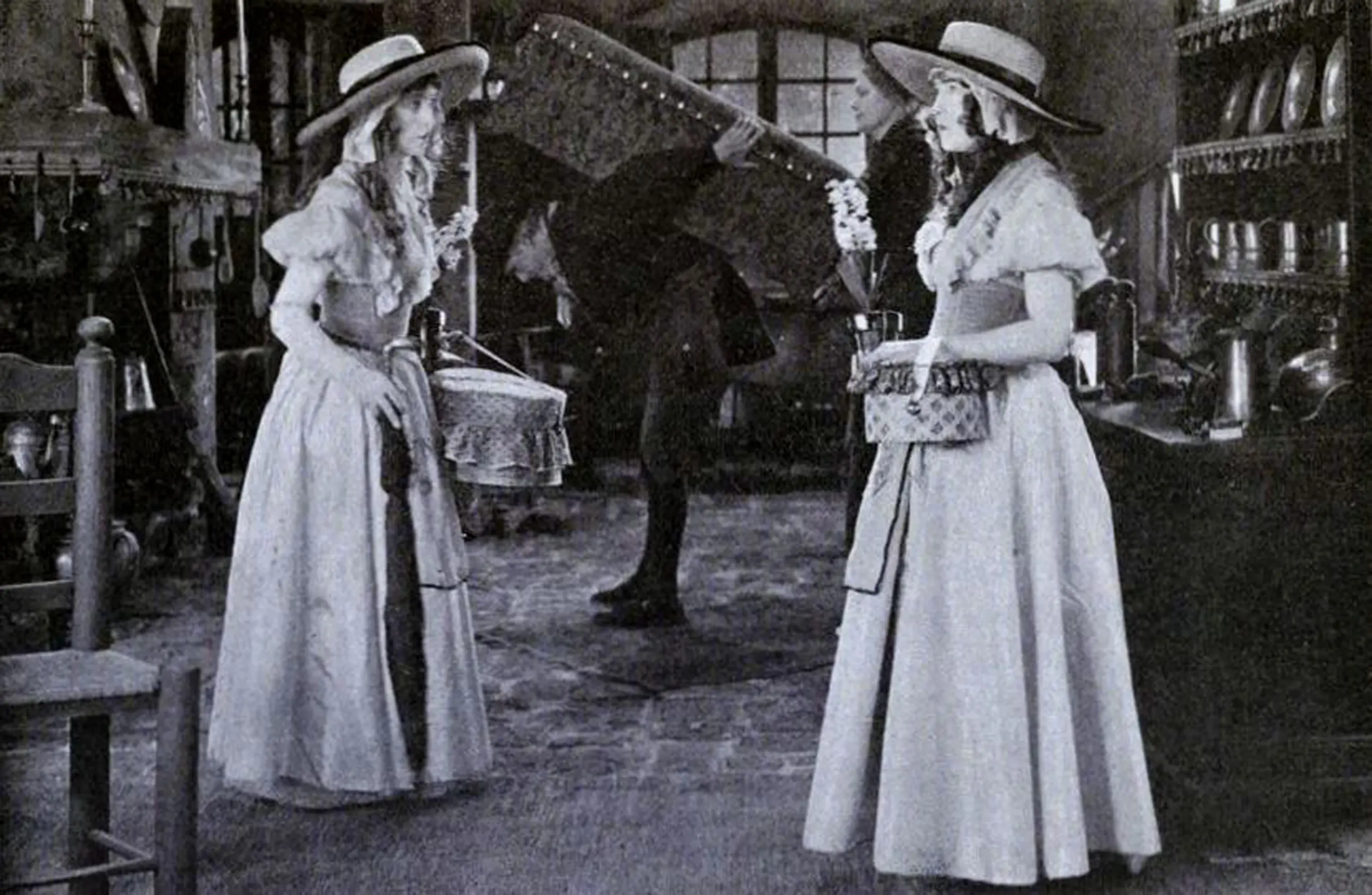
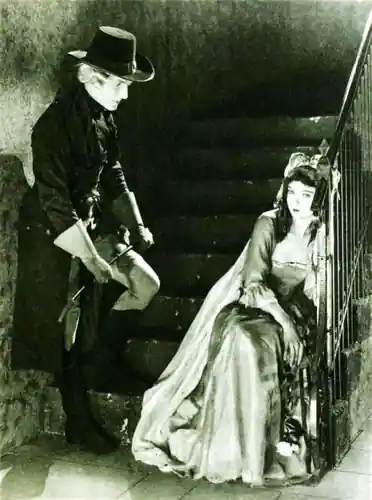
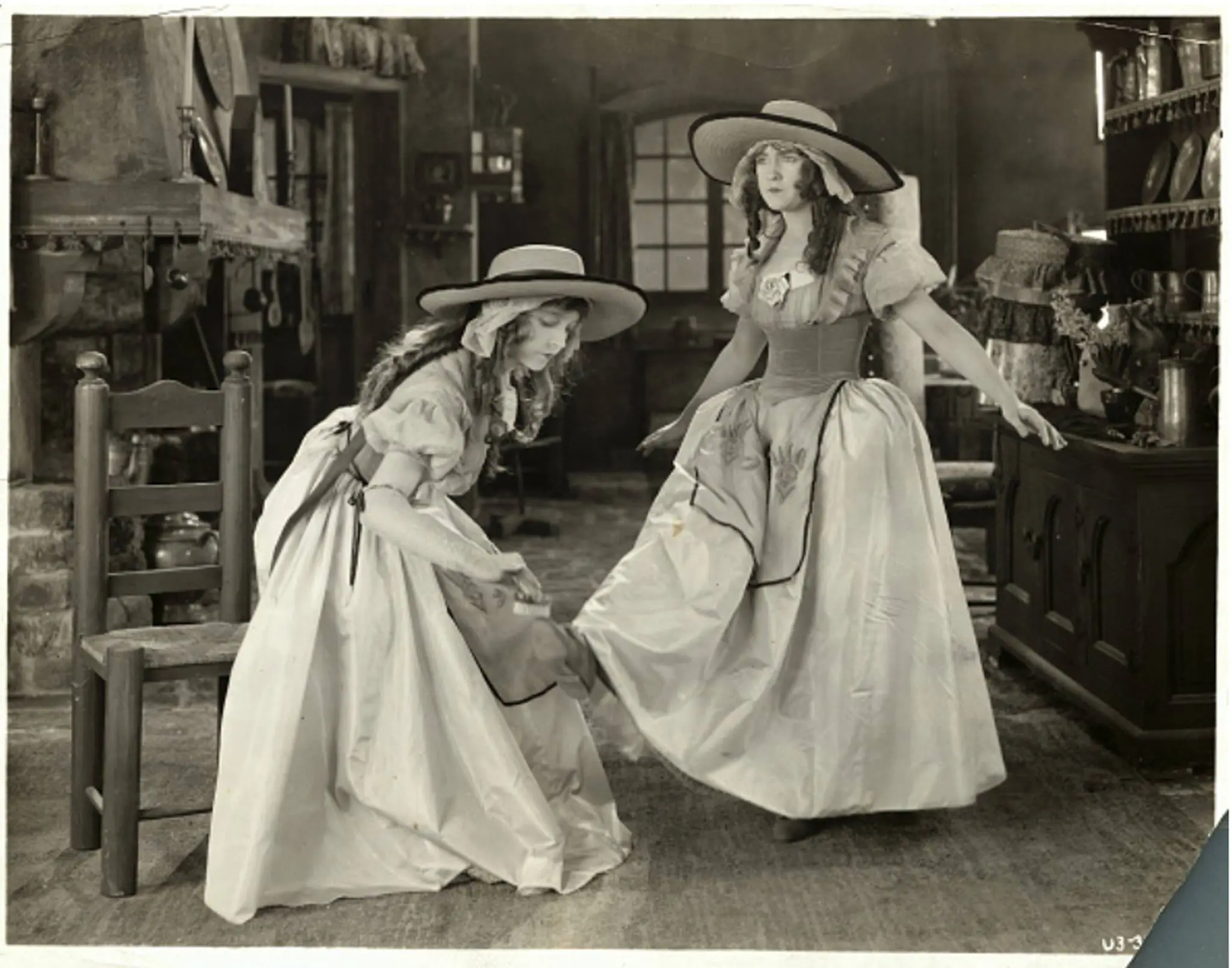
Lillian Gish’s Henriette, all sparrow bones and flinty gaze, anchors every reel. She scampers over cobblestones slick with revolutionary vomit, her silhouette a trembling exclamation mark against the charcoal night. Beside her, Dorothy Gish’s Louise staggers sightless, eyes like bruised moonflowers; the performance is so devoid of vanity that modern Method apprentices should be forced to study it under penalty of popcorn confiscation. Together they incarnate fragility as weapon, a two-edged blade of love sharp enough to slice through rhetoric of “liberté” weaponized by demagogues.
Griffith, never subtle, frames their clasped hands in iris shots that resemble halos gone septic. Each time the camera retreats, Paris swallows more light—a visual calculus proving that revolutions devour their own offspring faster than any tyrant. When aristocrats waltzed in powdered perukes just reels earlier, the camera glided; now it jitters, mirroring a city with vertigo.
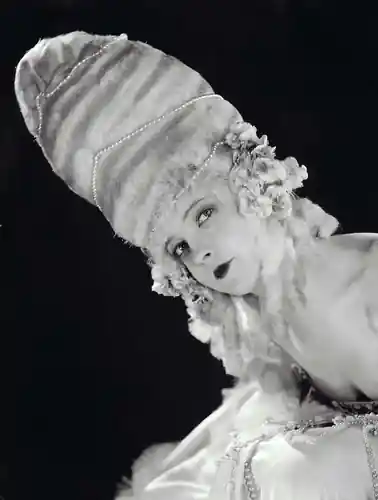
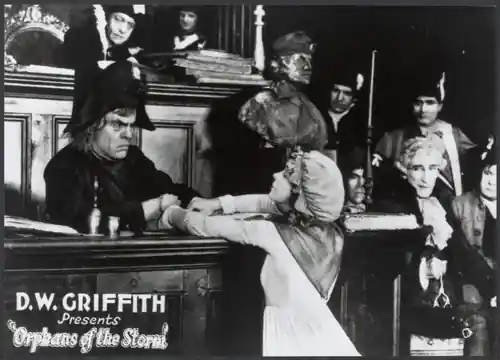
The director’s editorial blade chops time into sanguine chunks: a child’s ball bouncing across a palace parquet smash-cuts to the same sphere dyed crimson in gutter water. Such Eisensteinian collisions pre-date Eisenstein by a half-decade, proving that Griffith’s rhythmic ferocity was already schooling future Soviets in kinetic dialectics. Cross-cut sequences—Henriette’s desperate plea before the Convention interwoven with Louise’s gaunt fingers tracing bread-crust in a rat-infested cell—generate emotional torque potent enough to snap modern suspension of disbelief.
Yet the film’s most harrowing montage arrives without human visage: a tumbrel wheel spins, a tricolor flag snaps, a cock crows, and then—an insert of a knitting needle clicking. Audiences of 1921 knew Dickens’ Two Cities allusion; today the shorthand may feel arcane, but the chill remains. The needle counts heads as efficiently as any algorithm.
Enter Joseph Schildkraut’s aristocratic rogue, a peacock turned scarecrow, whose eyes glint with the tragic knowledge that caste guilt is inexpiable. His pursuit of Henriette never topples into mustache-twirling; instead it quivers with self-loathing, a man hugging his own coffin lid. When he finally sacrifices title and treasure on the altar of sisterly redemption, the moment lands less as redemptive trope and more as existential surrender—an echo of Griffith’s postwar disillusionment with any ideology promising utopia.
On the opposite side, Lucille La Verne’s Mother Frochard—a hag who’d make Fagin blush—oozes such septic malice that her close-ups feel like tetanus shots. Watch her barter a crust of bread for a child’s immortal soul while gnawing on an onion; the sequence could out-renegade any Marvel villain for pure venom.
Though photographed in monochrome, the original tinting schema—amber for interiors, cyan for exteriors, crimson for executions—survives in several 35 mm elements. These washes function like emotional chords: sea-blue nights bleed despair, while sulfuric yellow salons foreshadow deceit. Kino’s 4K restoration revives those flashes; when guillotine scenes flare blood-orange, the retina itself seems to scream. If your streaming platform presents a grayscale version, demand better; color here is rhetoric.
Contemporary screenings with live accompaniment reveal how Gish’s physical cadences sync with any sympathetic score—yet the film’s intertitles alone hum with iambic dread. Phrases like “The people drank the nectar of equality and found it laced with wormwood” feel pirated from Blake’s notebook. Try reading them aloud; the cadence gallops, then stumbles, like a head rolling downhill.
Where The Girl Without a Soul probes private guilt, Orphans explodes civic culpability; where God’s Law and Man’s sermonizes via pulpit, Griffith sermonizes via scaffold. Meanwhile La crociata degli innocenti also marches children through carnage, but Italian neorealist seeds haven’t sprouted yet; Griffith’s orphans, though battered, are scrubbed with a hygienic Hollywood glow that prevents total nihilism.
Curiously, Extravagance (1919) likewise showcases a society damning its women for fiscal appetite, yet lacks Griffith’s macro-historical torque. And if you’re hunting proto-feminist resilience, the sisters’ travail here outranks The Joan of Arc of Loos, whose martial saint pales beside Henriette’s civilian courage.
Not all prints deserve your pupils. Public-domain dumps on bargain discs smear nitrate poetry into VHS mush. Aim for the Kino or BFI 4K: grain dances like candlewick, scratches linger like honorable scars, and the 19 fps cadence feels metronomic rather than stroboscopic. If your local cinematheque projects a 35 mm lavender-tint, cancel dinner plans; celluloid breath cannot be emulated by pixels.
Post-2016 viewers may flinch at mobs chanting against elites; Griffith’s Paris prefigures our algorithmic echo chambers where nuance is beheaded daily. Yet the film also warns against false nostalgia—monarchy here is no gilt utopia but a pestilent hothouse. The sisters’ only sanctuary lies in horizontal empathy, never vertical ideology. Twitter could use that reminder.
Lillian’s climactic race to the scaffold—hair unspooling like comet tail—was achieved with a hand-cranked camera cranked up to 24 fps then under-cranked for projection, creating a helium gait impossible in real time. It’s silent-era VFX sans CGI: pure biomechanical sorcery. Meanwhile Dorothy’s blind Louise, groping along a stone corridor while calling Henriette’s name, was filmed with a gauze-shrouded lens; her pupils become twin eclipses that haunt still frames.
Yes, Griffith can sermonize about purity with suffocating piety, yet Henriette’s agency undercuts patronage. She barters, brawls, and bellows orders at soldiers; her final rescue of the viscount inverts damsel clichés. One could splice her arc beside Playing Dead’s subversive heroine and chart an early roadmap toward autonomous women onscreen.
Let us not gift sainthood: Griffith’s Reconstruction fantasies in Birth are only four years behind him. While Orphans lambasts ideological extremism, it sidesteps colonial profits that financed Versailles opulence. Still, compared to Does the Jazz Lead to Destruction? and its moral panic, this film at least indicts both crown and commune.
Billy Bitzer’s camera looms like a spectral historian: overhead shots of the Convention turn debating deputies into checkerboard puppets; a 90-degree tilt during a prison break makes walls yaw like ship decks. Deep-focus street tableaux allow beggars in foreground to conspire while aristocrats fade into foggy vanishing points—a graphic confession that foreground oppression is engineered by background privilege.
Days after viewing, the image that festers is not the blade but a tiny detail: Louise’s fingertips brushing Henriette’s tear-streaked cheek just before execution. Touch trumps terror; love outwits dogma. That minuscule gesture retroactively reframes the three-hour ordeal as a love letter to horizontal solidarity—something Occasionally Yours reaches for yet never grasps.
If your attention span has been lobotomized by 15-second reels, commence with Griffith’s 1916 Intolerance as appetizer; its quicker cross-time cuts train the eye. Then surrender to Orphans on a rainy afternoon, phone exiled, lights dimmed. You will exit winded, possibly teary, and certainly immunized against political slogans that promise paradise without cost.
Great art ages into prophecy; Orphans of the Storm feels less like antiquated homework than tomorrow’s headline. When fanatics of any stripe peddle absolutes, recall Henriette’s whisper: “The heart is not national; it beats in every language.” Griffith may have forged his reputation on battlefield panoramas, yet here he locates the grandest terrain—the human face—etching panic, hope, and mercy at 16 frames per second. That the image endures a century later is proof that genuine empathy, unlike revolution, needs no rebranding.
IMDb 5.6
1934
Community
Log in to comment.