DbcultAccessing Vault...
5.3/10
Senior Film Conservator
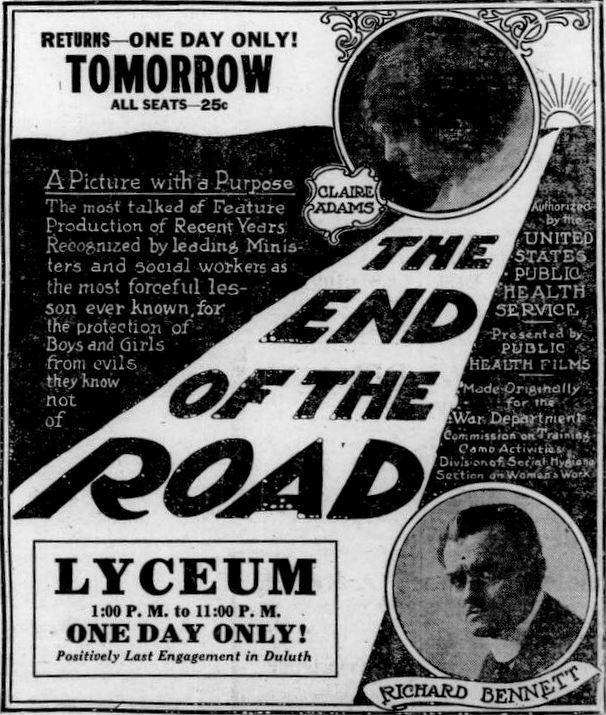
A definitive 5.3/10 rating for a film that redefined the boundaries of cult cinema. The End of the Road remains a cornerstone of transgressive art.
In the annals of early cinema, few films dared to confront societal taboos with the unflinching directness of Edward H. Griffith's 1919 production, 'The End of the Road'. Emerging from the crucible of the Progressive Era and the shadow of the Great War, this cinematic endeavor transcends mere entertainment, positioning itself as a potent instrument of public health advocacy. It is a film that, even a century later, retains a startling resonance, not just for its historical significance but for its audacious approach to subjects often relegated to hushed whispers: sexual education, venereal disease, and the profound consequences of ignorance.
The year 1919 was a tumultuous one, marking the end of the 'war to end all wars' but ushering in an era of newfound social anxieties. Soldiers returning from the trenches brought with them not just tales of heroism, but also the grim realities of diseases contracted in wartime brothels, galvanizing public health officials and reformers into action. Katherine Bement Davis, a prominent social hygienist and penal reformer, co-wrote the scenario with Edward H. Griffith, imbuing the narrative with an explicit didactic purpose. This wasn't merely a story; it was a sermon, a stark warning, and a call to enlightenment, delivered through the nascent, yet powerful, medium of film. Its ambition was nothing short of revolutionary: to educate the masses, particularly young women, about the dangers of sexual ignorance and the devastating impact of syphilis, a topic considered utterly scandalous for public discussion, let alone cinematic depiction.
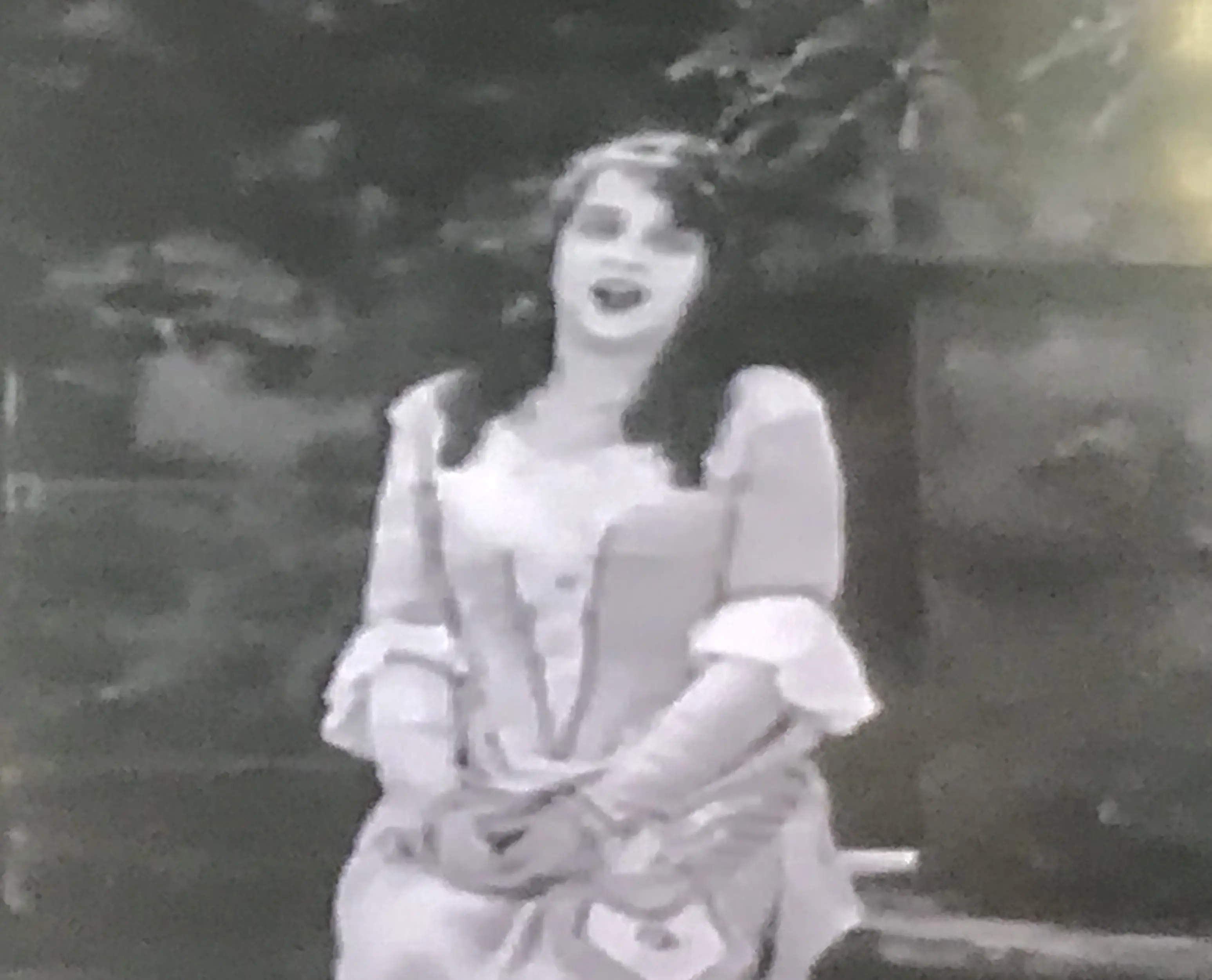
At its core, 'The End of the Road' hinges on a compelling narrative contrast between two childhood friends, Mary Lee (Alice Brady) and Vera (Claire Adams). Their parallel lives, from the innocent days of youth to the complexities of womanhood, serve as a powerful allegory for the film's central thesis. Mary Lee is blessed with a mother who, against the prevailing societal norms of the time, imparts a forthright, scientific understanding of human sexuality. This foundational knowledge equips Mary Lee with prudence, self-awareness, and the agency to make informed choices about her body and her future. She blossoms into a capable and compassionate nurse, her intellect and nurturing spirit leading her to a fulfilling, professional life and a partnership with a principled doctor.
Vera, on the other hand, is tragically miseducated. Her mother, embodying the era's pervasive prudery, spins a romanticized, fairytale version of procreation, effectively leaving Vera blind to the realities of human biology and the potential pitfalls of sexual encounters. This deliberate obfuscation renders Vera dangerously naive, a lamb led to slaughter in the harsh landscape of early 20th-century urban life. Guided by her mother's misguided insistence on marrying for wealth and status, Vera becomes entangled with a wealthy, yet morally bankrupt, cad. This character, a thinly veiled representation of the societal menace, embodies the dangers lurking beneath a veneer of affluence and charm. His syphilitic condition, a detail shocking in its explicit mention for the time, becomes the instrument of Vera's tragic downfall, transforming her into a cautionary tale writ large across the silent screen.
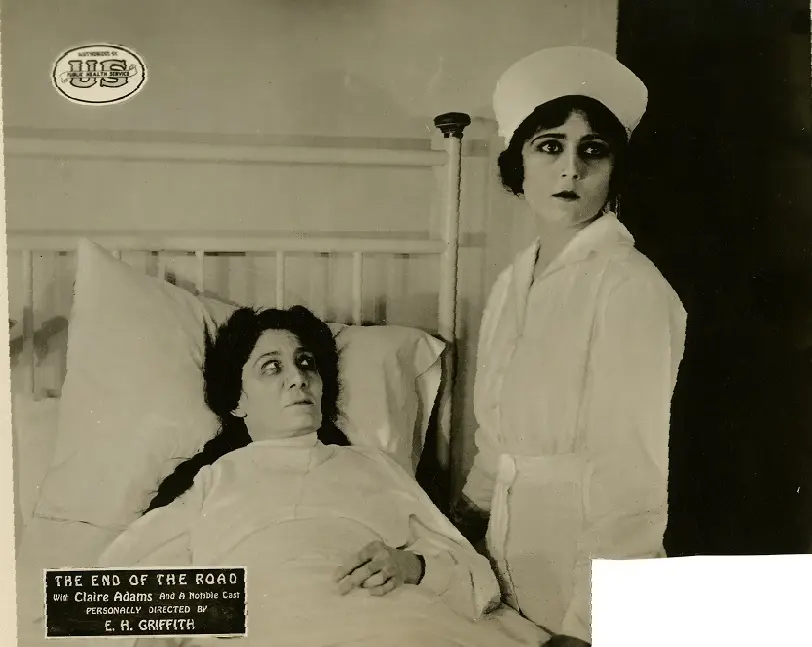
Alice Brady's portrayal of Mary Lee is particularly noteworthy. As a prominent star of the era, Brady brings a dignified strength to a character who is both intelligent and empathetic. Her performance is not one of overt melodrama, but of quiet conviction, portraying Mary Lee as the ideal modern woman: educated, independent, and morally upright. She is the film's moral compass, guiding both Vera and the audience towards the path of enlightenment. Claire Adams, as Vera, delivers a performance that elicits profound pity. Her transformation from an innocent, if misguided, young woman to a victim of disease and societal negligence is handled with a delicate pathos that underscores the film's tragic message. The audience is meant to feel her suffering, not as a judgment, but as a consequence of systemic ignorance.
The supporting cast, including Arthur Housman and Robert Cain, contribute to the film's stark dichotomy. Housman likely portrays the insidious cad with a charming menace, while Cain, as the doctor, embodies the scientific rationality and compassionate intervention that the film advocates. The ensemble works in concert to reinforce the narrative's moralistic framework, using the expressive power of silent film acting – exaggerated gestures, poignant facial expressions, and strategic intertitles – to convey complex emotional and thematic content without a single spoken word. The film's reliance on these visual cues and textual explanations meant that every frame, every intertitle, had to be meticulously crafted to deliver its powerful message with maximum impact.
Perhaps the most shocking aspect of 'The End of the Road' for its contemporary audience was its explicit depiction of venereal disease. The film doesn't merely allude to syphilis; it graphically illustrates its devastating effects through a series of 'revelations' featuring actual patients. These scenes, undoubtedly controversial and potentially distressing, were central to the film's educational mission. They served as a brutal awakening, forcing viewers to confront the grim realities of a disease that ravaged lives, often in secret, and was shrouded in shame. This direct approach distinguished it from many other films of the era that might hint at moral failings but rarely dared to show their visceral consequences. This bold move aligns it with other socially conscious films, though few were as direct in their health messaging. For instance, while The Bitter Truth (1917) might have explored other societal ills, 'The End of the Road' went a step further into medical specifics.
The intervention of Mary Lee and her doctor husband in Vera's plight is the narrative's turning point, symbolizing the triumph of enlightened medical science and compassionate care over ignorance and moral judgment. They not only provide Vera with proper treatment but also use her case, and the cases of other patients, as a platform to educate. These segments, which might feel jarringly documentary-like within a dramatic narrative today, were integral to the film's purpose as a 'social hygiene' picture. They demonstrated the film's commitment to factual accuracy and its desire to serve as a genuine public service announcement, albeit one wrapped in a compelling, if melodramatic, story.
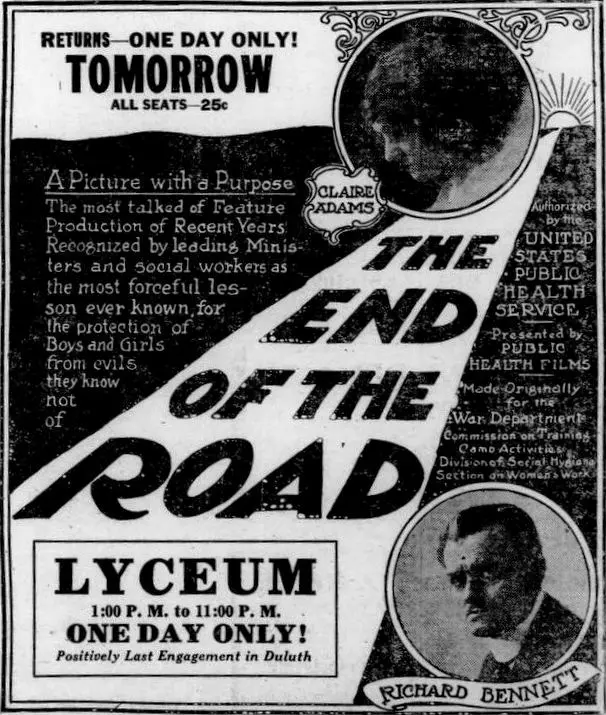
The film's climax, with Mary Lee and her husband volunteering to aid soldiers fighting in France, firmly anchors 'The End of the Road' within its specific historical moment. World War I had a profound impact on American society, not least in highlighting public health crises. The mobilization of millions of young men brought venereal disease into sharp national focus, as military officials grappled with its debilitating effects on troop readiness. The government itself launched campaigns promoting chastity and providing prophylactic information, but the problem persisted. This film, therefore, resonated deeply with contemporary concerns about national strength and the moral fabric of society. It connected personal responsibility and sexual health directly to patriotic duty and national defense.
This element of patriotic service also elevates Mary Lee beyond a mere protagonist; she becomes an emblem of the empowered, modern woman contributing to society on multiple fronts. Her journey from childhood enlightenment to professional dedication and ultimately, to wartime service, paints a picture of female agency that was progressive for its time. While other films like J'accuse! (1919) from Abel Gance delved into the profound psychological and physical toll of the war, 'The End of the Road' uniquely fused the personal battle against disease with the global conflict against the 'Huns,' framing both as struggles requiring courage, knowledge, and collective action.
Unsurprisingly, a film of such explicit content faced considerable challenges from censors. The very nature of its subject matter – venereal disease and sex education – placed it squarely in the crosshairs of moral guardians. While some states and municipalities banned or heavily cut the film, others, particularly those with a stronger public health mandate, permitted its exhibition, recognizing its potential as an educational tool. The battles fought over 'The End of the Road' reflect the broader cultural clash between Victorian-era prudery and the burgeoning Progressive movement's emphasis on scientific knowledge and social reform. Its reception was undoubtedly polarized, sparking heated debates and solidifying its status as a controversial, yet undeniably impactful, work.
The film's legacy lies not just in its pioneering subject matter, but in its demonstration of cinema's power as a medium for social change. Before the widespread adoption of sound, silent films communicated through powerful visuals, evocative intertitles, and the raw emotion of performance. 'The End of the Road' masterfully harnessed these elements to deliver a message that was both urgent and universal. It served as a precursor to later social problem films, paving the way for more open discussions of difficult topics on screen. While its melodramatic style and didactic approach might seem quaint to modern eyes, its courage and conviction remain undiminished. It reminds us that cinema, from its earliest days, has been more than just escapism; it has been a mirror, a teacher, and at times, a formidable agent of societal transformation.
Considering its place within the broader cinematic landscape of 1919, a year that also saw films like Reaching for the Moon exploring romantic escapism and A Wall Street Tragedy delving into financial intrigue, 'The End of the Road' stands out for its sheer audacity. It eschewed lighthearted fare or conventional drama to tackle a subject deemed too sensitive for polite conversation. This commitment to social commentary makes it a vital document for understanding the anxieties and reformist impulses of post-WWI America, and a testament to the early film industry's willingness to engage with pressing societal issues, even at the risk of controversy.
In conclusion, 'The End of the Road' is far more than a historical curiosity; it is a profound artifact of early cinema, a bold statement on public health, and a compelling narrative about the enduring power of knowledge versus the perils of ignorance. Its raw honesty, particularly in an era of strict moral codes, makes it a fascinating and essential watch for anyone interested in the evolution of film as a medium for social commentary and the historical context of public health movements. It forces us to reflect on how far we have come in discussing sensitive topics, and perhaps, how far we still have to go, making its 'end of the road' a beginning for many crucial conversations.
IMDb —
1919
Community
Log in to comment.