DbcultAccessing Vault...
Cult Review
Senior Film Conservator

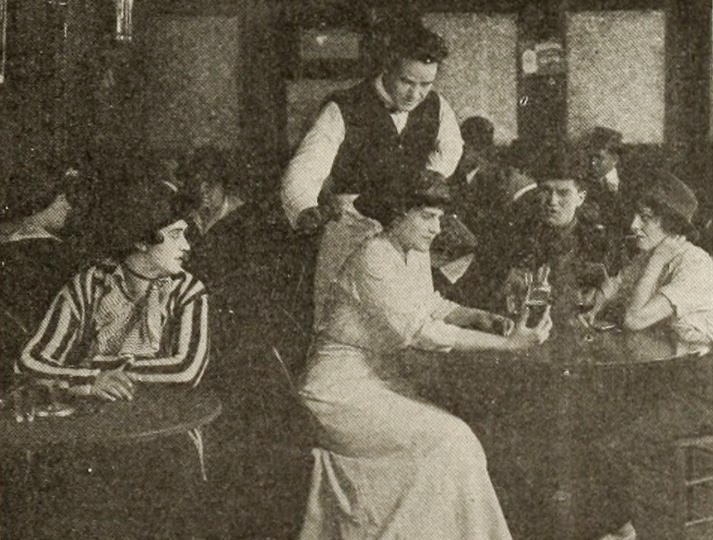
Stepping into the rugged world of Wolfville, as depicted in The Clients of Aaron Green, is to witness a pivotal, often brutal, moment in the shaping of the American West. This isn't just a film; it's a stark philosophical treatise cloaked in the dusty garb of a frontier drama, a relentless examination of what happens when the nascent, fragile tenets of formalized law collide head-on with the deeply ingrained, visceral traditions of 'old-fashioned justice.' The ambition of a single man, lawyer Aaron Green, portrayed with a compelling blend of idealism and perhaps a touch of naiveté, sets the stage for a societal reckoning that resonates far beyond the confines of this particular cinematic landscape.
The narrative, meticulously crafted by Alfred Henry Lewis, plunges us into a community where the rule of thumb, or more accurately, the rule of the rope, holds sway. In Wolfville, disputes aren't settled by eloquent arguments or judicial decrees; they're decided by the swift, irreversible finality of a lynching. This immediate, unmediated form of justice, while horrifying to modern sensibilities, was often viewed as a pragmatic necessity in an era and place where institutional structures were non-existent or woefully inadequate. It's into this crucible that Green, an outsider armed with law books and an unwavering belief in due process, arrives, intending to civilize the untamed. His arrival isn't merely a plot point; it's an existential challenge to Wolfville's very identity.
The film masterfully portrays the psychological landscape of Wolfville's inhabitants. They aren't inherently evil, but rather products of their environment, molded by harsh realities and a profound distrust of external authority. The concept of a lawyer, a man who speaks in abstractions and delays, is alien and threatening. Why wait for a jury when the evidence, as they perceive it, is clear and the need for retribution immediate? This cultural chasm is the beating heart of the film's conflict. The performances, particularly from Patricia Palmer and William Berke, lend a palpable authenticity to this struggle, embodying the raw emotions of a community resistant to change and the steadfast resolve of a man determined to bring it. Palmer, in particular, navigates a complex role, often serving as a moral compass or a voice of pragmatic reason amidst the escalating tensions.
The supporting cast, including Sid Hayes, Bob Burns, and Tex Allen, further enriches this tapestry, each portraying characters who embody different facets of Wolfville's collective psyche – from the hardened pragmatist to the reluctant skeptic, and the outright hostile traditionalist. Their interactions with Green are not mere dialogue exchanges; they are skirmishes in a larger war of ideologies, each word a battle for the soul of the town. The visual storytelling, while perhaps constrained by the filmmaking techniques of its era, effectively conveys the isolation and ruggedness of Wolfville, making the viewer feel the weight of its traditions.
The central question posed by The Clients of Aaron Green is timeless: how does a society transition from an anarchic state of self-governance to one bound by formal law? The film offers no easy answers, instead presenting a nuanced, often uncomfortable, depiction of this arduous process. Green's efforts are met with suspicion, hostility, and outright defiance, underscoring the profound difficulty of altering deeply ingrained cultural norms. This struggle is reminiscent of the thematic explorations in The Natural Law, which similarly grapples with the tension between innate human impulses and imposed societal structures. While The Natural Law might focus more on individual moral codes, The Clients of Aaron Green expands this to a community-wide ethical dilemma.
The film avoids simplistic portrayals of good versus evil. The townspeople, despite their brutal methods, are often driven by a genuine, if misguided, desire for order and protection, a stark contrast to the more overtly villainous characters seen in some contemporary Westerns. Green, too, is not without his flaws, his idealism occasionally bordering on an inability to truly comprehend the lived experiences of those he seeks to 'save.' This complexity elevates the film beyond a simple morality play, transforming it into a compelling character study of a community and the individual who dares to challenge its foundations.
While The Clients of Aaron Green stands on its own merits, its thematic richness invites comparison with other films that explore the establishment of law and order in challenging environments. The stark realism of its depiction of frontier justice finds parallels in the gritty authenticity of films like Beyond the Law, which also delves into the often blurred lines between justice and vengeance. The struggle of an individual against an entrenched system, even when that individual represents a 'better' way, is a perennial cinematic theme. One might even draw a distant, thematic link to The Immigrant, not in plot, but in the sense of an individual confronting a bewildering, often hostile, new societal structure and fighting for their place within it, albeit from different angles of legal and social integration.
The film's exploration of societal transformation also brings to mind the nuanced societal shifts depicted in historical dramas such as Mariano Moreno y la revolución de Mayo, which, while set in a vastly different context, similarly examines the turbulent birth of new legal and governmental frameworks. The inherent drama in these transitions, the friction between the old guard and the proponents of progress, is a powerful narrative engine. Moreover, the psychological weight of witnessing and participating in summary justice is a powerful motif, echoing the moral quandaries found in stories like Was She Justified?, where personal ethics clash with societal expectations or perceived necessities.
The direction, while perhaps less overtly stylized than later Westerns, maintains a keen focus on character and narrative propulsion. Every scene, every interaction, serves to deepen our understanding of the cultural chasm separating Green from the citizens of Wolfville. The pacing is deliberate, allowing the tension to build organically, making the inevitable confrontations all the more impactful. The screenplay, adapted from Alfred Henry Lewis's work, retains a certain literary quality, with dialogue that feels authentic to the period while still conveying complex ideas about justice, freedom, and community. It avoids the common pitfalls of making either side entirely sympathetic or reprehensible, instead presenting a messy, human struggle.
The performances are uniformly strong, with Patricia Palmer delivering a nuanced portrayal that adds depth to the often male-dominated genre. Her character's perspective offers a vital counterpoint to the more rigid male viewpoints, providing a window into the broader societal implications of the legal upheaval. William Berke, as Aaron Green, embodies the intellectual's struggle in a world that values brawn over books, a performance that grounds the film's lofty themes in human vulnerability and determination. The ensemble, including Sid Hayes, Bob Burns, and Tex Allen, creates a believable community, each face telling a story of hardship and resilience.
The Clients of Aaron Green remains a potent cinematic artifact, offering more than just historical intrigue. It is a pertinent commentary on the enduring tension between individual liberty and collective order, between tradition and progress. In an age where the rule of law is constantly debated and challenged, this film serves as a compelling reminder of the arduous journey societies undertake to establish and uphold justice. It might not possess the sweeping epic scope of some Westerns, nor the overt romanticism of films like The Red-Haired Cupid or The Make-Believe Wife, but its intellectual heft and unflinching portrayal of societal growing pains give it a unique and lasting power. Its exploration of the clash between primitive instincts and civilizing forces sets it apart, making it a valuable piece in the mosaic of early cinema.
The film's refusal to shy away from the ugliness of frontier justice, while simultaneously exploring the human motivations behind it, makes it a more profound experience than many of its contemporaries. It implicitly asks us to consider the true cost of civilization and the sacrifices, both personal and communal, required to forge a functional society. This is not merely a story about a lawyer in a rough town; it is a microcosm of human history, a timeless struggle for order in a chaotic world. It's a film that demands reflection, much like the introspective qualities of Memoria dell'altro, though through a vastly different lens of historical memory and social construction.
Ultimately, The Clients of Aaron Green is more than just a historical curiosity; it is a robust, thought-provoking drama that delves into the very foundations of law and society. Its exploration of the conflict between established custom and emerging legal frameworks is both engaging and deeply resonant. For anyone interested in the social dynamics of the frontier, the evolution of justice, or simply a well-told story with rich characters and profound themes, this film offers a compelling and essential viewing experience. It serves as a stark reminder that the establishment of law is rarely a clean, straightforward process, but rather a tumultuous, often violent, negotiation between differing worldviews. Its enduring legacy lies in its capacity to provoke introspection about our own societal contracts and the constant vigilance required to maintain them. The film's unwavering commitment to its core conflict, without resorting to easy resolutions, ensures its place as a significant piece of cinematic history, much like the unwavering commitment to narrative in The Commanding Officer or the intense focus on human agency in The Salamander. It's a testament to the enduring power of storytelling, even in its earliest forms, to dissect and illuminate the complexities of the human condition.
IMDb —
1914
Community
Log in to comment.