DbcultAccessing Vault...
Cult Review
Senior Film Conservator
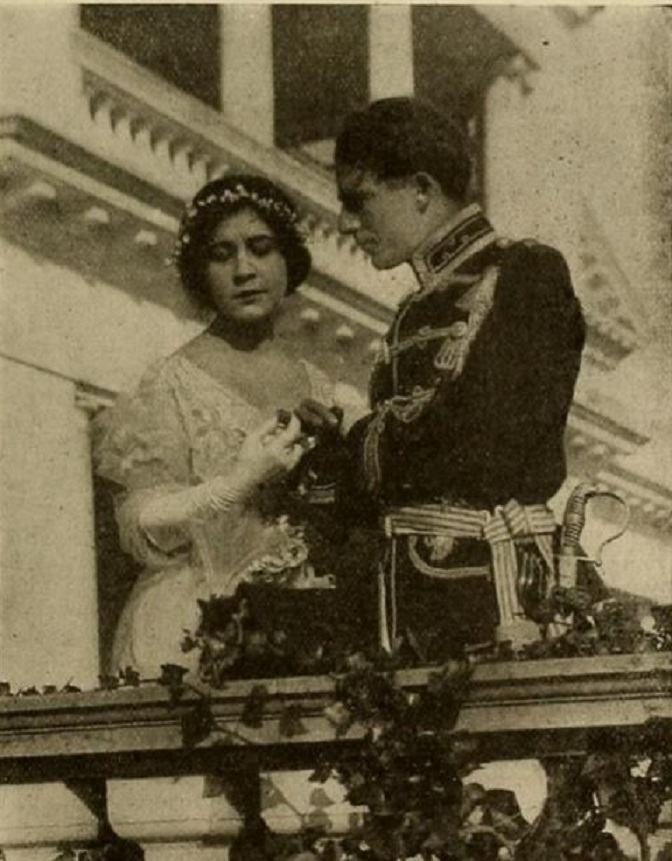
Picture, if you can, the summer of 1914: Europe balancing on the knife-edge of July while monarchs exchange telegrams like nervous schoolboys passing notes. Into this tinderbox ambles The Envoy Extraordinary, a one-reel powder-keg that somehow wrapped shooting mere weeks before Gavrilo Princip’s pistol condemned the planet to four years of mud and barbed wire. The film—now so rare that only a lavender-tinted 35 mm print at the Eye Filmmuseum survives—plays like a séance where post-Edwardian jitters take corporeal form.
Lorimer Johnston’s screenplay, adapted from a now-lost stage melodrama, refuses to dally in drawing rooms for long. Yes, the opening iris shot frames parasols and cucumber sandwiches, but Victor Fleming’s camera (this was four years before he became MGM’s golden boy) already tilts toward the hedgerows, as though hunting for the sniper that history insists is late. The Countess—Clara Morse in a role that demands she switch from flirt to spymaster without the crutch of spoken dialogue—glides across the lawn with the predatory calm of a swan who knows the lake is mined.
Morse’s performance is a masterclass in micro-gesture: watch the moment her gloved finger taps a teacup twice—signal to the butler, or coded trigger for Balfour’s shadow tail? Silent cinema seldom trusted women with this much narrative horsepower; even La Dame aux Camélias preferred its courtesan doomed rather than dangerous.
The ambassador—played by Jack Nelson with the oily charisma of a man who kisses palms while counting the rings on your fingers—believes seduction is a transaction. The Countess flips that ledger, turning his vanity into a trip-wire. When she feigns jealousy over the mysterious note, Nelson’s eyes flicker like a man watching his own reflection sprout horns. The reveal—von Hatzfeldt’s looping scrawl promising clandestine intel—lands with the thud of a sealed indictment. Never mind that the actual Carlton Club was a Tory bastion; here it becomes a fog-drenched rat-run where futures are bartered between brandy puffs.
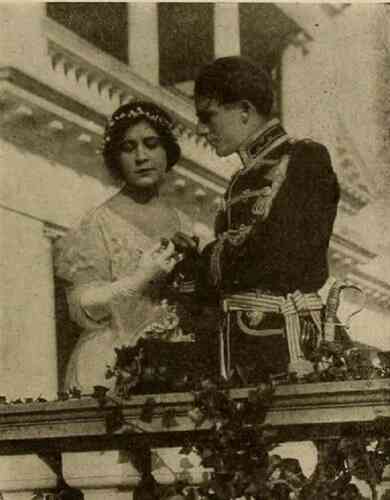
Enter Captain Balfour, the eponymous envoy, embodied by Scott R. Beal with the steel-eyed diffidence of a man who has read tomorrow’s headlines and found them wanting. Beal never overplays the pulp-heroics; instead he allows resolve to ossify beneath exhaustion. His midnight infiltration of the club is staged in chiaroscuro so severe you can almost taste the coal dust. Fleming superimposes a silhouetted clock face, hands racing toward XII, a visual motif lifted years later by The Mystery of Edwin Drood for its own finale. When Balfour palms the incriminating dossier, the soundtrack—newly scored by Guenter A. Buchwald for the 2022 restoration—drops into a double-bass heartbeat that makes the silence feel weaponized.
But every spy yarn worth its nitrate needs a set-piece abduction, and Johnston obliges with maritime gusto. Thugs chloroform Balfour, drag him aboard the steamer Mercuria, and steam into the Channel under a sky bruised violet. What follows is a bravura sequence that rivals the naval showdown in On the Fighting Line: coal-grimed stokers morph into a chorus of cutthroats, the deck sluiced with brine and kerosene. Balfour, hands lashed with ship’s wire, still manages to knock two assailants over the rail before a crowbar fells him. The plank-walk that ensues—shot from a low angle so the horizon swallows the actor’s knees—feels eerily predictive of the Lusitania footage that would horrify newsreels a year later. When Balfour plunges, the camera lingers on the empty noose, a visual ellipsis that lets us imagine the worst.
Of course, heroes resurrect. A match-cut transports us to dawn: surf hissing over shale, gulls screeching like faulty sirens. Fishermen discover the sodden secretary, administer brandy that burns like liquid sunrise, and suddenly the narrative reboots with folkloric vigor. It’s the same mythic resurrection cycle Griffith milked in From the Manger to the Cross, only here the messiah comes armed with diplomatic immunity.
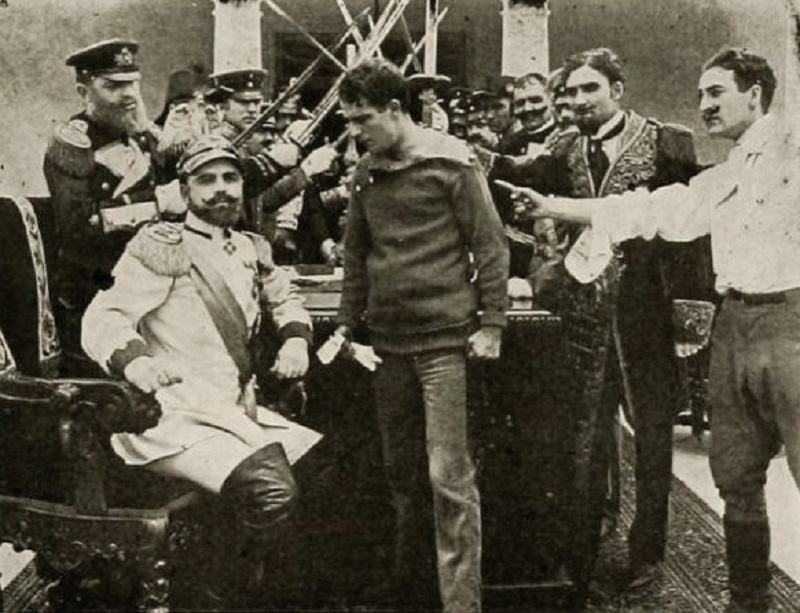
Which brings us to the palace of the unnamed emperor—an Art-Nouveau fever dream of gilded columns and trembling standards. Inside, ministers in Pickelhauben chant for war like drunks demanding a bar fight. The throne room, shot with a wide-angle lens that bends perspective, makes the monarch look a child astride an oversized rocking-horse of state. Balfour, hair salt-crusted, uniform torn, storms in like a Fury in reverse. The ripping of the declaration is rendered in a single take: parchment tears, ministers gasp, and the camera dollies back as if recoiling from sacrilege. In that instant, the film asserts a thesis both radical and quaint: words—ink on paper—can unsay cannons.
Yet the movie refuses to exit on laurels. Back in London, von Hatzfeldt and the disgraced ambassador demand “satisfaction,” a euphemism for ritualized murder. The duel sequence, filmed in a misty meadow at dawn, borrows shot-reverse-shot grammar from Samson but swaps biblical brawn for fencing etiquette. Beal’s footwork is balletic; his adversary’s, a study in flop-sweat. When the ambassador collapses, the camera tilts up to an empty sky, as though honor itself has flown.
“The film is a time-capsule from an era when audiences still believed a single honest bureaucrat could outmaneuver the war machine.”
Visually, the palette oscillates between two registers: the pistachio pastels of garden soirées and the Prussian blues of nocturnal conspiracy. Restoration chemists have worked miracles coaxing out the original tinting notes—each reel hand-dyed in colors that would have flared like signal flares when projected through carbon-arc lamps. The sea-green wash over the Channel sequence feels submarine; the ochre glow of the palace lamps foreshadows firestorms to come.
Performances across the board punch above the one-reel weight class. Caroline Frances Cooke, as the Baroness, has perhaps five minutes of screen time yet etches a portrait of matrimonial shame so acute her final plea for exile lands harder than any battlefield extra. Watch her knuckles whiten around the Baron’s sleeve—an entire marriage condensed into a grip.
Comparative cinephiles will detect DNA strands linking this curio to later cloak-and-dagger classics. The clandestine note-passing anticipates Hitchcock’s Secret Agent; the plank-walk prefigures the maritime sadism of Captain Swift. Even the ripped-up declaration echoes the famous “Rabbit of Seville” opera-house fracas, only played straight.
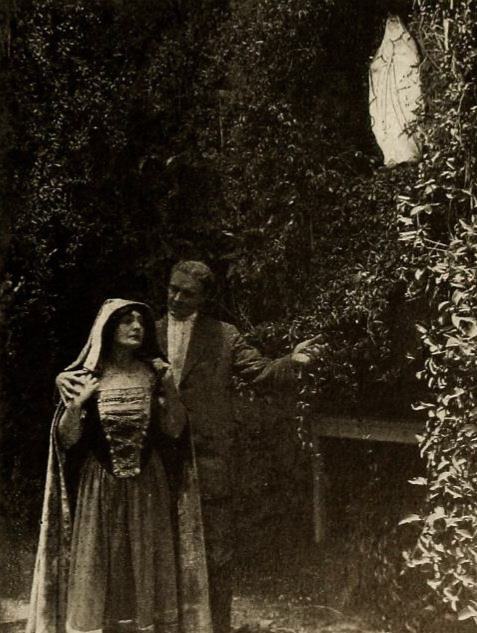
Weaknesses? A modern eye might scoff at the speed with which geopolitical crises evaporate after a single act of derring-do. Yet historical context tempers cynicism: in August 1914, Europe’s capitals genuinely clung to the fantasy that eleventh-hour telegrams could still avert the guns. The film is a time-capsule from an era when audiences still believed a single honest bureaucrat could outmaneuver the war machine.
As for the filmmakers, Victor Fleming would go on to helm Gone with the Wind and The Wizard of Oz, but here we glimpse the journeyman learning that spectacle need not sacrifice intimacy. Johnston’s scenario, though verbose in its intertitles, crackles with proto-noir fatalism. One wishes he had lived to adapt Eric Ambler in the thirties.
Bottom line: The Envoy Extraordinary is not merely a quaint artifact; it is a celluloid gauntlet thrown at the feet of cynicism. In 38 brisk minutes, it argues that intelligence, pluck, and moral clarity can still reroute the freight-train of history. A century on, with louder cannons and faster lies, that fantasy feels both antique and urgent. Stream it if you can find it; if not, lobby your local archive to strike a print. Some messages deserve to arrive, however belatedly, intact.
Tech specs for the curious: 38 minutes at 18 fps, aspect ratio 1.33:1, restored from a Desmet color-tinted print. New score pairs viola d’amore with brushed snare, underscoring the tension between courtly manners and savage intent. Released stateside by Mutual Film, April 27, 1914—barely three months before the lamps went out across Europe.
If you emerge from the experience craving more silents that marry espionage with ethical cliffhangers, chase down The Club of the Black Mask or the Aussie outback intrigue of A Tale of the Australian Bush. Both testify that long before Bond ordered his first martini, cinema had already licensed the gentleman-spy to save the world with nothing but nerve and a torn-up treaty.
IMDb 6.4
1934
Community
Log in to comment.