DbcultAccessing Vault...
Cult Review
Senior Film Conservator
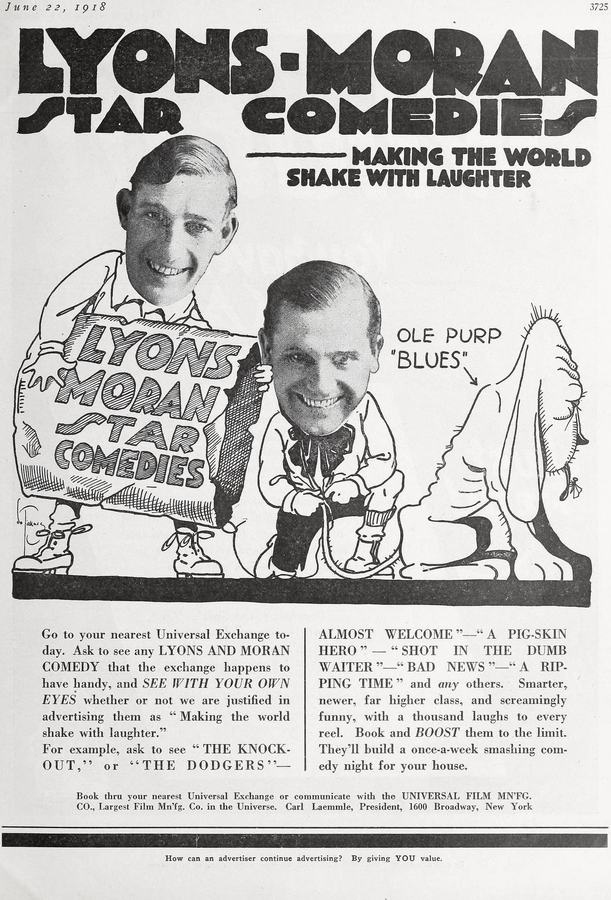
When the silent era birthed a plethora of slapstick spectacles, The Knockout emerged as a peculiar study in meta‑theatricality. Its premise—an over‑muscled champion, Nifty Ned, who relies on a covert accomplice, Happy Harry, to secure victories—functions as both a literal and figurative commentary on the artifice of sport. The film, penned by Leslie T. Peacocke and headlined by Lee Moran, Eddie Lyons, and Edith Roberts, refuses to merely present a series of pratfalls; instead, it orchestrates a layered choreography that invites the audience to contemplate the blurred line between performance and deception.
\n\nThe arena, rendered in stark chiaroscuro, is more than a backdrop; it is an active participant. The black‑to‑white contrast accentuates the silhouettes of the combatants, while the painted scenery—intended to evoke a bustling circus tent—serves as a trapdoor for the narrative’s twist. The cinematography, though constrained by the technological limitations of 1925, cleverly exploits deep focus to keep both the ring and the hidden periphery in view, allowing the audience to witness Harry’s clandestine club‑wielding from the very moment it occurs.
\n\nLee Moran’s Nifty Ned is a study in paradoxical bravado. His physique, exaggerated yet grounded, conveys a silent confidence that masks an underlying reliance on subterfuge. Eddie Lyons, as Happy Harry, embodies the archetypal silent‑film sidekick: diminutive, wiry, and perpetually clutching a wooden club that becomes an extension of his mischievous will. Their partnership is reminiscent of the comedic duos in Jumbles and Jokers, yet the stakes here feel more existential—each knockdown is a calculated betrayal of sport’s honor.
\n\nEdith Roberts, though given limited screen time, injects a fleeting humanity into the narrative. Her brief interludes—glimpses of a love interest questioning Ned’s integrity—serve as an ethical counterpoint, reminding viewers that the spectacle’s moral compass is skewed. The supporting cast of challengers, each more flamboyant than the last, functions as a rotating gallery of victims, their exaggerated reactions amplifying the film’s comic rhythm while simultaneously underscoring the perverse satisfaction derived from orchestrated defeat.
\n\nThe film’s comedic engine is powered by precise timing. The moment Ned is thrust against the scenery, Harry’s club swings with a kinetic inevitability that mirrors the classic slapstick of Buster Keaton’s The General. The audience, aware of the backstage machination, anticipates the impact, creating a tension that resolves in a burst of laughter when the opponent’s head snaps back like a marionette’s puppet.
\n\nThe climax—Ned himself being forced into the backdrop—reverses the established formula. The camera lingers on Ned’s bewildered expression as he collides with the painted wall, his momentum propelling him into the very space that previously protected him. Harry, operating on reflex rather than sight, delivers a club‑blow that lands on the wrong combatant. The resulting chaos, a cascade of overturned props and stunned faces, culminates in a meta‑commentary: the very mechanism that guaranteed victory becomes its downfall.
\n\nWhile The Knockout stands alone in its theatrical subtext, it shares DNA with other period pieces that interrogate the nature of performance. Winner Takes All also explores the commodification of sport, albeit through a more earnest lens, focusing on the personal toll of ambition rather than the duplicitous spectacle. Meanwhile, Unjustly Accused employs courtroom farce to critique societal hypocrisy, a thematic cousin to the ring’s staged injustice.
\n\nThe set design, though modest, is meticulously constructed to facilitate the film’s central gag. The backdrop’s faux‑brick pattern and exaggerated columns create depth, allowing the camera to capture both the ring’s action and the hidden side‑stage in a single frame. Intertitles, rendered in a bold sans‑serif typeface, punctuate the visual comedy with succinct, witty commentary—each line a punchline in its own right.
\n\nOriginal scores for silent screenings varied, but contemporary restorations often pair the film with a ragtime piano accompaniment that mirrors the frenetic energy of the on‑screen chaos. The syncopated rhythm accentuates Harry’s club swings, while softer melodic passages underscore Ned’s fleeting moments of introspection, albeit brief.
\n\nBeyond its immediate comedic value, The Knockout offers a prescient critique of modern spectacle. In an age where reality television and staged athletic events blur authenticity, the film’s depiction of engineered triumph resonates profoundly. The notion that victory can be manufactured—by hidden hands, backstage rigging, or digital manipulation—finds a silent‑film ancestor in Harry’s club.
\n\nMoreover, the film’s subversive ending prefigures the narrative twists popularized in later cinema, such as the reversal in The Life and Death of King Richard III, where the protagonist’s hubris precipitates downfall. This structural inversion underscores the timeless appeal of poetic justice.
\n\nLee Moran delivers a performance that balances brute strength with a sly awareness of the audience’s gaze. His exaggerated gestures, from the raised fist to the exaggerated stumble, convey emotion without utterance. Eddie Lyons, as the conspiratorial Harry, employs a kinetic physicality—his club swings are choreographed with the precision of a vaudeville routine, each arc timed to maximize visual impact.
\n\nDirector Leslie T. Peacocke’s vision is evident in the film’s pacing. He allows the comedy to breathe, interspersing rapid-fire gags with slower, tension‑building moments that culminate in the climactic reversal. The decision to forgo a conventional hero’s journey in favor of a cyclical pattern—victory, deception, exposure—demonstrates a daring narrative confidence rarely seen in early cinema.
\n\nContemporary reviews from 1925 praised the film’s inventive premise, noting its “refreshing departure from the usual slapstick tropes.” Modern audiences, however, may find the repetitive nature of the knock‑out gag less novel, yet the film’s underlying commentary retains relevance. Film scholars cite The Knockout as an early example of meta‑cinema, a precursor to works that self‑reflexively examine their own artifice.
\n\nIn sum, The Knockout is a masterclass in economical storytelling. Its 20‑minute runtime (typical for the period) packs a punch—pun intended—through meticulous set design, razor‑sharp physical comedy, and a narrative twist that challenges the viewer’s expectations. For aficionados of silent cinema, it offers a rich tapestry of visual humor and thematic depth; for newcomers, it serves as an accessible entry point into the era’s inventive spirit.
\n\nIf you appreciate the interplay of deception and spectacle, or simply enjoy a well‑executed pratfall, this film deserves a spot on your watchlist. Dive into the shadows behind the ring, and discover how a simple club can rewrite the rules of victory.
\n
IMDb 7.1
1932
Community
Log in to comment.