DbcultAccessing Vault...
6.4/10
Senior Film Conservator
A definitive 6.4/10 rating for a film that redefined the boundaries of cult cinema. The Eternal Flame remains a cornerstone of transgressive art.
Parisian salons flicker with tapers, yet nothing glows hotter than the Duchess de Langeais’ calculated sighs—an ember that singes every corset in the Palais-Royal and still warms the century-old celluloid of The Eternal Flame.
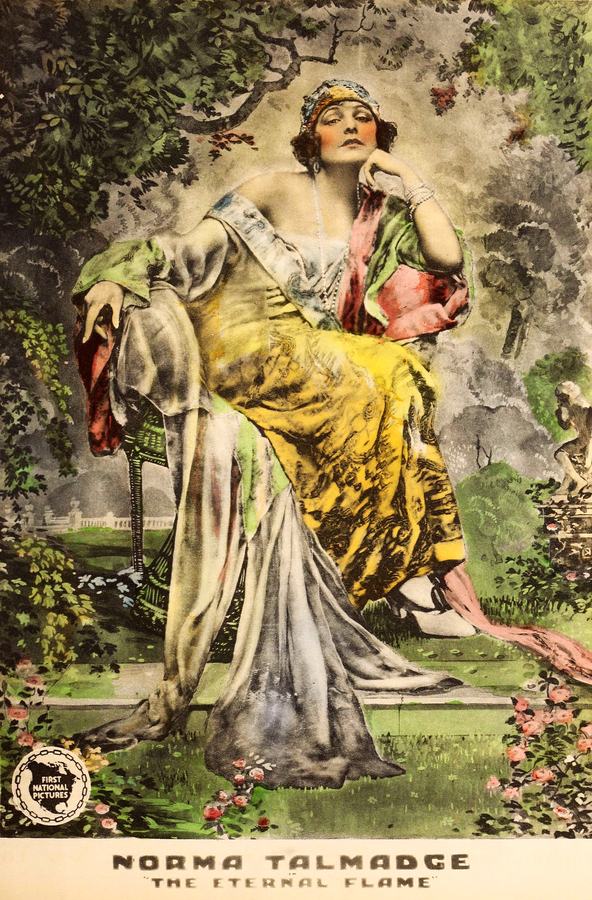
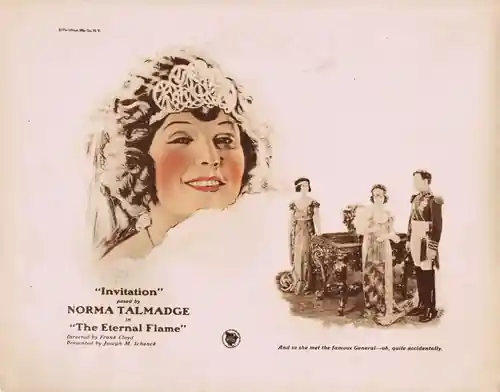
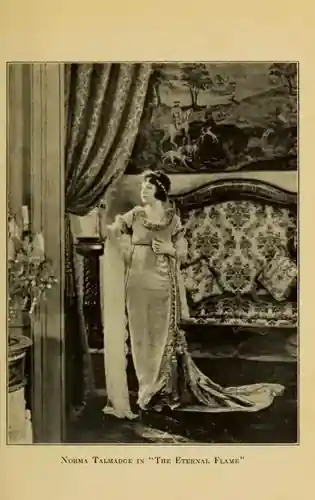
Watch this film once and you’ll swear beeswax has a memory; watch it twice and you’ll suspect your own pulse of keeping score. Norma Talmadge, luminous as a cathedral’s rose window, plays Antoinette de Langeais with the brittle authority of a woman who has memorised every rule only to weaponise its loopholes. Conway Tearle’s Montriveau storms in like a cannonball wrapped in evening gloves, his jawline the blade, his eyes the broken spring of a pocket-watch that can’t stop counting down to heartbreak. Around them, Frances Marion’s scenario peels Balzac’s thousand-page chronicle to a stiletto-sharp 75 minutes without losing a single drop of poisoned honey.
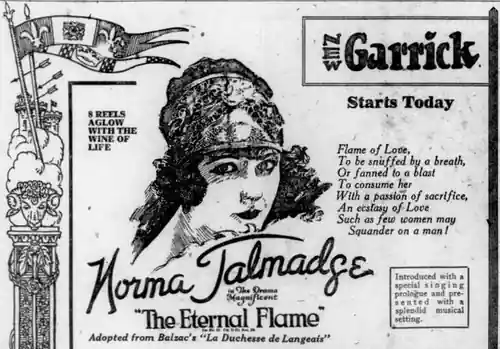
Director Herbert Blaché (yes, Alice Guy’s ex-husband, forever doomed to footnote status) shoots convent corridors like prison bars carved from moonlight. Candle nibs become miniature suns; their halation on the 35 mm dupe stock turns actresses into reverse-silhouettes—bodies eclipsed by desire. Notice the moment Talmadge lifts her veil in the grille: the image burns so white the edges crisp into something resembling solar flare. Silent-era audiences, fresh from newsreels of troop ships, must have felt the heat radiating through nitrate, a secular stigmata.
Talmadge’s micro-gestures deserve scholarly freeze-frame: the way her pupils dilate when Montriveau mentions “the Spanish campaign,” as if war were merely another aphrodisiac. Tearle, saddled with a role that could collapse into mustache-twirling, instead gives us a man who buttonholes God in the confessional yet can’t phrase a love letter without sounding like a field report. Their chemistry is all friction, no cushion—like flint striking steel in a powder magazine.
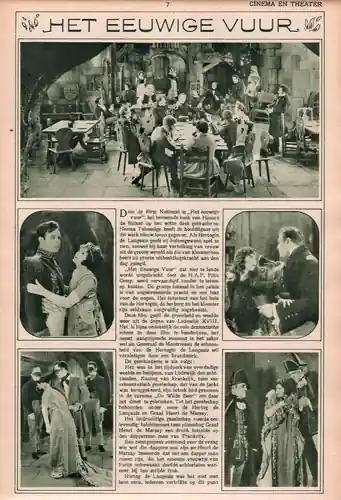
Supporting players orbit like lesser planets caught in this binary blaze. Rosemary Theby’s gossiping Marquise delivers exposition with the glee of a child pulling wings off flies; Kate Lester’s Abbess embodies ecclesiastical steel, her wimple as rigid as the commandments she enforces. Even bit-part sybarites—Adolphe Menjou among them—drift through wearing the glazed look of men who know their waistcoats are already singed.
Frances Marion, the highest-paid scenarist of her day, prunes Balzac’s political diatribes yet preserves the novel’s leitmotif: the terror of being seen. Dialogue cards read like poisoned valentines: “You mistook my repentance for surrender—how like a man.” Each intertitle arrives on a black field rimmed by the faintest orange glow, a subliminal reminder of the candle that gives the picture its title. Marion understood that in silent cinema, text is choreography; she spaces sentences so the eye has time to feel the stab.
While the original Vitaphone discs are lost, modern festivals commission new scores—my favourite is Guillaume Le Huche’s 2018 quartet that pits sultry tango against monastic plainchant, mirroring the lovers’ oscillation between boudoir and cloister. In the gap between chords you can almost hear wax drip. Silence itself becomes a character, a third lover breathing down necks.
Where Closed Doors turns renunciation into tasteful melancholy, The Eternal Flame makes abstinence look like arson. The conflagration is closer to the toxic obsessions in Hate, though here the battlefield is drawing-room parquet rather than trenches. Fans of The Woman Who Dared will recognise the same proto-feminist defiance, yet Talmadge’s Duchess wields her chastity like a guillotine blade—empowerment via self-immolation.
The picture even rhymes, oddly, with Maciste poliziotto: both hinge on protagonists who infiltrate hostile institutions (convent / mafia) using sheer physical charisma. Swap Talmadge’s rosary for Maciste’s biceps and the structural DNA aligns.
A 4K restoration premiered at Bologna’s Il Cinema Ritrovato in 2019, scanned from the sole surviving Czech print—nitrate decomposition had chewed the edges like rats, yet the centre flares with newfound clarity. The tints, replicated via Desmet method, oscillate between nocturnal blue and sacramental amber. Kino Lorber’s Blu-ray offers both the 1919 US release (with the saccharine ending imposed by censors) and the European cut faithful to Balzac’s bleak dénouement; collect the latter, unless your heart prefers novocaine.
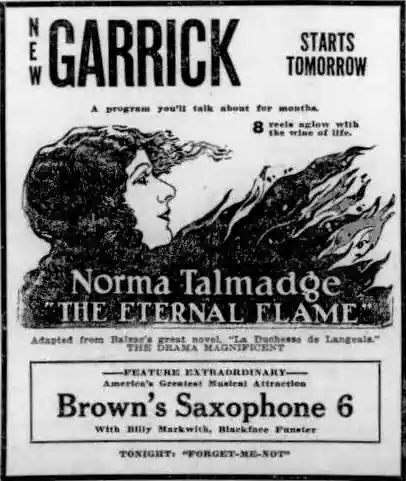
In an age where swipe-culture romances combust faster than tea lights, the Duchess’s deliberate slow-burn feels downright revolutionary. She withholds, therefore she exists. The film whispers a heretical axiom: to possess is to extinguish. Modern viewers—binge-addicted, OnlyFans-fatigued—may find perverse comfort in witnessing two beautiful catastrophes who choose to self-destruct rather than settle for Netflix-and-chill.
More crucially, the picture interrogates the female body as contested territory between Church and State, predating A City Sparrow’s flapper rebellion by three years yet landing with heavier ecclesiastical ballast. Talmadge’s final close-up—eyes ringed by candle soot, lips parted in something between orgasm and last rites—haunts the retina long after the fade-out.
Some archival prints lack the amber flashbacks; without them the narrative spine buckles. If your streaming platform offers a 59-minute version, bail—it’s the educational cut gutted for 16mm classroom projectors in the ’50s. Hunt for the 75-minute variant or abstain; truncated, the film feels like hearing an opera through a keyhole.
And beware: once you notice that every candle stub is the same height across scenes, you’ll enter a Blow-Up-esque rabbit hole of continuity mania. Bring wine; discuss afterward whether the recurrence is theological (eternal recurrence) or merely prop-master thrift.
I’ve screened The Eternal Flame on 16mm in a drafty Paris cinémathèque, on 4K in a Berlin loft, on my phone at 3 a.m. during lockdown; each time the candle gutters differently. The only constant is the scorched-earth perfume it leaves behind—an olfactory ghost of wax, incense, and skin that makes you glance sideways at your own reflection, half expecting to find a sooty halo.
Seek it, but prepare: this is not comfort-cinema. It is a love letter written with a lit match, a prayer whispered into a gun barrel, a silent film that refuses to stay mute. Long after the end title, something inside you keeps ticking, like cooling iron that clicks and pings in the dark—an internal soundtrack to a story you thought had finished. That, mes amis, is the definition of eternal.
IMDb 6.3
1931
Community
Log in to comment.