DbcultAccessing Vault...
6.4/10
Senior Film Conservator
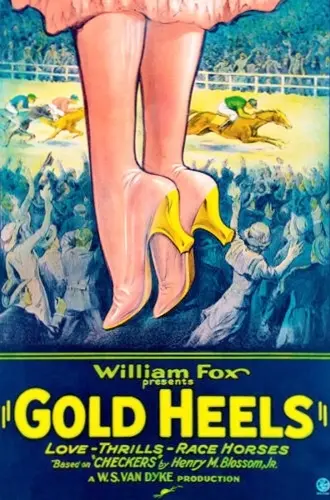
A definitive 6.4/10 rating for a film that redefined the boundaries of cult cinema. Gold Heels remains a cornerstone of transgressive art.
The silver screen of the early 20th century, though silent, spoke volumes through its powerful narratives and expressive performances. Among the myriad of films that graced this nascent art form, Gold Heels emerges as a compelling example of a story steeped in the universal themes of chance, redemption, and the unwavering human spirit. Directed by John Stone, this 1924 feature, penned by Henry Martyn Blossom and Frederick Chapin, with additional contributions from Stone himself, weaves a tapestry of hardship, hope, and ultimate triumph against a backdrop of both the exhilarating racetrack and the quaint charm of small-town America. It’s a narrative that, despite its vintage, resonates with an authenticity that continues to captivate, drawing viewers into a world where fortunes can turn on a dime, and true character is forged in the crucible of adversity.
At its core, Gold Heels is a testament to the enduring appeal of the underdog narrative, a cinematic archetype that has captivated audiences across generations. Our protagonist, Boots, portrayed with a compelling blend of weariness and resolve by Robert Agnew, begins his journey in the shadow of misfortune. He and his loyal companion, Push (Buck Black), are down to their last vestiges of hope, their pockets emptied by the capricious whims of the racetrack. This initial portrait of destitution immediately establishes a sympathetic connection with the audience, rooting Boots' subsequent struggles in a relatable human experience. His predicament is not merely financial; it's an existential crisis, a feeling of being perpetually out of sync with fortune's favour, a sentiment many have felt when life's dice seem perpetually loaded against them. The film expertly sets this stage, painting a vivid picture of the precarious existence of those who live by the promise of the next race, the next win, the next stroke of luck.
The narrative truly ignites with a moment of serendipitous heroism. Amidst the swirling chaos and intoxicating promise of the roulette table, Boots intervenes to save a conspicuously wealthy, yet perilously inebriated young man named Kendall (Carl Stockdale) from being relieved of his considerable winnings by opportunistic predators. This act of unexpected chivalry, born more of an inherent moral compass than a calculated gamble, becomes the fulcrum upon which Boots' destiny pivots. It's a classic cinematic trope, yet rendered with a refreshing sincerity that underscores the protagonist's intrinsic goodness despite his outward circumstances. This chance encounter doesn't just save Kendall’s money; it offers Boots an unexpected egress from his cycle of bad luck. Driving Kendall back to his idyllic, small hometown, Boots is introduced to a world far removed from the gritty, high-stakes environment of the track. Here, he encounters Pert Barlow (Winifred Landis), a character whose vivacity and genuine spirit immediately captivate him.
Pert represents a different kind of prize, one far more enduring than any racing purse. Her presence acts as a powerful magnet, drawing Boots away from his peripatetic existence and grounding him in a sense of community and stability he hadn't known. His decision to take a job in her father's store, a stark contrast to his previous life, speaks volumes about the depth of his burgeoning affection and his yearning for a life beyond the gamble. This transition is deftly handled, showcasing the transformative power of human connection. It's reminiscent of narratives like The Rescue, where a protagonist's journey is irrevocably altered by a compelling new environment and the people within it, leading to a re-evaluation of life's true priorities. Boots' willingness to shed his old skin for the chance at a meaningful relationship is a poignant illustration of love's potent influence.
Within the confines of Pert’s father's property, Boots discovers the titular Gold Heels, a broken-down racehorse, a shadow of its former glory. This equine character is not merely a plot device; it is a potent symbol of lost potential, neglected greatness, and the possibility of resurrection. Boots sees in Gold Heels a reflection of his own past struggles and a mirror to his aspirations for a new future. The act of buying and training Gold Heels becomes a deeply personal quest, a metaphor for Boots' own journey of self-improvement and redemption. It’s a testament to the idea that with dedication and belief, even the most forlorn can find their stride again. The bond forged between Boots and Gold Heels is depicted with a quiet intensity, conveying the unspoken understanding between man and beast, a common thread in many enduring cinematic tales, much like the profound connection seen in films such as The Bugle Call, where animals often serve as catalysts for human growth and understanding.
The narrative cleverly intertwines Boots' personal ambitions with the broader concerns of the community. A tragic incident at the local orphanage, leading to the death of a child due to the dilapidated conditions, galvanizes Pert into action. Her initiative to raise funds for a new building highlights her compassionate nature and leadership, further cementing her appeal as a formidable and admirable character. This subplot introduces a layer of social commentary, underscoring the film's awareness of communal responsibility and the stark realities faced by the less fortunate. It raises the stakes beyond individual desires, imbuing the story with a collective purpose. The subsequent theft of these hard-earned funds, entrusted to Old Barlow (Lucien Littlefield), is a devastating blow, not just to the orphanage project but to the very fabric of trust within the small town.
The immediate accusation leveled against Boots, given his checkered past and outsider status, feels tragically inevitable. He becomes the convenient scapegoat, a victim of circumstance and prejudice. His unjust incarceration is a moment of profound despair, threatening to unravel all the progress he has made towards a new life with Pert. This segment of the film masterfully builds tension, placing the protagonist in a seemingly insurmountable predicament. However, it is precisely in these moments of darkest trial that the strength of loyalty and friendship shines brightest. Boots’ pals, demonstrating unwavering faith and courage, orchestrate a daring escape, a thrilling sequence that injects a much-needed surge of action and defiance into the narrative. This act of solidarity underscores the film's belief in the power of human connection to overcome systemic injustice, a theme explored with similar zeal in stories of wrongful accusation and eventual vindication, such as parts of The Golden Wall or even the dramatic twists of Trimmed.
The climax of Gold Heels is a masterclass in silent film storytelling, culminating in a thrilling race that serves as both a literal and metaphorical sprint towards justice. Boots, having escaped jail, loads Gold Heels into a horse-trailer and races to the track, a desperate gamble against time and fate. The tension is palpable as the audience watches, breath held, for the outcome. The race itself is not merely about winning a prize; it is about Boots reclaiming his name, his dignity, and his future. As Gold Heels thunders towards victory, the truth about the stolen orphanage funds dramatically unravels. Kendall, the seemingly innocent young man Boots had once saved, is exposed as the true thief, a twist that retroactively recontextualizes their initial encounter and adds a layer of bitter irony to Boots' heroism. This revelation is a powerful moment of catharsis, not just for Boots, but for the audience who has witnessed his unjust suffering.
The performances, while constrained by the conventions of silent cinema, are remarkably expressive. Robert Agnew’s portrayal of Boots conveys a compelling arc from world-weariness to hopeful determination, and ultimately, triumphant vindication. His physical acting, essential for silent film, communicates deep emotion without uttering a single word. Winifred Landis imbues Pert Barlow with a spirited independence and compassionate strength, making her a formidable and admirable romantic lead. Her agency in raising funds for the orphanage is particularly noteworthy, positioning her as more than just a love interest, but a proactive force for good within the community. Carl Stockdale’s Kendall, initially presented as a victim, gradually reveals layers of deceit, making his eventual unmasking all the more impactful. The supporting cast, including Lucien Littlefield as Old Barlow and Buck Black as Push, provide solid grounding for the central drama, their reactions and loyalty adding depth to the narrative.
Thematically, Gold Heels is rich and resonant. It explores the precarious nature of luck versus the steadfastness of hard work and integrity. Boots' journey exemplifies the idea that while external circumstances can be cruel, one's inner character and dedication can ultimately prevail. The film also delves into the concept of justice, both its absence and its eventual, triumphant restoration. It champions the underdog, celebrating the resilience of those who refuse to be defined by their past misfortunes. Love, too, is a central pillar, providing Boots with the motivation to change his life and endure his trials. The small-town setting, with its tight-knit community and inherent gossip, serves as a microcosm for societal judgment and the struggle for acceptance, a recurring motif in films that explore rural life and its challenges, perhaps echoing the community dynamics seen in Juan José or even A Lady of Quality with its social pressures.
From a technical perspective, Gold Heels showcases the burgeoning sophistication of silent filmmaking. The direction by John Stone effectively builds suspense and emotion, utilizing close-ups and dynamic editing, particularly during the racetrack sequences, to create an immersive experience. The cinematography, while typical of the era, captures the stark contrasts between the grimy racetrack and the idyllic small town, enhancing the narrative's emotional landscape. The writers, Henry Martyn Blossom, Frederick Chapin, and John Stone, crafted a screenplay that, despite the lack of dialogue, maintains a clear, engaging plot with well-defined character arcs and satisfying dramatic payoffs. The pacing is deliberate, allowing the audience to fully invest in Boots' struggles and triumphs, a characteristic often shared by the more thoughtful narratives of the period, distinguishing it from purely action-driven fare like Cameo Kirby, which focused more on swashbuckling adventure.
The film’s resolution, with Boots reconciled with Pert and receiving Old Barlow's blessing for their marriage, offers a deeply satisfying conclusion. It is not merely a happy ending, but a earned one, a testament to the protagonist's perseverance and the power of truth. The triumph of Gold Heels on the track mirrors Boots' triumph over adversity, bringing both literal and metaphorical victory. This dual resolution, where personal happiness and justice intertwine, leaves the audience with a profound sense of closure and hope. It reinforces the timeless message that integrity, even when tested by the most challenging circumstances, will ultimately lead to a deserved reward. In an era often overlooked by modern cinephiles, Gold Heels serves as a potent reminder of the silent film's capacity for complex storytelling and emotional depth, proving that a compelling narrative, well-executed, transcends the limitations of its medium.
In conclusion, Gold Heels is more than just a period piece; it is a timeless narrative about the human condition, about falling and rising, about finding love and fighting for justice. Its themes are universal, its characters relatable, and its emotional impact enduring. For those willing to delve into the rich history of cinema, this film offers a rewarding experience, a glimpse into an era where stories were told with grand gestures and heartfelt expressions, proving that even without sound, a film can speak volumes to the heart and soul.
IMDb —
1934
Community
Log in to comment.