DbcultAccessing Vault...
4.2/10
Senior Film Conservator
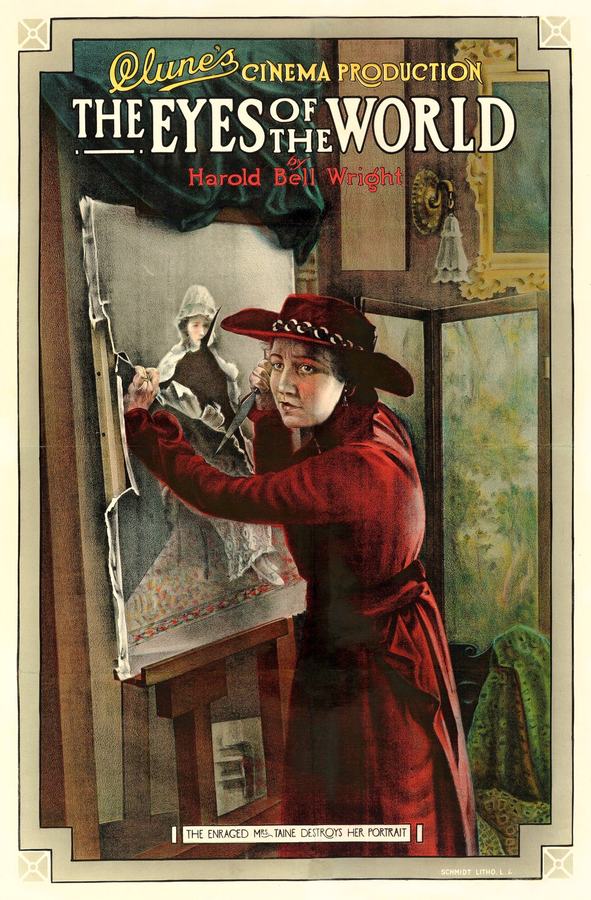
A definitive 4.2/10 rating for a film that redefined the boundaries of cult cinema. The Eyes of the World remains a cornerstone of transgressive art.
Harold Bell Wright’s The Eyes of the World arrives like a tarnished nickelodeon crown: heavy with self-righteous gemstones, yet so cracked you can see straight through to the hypocrisy glittering inside. Shot in 1916 when America was still deciding whether cinema was sewer or cathedral, this seven-reel sermon masquerading as romance flings every conceivable Victorian shocker—acid in the face, bastard heirs, mail-coach banditry—into a single cauldron and then dares you to call the residue art.
From its first iris-in on Conrad LaGrange’s moonlit proposal—rebuffed by Mary Gibson in favor of the feckless Aaron King—Wright telegraphs his thesis: desire equals debt, and every yes cashed in this world will be paid for in blood or bankruptcy. The film’s prologue is a feverish overture of refusals: Mary spurns LaGrange; Myra Willard spurns the knowledge that her lover Rutledge already keeps a wife; Mrs. Rutledge spurns sanity itself, hurling vitriol like a Greek Fury before collapsing in suicidal remorse. These opening reels feel less like narrative than like stained-glass panels dropped from a great height—each shard catching a different hue of moral outrage.
Jump twenty-five years and the story inhales, exhaling a locomotive of fresh sin: Aaron King, Jr., diploma from Paris tucked inside a threadbare valise, shares a Pullman with the aging Edward Taine and his orchidaceous wife Gertrude, whose stepdaughter Louise quivers like collateral damage in a marriage that is already embalmed. Enter James Rutledge, Jr.—all patrician swagger and hidden ledger lines—ready to inherit both the father’s fortune and the father’s unspoken guilt. Wright crosscuts their arrival with shots of the Sierras, those granite bookkeepers where every ledger will finally be balanced. The mountains loom, impassive, as though the landscape itself were waiting to audit these city folk.
Portrait painting becomes the film’s central moral technology. King’s commission to immortalize Gertrude Taine on canvas is no frivolous gig but a sacrament of exposure: each brushstroke lifts another veil from the sitter’s appetite. Wright literalizes the metaphor by letting us glimpse the canvas before its subject does; we watch pigment accrete into a sneer Gertrude herself cannot yet feel. When King refuses to release the finished work—declaring it “unworthy”—he is not indulging artistic vanity but enacting judgment day in oils. Meanwhile the parallel portrait of Sybil Andres, all dappled Sierra light and violin-curved wrists, serves as counter-gospel: innocence framed not as naïveté but as earned resistance to the world’s gaze.
The middle reels simmer with salon intrigue. Mrs. Taine’s reception—an amber-lit cavern of lace and predation—collapses when her elderly husband clutches his chest mid-toast, keeling over like a toppled bust of Cicero. Wright’s camera does not flinch; it lingers on the champagne flute still fizzing beside the corpse, then tilts up to Gertrude’s face where horror and relief wrestle for dominance. In that tilt you can feel American cinema discovering the close-up as moral stethoscope.
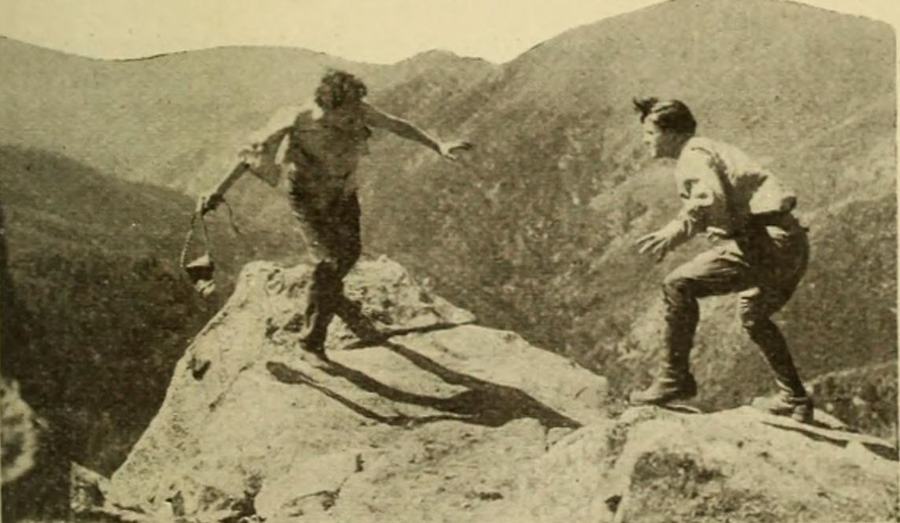
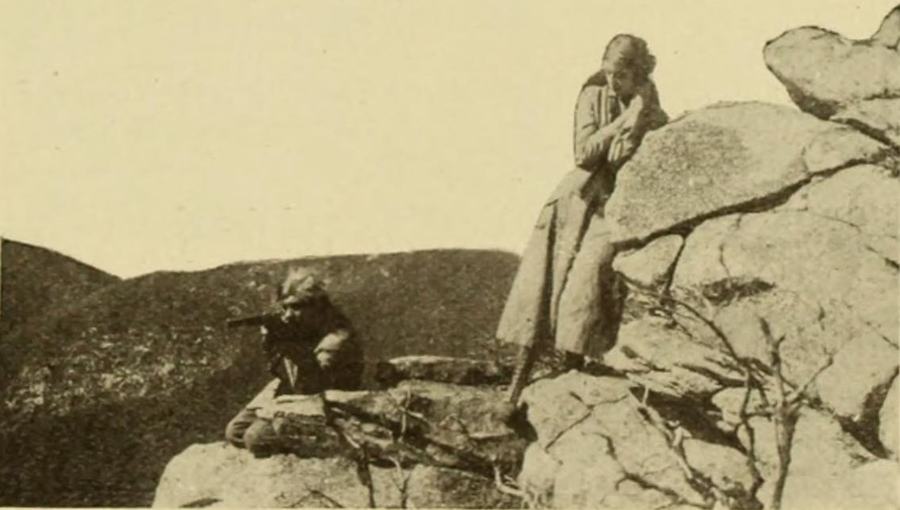
What follows is a kidnapping plot so baroque it risks toppling into Durand-of-the-Bad-Lands absurdity: Rutledge blackmails the escaped convict John Marston (once Willard) into abducting Sybil, hoping to salt the earth between her and King. But even here Wright cannot resist moral algebra. Marston, hauling the girl through sugar-pine forests, recognizes in her terror his own sister’s ancient wound; the same blood-guilt that drove him to hold up a stagecoach now drives him to protect his captive from Rutledge’s final assault. When he shoots Rutledge at Granite Peak—sending the aristocrat’s body pin-wheeling into a cataract—he is not merely rescuing Sybil but rewriting the myth of the American West: outlaw as archangel.

Back in Fairlands, the film’s true revelation detonates quietly. LaGrange coaxes Myra into telling her story in front of Gertrude Taine, and as the scarred woman speaks, the camera holds on Gertrude’s bare shoulder where a crescent scar—legacy of childhood scald—matches Myra’s own acid brand. Recognition passes between them like electric current: mother and daughter severed by shame, now conjoined by the very mark that once promised permanent exile. Wright withholds any embrace; instead Gertrude retreats into the studio shadows while Myra stands mute, forgiveness flickering across her ruined cheek like heat lightning. It is the most devastating moment in silent cinema you have never seen, precisely because it refuses the catharsis melodrama has taught us to expect.
Technically, the film straddles two worlds. Interiors—shot in the Chicago studio of Selig Polyscope—glow with the gaslit amber of early Griffith, while exteriors shot in the Sierra foothills anticipate the seismic realism that would later define Evidence and The Darkening Trail. Cinematographer Arthur Tavares uses natural back-light to halo Sybil’s hair until she seems carved from quartz; conversely he lets Gertrude’s face recede into venetian-blind gloom, stripes of shadow scoring her like prison bars. The tinting—cyan for mountain dawn, sulfur-yellow for Taine’s ballroom—survives only in fragments at MoMA, yet even in monochrome stills you sense the chromatic rhetoric Wright intended.
Performances oscillate between the statuesque and the searing. Jane Novak, as the adult Sybil, carries her violin bow like a divining rod, every gesture calibrated to suggest music we cannot hear. Katherine Miller’s Myra, beneath layers of crepe and prosthetic scarring, lets her eyes do the heavy lifting—two pale lanterns still capable of tenderness even while the rest of her face appears cauterized. The standout, however, is Violet Reed’s Gertrude Taine: she plays predatory hunger so softly that you almost root for her until the moment she tries to weaponize rumor against Sybil. Watch her in the studio scene where she first sees King’s unvarnished portrait: pupils dilate, breath catches, and for an instant the mask of coquetry slips to reveal something feral, almost canine.
Wright’s screenplay, adapted from his own bestseller, ladles on the moral homilies (“The world sees only the glitter of the coin, never the corrosion on its edge”), yet the visuals undercut the piety at every turn. When King completes his Sierra masterpiece—an allegory of Truth unveiling a naked child before a mob of hooded hypocrites—the painting is so frankly erotic that contemporary reviewers dubbed it “pagan.” The film thus anticipates the tension that would later fracture Schwert und Herd and The Man Who Couldn’t Beat God: how to preach without becoming the very voyeur you condemn.
Restoration status remains scandalous. Of the original seven reels, only four survive in 4K scans; the climactic duel on Granite Peak exists solely in a 28-minute 16-mm condensation struck for rural churches in 1921. The missing footage—rumored to contain a brief nude study of Sybil used as artist’s reference—has become grail-like among archivists. Meanwhile the intertitles, retranslated back from Czech prints held in Prague, retain a Slavic stiffness (“O, mountaintop, swallow this evil man into thy stony bosom!”) that lends the surviving reel an alien, almost Das Geheimschloss atmosphere.
Yet even in its mutilated state, The Eyes of the World haunts because it stages the central American nightmare: that our past is never past, only repainted. Every character carries an original wound—acid, bullet, scar, bankruptcy—and believes art or land or money can varnish it over. Wright insists otherwise: the canvas will crack, the land will slide, the scar will bloom again like a nightshade flower. The only redemption lies in being seen, fully, by another pair of human eyes. When King finally clasps Sybil in the studio, the camera pulls back to reveal the unfinished allegory behind them: Truth’s veil still lifted, the mob still pointing. The couple do not block the painting; they stand within it, participants now rather than witnesses. The implication is unsettling: love does not exempt us from the world’s gaze—it merely gives us someone to face it with.
Compare it to contemporaneous melodramas—Fine Feathers with its tidy restitutions, or Nell Gwynne with its royal pardon—and Wright’s film feels almost modern in its refusal to balance the moral ledger. The villain dies, yes, but the hero’s greatest canvas is already promised to a Paris salon that will commodify it. The mother is reunited with her daughter, yet the reunion transpires off-screen, in whispers. The outlaw savior vanishes into snow, his redemption as fugitive as his crime. Everyone survives, but nobody is absolved.
Should you seek it out? If you crave the kinetic thrills of Pinocchio or the fizzy decadence of Champagneruset, stay away. But if you believe, as I do, that silent cinema’s deepest chills come from watching a culture argue with its own reflection, then beg, borrow, or torrent whatever fragments exist. Watch them at 2 a.m. with the windows open so the Sierra wind can slip through and rustle your curtains. Let the nitrate perfume—vinegar and lilacs—sting your nostrils. You will emerge blinking into dawn convinced that every scar you carry is merely primer coat, that somewhere a brush is waiting to finish the portrait you have spent your life avoiding.
In the end, The Eyes of the World is less a film than a dare: to look without flinching at the corrosion on the coin, to admit that the eyes watching us are often our own, and to discover—beneath layer after layer of varnish—the raw, unpainted self still trembling in the light.
IMDb 5.4
1933
Community
Log in to comment.