DbcultAccessing Vault...
Cult Review
Senior Film Conservator
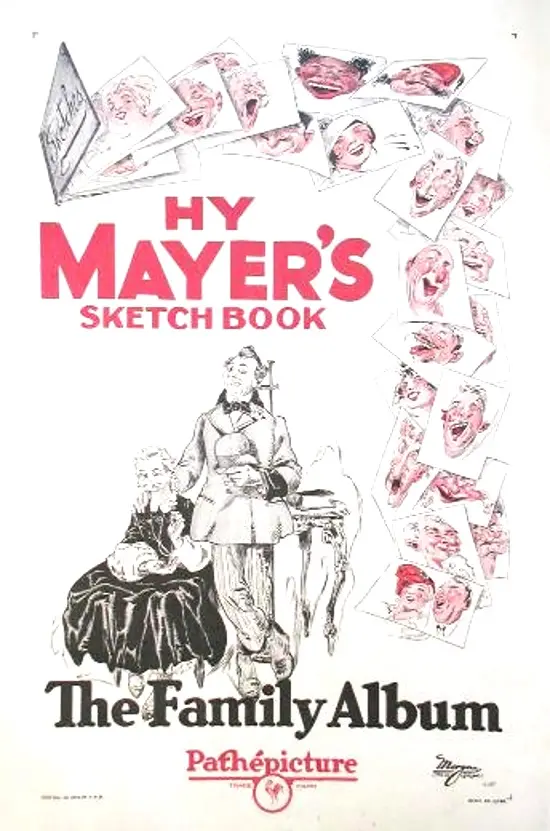
Is 'The Family Album' worth watching today? Short answer: yes, but with significant caveats. This is not a film for passive consumption; it demands engagement, patience, and a willingness to step into a deeply personal, often uncomfortably intimate, space.
It is absolutely for viewers who appreciate experimental cinema, solo performances, and profound meditations on identity and memory. It is decidedly NOT for those seeking traditional plot-driven narratives, escapism, or broad entertainment.
Henry 'Hy' Mayer's 'The Family Album' is an audacious undertaking, a cinematic anomaly where the lines between writer, performer, and subject blur into near non-existence. Mayer is the architect, the inhabitant, and the very landscape of this film, crafting a piece so intrinsically tied to his own being that it feels less like a production and more like an extension of his consciousness.
This isn’t merely a performance; it’s an unveiling. Mayer invites us into an almost sacred space, an inner sanctum of memory, regret, triumph, and the quiet accumulation of a life lived. The film’s premise, if one can even call it that, is disarmingly simple: Mayer, alone, sifting through the relics of his past, whether they be physical photographs, faded letters, or the more ephemeral fragments of recollection.
The sheer audacity of such a project instantly sets it apart from the conventional cinematic landscape. In an era dominated by ensemble casts and intricate plot mechanics, 'The Family Album' offers a stark, singular counterpoint. It’s a testament to the power of one voice, one perspective, to fill an entire canvas, provided that voice is compelling enough.
Hy Mayer's 'performance' in 'The Family Album' defies easy categorization. It is not acting in the traditional sense, where a character is donned and shed. Instead, it is an act of radical vulnerability, an unvarnished presentation of self that feels both courageous and, at times, almost voyeuristic for the audience. He doesn't merely portray emotion; he embodies it, allowing the raw, unfiltered currents of his interior world to flow directly onto the screen.
Consider the sequence where Mayer, almost imperceptibly, traces the outline of a forgotten face in an old photograph, his hand shaking slightly. It's a moment of profound, wordless grief and connection, a silent dialogue between past and present that speaks volumes more than any expository dialogue ever could. This is not a practiced gesture; it feels organic, a genuine human reaction caught in amber.
His voice, often a gentle murmur, occasionally rises to a surprising crescendo of frustration or joy, particularly when recounting a perceived injustice from his youth, echoing the raw emotion seen in some early independent dramas like Life. These shifts are not theatrical; they feel like the natural ebb and flow of a mind grappling with its own history.
Mayer isn't just performing; he's undergoing a public therapy session, and we, the audience, are the silent, complicit analysts. This unconventional approach to character (or lack thereof) is both the film's greatest strength and its most alienating factor. It demands an audience willing to sit with discomfort, to witness raw processing rather than polished presentation.
Given the film's singular focus, the technical craft becomes less about spectacle and more about intimacy. The cinematography, presumably handled with an austere precision, focuses relentlessly on Mayer – his face, his hands, the subtle shifts in his posture. Close-ups are not just prevalent; they are the language of the film, allowing every wrinkle, every flicker of an eye, to tell a story.
The choice to use only natural light in certain segments, casting long, melancholic shadows across his face, speaks volumes about the passage of time and the weight of memory, a technique far removed from the polished grandeur of something like The Easiest Way. It creates an atmosphere of stark realism, enhancing the feeling that we are peering into a private world, unadorned and unglamorous.
Sound design, too, plays a crucial, often understated, role. Beyond Mayer's voice, the film likely employs long stretches of silence, punctuated by ambient sounds – the rustle of old paper, the distant hum of life outside, perhaps even the faint crackle of an old recording. These auditory elements don't just fill space; they create it, building an immersive environment that mirrors the interior landscape Mayer is exploring. The deliberate absence of a conventional score forces the audience to lean in, to listen more intently, to find the rhythm in Mayer’s own breathing and the quiet turning of pages.
The pacing of 'The Family Album' is deliberately unhurried, almost meditative. It eschews the rapid-fire editing and constant narrative progression of mainstream cinema, opting instead for a rhythm dictated by the ebb and flow of memory itself. Long takes allow moments to breathe, inviting the audience to linger on an expression, a gesture, or the texture of an old photograph. This slow burn can be challenging, but it’s essential to the film's purpose.
The film's most potent effect lies in its almost hypnotic pacing; long stretches of quiet contemplation broken by a sudden, sharp recollection, like a forgotten melody resurfacing. This mirrors the unpredictable nature of memory, how seemingly trivial details can trigger profound emotional responses. The tone oscillates between a profound melancholy, a nostalgic warmth, and moments of surprising, almost defiant, joy. It’s a complex emotional tapestry, woven with the threads of a lifetime.
This unconventional pacing makes 'The Family Album' a demanding watch, but also a uniquely rewarding one for those willing to surrender to its rhythm. It’s a film that asks for your full presence, not just your attention, much like an intimate conversation with an old friend where silences are as meaningful as words.
Perhaps the most striking aspect of 'The Family Album' is its complete disregard for traditional narrative structure. There is no rising action, no clear conflict, no conventional resolution. Instead, the film presents a mosaic of vignettes, a stream of consciousness guided by association rather than chronology. Mayer doesn’t tell a story; he unearths fragments of stories, allowing them to coalesce into a larger, albeit abstract, portrait of a life.
This approach is both liberating and disorienting. It frees the film from the constraints of plot mechanics, allowing for a more fluid and organic exploration of its themes. However, it also places a significant burden on the audience to construct meaning from disparate pieces, to connect the dots in a way that resonates with their own experiences of memory and family.
It’s less a film and more a living, breathing archive, a testament to the fact that every human life, no matter how seemingly mundane, contains an epic. This makes 'The Family Album' a conversation starter, a piece designed to provoke introspection long after the credits roll.
Yes, 'The Family Album' is absolutely worth watching today, but only if you approach it with the right mindset. This isn't your Friday night popcorn flick. It's an experience demanding patience and introspection.
It rewards viewers who are open to experimental forms of storytelling and appreciate raw, unadorned personal narratives. If you're looking for a challenging, deeply human exploration of memory, identity, and the weight of personal history, this film will resonate profoundly.
However, if you prefer fast-paced plots, clear character arcs, or lighthearted entertainment, 'The Family Album' will likely prove frustrating. Its deliberate pacing and lack of conventional narrative can be off-putting for some.
Ultimately, its value lies in its unique ability to provoke self-reflection. It works. But it’s flawed. It’s a niche film, but a powerful one within its niche.
'The Family Album' is not just a film; it is an experience, an invitation to witness a soul laid bare. Henry 'Hy' Mayer's singular vision, combining writing and performance into a seamless, deeply personal tapestry, is both a triumph of independent filmmaking and a test of audience patience. It will not be for everyone. Indeed, its very strength – its uncompromising intimacy and unconventional structure – will be its greatest barrier to widespread appeal. Yet, for those willing to meet it on its own terms, 'The Family Album' offers a profoundly moving and intellectually stimulating journey into the self, proving that the most compelling narratives often lie not in grand spectacles, but in the quiet, reflective corners of a single human life. It’s a cinematic meditation that lingers, prompting a re-evaluation of one’s own personal archives and the stories they hold.

IMDb —
1935
Community
Log in to comment.