DbcultAccessing Vault...
Cult Review
Senior Film Conservator
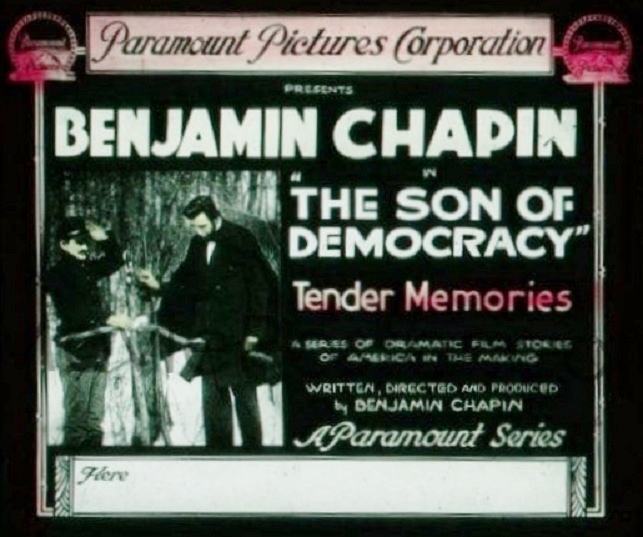
In the pantheon of early American cinema, few figures possessed the singular, almost obsessive dedication to a historical persona that Benjamin Chapin exhibited toward Abraham Lincoln. With Tender Memories (1918), Chapin eschews the grand political theater often found in contemporary works like The Battle of Ballots, opting instead for a psychological excavation of the man beneath the monument. This film is not merely a biographical sketch; it is a somber meditation on the anatomy of mourning and the desperate human need for ritualistic closure.
The structural ingenuity of Tender Memories lies in its framing device. By utilizing a soldier lying in an unmarked grave as the primary narrator, the film immediately establishes a dialogue between the individual casualty of war and the executive power responsible for the conflict. This spectral voice provides a haunting resonance that elevates the film above standard period dramas like The Fall of the Romanoffs. While the latter focuses on the crumbling of empires, Chapin focuses on the crumbling of the human spirit under the weight of unacknowledged death.
This soldier, a nameless proxy for the thousands lost in the carnage of the Civil War, demands an accounting of grief. Lincoln’s response is not a political defense, but a vulnerable regression into his own formative trauma. The transition from the muddy trenches of the present to the desolate woods of 1818 Indiana is handled with a poetic fluidity that was quite advanced for its era, rivaling the atmospheric density seen in Barnaby Rudge.
The heart of the film is the depiction of Nancy Hanks Lincoln’s death. Chapin captures the visceral austerity of frontier life with a commitment to realism that avoids the sentimental trappings of The Studio Girl. The Indiana wilderness is presented as a silent, indifferent antagonist. When Nancy is buried, the absence of a minister is not merely a logistical oversight; it is a spiritual crisis for the young Lincoln. The film portrays this "unhallowed" burial as a lingering wound, a theme that echoes the existential dread found in During the Plague.
Chapin’s performance as both the adult Lincoln and (through clever staging) the presence of the younger self, showcases a remarkable range. He captures the lanky, awkward physicality that defines the Lincoln iconography, but infuses it with a deep, melancholic interiority. Unlike the stylized performances in Der Mandarin, Chapin’s movements are grounded and deliberate, reflecting the physical toll of a life spent in both manual labor and emotional upheaval.
The cinematography in Tender Memories utilizes high-contrast lighting to emphasize the isolation of the Lincoln cabin. The shadows are long and oppressive, suggesting a world where the supernatural and the mundane coexist. This visual language is far more sophisticated than the contemporary Masked Ball, which relies on more traditional stage-like compositions. In Chapin’s work, the environment itself is a character—a silent witness to the boy’s grief and the man’s resolve.
The sequence involving the search for the minister, David Elkins, is paced with a sense of moral urgency. It is a quest for spiritual legitimacy. This narrative drive distinguishes it from the more leisurely character studies like Two Men of Sandy Bar. Here, every mile traveled by the minister represents a step toward healing a fractured soul. When the rites are finally performed over the neglected grave, the film achieves a sense of catharsis that is rare in early silent cinema.
In 1918, as the world was reeling from the industrial-scale slaughter of the Great War, a film about an unmarked grave and the necessity of a proper funeral carried immense weight. While 'Blue Blazes' Rawden explored the rugged morality of the West, Tender Memories explored the rugged morality of the heart. It spoke to a global audience grappling with the loss of sons and fathers who would never receive a traditional burial.
The film’s focus on domestic tragedy within the context of a national figurehead offers a striking contrast to the more lighthearted Suzanne, professeur de flirt or the melodrama of Beauty in Chains. It suggests that the greatness of a leader is forged not in the heat of battle, but in the quiet, lonely moments of personal bereavement. This thematic depth is what allows the film to survive its technical antiquity.
Of course, viewed through a modern lens, the film’s pacing can occasionally feel glacial. The reliance on intertitles to convey complex theological and emotional shifts is a limitation of the medium at the time. However, the raw sincerity of the performances compensates for these hurdles. Unlike the somewhat frantic energy of Manden med Staalnerverne, Tender Memories is comfortable in its stillness. It demands the audience's patience and rewards it with a profound sense of intimacy.
The production design, while rudimentary, effectively communicates the unfiltered poverty of the Lincoln family. The cabin is not a romanticized pioneer dwelling but a cramped, dark space of struggle. This realism serves to ground the metaphysical elements of the story, preventing the ghost-soldier framing from feeling like a mere gimmick. It is a groundedness that we also see in A Japanese Nightingale, where cultural specificity provides the backbone for the emotional narrative.
Benjamin Chapin’s contribution to the Lincoln mythos cannot be overstated. While other actors have played the role with more oratorical flourish, Chapin captures the quiet dignity of suffering. His Lincoln is a man haunted by the past, yet driven by it to ensure a better future for others. This duality is the engine that drives Tender Memories. It is a film that honors the dead by acknowledging the pain of the living.
When compared to the nationalistic fervor of For sit Lands Ære, Chapin’s work feels surprisingly subversive. It posits that the most important duty of a leader is not to the flag, but to the individual soul. The film’s final moments, where the rites are finally spoken, serve as a reminder that memory is the only true bridge between the living and the dead.
Ultimately, Tender Memories is a triumph of early cinematic empathy. It avoids the melodramatic excesses of Her Life and His by remaining laser-focused on its central theme: the reclamation of dignity through ritual. The film stands as a testament to the power of the silent screen to convey the deepest, most wordless aspects of the human experience. It is a somber, beautiful, and deeply moving piece of history that deserves a place in the conversation about the evolution of the biopic.
Reviewer's Note: For those interested in the evolution of the American frontier on film, this remains an essential, if harrowing, viewing experience. Its exploration of grief remains as relevant today as it was a century ago.
IMDb —
1935
Community
Log in to comment.