DbcultAccessing Vault...
Cult Review
Senior Film Conservator
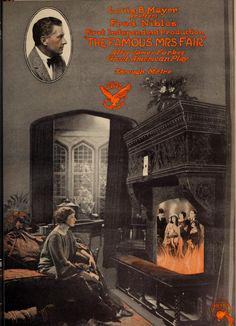
When the reels of The Famous Mrs. Fair begin to spin, the audience is thrust into a tableau where heroism on the front line collides with the quiet devastation of home. Dorcas Matthews embodies Nancy Fair with a poise that feels simultaneously regal and bruised, a duality that mirrors the nation's own attempt to reconcile triumph with trauma.
The film’s architecture is meticulously layered: the opening sequence—an austere montage of battlefield triage—establishes Nancy’s credentials as a nurse whose hands have staunched the blood of strangers. This visual prelude is not merely exposition; it functions as a thematic overture, underscoring the paradox of a woman whose public valor is eclipsed by private neglect.
Transitioning to the domestic sphere, the camera lingers on the Fair residence, a once‑stately manor now suffused with shadows. The mise‑en‑scene—faded wallpaper, cracked mirrors—serves as a metaphor for the fractured family dynamics. Here, the film deviates from melodramatic conventions, opting instead for a restrained, almost documentary‑like observation of interpersonal decay.
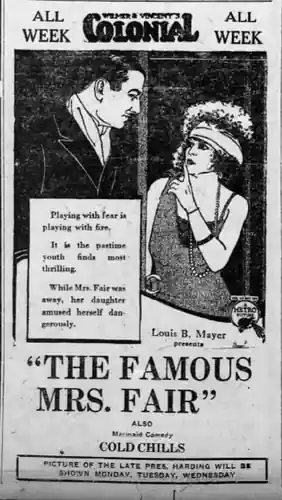
Nancy Fair is not a monolithic heroine; she is a cartographer of emotional terrain. Matthews conveys an inner compass that points inexorably toward duty, even as her compass needle quivers under the weight of marital betrayal. The affair with Angy Brice (portrayed by Helen Ferguson) is rendered with a subtlety that eschews melodrama: a lingering glance, a half‑said apology, a shared cigarette that smolders in the dimly lit hallway.
Mr. Fair, embodied by Cullen Landis, oscillates between the archetype of the stoic patriarch and the flawed man seeking solace outside his marriage. His liaison is not depicted as a salacious scandal but as a symptom of post‑war alienation—a quiet yearning for connection that finds an ill‑fated outlet in Angy’s company.
Alan Fair (Ward Crane) drifts into the orbit of a dubious cohort, his moral compass eroded by the allure of quick money and reckless bravado. The screenplay, crafted by James Forbes and the legendary Frances Marion, uses Alan’s trajectory to comment on the broader societal disorientation that followed the Great War.
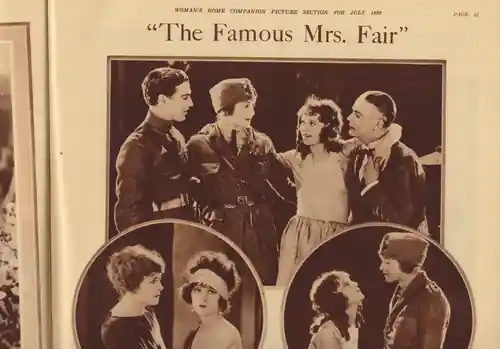
Sylvia Fair (Marguerite De La Motte) embodies the rebellious spirit of a generation eager to break free from the shackles of expectation. Her elopement, while seemingly impulsive, is rendered as a poignant act of self‑assertion, a silent scream against the oppressive silence of a household that has lost its voice.
Nancy’s decision to embark on a lecture circuit is both a narrative catalyst and a commentary on the era’s burgeoning public sphere for women. The tour scenes—shot on location in austere auditoriums—show her addressing crowds with fervor, her voice resonating like a beacon of hope. Yet each applause is undercut by a lingering sense of emptiness, a reminder that public adulation cannot mend private fissures.
These moments are juxtaposed with intimate interludes where Nancy returns to the manor, confronting the silence that greets her. The dichotomy between the bright, sun‑lit lecture halls and the dim, candle‑lit corridors of the Fair house creates a visual tension that underscores the film’s central theme: the impossibility of wholly separating the public self from the private soul.
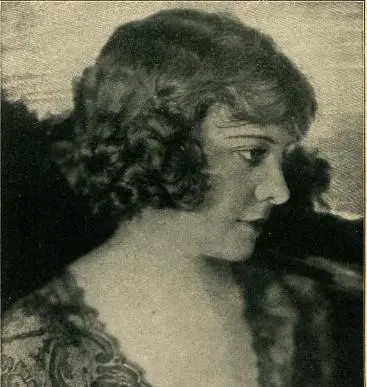
Cinematographer unknown employs chiaroscuro to great effect, bathing scenes of familial confrontation in stark contrast. The use of deep shadows during the revelation of Mr. Fair’s affair amplifies the moral ambiguity, while the soft, diffused lighting in Nancy’s lecture scenes elevates her to an almost saintly stature.
The recurring motif of a cracked mirror—first seen in the hallway, later shattered during a climactic argument—symbolizes the fractured identities of each character. When Nancy finally pieces together the mirror fragments, the visual metaphor aligns with her emotional reconstruction of the family unit.
The thematic preoccupations of The Famous Mrs. Fair echo those of contemporaneous works such as Clown Charly, where performance masks inner despair, and The Slacker, which scrutinizes post‑war disillusionment. However, unlike the overt cynicism of The Slacker, Mrs. Fair offers a redemptive arc rooted in familial reconciliation.
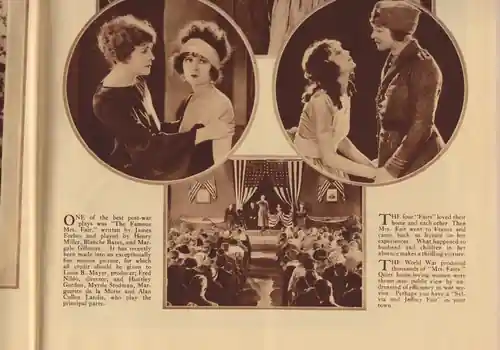
Frances Marion’s involvement as co‑writer imbues the script with a feminist sensibility that predates the more overt explorations found in later silent classics like Peggy, Behave!. Marion’s fingerprints are evident in the nuanced portrayal of Nancy’s agency, a rare instance of a female protagonist steering her narrative destiny.
Dorcas Matthews delivers a performance that oscillates between restrained dignity and visceral anguish. Her eyes—often the sole conduit of emotion—convey a spectrum ranging from stoic resolve to tear‑streaked vulnerability. In the scene where she discovers Sylvia’s disappearance, Matthews’ trembling hands and clenched jaw speak louder than any intertitle.
Supporting actors shine in their respective roles. Kathleen Chambers, as Angy Brice, imbues the character with a bittersweet melancholy, while Huntley Gordon’s portrayal of Mr. Fair balances paternal authority with palpable insecurity. The ensemble’s chemistry anchors the film’s emotional gravity.
The film’s pacing is deliberate, allowing each subplot to breathe. The first act, steeped in exposition, gradually yields to a second act that intensifies familial conflict, culminating in a third act where resolution unfolds with a measured, almost lyrical cadence. This tripartite rhythm mirrors the three acts of a classical tragedy, reinforcing the film’s gravitas.
At its core, The Famous Mrs. Fair interrogates the notion of duty—both to nation and to family. Nancy’s transition from battlefield nurse to domestic caretaker encapsulates the broader societal shift from collective war effort to individual reconstruction. The film posits that true heroism lies not solely in grand gestures but in the quotidian acts of love, forgiveness, and perseverance.
Identity, too, is a central concern. Each character grapples with the dissonance between the persona they present to the world and the self they conceal. The eventual reconciliation suggests that authenticity, though fraught with pain, is indispensable for genuine connection.
Nearly a century after its release, The Famous Mrs. Fair endures as a testament to silent cinema’s capacity for nuanced storytelling. Its exploration of post‑war domesticity anticipates later works such as A Fool There Was (1922), yet retains a distinct voice rooted in feminist empathy.
Modern viewers may find parallels in today’s discourse on veterans’ reintegration, gendered expectations, and the fragile scaffolding of family structures. The film’s quiet insistence on dialogue over melodrama offers a blueprint for contemporary narratives seeking depth without excess.
In sum, The Famous Mrs. Fair is a richly layered work that rewards patient viewing. Its deft blend of visual symbolism, robust character arcs, and socially conscious scripting renders it a cornerstone of early 20th‑century cinema. For scholars, cinephiles, and casual audiences alike, the film provides a window into an era where personal sacrifice and collective healing intersected on the silver screen.
IMDb —
1915
Community
Log in to comment.