DbcultAccessing Vault...
7.3/10
Senior Film Conservator
A definitive 7.3/10 rating for a film that redefined the boundaries of cult cinema. Phil-for-Short remains a cornerstone of transgressive art.
In the annals of early cinema, where narratives often clung to conventional tropes of damsels in distress or saccharine romance, Phil-for-Short emerges as a vibrant testament to a burgeoning spirit of female independence and intellectual prowess. Released in 1920, this film, penned by Forrest Halsey and Clara Beranger, and featuring the compelling presence of Florence Short, transcends mere period piece status to deliver a story that, even a century later, feels remarkably resonant in its exploration of grief, societal constraint, and the audacious pursuit of self-determination. It is a cinematic artefact that reminds us of the profound capabilities of silent storytelling, where every gesture, every flicker of an eye, and every meticulously crafted intertitle had to bear the weight of unspoken dialogue.
At the heart of this compelling drama is Damophilia Illington, known affectionately as "Phil," a character brought to life with captivating vivacity by Florence Short. Phil is no ordinary ingenue; she is the cherished progeny of a progressive university professor, a man who, far ahead of his time, nurtured her mind with the rigors of Greek literature and the virtues of independent thought. This intellectual inheritance forms the bedrock of Phil’s formidable character, setting her apart from the constrained expectations typically imposed upon women of her era. Her world, however, is cruelly upended by the sudden, devastating hand of fate, snatching away her beloved father and plunging her into a maelstrom of grief and vulnerability. The film masterfully conveys this initial sorrow without a single spoken word, relying instead on Short's expressive face and body language, allowing the audience to feel the raw, visceral impact of her loss.
The tragedy of her father’s death, however, is merely the prelude to a far more insidious threat. Enter the town’s banker, portrayed with a chilling blend of arrogance and avarice by Edward Arnold. This "stuffed shirt", as the plot succinctly describes him, is a predatory figure, emblematic of the patriarchal forces that sought to control women's lives and fortunes. He cunningly exploits legal loopholes, leveraging his influence to have himself declared Phil’s guardian, his true motive transparently a forced matrimonial alliance. The sheer audacity of this maneuver, the casual cruelty of a man seeking to annex a young woman's life under the guise of protection, is rendered palpable through Arnold's performance. His stern, unyielding countenance and calculated gestures paint a vivid picture of a man utterly convinced of his entitlement, providing a stark contrast to Phil's burgeoning sense of defiance.
Phil, however, is no shrinking violet. Her father’s lessons in resilience and self-reliance have taken deep root. Rather than succumb to the banker’s oppressive designs, she makes a courageous, instantaneous decision: to flee. This act of spontaneous emancipation is a pivotal moment, showcasing her agency and refusal to be a pawn in another's game. She leaves behind the familiar confines of her home, embarking on a journey into the unknown, driven by an innate need for freedom and intellectual engagement. This echoes the spirit of other strong female characters in literature and film, such as Maggie Tulliver in The Mill on the Floss, who, though bound by different societal strictures, also yearned for a life beyond conventional expectations.
Her escape leads her to a nearby university, a sanctuary of higher learning, where she secures a position as an assistant to a professor of Greek literature. This is not a random twist of fate; it is a direct result of her father's meticulous tutelage, demonstrating that her intellectual pursuits are not mere hobbies but vital, marketable skills. The professor, portrayed by Charles Walcott, is a man shrouded in bitterness and resentment. His cynicism is a direct consequence of a recent, painful betrayal – the dissolution of an engagement to a woman who had deceived him. Walcott masterfully conveys this wounded soul through his stoic posture, furrowed brow, and the subtle weariness in his eyes. He is an emotional fortress, guarded and withdrawn, a stark contrast to Phil’s vibrant optimism.
The dynamic between Phil and the professor is the narrative's beating heart. Phil, armed with her sharp intellect, empathetic spirit, and an unwavering determination, sets out to dismantle the professor’s emotional barriers. Her approach is not aggressive or overt; it is a subtle, persistent demonstration of loyalty, competence, and genuine intellectual kinship. She doesn't just assist him; she engages with him on an intellectual plane, her knowledge of Greek literature proving to be not just a qualification, but a bridge to his wounded psyche. This intellectual sparring and shared passion for ancient texts become the unlikely crucible in which a new connection begins to forge.
The success of Phil-for-Short hinges significantly on the performances of its lead actors, particularly Florence Short. In an era where exaggerated gestures could easily devolve into caricature, Short delivers a nuanced and believable portrayal of Phil. Her eyes convey a spectrum of emotions – from the depths of sorrow to the sparks of defiance, and ultimately, the warmth of burgeoning affection. She imbues Phil with a modern sensibility, making her a character who is both vulnerable and incredibly strong, a proto-feminist icon navigating a world not yet ready for her independence. Her performance is a masterclass in silent film acting, where every movement and facial expression must communicate volumes.
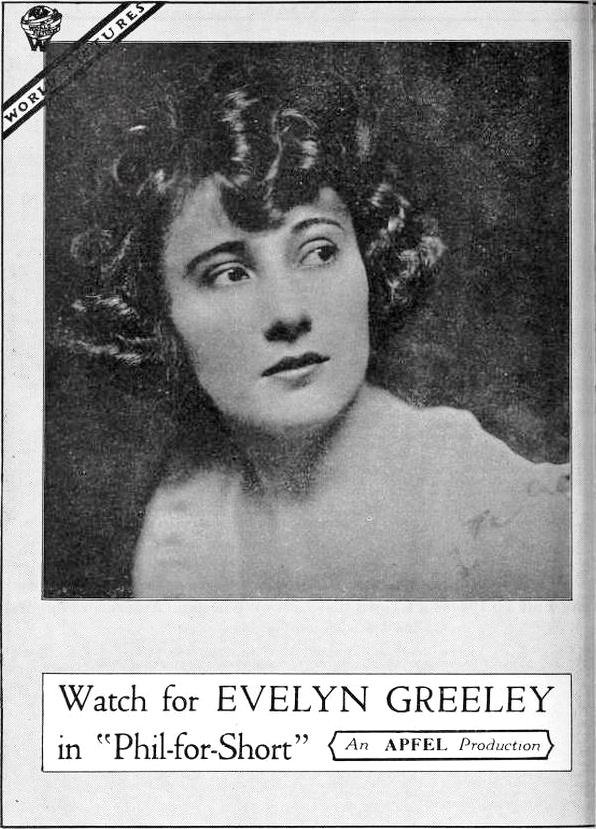
Charles Walcott's portrayal of the embittered professor is equally compelling. He manages to convey a deep-seated pain and intellectual pride without ever resorting to melodramatics. His gradual thawing under Phil's influence is subtle, a slow unfurling of a spirit that had been tightly coiled by past hurt. The chemistry between Short and Walcott is not overtly passionate but rather built on mutual respect and intellectual understanding, a more profound and perhaps more enduring form of connection. The supporting cast, including Edward Arnold as the detestable banker, Ann Eggleston, Charles Duncan, Henrietta Simpson, John Ardizoni, Henry Hallam, Ethel Grey Terry, James A. Furey, Tony Merlo, Hugh Thompson, and Evelyn Greeley, all contribute to a rich tapestry of characters, each serving to highlight Phil's journey.
The direction, while uncredited in the provided details, deftly handles the pacing and visual storytelling. The use of intertitles is judicious, providing necessary exposition and dialogue without overwhelming the visual narrative. The cinematography, typical of the era, is functional yet effective, focusing on character expressions and key actions. One can imagine the subtle shifts in lighting or camera angles being used to emphasize Phil's emotional state or the professor's guardedness, techniques that were evolving rapidly in the early 20th century cinema, as seen in other contemporary works like Greed, which pushed the boundaries of visual storytelling, albeit with a much darker thematic palette.
Beyond the surface narrative of romance and escape, Phil-for-Short delves into profound themes that resonate across time. The most prominent is undoubtedly the theme of female autonomy. Phil’s refusal to be bound by the banker’s schemes, her proactive decision to forge her own path, and her pursuit of a career rooted in her intellectual strengths, all speak to a nascent feminist consciousness. She embodies the spirit of a woman who demands agency over her own life, even in the face of immense personal loss and societal pressure. This portrayal is particularly significant given the year of its release, a time when women's suffrage had just been secured in the United States, and the fight for broader social and economic equality was still very much ongoing.
Grief and healing are also central to the film. Phil’s initial devastation is palpable, yet her journey is one of transforming sorrow into strength. Her intellectual pursuits and her determination to "win over" the professor are not just about romance; they are also about finding a new purpose, a new connection to fill the void left by her father’s absence. Similarly, the professor’s arc is one of redemptive healing. Phil’s genuine nature and shared intellectual passion slowly chip away at his cynicism, allowing him to trust and feel again. It's a testament to the idea that true connection can mend even the most deeply wounded hearts, a theme explored in countless narratives, but given a unique, understated elegance here.
The film also champions the power of intellect and education. Phil’s proficiency in Greek literature is not merely a plot device; it is central to her identity and her ability to navigate the world. It provides her with a means of escape, a career, and ultimately, a foundation for a meaningful relationship. Her intellectual curiosity and competence are presented as attractive and empowering qualities, challenging the prevailing notion that women's primary value lay in their domesticity or marital prospects. This emphasis on intellectual compatibility as a basis for love is refreshing and forward-thinking.
The narrative crafted by Forrest Halsey and Clara Beranger is remarkably robust for its time. They eschew simplistic resolutions, instead building a story around character-driven conflict and resolution. Beranger, a prolific screenwriter of the silent era, was known for her strong female characters and progressive themes, and Phil-for-Short stands as a shining example of her contribution to shaping early cinematic narratives. Her collaboration with Halsey likely contributed to the film's nuanced portrayal of human relationships and societal critiques. Their script provides a solid framework upon which the actors could build their silent performances, ensuring that the emotional beats and character motivations were always clear, even without dialogue.
When considering Phil-for-Short in the broader context of silent cinema, it holds a significant, albeit perhaps less celebrated, place. It might not possess the epic scale of a sprawling historical drama, but its strength lies in its intimate character study and its progressive themes. It belongs to a lineage of films that quietly championed individual spirit, often through the lens of a compelling female protagonist. One might draw parallels to the spirited independence seen in characters from films like M'Liss, though Phil's intellectual grounding gives her a distinct edge.
In conclusion, Phil-for-Short is more than just a historical curiosity; it is a captivating and emotionally rich silent film that deserves renewed attention. It offers a powerful narrative of a young woman's journey through grief, against patriarchal oppression, and towards intellectual and emotional fulfillment. Its themes of resilience, the pursuit of knowledge, and the redemptive power of genuine connection remain as pertinent today as they were a century ago. It stands as a testament to the enduring power of storytelling, proving that even without spoken words, a film can convey profound truths about the human condition and inspire audiences with its portrayal of an unyielding spirit. For those who appreciate the artistry of early cinema and stories that champion the strength of the individual, Phil-for-Short is an absolute must-see, a forgotten gem waiting to be rediscovered and celebrated.

IMDb 6.2
1932
Community
Log in to comment.