DbcultAccessing Vault...
Cult Review
Senior Film Conservator
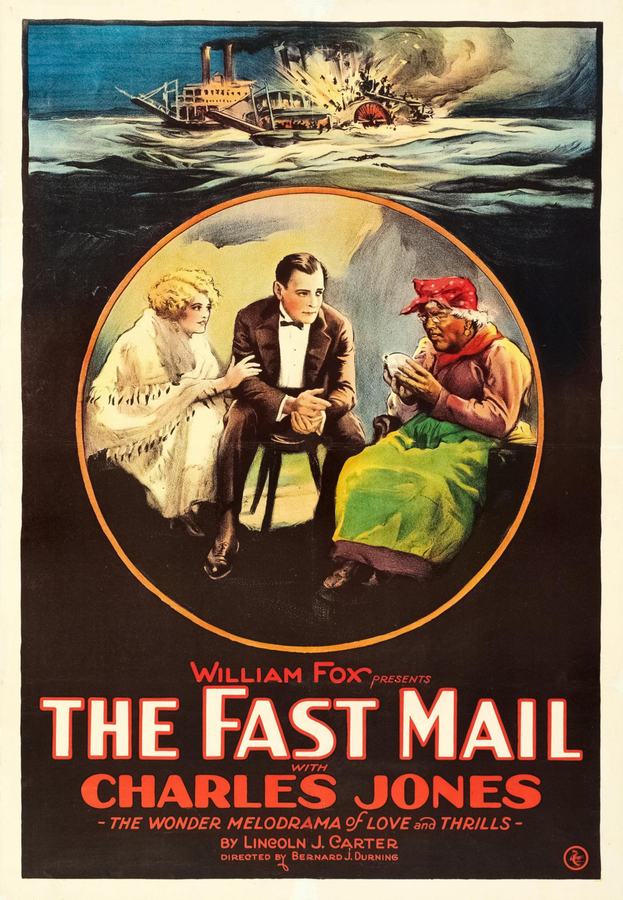
Step back in time, dear reader, to an era when cinema spoke not through dialogue, but through the universal language of action, emotion, and sheer, unadulterated spectacle. We're diving deep into the exhilarating depths of The Fast Mail, a 1922 silent film that, even a century later, retains an astonishing capacity to thrill and captivate. Directed by Jacques Jaccard, with a narrative penned by Jaccard himself alongside Lincoln J. Carter and Agnes Parsons, this picture serves as a compelling testament to the ingenuity and audacious spirit of early filmmaking. It's a cinematic roller coaster, an unrelenting surge of peril and heroism, anchored by the magnetic presence of Western star Buck Jones.
The narrative, deceptively simple at its core, blossoms into a tapestry of intricate betrayals and daring rescues. We are introduced to Stanley Carson, portrayed with rugged charm and an underlying nobility by Buck Jones, a cowboy whose journey takes him from the open range to the bustling, and ultimately treacherous, confines of a Southern city. His visit to Virginia Martin, played with an engaging blend of vulnerability and resilience by Eileen Percy, quickly unravels into a maelstrom of misfortune. Virginia's own brother, a character whose moral compass is severely skewed by his association with a coterie of unscrupulous gamblers, becomes an unwitting catalyst for much of the ensuing drama. It's a classic setup: the virtuous outsider pitted against the corrupting influences of a decadent urban underworld, a theme explored in various forms throughout cinematic history, perhaps even hinting at the moral quandaries found in the more melodramatic works like Dangerous Lies, where hidden truths and societal pressures often dictate character actions.
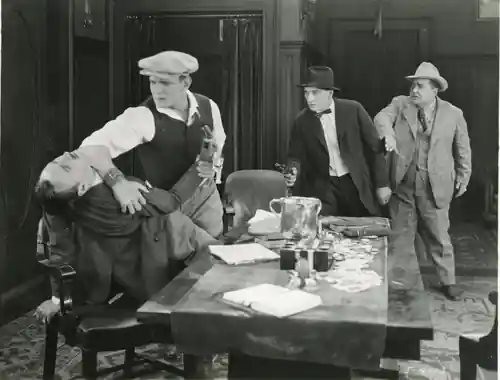
The initial act of villainy is a calculated attempt to disgrace Virginia, a subtle yet insidious form of social sabotage that speaks volumes about the era's societal anxieties. But the plot thickens with a more overt act of malice: a rigged horse race. Carson, a man of integrity and skill, is cruelly tricked out of victory by these same crooked gamblers. This isn't just about losing a wager; it's an affront to his honor, a direct challenge to his cowboy code. The sense of injustice is palpable, and Buck Jones's performance here, relying on nuanced facial expressions and powerful physicality, conveys the simmering rage and determination of a man wronged. This segment effectively establishes the stakes, not just for Carson, but for Virginia, who soon becomes the ultimate pawn in the villains' nefarious game.
The abduction of Virginia is the true turning point, transforming a story of social intrigue and sporting deceit into a full-blown chase thriller. The villains, realizing Carson is a formidable obstacle, resort to extreme measures, snatching Virginia away in a move designed to cripple his resolve. This act ignites the fuse for one of the most remarkable and sustained action sequences in silent cinema, a masterclass in kinetic storytelling that propels the film into legendary status. The tension is expertly ratcheted up, leaving the audience breathless, wondering how Carson can possibly overcome such overwhelming odds. It's a stark contrast to the more whimsical, albeit charming, chases one might find in animated shorts or comedies of the era, such as Toonerville's Fire Brigade, which, while entertaining, lacked the life-or-death stakes presented here.
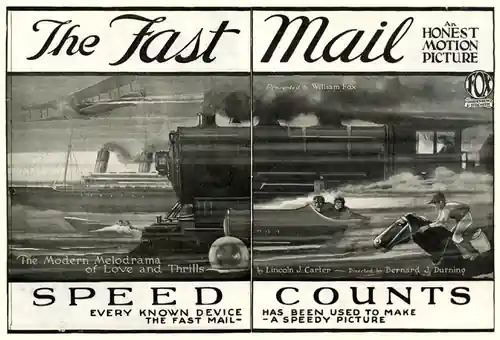
What follows is an almost unbelievable succession of stunts and escapes that showcase not only Buck Jones's athleticism but also the innovative spirit of early Hollywood stunt work. Carson's pursuit begins with a desperate leap into a moving boat, a transition that immediately establishes the relentless pace. From the water, he swims ashore with an urgency that communicates the direness of Virginia's predicament. But the true spectacle begins when he leaps aboard a 'fast mail' train – a marvel of industrial power and speed, a symbol of progress now repurposed as an instrument in a high-stakes rescue. The train sequence itself is a marvel of editing and cinematography, capturing the sheer velocity and the inherent danger of the pursuit. The camera angles, though limited by the technology of the time, are expertly chosen to maximize impact, placing the viewer right alongside Carson as he navigates the speeding behemoth.
The audacity continues as Carson, with seemingly superhuman agility, jumps from the thundering train into a moving automobile. This particular stunt is a jaw-dropping feat, a testament to the courage of the performers and the trust placed in the filmmakers' ability to capture it safely. It's a moment that would elicit gasps even from modern audiences accustomed to CGI-enhanced spectacles. The seamless transition from one mode of transport to another, each faster and more precarious than the last, creates an escalating sense of urgency and excitement. This sequence alone would be enough to cement the film's reputation, but The Fast Mail isn't content to rest on its laurels; it pushes the boundaries further, continually raising the bar for action filmmaking.

Carson's relentless pursuit brings him to the very hotel where Virginia is being held captive. The tension here is almost unbearable, the culmination of a chase that has spanned various terrains and modes of transportation. However, just as he is on the precipice of rescuing Virginia, the narrative introduces an unexpected, yet profoundly human, twist. A fire breaks out, trapping an innocent family. In a remarkable display of selflessness, Carson pauses his urgent personal mission to rescue them. This brief detour, far from derailing the plot, actually elevates Carson's character, transforming him from a mere action hero into a true paragon of virtue. It underscores his innate goodness and his unwavering commitment to justice, not just for Virginia, but for anyone in peril. This moment of altruism serves as a powerful counterpoint to the earlier acts of villainy, highlighting the moral clarity that underpins Carson's character. It's a narrative beat that resonates deeply, reminding us that true heroism often involves prioritizing the welfare of others, even at great personal cost.
The final confrontation with Virginia's captors is swift and decisive, a satisfying resolution to the relentless build-up. Buck Jones delivers a powerful performance, embodying the righteous fury of a man who has overcome every obstacle to protect the innocent. Eileen Percy, though often in distress, conveys a quiet strength and serves as a compelling damsel in need of rescue, avoiding the pitfalls of a purely passive character. The supporting cast, including Jim Mason and Harry Dunkinson, effectively portray the various shades of villainy and complicity, while Adolphe Menjou and William Steele, even in their potentially smaller roles, add layers of authenticity to the bustling urban environment.
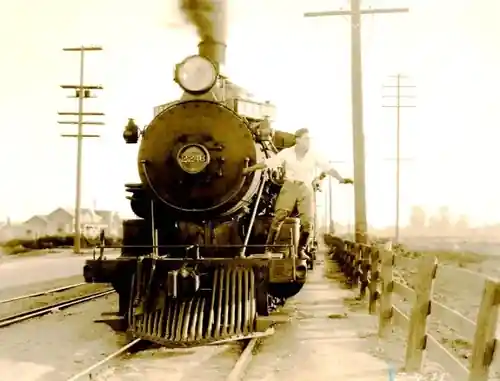
From a technical standpoint, The Fast Mail is a marvel. The editing, crucial for maintaining the breakneck pace, is expertly handled, creating a seamless flow between the various action sequences. The cinematography, while constrained by the equipment of the early 1920s, manages to capture the grandeur of the train, the peril of the stunts, and the emotional intensity of the performances. The use of intertitles is judicious, providing just enough information to propel the plot forward without bogging down the action. The film relies heavily on visual storytelling, a hallmark of the silent era, where every gesture, every expression, every movement had to convey meaning. This is where Buck Jones truly shines; his physical presence and his ability to communicate complex emotions without a single spoken word are central to the film's success. In some ways, the film’s reliance on pure visual narrative is reminiscent of other silent era productions that focused on spectacle and character, even if their plots were vastly different, like the fantastical journey in A Trip to Mars, which also used visual storytelling to transport its audience.
The writers, Jacques Jaccard, Lincoln J. Carter, and Agnes Parsons, crafted a narrative that, while adhering to genre conventions, introduced enough twists and turns to keep the audience thoroughly engaged. They understood the power of escalation, continually raising the stakes and forcing the hero into increasingly desperate situations. Their ability to weave together elements of social drama, crime thriller, and action spectacle into a cohesive and compelling whole is commendable. It's a blueprint for effective action storytelling that continues to influence filmmakers today. The moral complexities introduced through Virginia's brother, for instance, add a layer of depth that elevates the film beyond a simple hero-vs-villain narrative, touching upon themes of family loyalty and societal corruption, much like the intricate familial dramas found in literary adaptations such as Little Dorrit, albeit with vastly different settings and scales of conflict.

Buck Jones was more than just a cowboy star; he was an embodiment of American ideals of rugged individualism and unwavering courage. In The Fast Mail, he delivers one of his most iconic performances, showcasing a versatility that extended beyond the typical Western tropes. His ability to perform his own stunts with such conviction adds an undeniable authenticity to the action sequences, making them all the more thrilling. He projects an aura of quiet strength, a man of action rather than words, which perfectly suited the silent medium. This film, alongside others like Broadway Arizona, solidifies his legacy as a true pioneer of the action genre, a figure whose appeal transcended geographical and demographic boundaries.
The film's exploration of themes like justice, courage, and the triumph of good over evil resonates even today. It's a timeless story of a hero's journey, filled with obstacles that test his physical and moral fortitude. The contrast between the idyllic, honest world of the cowboy and the corrupt, dangerous urban landscape is a recurring motif, a commentary on the changing face of America in the early 20th century. This juxtaposition of innocence and experience, of rural virtue and urban vice, is a powerful undercurrent throughout the narrative, giving the high-octane action a deeper thematic resonance. It’s a compelling argument for the enduring appeal of the silent era, demonstrating that even without spoken dialogue, powerful stories could be told with immense emotional and dramatic impact.
In conclusion, The Fast Mail is far more than just a historical curiosity; it is a vibrant, pulse-pounding piece of cinematic artistry that deserves to be rediscovered and celebrated. Its relentless pace, incredible stunts, and the compelling performance by Buck Jones make it a standout in the silent film canon. It's a film that reminds us of the raw power of visual storytelling and the enduring appeal of a hero who will stop at nothing to right a wrong. For anyone interested in the evolution of action cinema, or simply in experiencing a truly thrilling ride, The Fast Mail is an essential viewing experience. Its influence on subsequent action films, particularly those featuring daring chases and resourceful heroes, is undeniable, echoing in the DNA of countless blockbusters that followed. It stands as a testament to the fact that even in an era without synchronized sound, filmmakers could craft narratives of incredible dynamism and emotional depth. So, if you ever find yourself yearning for an adventure that transcends time, hop aboard The Fast Mail; you won't be disappointed. It’s a journey that speaks volumes without uttering a single word, a pure distillation of cinematic excitement that continues to captivate and inspire, proving that some stories are truly timeless.
IMDb 7.8
1936
Community
Log in to comment.