DbcultAccessing Vault...
Cult Review
Senior Film Conservator
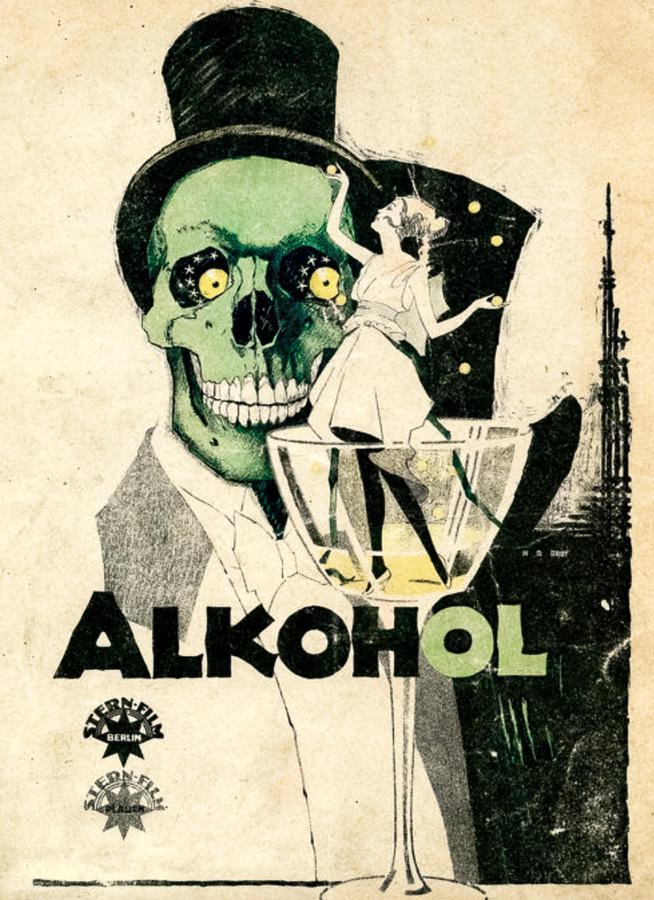
Imagine a ballroom drenched in candelabrum shimmer, the air thick with tuberose and the metallic tang of secrets. Alfred Lind and Ewald André Dupont’s Alkohol—released in the tremulous year of 1919—doesn’t merely depict decadence; it distills it into a volatile spirit you can almost taste on the tongue. The film opens on a masquerade so opulent it feels like a last supper before the empire itself collapses. Hella Swendsen, incandescent and imperious, glides through the crowd like a comet trailing scarlet silk. Minutes later, her engagement is annulled by a fiancé whose surname is synonymous with shame: his mother perished in the clutches of alcoholism, a fact he discovers in the same breath that he rejects his future bride. The cruelty is casual, almost operatic—yet the camera, cool and unblinking, refuses to sensationalize.
Silent cinema rarely enjoyed the luxury of spoken exposition; instead it traded in the hieroglyphics of gesture. Auguste Pünkösdy, as the guilt-ridden confidant, has eyes that seem to bruise the very film stock. When he corners Hella on a moonlit balcony, his shoulders fold inward like broken umbrellas, a physical confession that needs no intertitle. Dupont’s blocking is geometric: characters advance and recede along diagonal vectors, creating a zig-zag of moral tension across the frame. The camera, often positioned at waist height, turns the viewer into an accomplice peering through a keyhole.
Comparisons to Bonnie May or The Golden Shower feel facile; those films luxuriate in the ornamental chaos of Weimar cabarets, whereas Alkohol interrogates the hangover that follows. The picture’s true cognate is The Tide of Death, another parable where liquid vice seeps through bloodlines like rising tidewater. Yet where Tide externalizes guilt as storm-tossed seascapes, Alkohol internalizes it, fermenting dread inside parlors and drawing rooms.
Restoration enthusiasts will swoon over the tinting strategy: amber for interiors laced with lamplight, viridian for nocturnal exteriors, and a sulfurous yellow whenever alcohol appears on screen. These chromatic cues operate like a synesthetic score, conditioning the viewer’s Pavlovian response long before the plot articulates its moral. Note how the champagne coupe, introduced in a creamy close-up, reappears later filled with absinthe that glows the color of oxidized copper. It is the same object, yet transfigured—an alchemical metaphor for the protagonist’s metamorphosis from fiancé to fugitive.
Ewald André Dupont would later helm the celebrated Variety (1925), but here he is already experimenting with kinetic subjectivity. When the stranger narrates the dead woman’s decline, the image track detours into a delirious flashback: superimposed bottles multiply like malignant cells across the screen, their labels writ in Expressionist lettering. The sequence lasts maybe forty seconds, yet it anticipates the psychedelic overlays of 1960s cinema. Contemporary critics dismissed the flourish as gimmickry; in hindsight it feels prophetic, a visual premonition of delirium tremens.
Maria Zelenka, essaying the off-screen specter of the alcoholic mother, never once appears in the present timeline; her performance exists entirely in the stranger’s recollection. Even so, she dominates the film like a revenant. In a masterstroke of casting, Dupont selected an actress whose cheekbones could slice celluloid, then asked her to play every scene at the precipice of laughter and tears. The result is a portrait of dependency that refuses both pity and vilification—an equilibrium most modern films still struggle to strike.
Jean Moreau (not to be confused with the French icon) embodies Hella’s fiancé with the brittle hauteur of an empire nearing collapse. Watch the micro-movement when he first utters his mother’s name: the left eyelid flutters, a tic so fleet you could mistake it for a projection stutter. It is the kind of detail that rewards Blu-ray pausing, a semaphore of inner collapse. Meanwhile, Wilhelm Diegelmann’s turn as the family patriarch is all booming baritone absence—his character is never seen without a glass of Tokay, yet he alone fails to recognize the omen in his own hand.
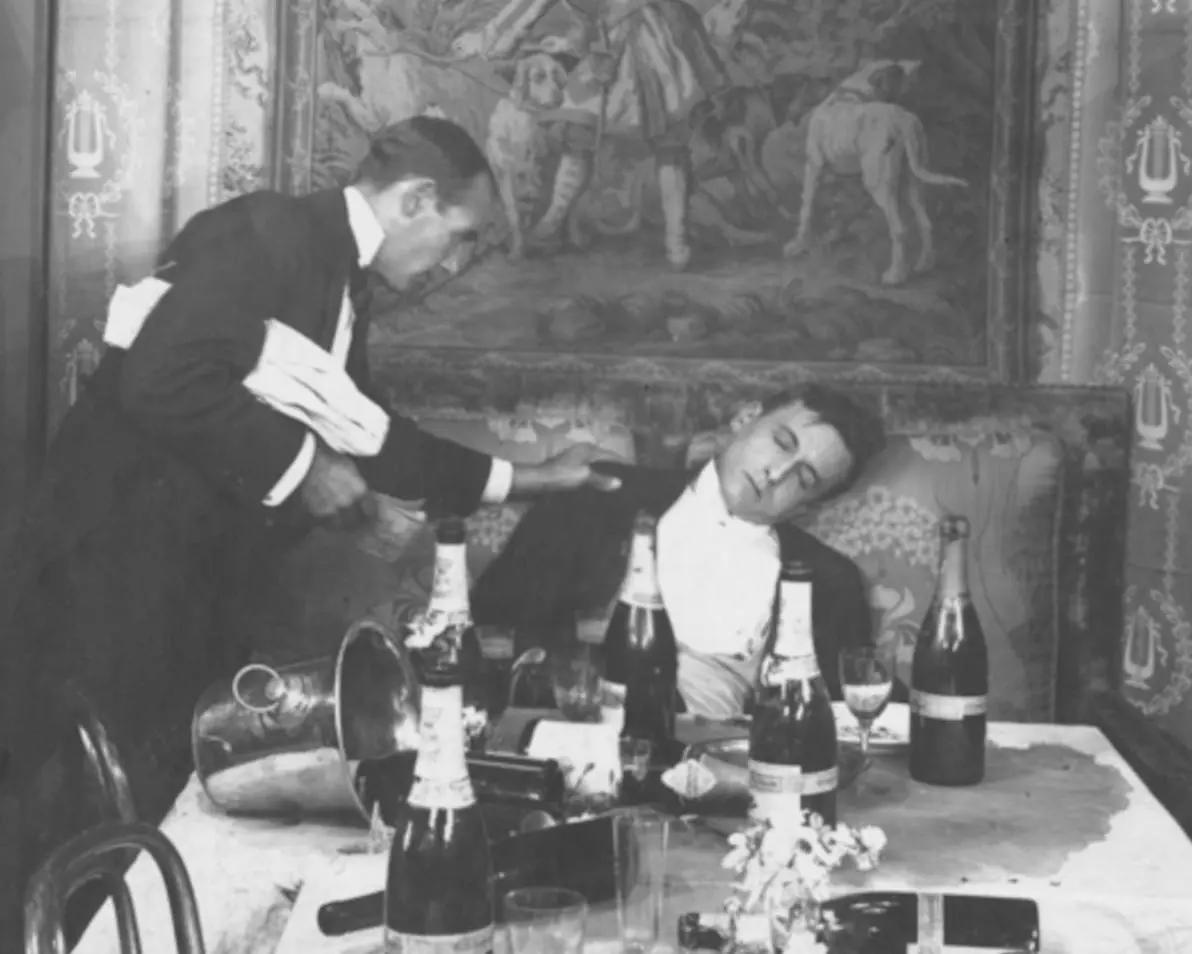
What distinguishes Alkohol from temperance sermons like Mrs. Slacker is its refusal to gender addiction as inherently feminine or masculine. The narrative distributes culpability across ballroom parquet like broken glass: the mother’s drinking, the son’s cowardice, the father’s denial, the stranger’s voyeurism, Hella’s obliviousness. Each character nurses a different vintage of guilt, yet all swirl toward the same drain.
This egalitarian toxicity feels startlingly modern. Consider the scene where Hella, jilted and furious, commandeers a bottle of cognac and gulps in defiance. The act is framed not as transgressive erotic spectacle, but as a bitter communion—an inverted betrothal where the groom is absent and the ring replaced by a liquor stamp on her lip. Dupont withholds judgment; the camera simply watches her throat contract, the sinews of survival asserting themselves against social ruin.
Because the original score is lost, every contemporary screening becomes an act of speculative resurrection. For the 2022 Viennale, Austrian composer Olga Klotz devised a chamber suite dominated by viola d’amore and prepared piano: strings are threaded with paper to mimic the rasp of a throat burning from schnapps; piano wires are detuned to suggest the wobble of inebriated gait. The effect is not nostalgic but forensic—an autopsy of a culture that thought it could drink its way out of historical trauma.
Home viewers hunting for streaming options should note that the only legitimate restoration is housed at Filmarchiv Austria, scanned at 4K from a 35mm nitrate print discovered in a Tyrolean monastery. The file circulates on boutique torrents, but a pristine Blu-ray with Klotz score is slated for Region-B release next spring. Seek it out; YouTube rips flatten the amber tones into urine yellow and drop half the intertitles, reducing the narrative to melodramatic swiss cheese.
Trace the DNA and you’ll detect strands of Alkohol in Wilder’s The Lost Weekend, in Preminger’s Fallen Angel, even in Cassavetes’ A Woman Under the Influence. The idea that addiction can function as both character flaw and structural indictment—an invisible villain steering history from the wings—originates here, in a film barely mentioned in canonical surveys.
Curiously, Dupont’s American sojourn never recaptured the ferocity of this early work. Hollywood tamed him, handed him bigger budgets and smaller themes. Yet watch Alkohol back-to-back with his late-career noir Scarlet Friday and you’ll spot the identical visual stutter: a hand trembling around a glass, a woman’s reflection fractured in a barroom mirror. The context shifts, the despair remains.
Because we still live at masquerades—Instagram filters replacing domino masks, craft cocktails standing in for absinthe. Because Alkohol understands that the real horror isn’t the bottle, but the architecture of silence we erect around it. Because every frame is a reminder that cinema once dared to moralize without moralism, to pity without paternalism, to intoxicate while exposing the poison.
Pour yourself a glass of something you can’t pronounce, dim the lights, and let this 104-year-old ghost climb into your veins. When the credits—white letters on obsidian—finally fade, you may find your hand hovering over the bottle, unsure whether to refill or recoil. That tremor is the film’s last, cruelest gift: a reflection you can’t simply unsee or untaste.
IMDb 5.2
1917
Community
Log in to comment.