DbcultAccessing Vault...
Cult Review
Senior Film Conservator
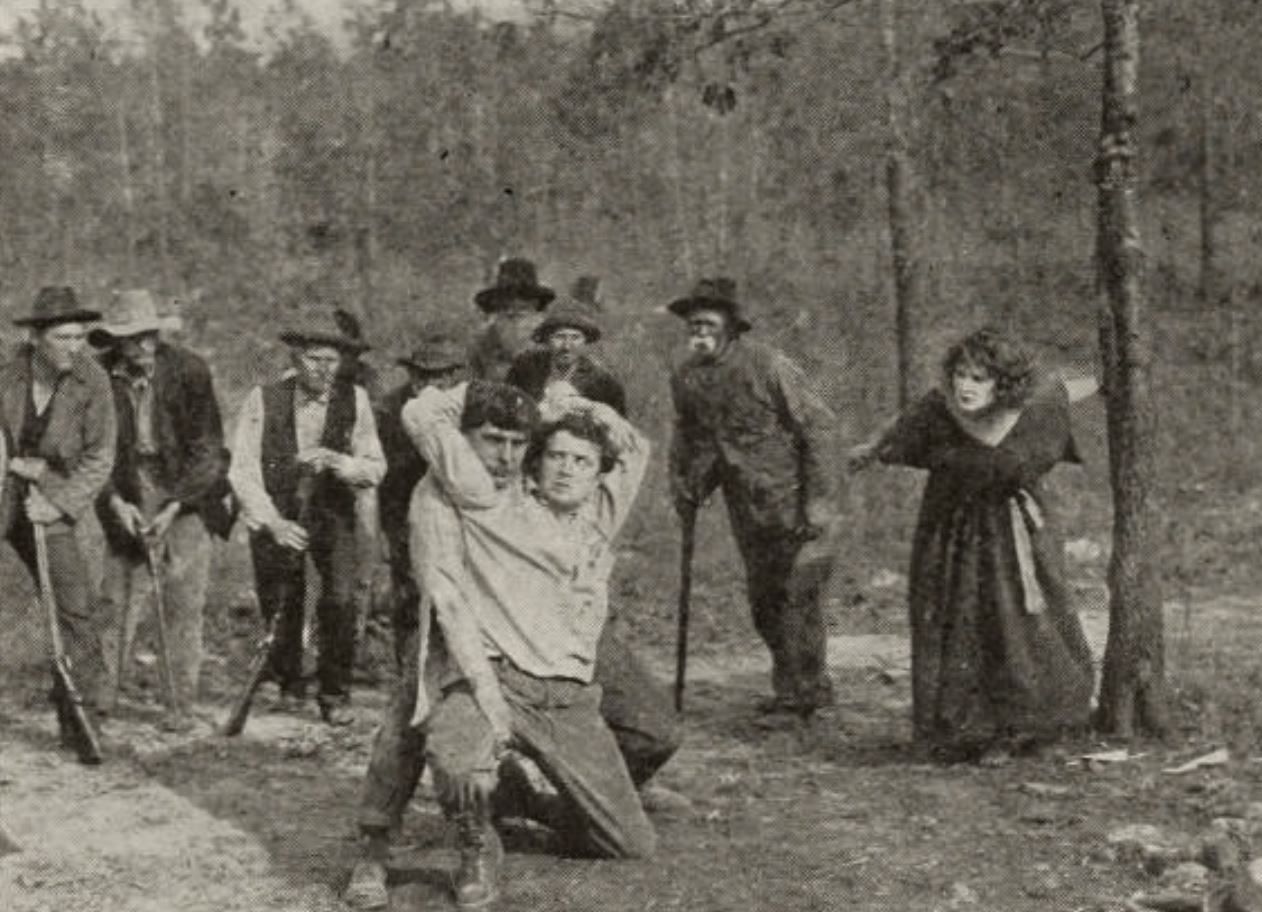
Stepping back into the early cinematic landscape, one often unearths gems that, despite their age and the constraints of their medium, resonate with timeless human struggles. 'The Feud Girl,' a potent drama penned by Charles Logue, is precisely such a discovery. It plunges us headfirst into a world defined by ancient animosities, where the rugged terrain mirrors the equally rugged dispositions of its inhabitants. This isn't just a story; it's an anthropological study of tribalism, an exploration of how inherited hatred can shackle generations, and a testament to the enduring, often defiant, power of love. Released in an era when cinema was still finding its voice, this film manages to articulate complex emotional landscapes with a visual eloquence that belies its silent nature.
The premise is as old as storytelling itself: two families, locked in a bitter, generations-spanning feud. Their lives are interwoven with the fabric of the mountains, their identities forged in the fires of conflict. But into this crucible of animosity, a forbidden love blossoms, threatening to either extinguish the flames of hatred or fan them into an uncontrollable inferno. This core conflict—love versus loyalty, individual desire versus communal tradition—provides the narrative backbone for a drama that is both intensely personal and sweepingly epic. Logue's screenplay, even in its silent manifestation, demonstrates a keen understanding of human psychology, crafting characters who are archetypal yet imbued with enough specificity to feel genuinely tragic.
What makes 'The Feud Girl' so compelling, even a century after its initial release, is its unwavering focus on the human cost of prolonged conflict. The mountain setting isn't merely a backdrop; it's an active participant, a symbol of the harsh, unyielding nature of the feud itself. The isolation of these communities fosters a fierce insularity, making any external influence or internal dissent a profound challenge to the established order. The film meticulously builds this world, showing how the feud isn't just an occasional skirmish but a pervasive atmosphere, shaping every decision, every relationship. Children are born into it, raised to perpetuate it, and the very idea of peace seems like a betrayal of their ancestors.
The central romance, however, offers a glimmer of hope, a radical departure from the entrenched hatred. The young lovers, caught between their hearts' desires and their families' expectations, embody the universal struggle against societal strictures. Their clandestine meetings, fraught with danger and emotional tension, are the film's most powerful moments. The silent film format, relying heavily on visual storytelling and the expressive power of its actors, amplifies the unspoken yearning and desperation. A stolen glance, a hesitant touch, a tearful farewell—these gestures carry immense weight, communicating volumes without a single uttered word. This mastery of visual narrative is a hallmark of the era, and 'The Feud Girl' utilizes it to its fullest potential.
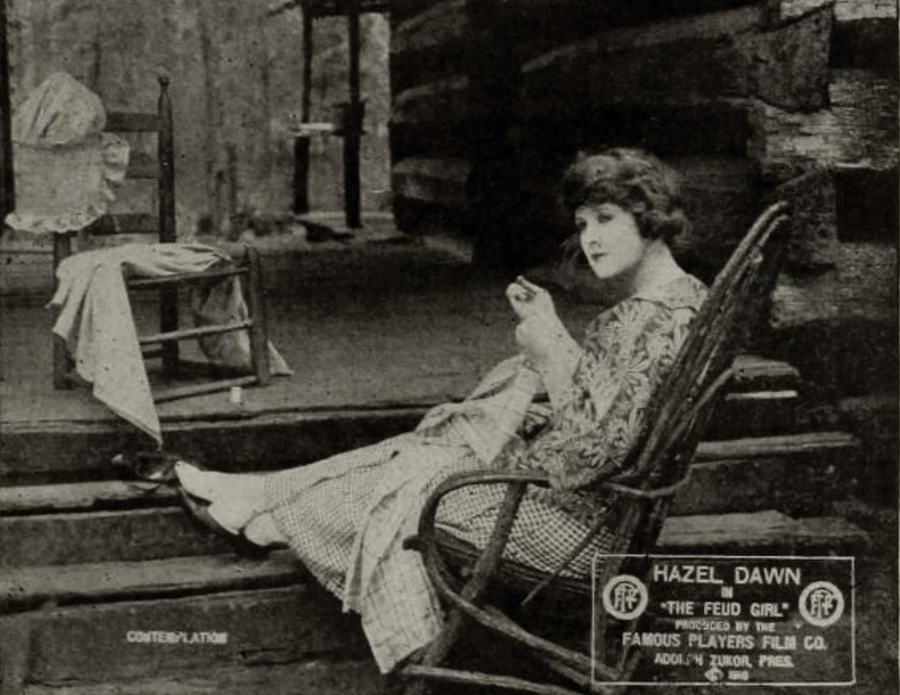
The success of any silent film hinges almost entirely on the capabilities of its cast to convey emotion and character without dialogue. 'The Feud Girl' is fortunate in this regard, boasting a cadre of performers who bring considerable depth to their roles. Hazel Dawn, in the titular role, is particularly captivating. Her portrayal of the 'Feud Girl,' torn between allegiance and affection, is nuanced and deeply felt. She doesn't merely play a damsel in distress; she embodies a woman of strength and conviction, whose love becomes a catalyst for change, or at least a desperate attempt at it. Her expressive eyes and subtle gestures communicate a whirlwind of internal conflict, making her character's predicament profoundly moving. Her performance stands as a testament to the power of non-verbal acting, a skill that could easily rival the most celebrated dramatic performances of any era.
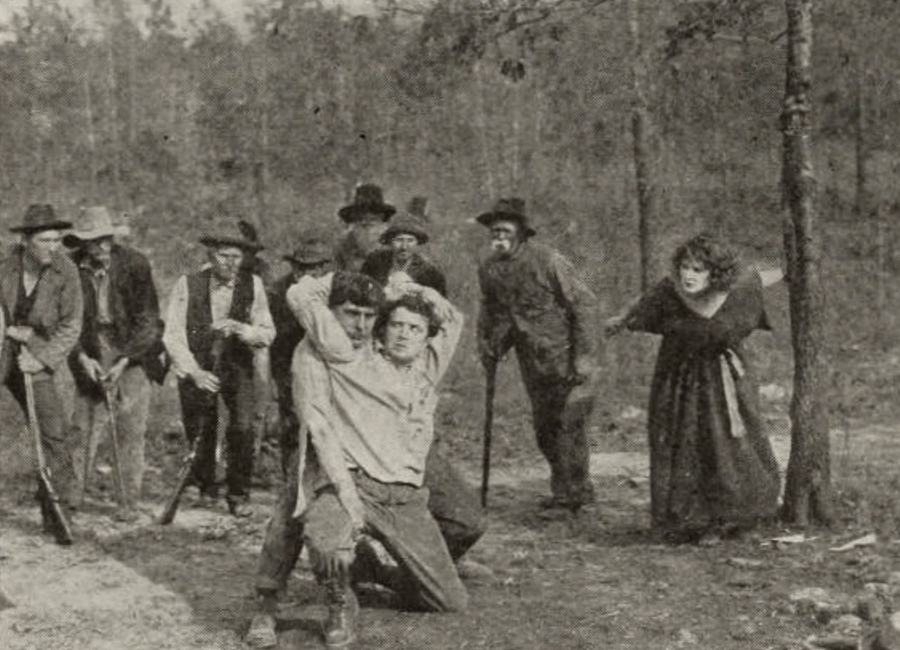
George Majeroni, as the male lead, complements Dawn's intensity with a portrayal that balances youthful ardor with the weight of familial duty. His character's struggle to reconcile his love with the ingrained hatred of his clan is palpable. Majeroni avoids caricature, instead presenting a figure who is both passionate and tormented, a man trapped by circumstance yet striving for agency. The chemistry between Dawn and Majeroni is understated but powerful, lending credibility to their forbidden romance and making the audience genuinely root for their eventual triumph against overwhelming odds. Their scenes together are charged with a quiet desperation, a yearning for a world where their love wouldn't be a transgression.
The supporting cast, including Hardee Kirkland, Russell Simpson, and Gertrude Norman, et al., provide the necessary grit and gravitas to the feuding families. Their performances, often broader in their expressiveness, serve to underscore the rigid, unyielding nature of the mountain folk. Simpson, in particular, often excelled in portraying stern, patriarchal figures, and here he likely brings a formidable presence that embodies the uncompromising spirit of the clan elders. These actors, through their physicality and facial expressions, paint a vivid picture of a community steeped in tradition and suspicion, where every stranger is a potential threat and every act of kindness towards the 'other side' is perceived as treason. Their collective efforts create a believable, albeit bleak, social fabric against which the central romance must struggle.
Charles Logue, credited as the writer, demonstrates a profound understanding of dramatic tension and character motivation. The narrative arc, from the initial establishment of the feud to the blossoming of forbidden love and the inevitable confrontation, is skillfully constructed. Logue avoids simplistic resolutions, instead opting for a portrayal that acknowledges the deep-seated nature of the conflict. While specific directorial credits might vary or be less emphasized in early cinema, the narrative drive and thematic clarity undoubtedly stem from Logue's vision. His ability to distill complex social dynamics into a compelling visual story is commendable. The script likely provided ample opportunities for visual metaphor and symbolic action, which were crucial for conveying meaning in the silent era.
The film's exploration of vengeance is particularly astute. It doesn't glorify it, nor does it entirely condemn the motivations behind it. Instead, it presents vengeance as a destructive force that traps all involved, regardless of which side they are on. The cycle of 'an eye for an eye' is shown to be self-perpetuating, eroding empathy and fostering a climate of constant fear. The young lovers' struggle, therefore, is not just for their own happiness, but implicitly for the very soul of their community, a desperate attempt to break free from a legacy of bitterness. This thematic depth elevates 'The Feud Girl' beyond a mere melodrama, positioning it as a thoughtful commentary on the human condition.
In its earnest portrayal of societal conflict and personal sacrifice, 'The Feud Girl' shares thematic DNA with other dramas of its time, though its specific focus on Appalachian-style feuds gives it a distinct flavor. One might draw parallels to the intense melodramas like Destiny: or, the Soul of a Woman or The Whirlpool of Destiny, which also delved into the powerful, often destructive, forces shaping individual lives. However, 'The Feud Girl' distinguishes itself by grounding its emotional turmoil in a specific cultural and geographical context, making the feud itself almost a character in the drama. The rugged realism, even within the stylized performance of silent cinema, gives it a raw edge that some more ethereal or urban dramas might lack.
The film also touches upon themes of youthful rebellion against archaic traditions, a motif explored in various forms across early cinema. While not a direct comparison, the struggle of the individual against overwhelming social pressure can be seen in films that explore different facets of societal constraints. For instance, the emotional intensity and the focus on individual choice against a backdrop of rigid social norms might recall the internal conflicts presented in films like In the Prime of Life, albeit in a vastly different setting. The underlying question of whether love can truly conquer all, or if it is doomed to be crushed by the weight of history, remains a potent query throughout these narratives.
The visual grammar of 'The Feud Girl' is crucial to its impact. Without spoken dialogue, the cinematography, set design, and costuming carry an immense burden of information and emotion. The film likely leveraged location shooting to emphasize the wild, untamed nature of the mountain environment, contrasting it with the equally wild, untamed passions of its characters. The use of natural light, the stark silhouettes against a mountain sky, or the claustrophobic interiors of rustic cabins would have all contributed to the film's atmospheric power. Such visual choices weren't just aesthetic; they were narrative devices, deepening the audience's understanding of the characters' world and their struggles. The visual storytelling would have been paramount in communicating the harsh realities of their existence, the beauty of forbidden moments, and the ever-present threat of violence.
Consider the power of a long shot of a solitary figure traversing a treacherous mountain path, symbolizing the arduous journey of the lovers, or a close-up on a character's face, revealing a world of unspoken pain and resolve. These techniques, refined over the silent era, allowed filmmakers to create deeply immersive experiences. The visual language of 'The Feud Girl' would have been critical in conveying the nuances of the feud itself—the furtive glances, the guarded movements, the sudden bursts of aggression. It's a testament to the artistry of silent film directors and cinematographers that they could evoke such a rich tapestry of human experience using only images and intertitles.
'The Feud Girl' stands as a compelling example of early American cinema's capacity for complex dramatic storytelling. It’s a film that transcends its historical context to speak to universal themes: the futility of inherited hatred, the courage required to defy tradition, and the redemptive power of love. While many silent films have faded into obscurity, those like 'The Feud Girl' that tackled such potent narratives often possess a raw emotional power that continues to resonate. It reminds us that fundamental human emotions and conflicts have always been at the heart of compelling drama, regardless of technological advancements in filmmaking.
In an age where cinematic spectacle often overshadows genuine emotional depth, revisiting films like 'The Feud Girl' offers a valuable perspective. It forces us to engage with the narrative on a deeper, more interpretive level, to read the emotions in the actors' faces, and to appreciate the artistry of visual storytelling. It’s a powerful reminder that sometimes, the most profound stories are told not through a cacophony of sound, but through the eloquent silence of human experience. For enthusiasts of early cinema, or anyone interested in the enduring power of classic dramatic narratives, 'The Feud Girl' remains a significant and emotionally resonant piece of film history. It's a stark, beautiful, and ultimately hopeful portrayal of humanity's struggle against its own destructive impulses, illuminated by the fragile but persistent flame of love.
IMDb 6.7
1929
Community
Log in to comment.