DbcultAccessing Vault...
6/10
Senior Film Conservator
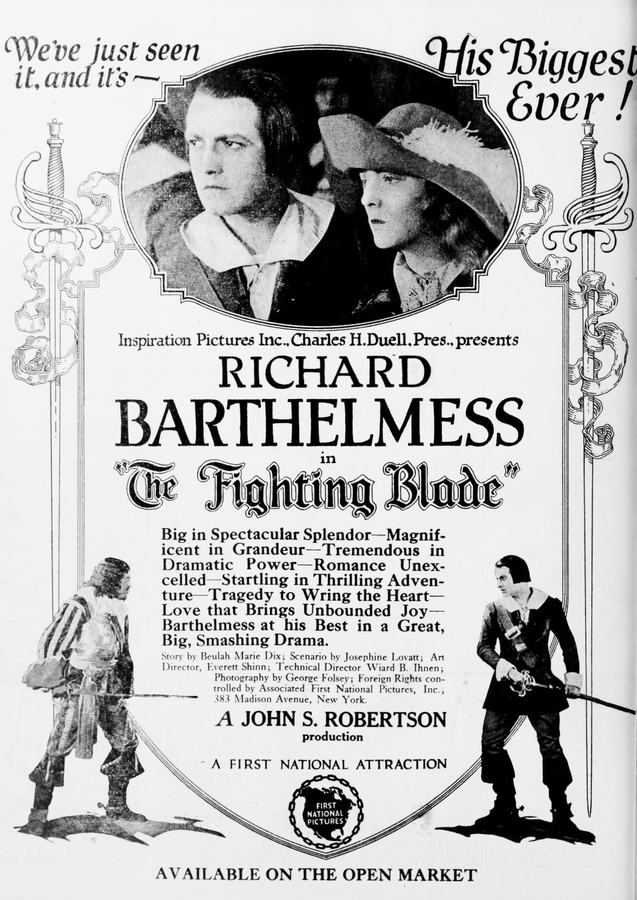
A definitive 6/10 rating for a film that redefined the boundaries of cult cinema. The Fighting Blade remains a cornerstone of transgressive art.
Stepping back into the hallowed halls of silent cinema often feels like unearthing a forgotten treasure, a celluloid artifact whispering tales from a bygone era. Among these cinematic echoes, Don Bartlett's 1923 historical drama, The Fighting Blade, emerges as a particularly gleaming gem. It’s a film that, despite its age, retains a remarkable vivacity, drawing viewers into a world of political intrigue, fervent romance, and the clashing of steel. Set against the richly textured backdrop of Oliver Cromwell’s turbulent England, specifically the academic and often rebellious environs of Oxford, this picture is far more than a simple swashbuckler; it's a meticulously crafted narrative exploring themes of loyalty, honor, and the unwavering courage required to defend one’s convictions and affections.
The choice of Cromwellian England as the canvas for this drama is nothing short of inspired. This was an epoch defined by seismic shifts in power, religious fervor, and societal upheaval. The very air of 'olde Oxford towne' would have been thick with tension, a battleground of ideas as much as a theatre of war. The film masterfully leverages this historical milieu, imbuing every frame with a palpable sense of impending conflict and uncertain allegiances. It’s not merely a scenic backdrop but an active participant in the narrative, shaping the destinies of its characters and testing their moral fiber. The meticulous attention to period detail, from costuming to set design, transports the audience directly into this fraught historical moment, a testament to the production values of the era.
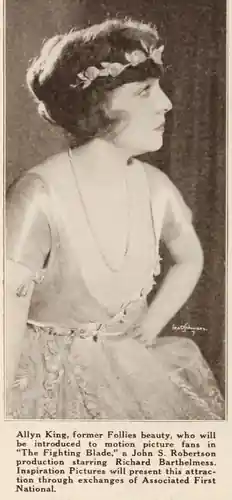
At the heart of this historical maelstrom stands Karl Van Kerstenbrook, portrayed with compelling nuance by the incomparable Richard Barthelmess. Barthelmess, a titan of the silent screen, brings a magnetic intensity to the role of the Dutch soldier-of-fortune. His Kerstenbrook is not just a master of the sword; he is a man of principle, an outsider navigating a complex world, driven by a code of honor that transcends national boundaries. Barthelmess’s expressive eyes and subtle gestures convey a wealth of emotion, from resolute determination to tender vulnerability, without uttering a single word. He embodies the classic hero archetype, yet infuses it with a quiet dignity and a world-weary wisdom that elevates the performance beyond mere derring-do. His ability to communicate complex emotional states through purely physical means is a masterclass in silent acting, proving why he remained one of the most sought-after talents of his time.
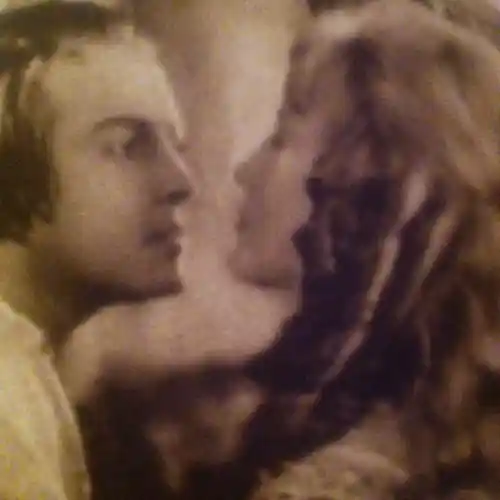
Complementing Barthelmess’s stoic strength is Dorothy Mackaill as the fair Thomsine Musgrove. Mackaill, with her captivating screen presence, portrays Thomsine not merely as a damsel in distress but as a woman of spirit and resilience, caught in the crosscurrents of political and personal loyalties. Her plight provides the emotional anchor for Kerstenbrook's journey, making his struggle not just about abstract ideals but about the very real, tangible threat to the woman he loves. The chemistry between Barthelmess and Mackaill is palpable, a tender spark amidst the encroaching darkness, giving the film its essential romantic core. Their silent glances and shared moments speak volumes, conveying a profound connection that grounds the film's more adventurous elements.
The supporting cast, though perhaps less prominent, contributes significantly to the film's rich texture. Lee Baker, Morgan Wallace, Phil Tead, and Frederick Burton, among others, craft memorable characters that populate Oxford's tumultuous landscape. Their performances, often relying on exaggerated expressions and gestures typical of the silent era, nevertheless manage to convey distinct personalities and motivations. From the conniving antagonists to the loyal allies, each actor plays their part in building a believable world around our central protagonists. Stuart Sage and Bradley Barker also provide notable contributions, adding layers to the historical drama. Even figures like Marcia Harris and Allyn King, in their more minor roles, contribute to the overall atmosphere of intrigue and period authenticity.
The plot, penned by the talented trio of Josephine Lovett, Beulah Marie Dix, and Don Bartlett, unfolds with a compelling rhythm, blending historical drama with exhilarating action sequences. The narrative is a relentless test for Karl Van Kerstenbrook, forcing him to prove his 'nettle'—his inherent courage and resilience—at every turn. His blade, a symbol of his prowess and his commitment, becomes an extension of his will. The screenplay expertly weaves together personal stakes with broader political machinations, ensuring that the audience remains invested in both the individual fates of the characters and the larger historical context. The pacing is remarkably adept for a silent film, maintaining tension and momentum through a series of escalating challenges and dramatic confrontations.
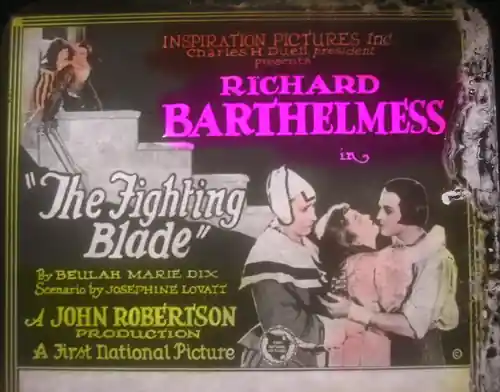
Don Bartlett’s direction is characterized by a keen understanding of visual storytelling, a paramount skill in the silent era. He orchestrates the action with precision, particularly in the numerous sword-fighting sequences, which are executed with a balletic grace and thrilling realism. The camera work, while perhaps not as overtly experimental as some of its contemporaries, is always purposeful, guiding the viewer's eye and enhancing the dramatic impact of each scene. The use of lighting and shadow to create mood, especially in the more clandestine or suspenseful moments, is particularly effective. The film's visual language is rich and evocative, ensuring that the absence of spoken dialogue never diminishes the narrative's power or clarity.
Beyond the thrilling sword fights and romantic entanglements, The Fighting Blade delves into deeper thematic waters. It explores the concept of honor in a world where allegiances are fluid and betrayal is a constant threat. Karl’s steadfast commitment to Thomsine, despite the personal peril, underscores a timeless ideal of chivalry and unwavering devotion. The film also subtly touches upon the complexities of identity—Karl, as a Dutchman in England, represents an outsider perspective, allowing the narrative to examine prejudice and acceptance. His journey is ultimately one of self-affirmation, proving his worth not just as a warrior but as a man of integrity in a fractured society.
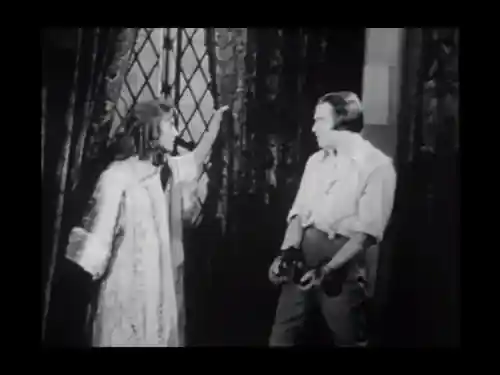
While each silent film possesses its unique charm, The Fighting Blade stands tall among its peers. In its blend of historical action and romantic drama, it shares a spiritual kinship with other period pieces of the era. One might draw parallels, for instance, with films like Fighting Blood, released in the same year, which also delves into intense personal struggles against a backdrop of societal conflict, often emphasizing themes of resilience and perseverance. Both films, in their own right, showcased the robust storytelling capabilities of silent cinema when tackling grand narratives. The sense of sweeping historical drama and personal stakes also brings to mind the dramatic tension found in features like The Whirlwind, which similarly explores individuals caught in the maelstrom of larger societal forces. These comparisons highlight a shared ambition to deliver compelling, emotionally resonant stories through purely visual means, often with a focus on heroism and the triumph of the human spirit against formidable odds. However, The Fighting Blade distinguishes itself with its particularly strong character development for Karl and its visually striking swordplay sequences, making it a standout in the genre.
For contemporary audiences, watching The Fighting Blade is a journey into the foundational artistry of cinema. It reminds us of an era when storytelling relied purely on visual artistry, compelling performances, and the evocative power of a well-crafted narrative. The film’s enduring appeal lies not just in its historical significance but in its timeless themes and its ability to captivate viewers with its dramatic sweep and emotional depth. It serves as a powerful testament to the skill of its creators—the writers, the director, and especially the actors—who, without the aid of spoken dialogue, managed to create a work of profound impact.
In conclusion, The Fighting Blade is a compelling and historically rich silent film that deserves renewed attention. It offers a fascinating glimpse into a pivotal period of English history, filtered through the lens of personal heroism and romantic devotion. Richard Barthelmess delivers a performance that is both commanding and tender, anchoring the film’s emotional core. The meticulous production design, thrilling action sequences, and a narrative that expertly balances intrigue with passion make this a truly memorable cinematic experience. It is a film that, like Karl Van Kerstenbrook’s unyielding blade, has stood the test of time, proving its mettle and continuing to cut a sharp impression into the annals of film history. For aficionados of silent cinema, historical dramas, or simply exceptional storytelling, this film is an essential watch, a vibrant echo from a foundational era of filmmaking that continues to resonate with power and grace.
IMDb 4
1911
Community
Log in to comment.