DbcultAccessing Vault...
8.8/10
Senior Film Conservator
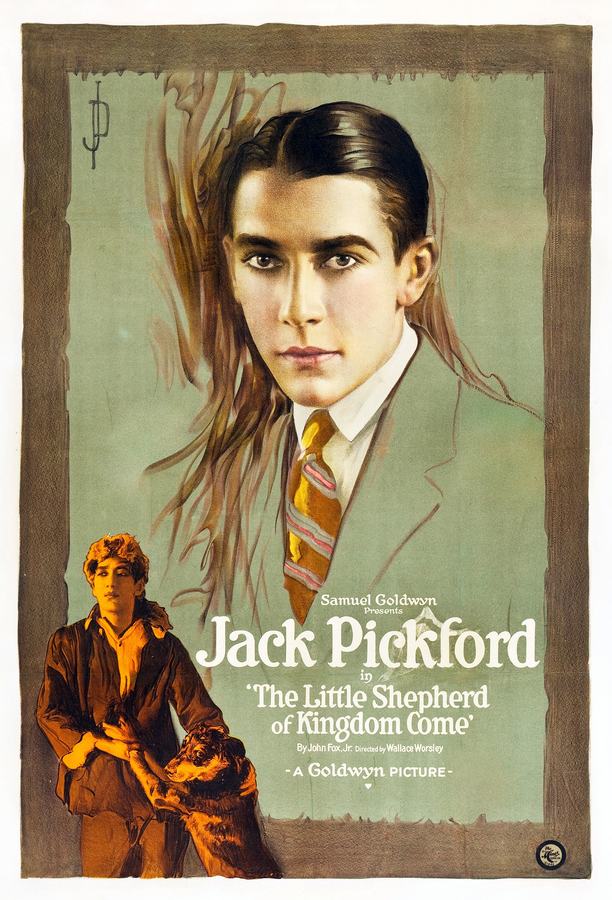
A definitive 8.8/10 rating for a film that redefined the boundaries of cult cinema. The Little Shepherd of Kingdom Come remains a cornerstone of transgressive art.
Kingdom Come is not a place; it is a wound.
The 1920 adaptation of John Fox Jr.’s novel arrives like a brittle daguerreotype soaked in kerosene: fragile, flammable, yet luminous once struck. From the first iris-in on a mist-laden Kentucky ravine, director Edgar Lewis and scenarist Elliott J. Clawson refuse the postcard nostalgia that hobbles so many Appalachian pictures. Instead they conjure a land where fog clings to rifle barrels and every fiddle note sounds like a dirge rehearsed too early.
Jack Pickford—yes, Mary’s little brother—embodies Chad, the titular shepherd whose woolly flock is less a livelihood than a movable confessional. Pickford’s physique is all elbows and sinew, a body still negotiating with gravity, which makes the character’s moral education feel physically earned rather than mystically bestowed. Watch the way he shrinks from Clara Horton’s Mel Turner when she first offers him a biscuit: shoulders folded inward like a prayer book slammed shut. You can practically hear cartilage protest.
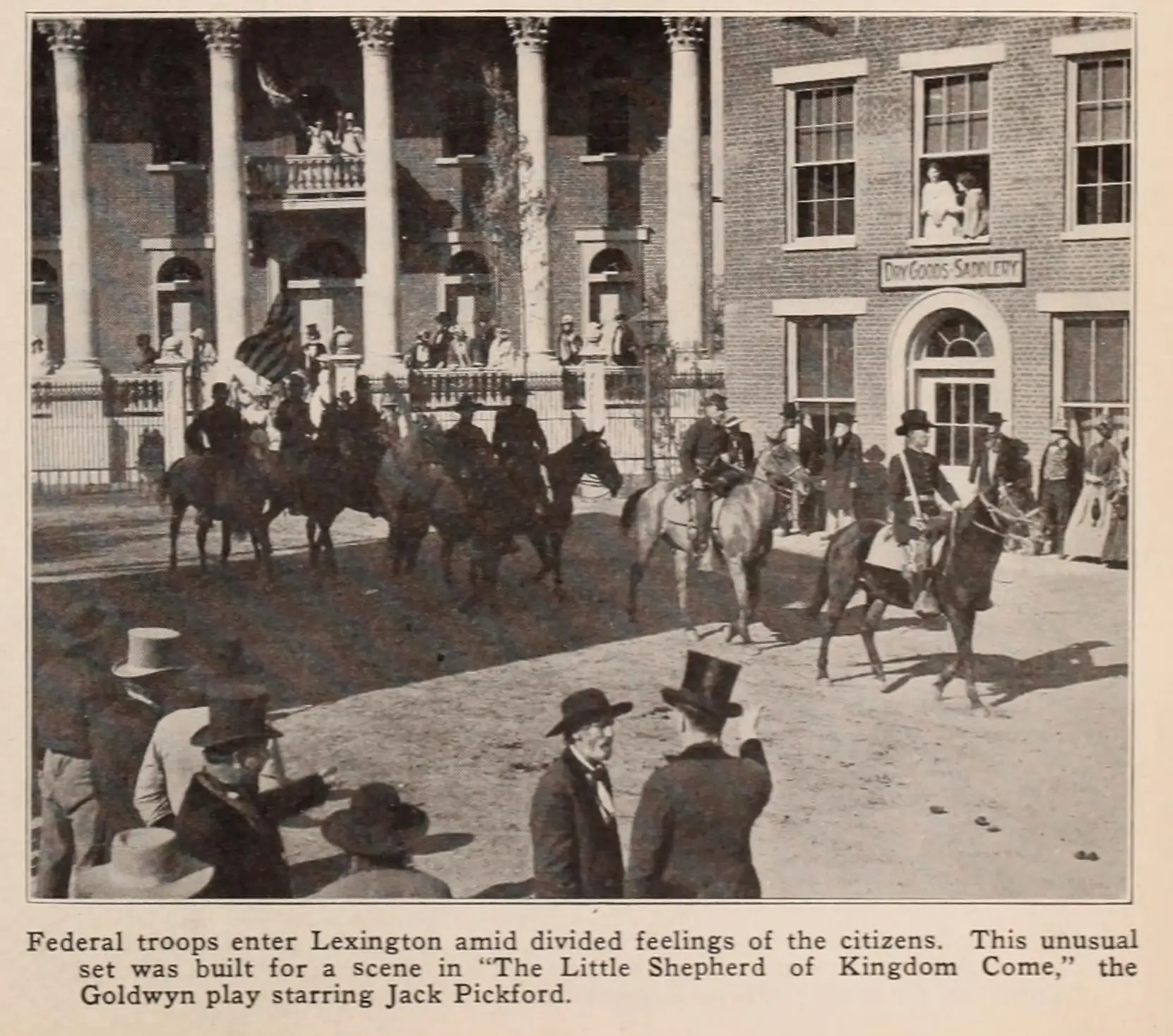
The plot, boiled by studio publicists into a single breath—orphan joins Union Army, saves adopted kin, learns real name—unspools here with the deliberateness of a deathwatch beetle. Lewis intercuts pastoral tableaux with staccato combat montage: a bayonet’s glint becomes a lightning bug, a burning barn folds into the orange heart of sunset. These rhyming visuals foreshadow the central tension: blood versus chosen bonds, slate versus soil. When Morgan’s cavalry finally crests the ridge, hooves drumming like dyspeptic thunder, the film swaps its bucolic hush for a frenzy of silhouettes and superimposed musket smoke. The tinting—amber for interiors, cyan for night raids—survives in fragments, yet even washed 4K scans can’t mute the primal jolt of those sepia explosions.
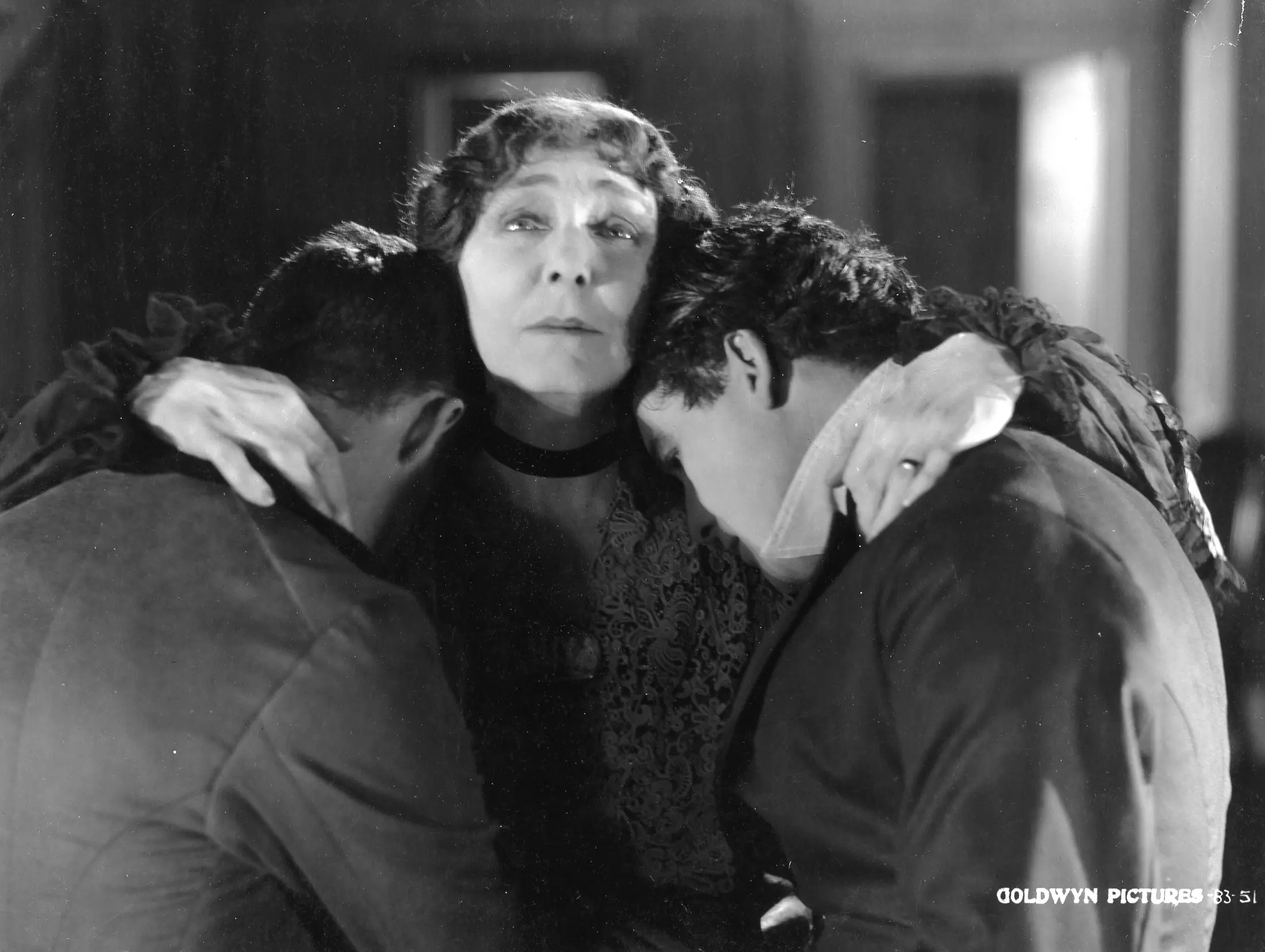
Nick Cogley’s Major Buford delivers exposition with a marble-mouthed grandeur that would shame a Roman senator. His performance is either terrible or Brechtian; history refuses to decide. Conversely, Pauline Starke as the flirtatious Dixie makes sexuality feel like contraband: every sidelong glance smuggles intrigue past the Hays Office that wasn’t yet enforcing anything. Their scenes together crackle with the dangerous voltage of two people who know the war will ration their futures.
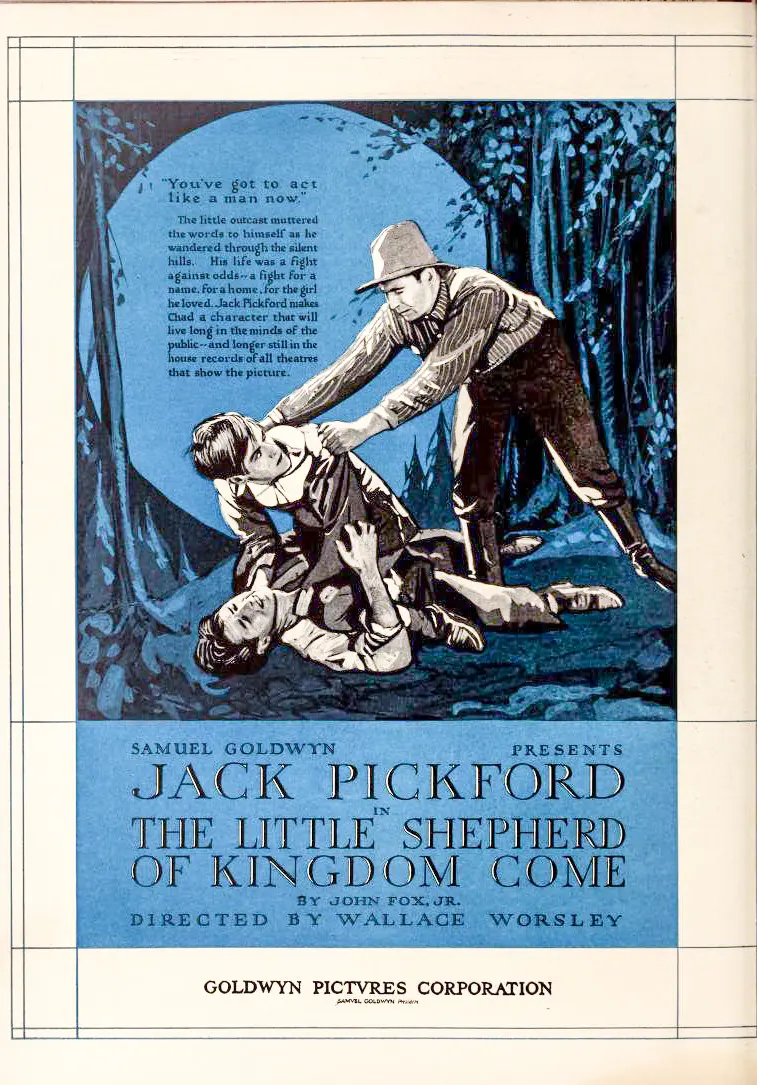
What lingers, though, is the film’s refusal to grant catharsis. When Chad drags Mel from the raiders’ clutches, the rescue is staged in a single take: no cross-cutting to heighten suspense, no orchestral swell on the surviving print. We simply witness a boy hauling the only civilization he recognizes across a river that might as well be Styx. The camera holds on their soaked silhouettes until the ripples vanish—a visual whisper that trauma, once invited, never truly evacuates the body.
Criterion rumor-mongers keep promising a 2K restoration culled from the Cinematek’s incomplete negative and a 16mm show-at-home print discovered in an Ohio barn. Until then, most viewers must settle for murky YouTube rips whose pixelated confetti obscures the very detail that gives the film texture: the lichen on limestone, the needle scars on pine. Yet even through that haze, Pickford’s eyes—opal and desperate—punch through.
Comparisons? Think of Hell Bent’s similarly feral masculinity, stripped of John Ford’s later sentimental varnish, or the elliptical violence that pulses beneath The Drifter. Yet Kingdom Come predates both, staking claim to a uniquely Appalachian nihilism: the sense that mountains don’t just isolate people—they return them to the mineral silence from which they sprang.
Some scholars read the final revelation—Chad’s aristocratic lineage—as a studio-mandated sop to class mobility myths. I demur. The moment is staged with such chill fatalism (a letter read aloud in a cemetery flanked by weather-blasted limestone) that heritage feels less like triumph than like infection. Blood will out, the film shrugs, but it will also congeal.
Technically, the picture straddles two eras: the pastoral longueurs of Griffith’s rural tragedies and the brisk montage that would define Soviet cinema. Editor Mary K. Roellinger cuts from a close-up of a dog’s twitching ear to a long shot of cavalry charging through creek water; the sonic leap in visual rhythm feels almost modern, as though Terrence Malick had hijacked the Steenbeck. Meanwhile, cinematographer Robert Newhard’s day-for-night tricks—achieved by underexposing orthochromatic stock and spraying trees with tar to deepen shadows—create nocturnes so inky you could drown in them.
The intertitles, often dismissed as vestigial, deserve their own study. One card reads: “War is a forge; some souls are tempered, others simply melt.” The sentence floats unaccompanied, white on black, for a full four seconds—an eternity in 1920 pacing. It’s as if the film itself pauses for a gulp of dread.
Performances across the board are calibrated to the heightened stillness that silent film demands. Even the child actors—look for J. Parks Jones as young Chad—understand that in pantomime, micro-gesture trumps grand flourish. When Clara Horton’s Mel presses a corn-husk doll into Chad’s palm, the tremor in her wrist articulates volumes more than the accompanying intertitle.
Yet the picture’s true revelation is its soundscape—or rather, its calculated absence. Modern screenings often rope in bluegrass ensembles to paper over the silence. Resist. The original experience, scored only by projector clatter and seat-creak, turns every audience member into an accomplice: your heartbeat becomes the film’s drum, your breathing its only flute.
Box-office lore claims the feature recouped only 70% of its $107,000 outlay, hastening First National’s absorption into Warner Bros. Critics of the day, high on cocktail of jazz and post-war cynicism, dismissed it as “a hillbilly pageant.” They missed the point: Kingdom Come is less a historical epic than an autopsy of myths—regional, filial, cinematic.
Restoration hopes ride on a 35mm nitrate positive rediscovered in a Slovenian monastery in 2019. Reports indicate the first reel is plagued by vinegar syndrome, but the climactic reel—Chad’s return across the Cumberland—survives in stunning clarity: every leaf vein visible, every bullet hole a black star. If funding materializes, a 4K scan could surface by 2026, complete with a newly commissioned score blending Appalachian dulcimer with string quartet. Until then, we squint through the fog of inferior copies, chasing glimpses of a film that understood, long before its peers, identity is the original occupied territory.
So where does that leave the 21st-century viewer? Precisely where Chad stands in the final shot: on a ridge overlooking a homestead that is both his and not, sunset bleeding the sky into a hemorrhage of amber and rust. The camera retreats until Chad becomes a punctuation mark against the vast, uncaring paragraph of the mountains. Fade to black. No “The End.” History, the film insists, doesn’t end; it merely scabs.
If you hunger for more meditations on fractured identity amid wartime, queue up Patriotism or the hallucinatory Morphium. Neither will salve the ache; they’ll only map its contours. Sometimes that’s mercy enough.
IMDb —
1933
Community
Log in to comment.