DbcultAccessing Vault...
Cult Review
Senior Film Conservator
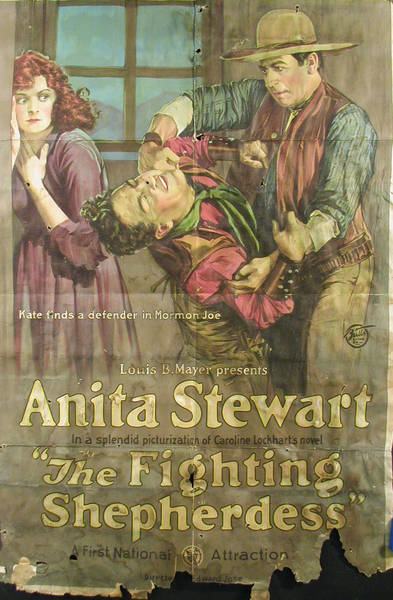
A bruised pearl of the American silent era, The Fighting Shepherdess arrives like a tumbleweed soaked in kerosene—deceptively rustic until it bursts into political flame.
Most westerns of 1920 wanted cowboys, saloon chandeliers, and the easy catharsis of a six-shooter. Caroline Lockhart’s screenplay, adapted from her own serial, swaps the cowboy for a shepherdess, the saloon for a lambing shed, and the six-shooter for a gendered war of attrition. The result is a film that feels as though someone grafted a suffrage pamphlet onto a cattle-drive epic and let the sutures bleed.
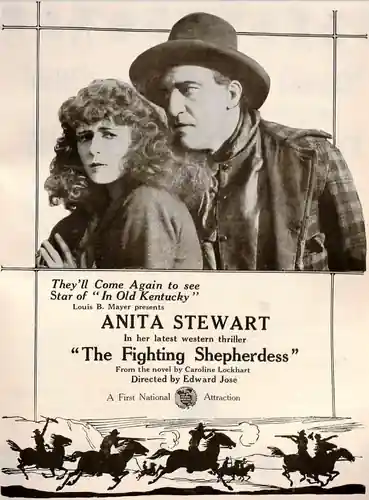
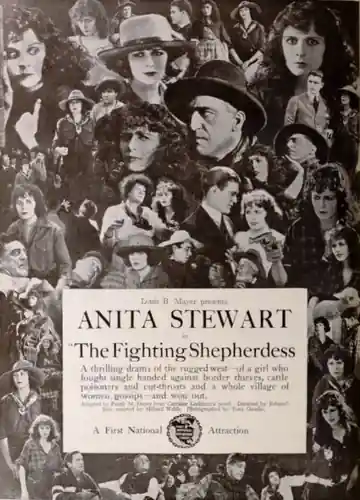
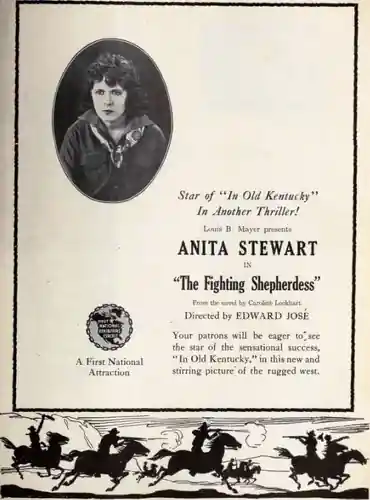
Anita Stewart, queen of the silent box office that year, plays the nameless protagonist listed only as “The Girl” in studio ledgers. Stewart’s face—wide eyes set like cold blue coins beneath a battered Stetson—carries the entire moral weight of the picture. She never smiles, not because she lacks humor but because the landscape itself has outlawed it.
The plot is deceptively linear: father dies, debts ripen, cattlemen close in. Yet every reel tilts the axis. The first third is pastoral noir—shadows of clouds sliding across sheep backs like guilty consciences. Mid-film pivots into courtroom kabuki where a bought judge dismisses surveys as “sentimental ink.” By the finale, the movie has shape-shifted into a siege poem: lanterns blown out, rifles glinting like ice picks under starlight.
Cinematographer John W. Brown, fresh from shooting snowdrifts for Over Night, treats Wyoming as a study in negative space. Two-thirds of any given frame are sky, so when a rider appears he seems apostrophic—a comma inserted by an angry god. The sheep themselves become animated white punctuation, drifting, clustering, re-staging the politics of bodies under capitalism. In one bravura shot, the camera tilts down from a circling hawk to find the heroine cradling a black lamb, its fleece inked for market identification. The chromatic inversion—black sheep, white sky—feels like a manifesto: she will not be sorted.
Contrast this with the cattlemen’s compositions: low angles that balloon their chests into monuments, shadows cast like oil spills across the prairie. Editor Frank Mitchell Dazey intercuts these hulking silhouettes with close-ups of bleating lambs, a dialectical montage that predates Eisenstein’s Battleship Potemkin by five years yet feels angrier because it is so quiet.
Anita Stewart’s refusal of silent-era semaphore—no fluttering lashes, no hand pressed to brow—reads as Method avant la lettre. She acts with her clavicles: shoulders squared when surveying land, suddenly concave when the banker reads the foreclosure notice. Watch her thumbs inside leather gloves, drumming a Morse of desperation only the audience can hear.
Opposite her, Noah Beery as cattle baron Cash Hale chews more cud than scenery. He lets his neckerchief do the acting: crimson silk that flares like a fresh wound whenever he’s thwarted. In the climactic confrontation, he fires his revolver not at the heroine but at her sheep—an act so gratuitous it transcends villainy and becomes thesis. The West will not be won by killing people; it will be won by erasing their livelihoods one ewe at a time.
Ben Lewis, playing the feckless surveyor who loves her, has the thankless task of embodying compromise. Lewis underplays so severely he seems to vanish into sagebrush, a ghost of allyship that never quite materializes. His final gesture—handing her the deed he forged—carries no redemptive lift; Stewart pockets it without looking at him, as though receipt of male charity is merely another tributary of the same patriarchal river.
Lockhart’s source novel scandalized 1919 readers with its blunt assertion that “the only thing more obscene than a cattle baron is the courthouse that kisses his spurs.” The Hays Office, still a glimmer in postmasters’ eyes, could not yet censor films, so the screenplay keeps that ire. Dialogue intertitles bristle with class-conscious aphorisms: “A deed is just a love letter the bank writes to itself.”
Yet the film’s most radical whisper is ecological. Sheep, those docile clichés of pastoral idyll, here become insurgents. Their grazing patterns differ from cattle; they crop grass to the root, turning rangeland into lunar scab if unmanaged. The heroine’s refusal to overstock, her midnight irrigation of alfalfa plots, her negotiation with Basque shepherds—all sketch a cooperative stewardship capitalism cannot metabolize. When Hale’s herd tramples her pasture into dust, the camera lingers on a single clump of sage trying to stand upright. It’s the most intimate violence the film depicts, and it prefigures today’s fights over aquifers and methane.
Original roadshow engagements shipped with a cue sheet calling for “sad corrido, then galloping diminished chords, then silence so deep the audience hears its own pulse.” Most nickelodeons ignored it, slapping on generic barn-dance reels. The surviving 16 mm print at MoMA retains tinting: amber for day, cyan for night, rose for the two brief flashbacks to the heroine’s childhood. These chromatic shifts act as emotional chromatography, separating hope from resignation at the molecular level.
During 1921’s Chicago engagement, the orchestra pit caught fire during the siege scene. Projectionist kept rolling; audience stayed seated, assuming the smoke was part of the show. That anecdote, apocryphal or not, testifies to how thoroughly the film colonized spectator perception.
Place The Fighting Shepherdess beside Under Two Flags and you see how Hollywood bifurcated female agency: colonial adventure fantasy vs. home-front realism. Pair it with Her Life and His and notice how both films end with a woman holding property deeds aloft, but only one allows her to keep them. Against Singing River, another Stewart vehicle, Shepherdess refuses musical consolations; its silence is weaponized.
Internationally, it rhymes with the agrarian fury of Brazil’s O Crime dos Banhados: both indict monoculture, both stage courtroom farces, both let the land itself pronounce the verdict. Yet while Banhados ends in massacre, Shepherdess ends in precarious standoff—American optimism or American amnesia, you decide.
No complete 35 mm negative survives; what circulates is a 1998 restoration spliced from two incomplete prints—one found in a Butte parish attic, the other in a Lisbon archive mislabeled La Pastora Guerrera. The 2019 Kino Blu-ray adds a piano score by Guenter Buchwald that alternates between Bartók dissonance and Copland open chords. The disc also includes a 12-minute featurette on sheep-ranch economics narrated by Kelly Reichardt, who calls the film “the missing link between The Wind and Meek’s Cutoff.”
Streaming rights are fractured; you can rent it on CinephobeTV in 2K, but the transfer crushes the cyan night scenes into navy murk. Physical media remains the only way to see the tints breathe. Buy the disc, rip it, host a backyard screening with a Bluetooth speaker hidden in a sheep skull—continue the insurgency.
Some films age into quaintness; others into prophecy. The Fighting Shepherdess does both. Its sexual politics feel simultaneously of-their-minute and tomorrow’s headlines—compare the heroine’s standoff with the 2020s’ “don’t frack with my future” land camps. Its ecological lament predates Dust Bowl documentaries by a decade. Its formal DNA—elliptical editing, landscape as antagonist, refusal of cathartic kiss—maps onto contemporary slow cinema more than to any 1920s western.
Yet the film’s ultimate triumph is affective. Long after the fade-out, you will find yourself scanning restaurant menus for grass-fed beef, wondering whose grass was fed. You will hear bleating in traffic horns. You will remember Anita Stewart’s eyes—two cold candles that refused to be snuffed—and realize this is not nostalgia but accountability.
Watch it for the feminist shoot-out. Rewatch it for the quiet moment when a black lamb nuzzles the heroine’s boot, and she almost—almost—lets herself cry.
IMDb 7.4
1927
Community
Log in to comment.