DbcultAccessing Vault...
7.4/10
Senior Film Conservator
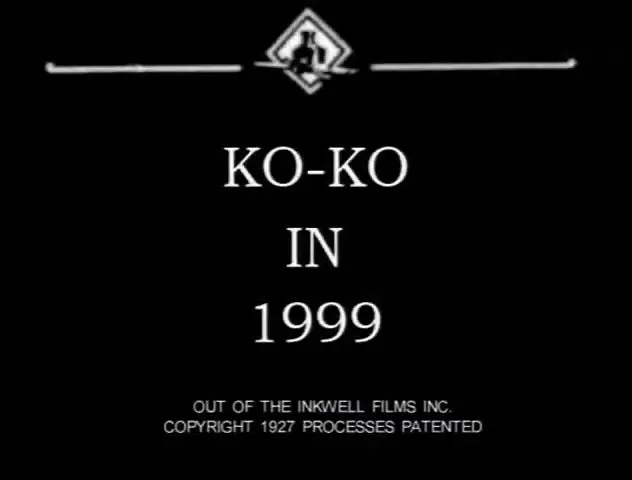
A definitive 7.4/10 rating for a film that redefined the boundaries of cult cinema. Ko-Ko in 1999 remains a cornerstone of transgressive art.
Is Ko-Ko in 1999 worth watching today? Short answer: Yes, but only if you are willing to look past the slapstick and see the existential dread lurking beneath the ink.
This film is for animation purists and those fascinated by early 20th-century futurism. It is absolutely not for viewers who require a linear plot or high-definition visual polish.
This film works because it utilizes the 'Out of the Inkwell' technique to create a genuine sense of metaphysical peril that most modern cartoons lack.
This film fails because the frantic pacing of the 1999 sequences prevents any single futuristic gag from landing with the satirical weight it deserves.
You should watch it if you want to see the exact moment where animation transitioned from simple 'moving drawings' into a medium capable of biting social commentary.
Max Fleischer was never just an animator; he was a tinkerer, an inventor, and a bit of a cynic. In 1927, the idea of the year 1999 wasn't about the internet or space travel. It was about the terrifying extension of the assembly line into every facet of human life. When Ko-Ko enters this future, he isn't greeted by wonders. He is greeted by a mechanical barber.
The barber scene is a highlight of early body horror disguised as comedy. The machine’s cold, metallic arms manipulate Ko-Ko with a precision that feels invasive. Unlike the character-driven humor in The Dog and the Thief, the humor here is derived from the loss of autonomy. The machine doesn't care if Ko-Ko is a clown or a king; it only cares about the process.
Fleischer uses the medium to highlight the absurdity of the industrial age. The animation of the gears is heavy and deliberate, contrasting with Ko-Ko’s rotoscoped fluidity. It is a visual clash between the organic and the synthetic that feels remarkably modern. If you look closely at the feeding machine, you see the blueprint for the 'eating machine' in Chaplin’s Modern Times, proving Fleischer was years ahead of the curve in his critique of efficiency.
The direction in Ko-Ko in 1999 is defined by the presence of the animator himself. Max Fleischer appears in the live-action segments, and his relationship with Ko-Ko is fraught with a strange tension. He is the creator, but he is also the one who allows Father Time to pursue his creation. This isn't just a gimmick; it’s a directorial choice that frames the entire film as a struggle for survival.
The transition from the live-action desk to the animated world is handled with a seamlessness that puts many modern CGI-hybrid films to shame. When Ko-Ko jumps into the future, the background art shifts from the minimalist inkwell setting to a dense, cluttered urban sprawl. This shift in art direction mirrors the internal chaos of the character. He is running from death, only to find a world where life is lived by machines.
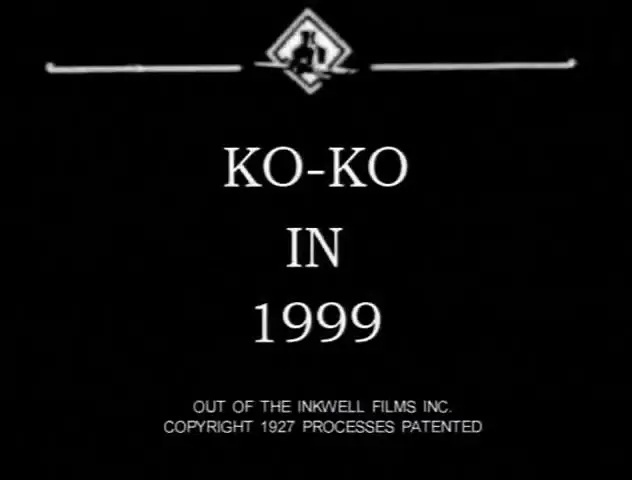
Fleischer’s direction is punchy. He doesn't linger on a shot for more than a few seconds. The film moves with the same frantic energy as Conflict, pushing the viewer to keep up with the visual gags. It works. But it’s flawed. The speed sometimes blurs the ingenuity of the background designs, which are some of the most imaginative of the silent era.
If you are looking for a historical curiosity that still has the power to unsettle, then the answer is a resounding yes. Ko-Ko in 1999 is a fever dream captured on celluloid. It captures a specific American anxiety of the 1920s—the fear that the machines we built to serve us would eventually replace our most human institutions, including marriage.
The 'Marriage Machine' sequence is particularly biting. In a matter of seconds, two characters are processed, stamped, and wed. It’s a cynical observation on the speed of modern life that feels uncomfortably relevant in the age of swipe-right dating apps. While films like Nearly Married explored the social hurdles of matrimony, Fleischer reduces the entire institution to a vending machine transaction.
The rotoscoping used for Ko-Ko gives him a weight and a presence that other cartoons of the era lacked. When he runs, his knees lift and his feet plant with a human cadence. This makes his peril feel more 'real' than the rubber-hose animation found in contemporary shorts. When Father Time swings his scythe, you feel the proximity of the blade because Ko-Ko moves like a person, not a drawing.
Pros:
The inventive 'Out of the Inkwell' live-action integration remains impressive nearly a century later. The social satire regarding automation is surprisingly sharp and lacks the sentimentality of Disney’s later works. The character design of Father Time is genuinely menacing, adding a layer of stakes often missing from silent shorts.
Cons:
The film relies heavily on repetitive chase logic that can wear thin by the six-minute mark. Some of the futuristic gags are dated in their execution, requiring a bit of historical context to fully appreciate. The musical scores found on modern restorations vary wildly in quality and can sometimes distract from the visual rhythm.
To understand Ko-Ko in 1999, one must look at Fleischer’s broader body of work, such as Frontier of the Stars. Fleischer was obsessed with the boundary between our world and the world of the screen. Ko-Ko isn't just a character; he is a prisoner of the ink. This film takes that meta-narrative and pushes it to its logical conclusion: even a cartoon character cannot escape time.
The film’s depiction of 1999 as a gear-driven dystopia is a fascinating counterpoint to the sleek, clean futures depicted in later decades. It’s a dirty, noisy, and dangerous future. It’s a future where a mechanical barber might accidentally decapitate you while trying to give you a shave. It’s a future that feels more like a warning than a promise.
"Fleischer’s 1999 isn't a dream of progress; it is a nightmare of efficiency where the human soul—or in this case, the inkwell soul—is processed through a series of automated indignities."
Ko-Ko in 1999 is a jarring, inventive, and deeply weird piece of cinema. It stands as a testament to Max Fleischer’s ability to weave complex social anxieties into what was ostensibly children's entertainment. While it lacks the narrative depth of a feature-length film like The Mystic, it compensates with a relentless visual imagination that few modern animators can match.
The film is a reminder that our fears about technology are not new. We have been worried about the 'Marriage Machine' and the 'Mechanical Barber' for a long time. Fleischer just had the courage to draw them. It is a vital, if slightly chaotic, entry in the history of the medium. Watch it for the history; stay for the sheer, unhinged creativity of a man who looked at an inkwell and saw the end of the world.

IMDb 5.2
1923
Community
Log in to comment.