DbcultAccessing Vault...
8/10
Senior Film Conservator
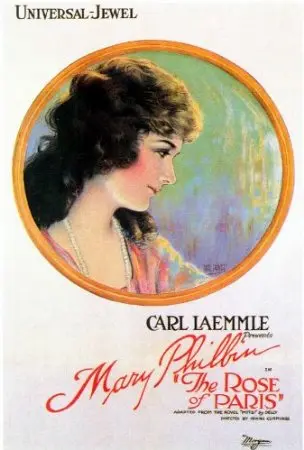
A definitive 8/10 rating for a film that redefined the boundaries of cult cinema. The Rose of Paris remains a cornerstone of transgressive art.
The year 1924 stood as a watershed moment for Universal Pictures, a period when the studio was oscillating between the visceral horror of its emerging monster cycle and the delicate, often heart-wrenching melodramas that defined the 'Jewel' production line. At the intersection of these sensibilities lies The Rose of Paris, a film that leverages the ethereal fragility of Mary Philbin to tell a story of systemic greed and the precarious nature of virtue. Directed by Irving Cummings, the film is less a simple rags-to-riches tale and more a study in the predatory mechanics of the Parisian elite. It captures a specific zeitgeist where the remnants of feudal inheritance clashed violently with the burgeoning cynicism of the post-war era.
In the pantheon of silent film stars, Mary Philbin possesses a visage that seems almost translucent, a canvas upon which the most minute tremors of fear and hope are magnified. As Mitsi, the convent-bred orphan, Philbin avoids the saccharine pitfalls that often plagued her contemporaries. There is a gravity to her performance—a weight of expectation that she carries from the sacred halls of her upbringing into the profane drawing rooms of Paris. Unlike the protagonists in The Faded Flower, who often succumb to their environments with a passive sigh, Philbin’s Mitsi retains a core of bewildered resilience that anchors the film’s more histrionic moments.
Her chemistry with the supporting cast, particularly the menacingly suave John St. Polis, creates a palpable tension. St. Polis, playing the relative who knows the secret of her birthright, embodies a specific type of cinematic villainy: the one that uses etiquette as a weapon. Every gesture, every invitation to a grand ball, is a calculated move to strip Mitsi of her autonomy. This dynamic mirrors the social deception found in The City of Masks, where identity is a currency to be traded or stolen in the shadows of the urban landscape.
The visual language of The Rose of Paris is predicated on the sharp juxtaposition between the ecclesiastical simplicity of the convent and the baroque, suffocating opulence of the Parisian estates. The cinematography uses light not just to illuminate, but to isolate. In the early scenes, the light is soft, diffused through stained glass, suggesting a world of divine order. As Mitsi enters Paris, the lighting becomes harsher, more directional, creating deep pockets of shadow where the conspirators lurk. This shift in visual tone is reminiscent of the atmospheric dread found in During the Plague, though here the contagion is not biological, but moral.
"The film operates as a visual symphony of entrapment, where the very walls of the Parisian mansions seem to close in on the protagonist, echoing her internal realization that her newfound family is merely a collective of well-dressed wolves."
The screenplay, a collaborative effort involving heavyweights like Lenore J. Coffee and Edward T. Lowe Jr., manages to maintain a brisk pace despite the intricate plotting required for a missing-heir narrative. They avoid the narrative stagnation that occasionally hampered films like The Honor of His House. Instead, every scene serves to tighten the noose around Mitsi’s inheritance. The writers understand that the audience is ahead of the protagonist, and they use this dramatic irony to generate a constant sense of burgeoning anxiety.
The central conflict of the film—the swindling of an innocent by her own kin—is a timeless trope, yet it is executed here with a particular venom. The antagonist is not a mustache-twirling caricature but a man driven by the existential fear of losing his social standing. This nuance makes his betrayal of Mitsi all the more chilling. It isn't just about the money; it's about the preservation of a lifestyle that is fundamentally parasitic. This theme of social desperation is a through-line in many films of the era, such as Der Mann ohne Namen - 1. Der Millionendieb, where the quest for wealth destroys the very humanity it was meant to enhance.
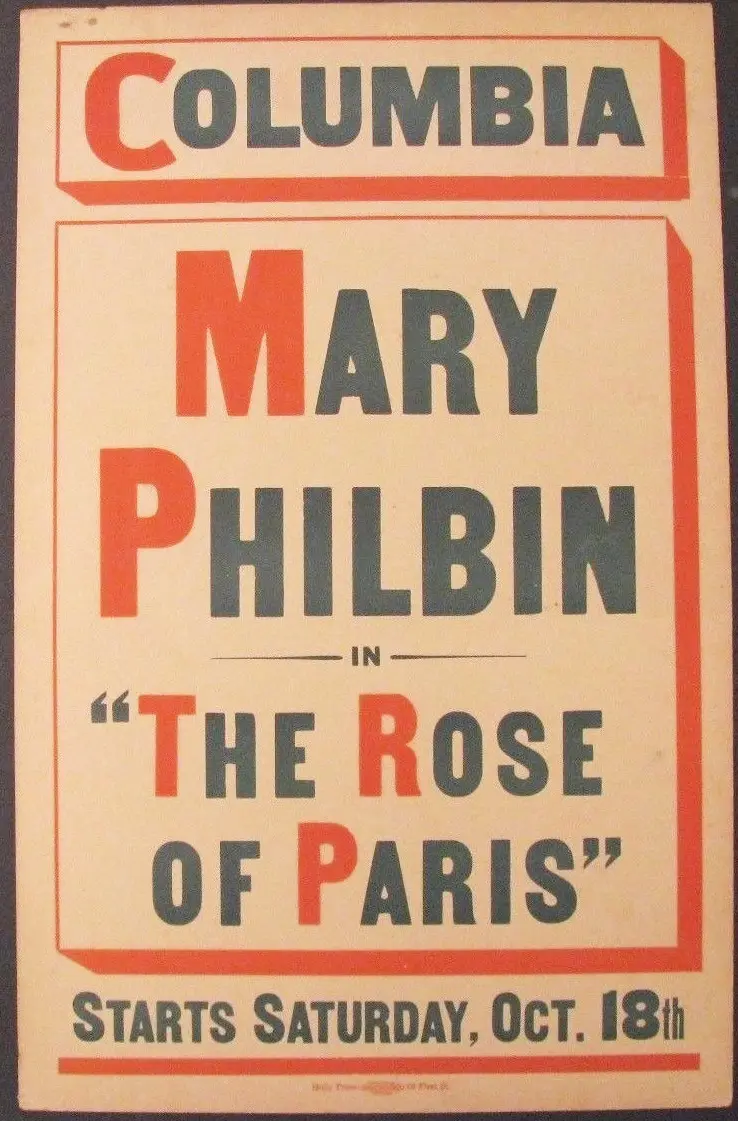
The supporting cast, including the likes of Cesare Gravina and Rose Dione, adds layers of texture to this world. Gravina, in particular, brings a touch of grounded humanity that prevents the film from floating off into the ether of pure melodrama. His presence serves as a reminder of the world outside the gilded cages of the heirs—a world that is often ignored by the characters but felt by the audience.
To watch The Rose of Paris today is to witness the peak of the silent era's ability to communicate complex socio-economic anxieties through pure imagery. The film addresses the precariousness of the feminine position in the early 20th century—how a woman's entire life could be upended by a secret in a dusty ledger or the whims of a male relative. This thematic core is shared with Alias Mary Brown, which also explores the intersection of identity and female survival in a hostile patriarchal framework.
Furthermore, the film's obsession with lineage and bloodlines reflects a post-war Europe still grappling with its identity. Paris, in this film, is a character itself—not the romanticized city of lovers, but a labyrinthine entity that consumes the unwary. It is a city of masks, much like the one depicted in The White Masks, where everyone is playing a part and the truth is the most dangerous thing one can possess.
Irving Cummings, perhaps better known for his later work in the sound era, demonstrates a sophisticated grasp of silent storytelling here. He utilizes the camera to create a sense of voyeurism; we are often looking at Mitsi through doorways, through crowds, or from a distance, emphasizing her status as an object of scrutiny and a target of opportunity. The editing is rhythmic, building tension during the sequences where the plot to swindle her begins to coalesce. It lacks the disjointed nature of experimental works like La luz, tríptico de la vida moderna, opting instead for a seamless, immersive narrative flow that prioritizes emotional engagement.
The production design is equally noteworthy. The contrast between the sparse, vertical lines of the convent and the cluttered, horizontal opulence of the Parisian sets speaks volumes about the characters' psychological states. Mitsi is a creature of the vertical—looking toward the divine, toward higher ideals—while her captors are horizontal, rooted in the material, the earthly, and the acquisitive. This visual metaphor is subtly reinforced throughout the film’s duration.
While The Rose of Paris may not have the name recognition of The Phantom of the Opera, it remains a vital piece of Mary Philbin's filmography and a testament to the high production standards of Universal's silent output. It eschews the simplistic morality of Be a Little Sport or the lightheartedness of Queens Are Trumps, choosing instead to dwell in the uncomfortable space where family and felony intersect. It is a film that demands to be seen not just as a historical curiosity, but as a vibrant, breathing work of art that still speaks to the universal fear of being alone in a world that only values what you own.
The film’s resolution, while satisfying the genre's requirements for justice, leaves a lingering sense of melancholy. Mitsi has her fortune, but the world she once knew—the world of simple faith and convent walls—is gone forever. She has been initiated into the complexities of human malice, a transition that cannot be undone. In this regard, the film shares a spiritual kinship with The Torch Bearer, where the burden of truth and legacy weighs heavily on the protagonist's shoulders. The Rose of Paris stands as a haunting reminder that even the most beautiful flower, when transplanted into toxic soil, must grow thorns to survive.
In the final analysis, Cummings has crafted a melodrama that transcends its pulp origins. Through the lens of Mitsi's journey, we are forced to confront the fragility of our own security. It is a cinematic experience that lingers in the mind like the scent of a crushed rose—beautiful, evocative, and tinged with the bitterness of reality. For those seeking a deep dive into the soul of 1920s cinema, this is an essential destination.
IMDb —
1914
Community
Log in to comment.