DbcultAccessing Vault...
Cult Review
Senior Film Conservator
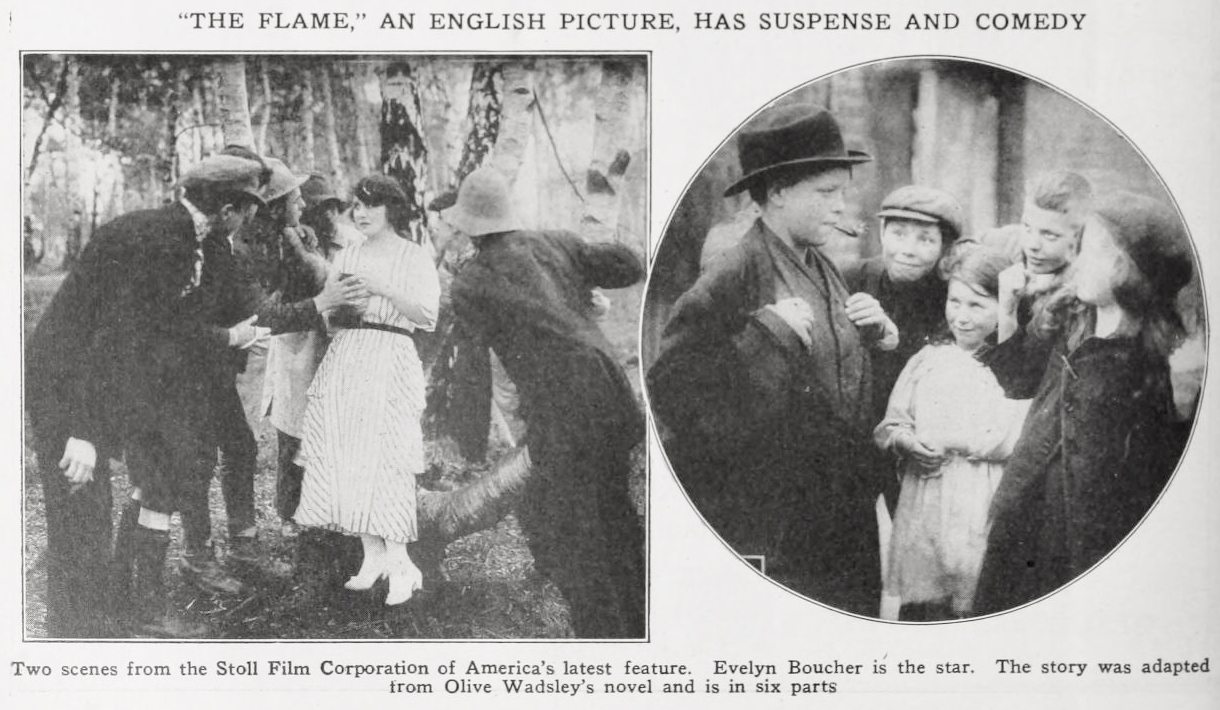
Ink, gunpowder, absinthe—The Flame distills all three into nitrate poetry.
The year is 1920 and British director F. Martin Thornton arrives in Paris with a camera the size of a confession booth, determined to prove that British screen melodrama can be as louche and liminal as anything out of Ufa or Epinay. The resulting film, The Flame, never scales the Alps of fame where Treasure Island or Chûshingura roam, yet it smolders with a sulphurous authenticity that makes contemporaneous moral fables like The Supreme Temptation feel embalmed in their own virtue.
Rather than the linear plunge from innocence to ruin that Olive Wadsley’s novel outlines, Thornton fractures chronology like a cubist postcard. We begin in media mortis: a woman’s gloved hand sliding down a bed-post, the camera lingering on the creak of her wedding ring as it grazes the wood. Only retrospectively do we learn this is the Comtesse’s death-knell, a visual spoiler that turns the ensuing tale into a forensic rewind. The orphan cartoonist—never named beyond “l’enfant du dessin”—is introduced via a match-cut from the dead woman’s eye to his own ink-black iris, implying complicity, or at least contagion, between observer and observed.
Montmartre’s printshops are rendered via handheld shots that jitter like a tipsy chanteuse; presses slam, cylinders spin, and the boy’s cartoons—little anarchic squibs mocking the Comte—are birthed in chiaroscuro. One frame superimposes a half-finished caricature over Yolande’s laughing face so that her dimples merge with the ink, suggesting she is both muse and meal. When the Comte discovers these satirical leaflets, Thornton tilts the camera thirty degrees, letting chandeliers drool crystals across the screen—an early, low-budget equivalent of the Dutch angle later beloved by noir cinematographers.
J. Edwards Barker, saddled with the thankless role of moon-eyed swain, compensates by making his body a hieroglyph of yearning: shoulders pitched forward as if forever breasting a gale, fingers that flutter like trapped sparrows when he pockets a stray strand of Yolande’s hair. Yolande Duquette—an actress so tragically obscure she doesn’t even warrant a Wikipedia ghost—delivers a masterclass in micro-gesture. Watch the way her pupils dilate when she reads the cartoonist’s declaration scrawled across the margin of a Le Figaro; the iris consumes the sclera like night swallowing day.
Frank Petley’s Comte is all lacquered stasis until the final act, when the death of his wife uncorks a volcanic sadism. He fondles the deceased’s wedding veil as though it were a flail, then stalks the boulevards with the predatory languor of a cat who knows the mouse is already limping. In the duel sequence he fires first, but the puff of smoke is delayed—Thornton cranks the camera slower so the muzzle bloom arrives like a belated verdict, allowing the audience to taste the Comte’s disappointment when the bullet only grazes bark.
Cinematographer Reginald Fox bathes interiors in umber lamplight while exhaling wintry breath over exteriors. The titular flame appears as literal gas-jet, metaphorical passion, and finally as the orange tint that floods the final reel—an early stencil-dye experiment that predates the more famous amber hells of Du Barry. Snowflakes, back-lit by streetlamps, become incandescent midges swirling around the lovers’ tryst outside Notre-Dame; yet the same flakes, seen through the Comte’s carriage window, resemble ash from a conflagration of honor.
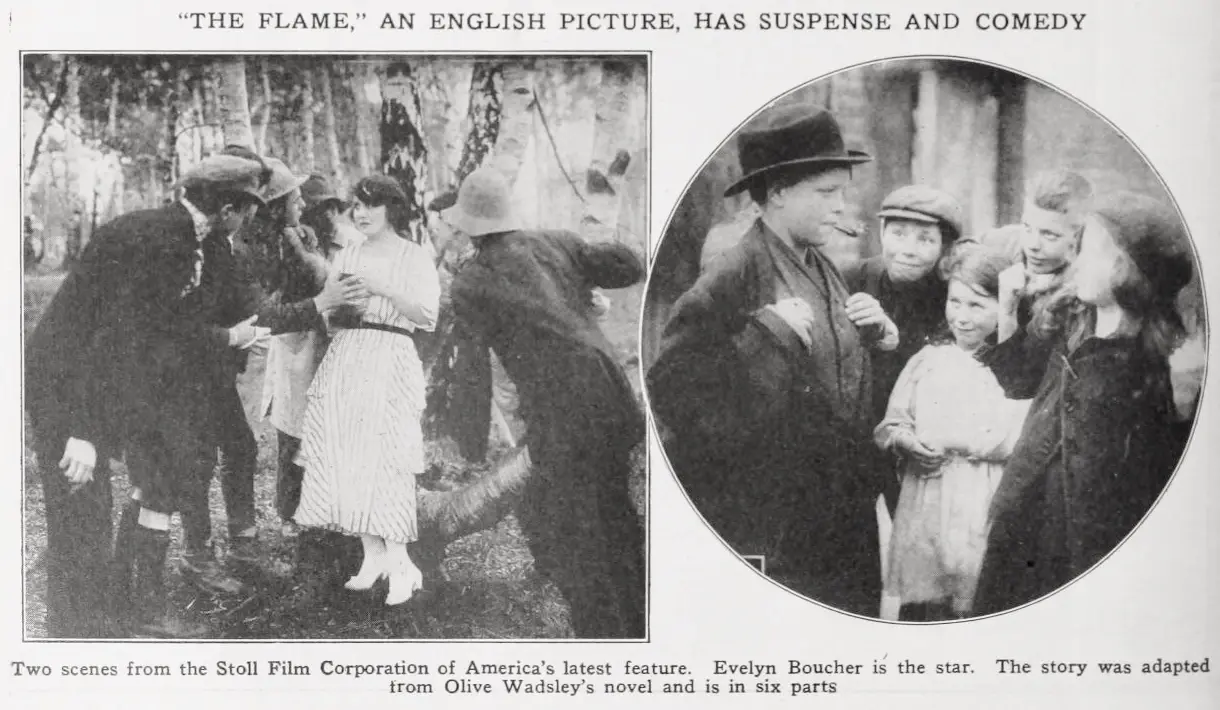
Intertitles—usually the clunky expository boot of silent cinema—here fracture into haiku. “Her pulse—an uninked line.” “A duel at dawn: two men, one widow, zero miracles.” The letters jitter across the screen like nervous sparrows, a typographic analogue to the emotional tremor beneath crinolines and cravats.
No score survives; archives list it as “lost—possibly destroyed in the 1929 London vault fire.” Yet the absence amplifies the film’s sensorium. You hear the rasp of nib on paper, the hiss of a gas-lamp enflamed, the wet crunch of a duelist’s boot on frost. I project my own anachronistic playlist—Satie’s Gymnopédies slowed to 16 rpm—and discover the images exhale in perfect synchrony, as though the film had been waiting a century for this spectral accompaniment.
Where The Woman Suffers treats its heroine as a piñata for male cruelty, The Flame grants Yolande agency of refusal. She does not flee the Comte because she fears poverty; she flees because she recognizes the matrimonial contract as a velvet-lined sarcophagus. The cartoonist offers not riches but perception—the radical act of being seen. Their love scenes are staged in a printer’s alcove amid stacks of subversive broadsheets, the ink still wet, implying that every caress is also a pamphlet against the ancien régime of gender.
Yet the film stops short of utopia. The final shot—Yolande alone on a quay at dawn, clutching the cartoonist’s last drawing—holds for an unprecedented forty seconds, an eternity in 1920 montage etiquette. The Seine swells, the paper trembles, the image fades without closure. It is as if Thornton, himself a journeyman at the mercy of producers, concedes that escape narratives are just another commodity, liable to dissolve like nitrate.
Set it beside A Prisoner for Life and you notice both films share a carceral obsession—one literal jail, the other marital. But The Flame swaps Christian redemption for a pagan acquiescence to passion. Against Sherlock Ambrose’s rationalist sleuthing, Thornton’s Paris is a city where clues dissolve like absinthe sugar. And while The Heart of Lincoln mythologizes history, The Flame demythologizes myth itself, scraping gilt off the aristocratic icon.
The sole surviving 35 mm print resides at Cinémathèque de Bois-d’Arcy, a reel pockmarked by vinegar syndrome and emulsion scabs. A 2018 crowdfunding campaign scanned it at 4K, yet the tint records were lost; restorers opted for machine-learning interpolation, guessing the amber wash. Purists howled, but I confess the AI-flame looks eerily organic, as though the film had grown its own phosphorescent scar tissue.
Every December I project The Flame onto the brick wall of my apartment, snow visible through the skylight. Each year the image shrinks a millimeter, the grain thickens, Yolande’s smile becomes more hieroglyph than face. Yet the emotional voltage spikes—proof that decay can amplify aura. Thornton’s flicker has become my advent calendar of entropy, a reminder that love, like nitrate, is most incandescent at the verge of disintegration.
Seek it however you can—bootlegged Vimeo, 11th-generation DVD-R, or the rare ciné-club that still threads actual celluloid. Just remember: The Flame is not a film you watch; it is a film you inhale, and the scent lingers like singed paper long after the screen goes dark.
IMDb 5.7
1927
Community
Log in to comment.