DbcultAccessing Vault...
Cult Review
Senior Film Conservator
Stepping into the flickering shadows of early cinema, one encounters a narrative as intricate and emotionally charged as a grand opera. Will S. Davis's Through Dante's Flames, a silent-era melodrama, is precisely this kind of experience—a tumultuous journey through the labyrinthine corridors of memory, identity, and the relentless pursuit of redemption. Far from a simple potboiler, this film delves into the profound psychological impact of trauma and the transformative power of human connection, all while grappling with the rigid moral strictures of its time. It's a testament to the enduring appeal of stories that challenge our perceptions of self and society, a cinematic artifact that, despite its age, still pulsates with raw, human drama.
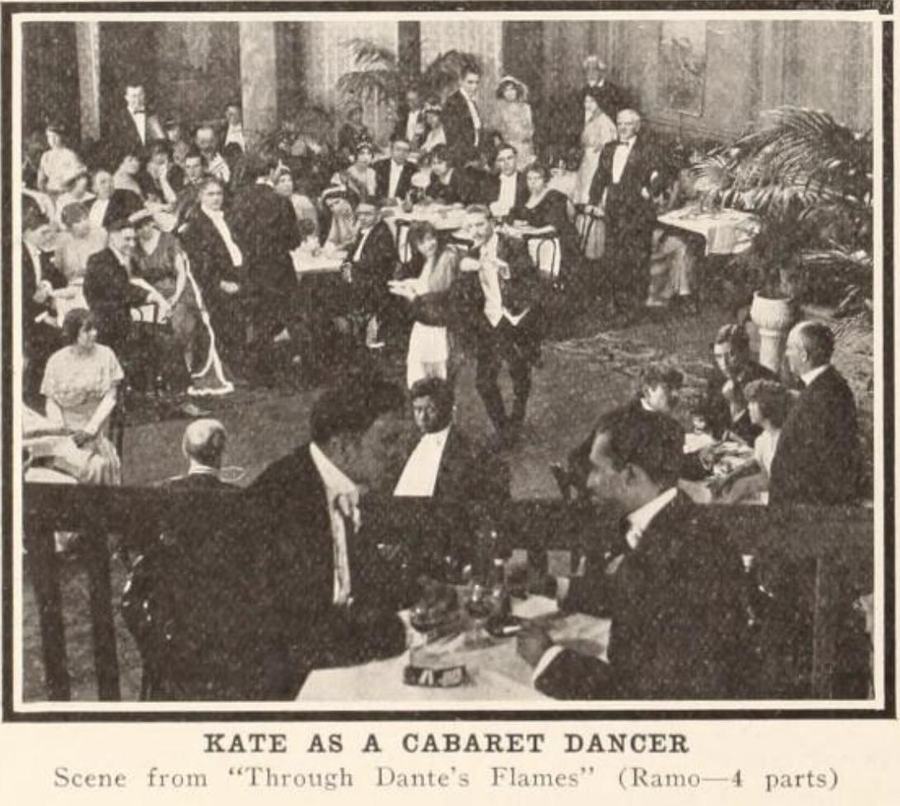
At the heart of this sprawling narrative is Kate Clarke, portrayed with compelling vulnerability by Lois Howard. Kate begins as an innocent, tethered to her brother, Joe, a character whose shadowy dealings with a counterfeiter's gang become the catalyst for her initial plunge into amnesia. The film wastes no time in establishing her vulnerability; an accidental blow during a police raid doesn't just injure her physically, it obliterates her past, leaving her a blank slate. This initial trauma isn't merely a plot device; it's the genesis of Kate's metamorphic journey. Without the anchor of memory, she drifts into the anonymity of the city, only to re-emerge, ironically, in the spotlight as a cabaret dancer. This reinvention, born of necessity rather than choice, highlights the precariousness of identity when one's history is erased. Her new life, vibrant and perhaps scandalous by the moral standards of the day, sets the stage for her encounter with Richard Harris, the tortured artist.
Richard, a visionary consumed by his quest to paint the perfect "Madonna," finds in Kate an unexpected muse. Her enigmatic beauty, perhaps accentuated by the very absence of her past, captivates him. The artistic process, often depicted as a solitary endeavor, here becomes a conduit for a deepening emotional entanglement. Richard's interest, initially aesthetic, ripens into a fervent, unrequited love. Kate, detached from her own history and perhaps emotionally guarded by her new profession, remains amused, then ultimately bored. This detachment is crucial; it underscores the profound chasm between Richard's idealized vision of her and the reality of a woman navigating a world without a personal roadmap. Her abrupt departure leaves the "Madonna" unfinished, a poignant metaphor for Richard's shattered aspirations and the elusive nature of his muse.
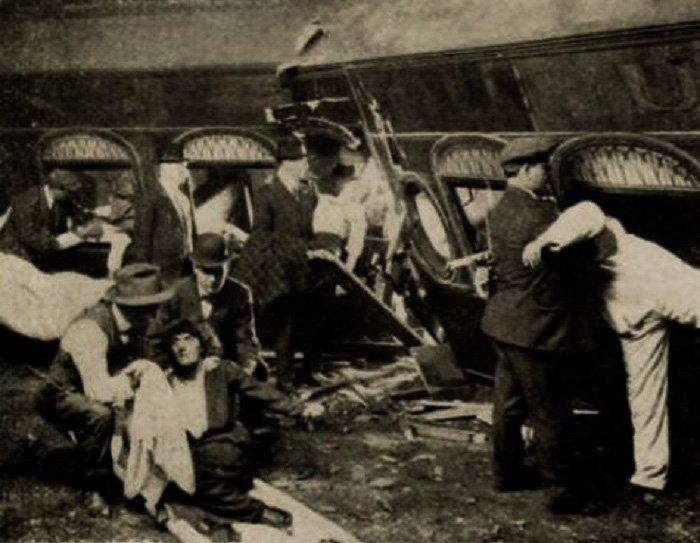
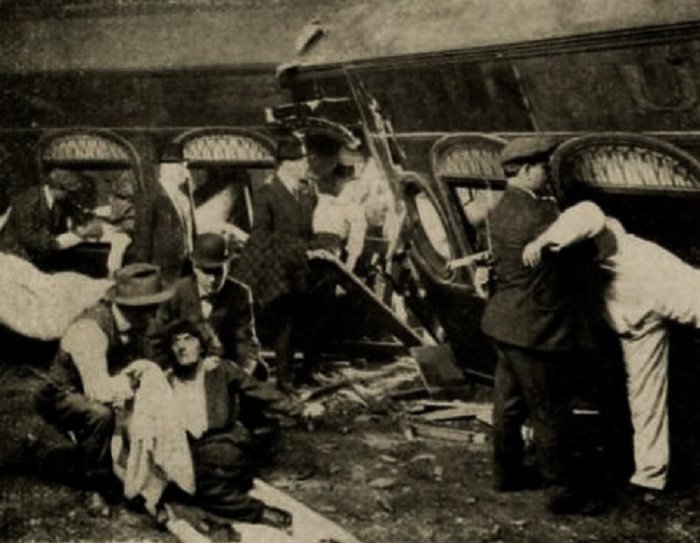
Yet, fate, a relentless puppeteer in this drama, has more in store for Kate. A catastrophic train wreck near a quiet village—a classic melodramatic trope, perhaps echoing the dramatic turns seen in films like The Tide of Death—strikes again, gifting Kate a second, equally selective amnesia. This time, her life as a dancer is expunged, leaving only the memories preceding her first injury. This double amnesia is a remarkable narrative choice, stripping away layers of identity, forcing both character and audience to confront the core of who Kate truly is. She is discovered and cared for by Joseph Harris, Richard's twin brother, a minister and physician whose gentle empathy stands in stark contrast to Richard's passionate intensity. Joseph's home becomes a sanctuary, a temporary haven from the storms of her past, or rather, her forgotten pasts.
The "Madonna" painting itself is more than just a prop; it's a central character, an evolving symbol reflecting the film's thematic complexities. For Richard, it represents an unattainable ideal, a divine vision that consumes him. His inability to finish it after Kate's departure speaks to the profound artistic and personal void she leaves. The scene where he, broken in health and spirit, finally completes the painting in a fit of delirium, seeing Kate before his eyes, is a powerful moment of artistic transcendence born from suffering. It elevates the painting beyond mere portraiture, imbuing it with the artist's very life force. This tragic completion, echoing the grand, often fatalistic artistic narratives of the era, gives the "Madonna" an almost mythic quality.
When Joseph, arriving too late to save his brother, recognizes Kate as the original muse, the painting's journey takes an unexpected turn. From an artist's studio, it is consecrated within the hallowed walls of a church, transformed from an object of personal obsession into a sacred icon. This transition is not without irony, considering Kate's forgotten past as a cabaret dancer, a profession often viewed with disdain by conservative society. The "Madonna" thus becomes a silent witness, a repository of hidden truths, poised to ignite the very scandal it seemingly transcends. The contrast between Richard's passionate, earthly love and Joseph's spiritual devotion, both centered on the same woman, albeit in different states of being, provides a rich tapestry for exploration. One might even draw parallels to the way an entity like The Golem takes on a life and meaning beyond its creator's initial intent, becoming an object of veneration or fear.
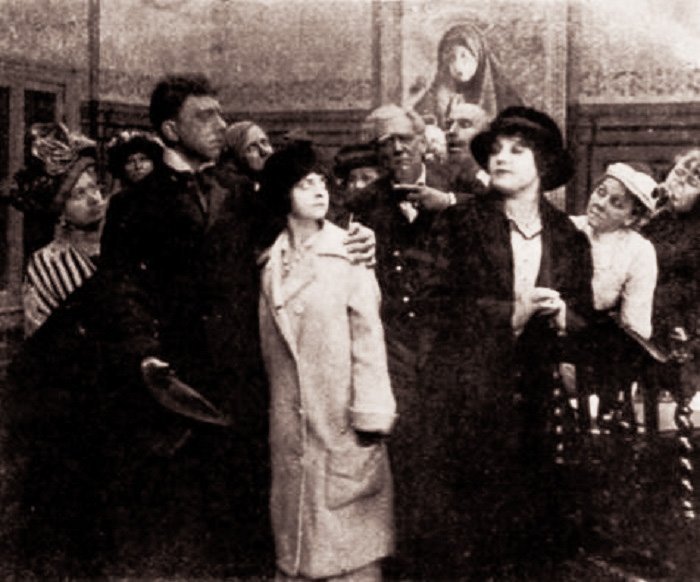
The tranquility Kate finds in the village is, predictably, short-lived. The re-emergence of Joe, still unrepentant and entwined with his counterfeiting gang, serves as a stark reminder of the past that refuses to stay buried. His desperate plea to Kate not to reveal his identity underscores the enduring ties of kinship, even to a brother who has been a source of such profound suffering. However, the true antagonist in this phase of the narrative is not Joe's criminality but the insidious venom of societal judgment, personified by Jane Perkins. Jane, a parishioner consumed by jealousy over Joseph's attentions to Kate, weaponizes Richard's letter, exposing Kate's forgotten life as a dancer. This act of malicious gossip, unfolding during a church bazaar, is a masterclass in melodramatic tension. The public revelation of Kate's past, and her own cruel discovery of it, is a moment of profound anguish, highlighting the devastating power of rumor and prejudice. It's a theme that resonates deeply with other films of the era exploring societal pressures and moral condemnation, such as Chained to the Past.
The villagers' swift condemnation, a predictable but no less painful reaction, is met with the unwavering defense of the minister, Joseph. His steadfast belief in Kate's inherent goodness, despite the sensational details of her past, marks him as a truly compassionate figure, a beacon of grace amidst the storm of judgment. This conflict between rigid morality and empathetic understanding is a recurring motif in silent cinema, often pitting the individual against the unforgiving collective. Joseph's role as both spiritual guide and physician allows him a unique perspective, enabling him to see beyond the superficial scandal to the wounded soul beneath. His actions are a powerful counter-narrative to the prevailing gossip, an embodiment of Christian charity in the face of human fallibility.
The climax of Through Dante's Flames is, quite literally, a trial by fire. The detective, Fagin, cleverly embedded within the community, manages to apprehend most of Joe's gang. Joe himself, cornered and desperate, seeks refuge in the very church that has become a sanctuary for his sister and the "Madonna." His accidental upsetting of a small stove, engulfing the church in flames, is a moment of profound symbolism. The fire, a destructive force, simultaneously acts as a purifier, burning away the old world, the repository of past sins and societal judgments. It is a dramatic, almost operatic, resolution to the building tension, reminiscent of the heightened stakes in films like The Eagle's Mate where danger often precipitates pivotal character developments.
Amidst the inferno, Joseph again emerges as Kate's rescuer, embodying both physical courage and spiritual fortitude. The "Madonna," miraculously, is almost the sole survivor of the blaze, its preservation underscoring its symbolic importance. It is a testament to enduring beauty, perhaps even divine intervention, untouched by the earthly chaos. Joe, badly injured, crawls to Kate's home, his final act a desperate reach for familial comfort. His death, attended by the minister, forces Joseph into a difficult position, pledged to secrecy amidst the renewed whispers of the villagers. This final act of compassion, protecting Joe's memory even from posthumous condemnation, further solidifies Joseph's moral integrity. The gossiping villagers, however, inevitably learn the truth, highlighting the inescapable nature of human judgment, even in the face of tragedy.
The film's ultimate resolution is both surprising and deeply moving. Joseph presents the "Madonna" to a Metropolitan Art Gallery, transforming it from a local curiosity into a public masterpiece. The public flocks to see it, drawn by its aesthetic power, unaware of the tumultuous human drama embedded within its brushstrokes. And then, the final, exquisite twist: the "Madonna," once an idealized portrait of a troubled muse, is revealed to be the perfect likeness of the minister's present wife and child. This revelation, delivered with quiet grace, confirms Kate's ultimate redemption and her integration into a loving, stable family unit with Joseph. It recontextualizes the entire narrative, suggesting that the "Madonna" wasn't merely a depiction of singular beauty or suffering, but a prophecy of enduring love, a testament to the transformative power of forgiveness and second chances. It echoes the profound spiritual journeys seen in films like 'Tween Heaven and Earth, where earthly trials lead to a higher form of grace.
Will S. Davis, through his direction, manages to weave a complex tapestry of human emotion and societal critique. The performances, particularly Lois Howard's nuanced portrayal of Kate's shifting identities, would have been crucial in an era devoid of spoken dialogue. Her ability to convey innocence, allure, confusion, and eventual peace through gesture and expression speaks volumes. Stuart Holmes, as Richard Harris, likely brought a compelling intensity to the tormented artist, while Will S. Davis himself, pulling double duty as writer and actor (presumably as Joseph, though the cast list doesn't explicitly state it for Joseph Harris), would have grounded the film with a quiet authority. Edith Hallor's role, likely Jane Perkins, would have required a specific kind of theatrical malice, essential for the melodramatic villain.
The film's reliance on dramatic coincidence—the repeated amnesia, the fortuitous train wreck, Joe's opportune reappearance—might feel contrived to a modern audience, but it was a cornerstone of silent-era storytelling, designed to propel narratives forward with maximum emotional impact. These narrative devices, rather than detracting from the film's power, amplify its themes of fate and the relentless hand of destiny, much like the relentless moral reckoning in The Avenging Conscience: or 'Thou Shalt Not Kill'. The visual language, from the stark contrast of the cabaret's artificial lights to the serene backdrop of the village, would have been vital in conveying the emotional landscape.
In retrospect, Through Dante's Flames is more than a historical curiosity; it’s a profound meditation on the human spirit’s capacity for resilience. It explores how our identities are shaped not just by what we remember, but by how we are perceived, and crucially, by the compassion we receive. The film suggests that even when stripped of our past, or burdened by its shadows, a path to peace and belonging can be forged through love and understanding. The final image of the "Madonna" representing a wholesome, loving family unit, rather than a solitary, idealized figure, offers a deeply satisfying and hopeful conclusion to Kate's arduous journey. It's a powerful reminder that true beauty, and indeed true sanctity, can be found not in unattainable ideals, but in the embrace of a redeemed life and the warmth of a family built on enduring affection.
IMDb 5.5
1922
Community
Log in to comment.