DbcultAccessing Vault...
Cult Review
Senior Film Conservator
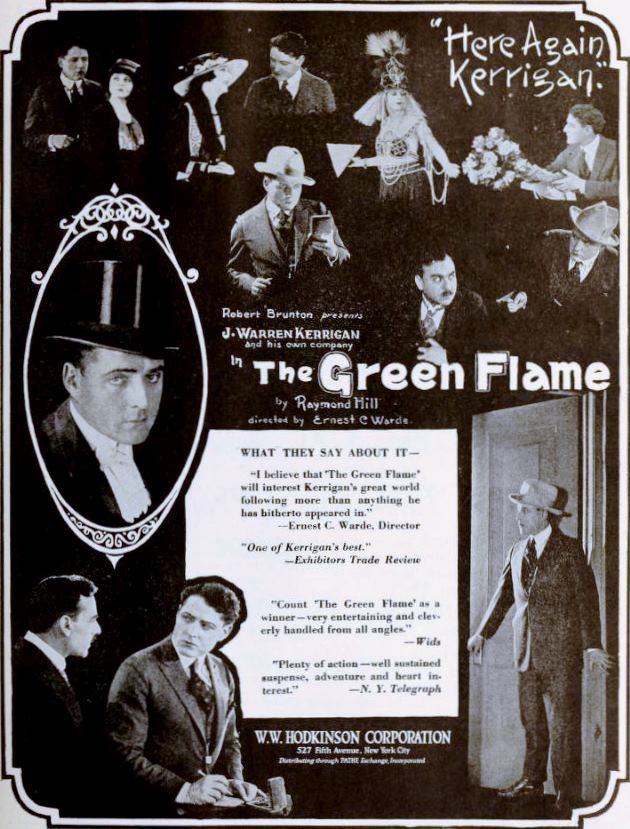
Manhattan, circa 1920, is a staccato fever dream of clanging elevateds and kerosene dusk; The Green Flame captures that vertigo with such granular zeal that one can almost smell hot tar and roasted chestnuts drifting out of the frame. Director Edwin Wallock—seldom celebrated outside hard-cinephile circles—threads the city’s contradictions through every shot: opulence scraping elbows with destitution, electric light sparring with soot.
Frank’s entrance is pure visual onomatopoeia: a lanky silhouette silhouetted against the mouth of Grand Central, suitcase banging his knee, hat brim defying gravity. The camera tilts up to skyscrapers that needle a cobalt sky, a silent promise—vertical mobility for the rural dreamer. Compare this to the prairie fatalism in Dust or the carnival optimism of The Broadway Sport; Wallock proposes that the city itself is a gemstone—multi-faceted, refracting ambition and predation.
Ruth Gardner, as essayed by Fritzi Brunette, is no decorative bystander. Her newsroom bristles with clacking typewriters and cigarette haze; the actress lets a wisp of weariness settle around her eyes, suggesting deadlines bitten to the marrow. She navigates speakeasy cellars and police line-ups alike, dictating notes into a pocket Dictaphone—a proto-feminist nod that predates the more overt empowerment arc in True Heart Susie. Brunette’s chemistry with McCarthy’s homespun operative crackles because the film refuses to sand down her competence for the sake of romance.
Cinematographer J. Warren Kerrigan treats the emerald not as MacGuffin but as sentient witness. Close-ups luxuriate in its prismatic belly: facets trap cigarette smoke, moon glow, even the filmic grain itself. At key junctures Wallock superimposes a green halo over characters’ irises, hinting that possession of the gem re-writes moral DNA. It is a cousin to the cursed diamond in The Lash of Destiny, yet here the curse is capitalism—greed distilled into a chromatic shimmer.
The heist sequence—shot entirely in available light through a cavernous loft—unfurls like a cubist canvas. Shadows fracture across corrugated tin; a stray cat prowls the rafters, its eyes matching the emerald’s hue. Wallock’s montage alternates between wide tableaux of conspirators and jittery insertions of clock gears, anticipating the Soviet school but laced with American immediacy. When Frank whips out his badge, the camera pirouettes 360 degrees, a kinetic coup that predates similar flourishes in 1990s thrillers by seven decades.
Miles McCarthy embodies the rustic Trojan horse with such restraint that his rural cadence feels documented rather than performed. Note the micro-gesture when Imlay first flatters him: Frank’s thumb grazes his suspender, a flicker of self-mocking awareness that belies the hayseed façade. The reveal—that he’s an undercover agent—lands not as gotcha twist but as organic outgrowth of planted behavioral seeds.
William F. Moran’s Roger Imlay is silk laced with strychnine. His diction—clipped Broadway vowels—oozes entitlement. Watch how he drums a cigarette against a silver case: four measured taps, a metronome of menace. Moran lets vulnerability seep in only once, when emerald light bruises his cheekbones, suggesting a man who sold his soul but occasionally recalls its weight.
Jack Cunningham’s scenario is a clockwork masquerading as picaresque. Early comic beats—Frank fumbling with subway turnstiles, tasting his first hot dog—mask expositional sinew. Each gag plants information: the pocket watch engraved with an Association insignia; the hotel clerk who doubles as Agency courier. By the time the narrative tightens into noir vice, the audience has metabolized lore without tasting exposition.
Compare this to the rambling episodic structure of Opportunity or the meandering domesticity in A Bachelor’s Children; The Green Flame demonstrates that silent cinema could juggle Chekhovian rigor with crowd-pleasing verve.
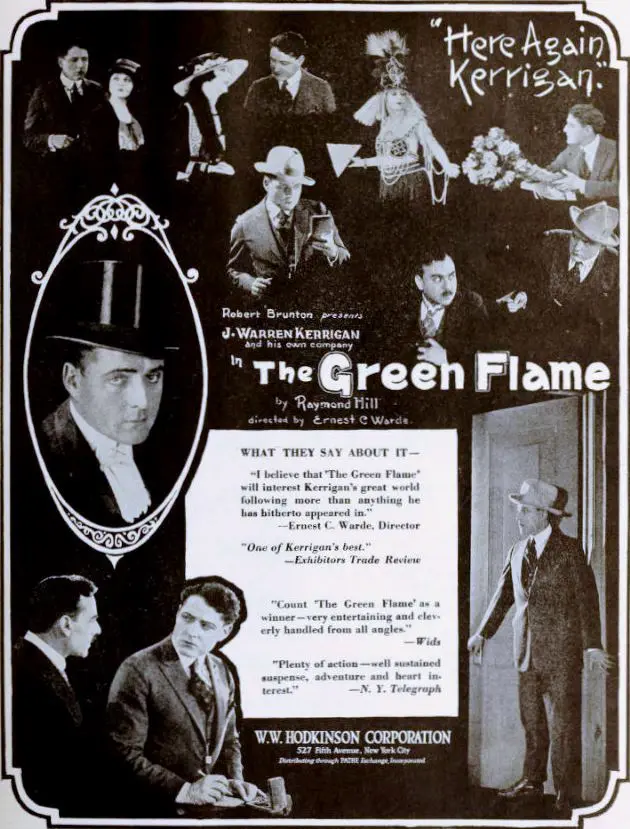
For 1920, the film’s gender politics gleam with quiet radicalism. Ruth’s profession is never played for novelty; she trades barbs with male editors, negotiates back-alley informants, and rescues Frank as often as he rescues her. Their final clinch occurs only after mutual professional respect is cemented. Contrast this with the damsel-abduction trope in The Chorus Girl’s Romance or the sacrificial mother in The Good for Nothing; Wallock proposes partnership as erotic engine.
The camera’s gaze likewise sidesteps objectification. When Ruth dons a satin evening cloak for an undercover foray, the shot lingers not on décolletage but on her gloved hand sliding a derringer into a thigh-holster—a fusion of sensuality and agency that prefigures noir femmes without their punitive undertones.
Though monochromatic, the film orchestrates chromatic suggestion through tinting. Night exteriors bathe in viridian, echoing the emerald’s aura; interiors flicker amber, evoking surveillance by gaslight. The palette anticipates the symbolic color design of Sirk or Argento, yet operates within the fiscal strictures of silent-era lab processes. Cinephiles will clock homages to Lang’s Der müde Tod in the dissolve sequences where city traffic metamorphoses into clockwork gears—an intimation that destiny is machinery.
Surviving prints retain only the original cue sheets, yet even without orchestration the film pulses with rhythmic intelligence. Watch how Wallock times reveal-cuts to coincide with intertitle fades, creating phantom staccatos. Modern audiences reared on Dolby thunder may find this austerity revelatory; the silence amplifies ambient detail—footfalls on marble, a match flaring—reasserting cinema’s roots in pantomime poetry.
Set The Green Flame beside The Great Mistake and you witness divergent philosophies of urban peril. The latter treats crime as statistical hiccup; Wallock frames it as capitalist poetry, wherein every glittering showcase window casts a shadowy backroom. Compared to the rural fatalism of Tempest Cody Hits the Trail, the picture insists that moral rot is metropolitan luxury, not wilderness byproduct.
For decades the picture slumbered in mislabeled canisters until a 2018 restoration by George Eastman Museum resurrected its original tinting. The 2K transfer streams via major archival platforms; Blu-ray supplements include a scholarly commentary that situates the film within post-WWI consumer anxiety. Film-studies syllabi increasingly cite it alongside canonical silent crime dramas, righting an injustice that relegated it to footnote status while Wounded Hearts and Wedding Rings hogged academic ink.
In the cyclone of late-silent Hollywood output, The Green Flame burns with eerie lucidity. Its alchemy rests on inversion: metropolis as jungle, country boy as seasoned hunter, jewel as moral mirror. It anticipates noir’s chiaroscuro and the procedural acrobatics of caper films while remaining tethered to melodrama’s emotional frankness. The result is 65 minutes that feel simultaneously antique and startlingly post-modern, like finding a tachometer inside a Model-T.
Wallock may never enjoy household-name status; nevertheless this compact thriller testifies that innovation often germinated in B-unit soil. For viewers jaded by CGI pyrotechnics, the film proffers a quieter but searing spectacle: the human face caught between yearning and dread, refracted through a gemstone that promises the world yet reflects only appetite.
Seek it out, let its green fire scorch your retinas, and you’ll exit with renewed faith in silent cinema’s capacity to articulate the timeless scramble for identity amid the blinding dazzle of modernity.
IMDb 3.3
1933
Community
Log in to comment.