DbcultAccessing Vault...
Cult Review
Senior Film Conservator
Stepping back into the annals of early cinema, one often encounters narratives that, despite the passage of a century, still resonate with primal human struggles. The Flame of Passion, a 1915 silent film helmed by Tom Terriss, is precisely such a relic. It’s a melodrama steeped in the grand traditions of its era, weaving a tale of inheritance, temptation, and villainy against an exotic backdrop that would have thrilled audiences yearning for escape from their mundane realities. As an art critic, I find myself drawn to these early works not merely for their historical significance, but for the raw, unfiltered storytelling that often speaks volumes about the societal anxieties and moral compass of their time. This isn't just a movie; it's a vibrant, if sometimes quaint, window into the very nascent art of cinematic narrative. The film, though perhaps overshadowed by more widely celebrated contemporaries, offers a fascinating glimpse into the nascent techniques of visual storytelling, where every gesture, every flicker of emotion, had to be painstakingly conveyed without the aid of spoken dialogue. It's a testament to the power of pure imagery, a silent symphony of human drama.
At its core, The Flame of Passion ignites with a familiar catalyst: the death of a wealthy patriarch and the subsequent scramble for his estate. William Lanyon, a West Indian planter, exits the earthly stage, bequeathing his considerable fortune to his nephew, Dick Lorient. Lorient, portrayed by Rienzi De Cordova, is introduced as a quintessential New York 'society rounder' – a man accustomed to ease, privilege, and the superficialities of urban high life. His engagement to his cousin, Dulcie Lanyon, further solidifies his position within this gilded cage, a union seemingly born more of convenience and familial expectation than fervent romance. This initial setup immediately establishes a dichotomy: the ordered, predictable world of New York society versus the untamed, potentially dangerous allure of the West Indies. It's a classic fish-out-of-water scenario, designed to test the mettle of our protagonist and expose the hidden depths (or shallows) of his character. De Cordova, in his portrayal, had the unenviable task of conveying this societal ennui and subsequent awakening through facial expressions and body language alone, a challenge inherent to the silent film medium that often demanded an almost theatrical exaggeration to ensure clarity for the audience. The very notion of a 'rounder' in the early 20th century conjured images of frivolous indulgence, a stark contrast to the rugged demands of managing a tropical plantation. This contrast is not merely geographical; it's a profound commentary on character, on the transformative power of circumstance. The film subtly critiques the superficiality of such a life, setting the stage for Lorient's inevitable confrontation with more visceral realities.
Lorient's journey to inspect his newly acquired property is, however, fraught with peril from within his own household. John Stark, the estate's overseer, emerges as the film's primary antagonist. Stark, played with a likely sinister undercurrent by Charles Mather, embodies the insidious nature of greed. The plot reveals that the estate has been shrewdly willed to Stark in the event of Dick's untimely demise – a legal loophole that fuels the overseer's villainous ambition. This twist introduces an immediate layer of suspense, transforming a simple inheritance tale into a thrilling narrative of survival against a cunning adversary. Stark's machinations are not merely about wealth; they represent a fundamental betrayal of trust, a corrosive force at the heart of the idyllic plantation setting. His character, a common trope in melodramas of the era, serves as a stark (pun intended) reminder of the ever-present threat of human depravity, even in the most picturesque of locales. The silent film's reliance on clear-cut villains and heroes often meant that characters like Stark were painted with broad strokes, their motivations transparently evil, allowing the audience to easily identify with the protagonist's plight. This clear moral delineation was a hallmark of storytelling designed for mass appeal, a way to ensure the narrative's emotional impact was universally understood, regardless of literacy or background. The tension built around Stark’s plotting is a testament to Terriss’s understanding of pacing, using intertitles and visual cues to signify the impending danger that Lorient, in his initial naivety, remains blissfully unaware of. One can imagine the close-ups of Stark’s furrowed brow or a sly glance, conveying volumes of malevolent intent without a single spoken word. This kind of visual shorthand was crucial for maintaining narrative momentum and psychological depth in an era without synchronized sound. The casting of Mather, a familiar face in early cinema, would have immediately signaled to contemporary audiences the kind of character they were dealing with, leveraging audience expectations to heighten the dramatic effect. The stakes are immediately clear: Lorient's life, and his legacy, hang in the balance, threatened by a man who lurks just out of sight, yet whose shadow looms large over the entire narrative. It’s a classic setup that still holds power, demonstrating that some narrative engines are truly timeless.
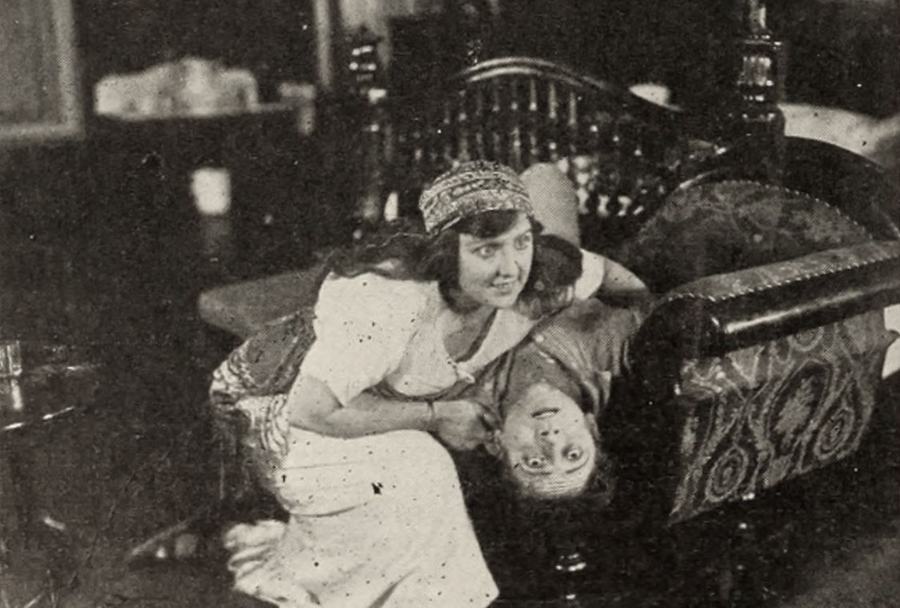
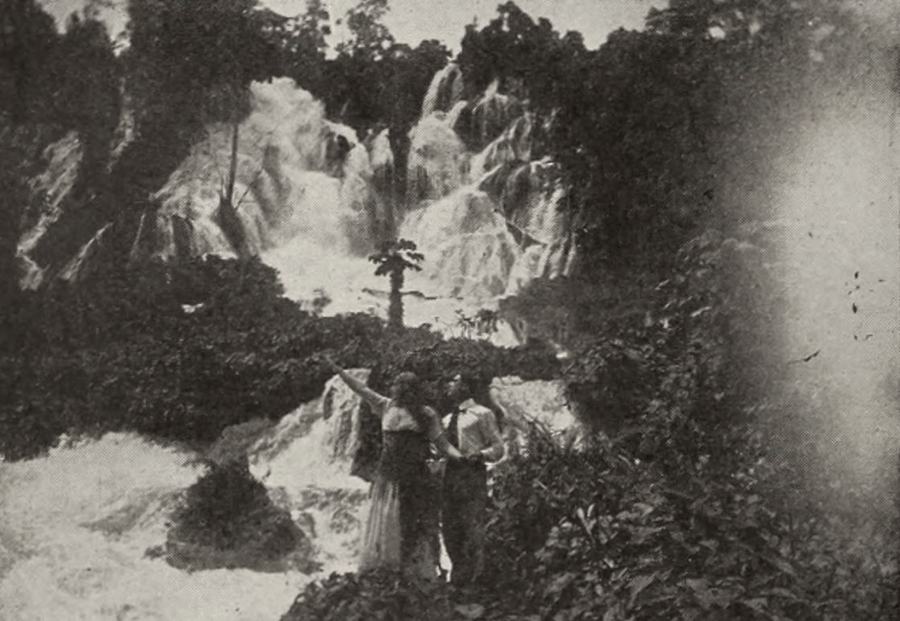
It is in the vibrant, sun-drenched landscape of Jamaica that Lorient’s true test begins. Here, amidst the lush foliage and the rhythmic pulse of the Caribbean, he encounters 'The Woman.' This character, tellingly left nameless in the plot summary, embodies the film's titular 'Flame of Passion.' She is not merely a love interest but a force of nature, a symbol of untamed desire and exotic allure that stands in stark contrast to the demure Dulcie awaiting him back in New York. The confrontation with 'The Woman' is the crucible through which Dick Lorient must pass. The plot describes his journey as one through 'rushing waters and fires of hell,' vivid metaphors that suggest both physical dangers and profound moral quandaries. This imagery, even without the full visual context of the film, immediately evokes a sense of epic struggle, a hero’s journey into the depths of temptation and survival. The 'rushing waters' could symbolize the overwhelming torrent of new emotions, the danger of being swept away by passion, while the 'fires of hell' speak to the destructive potential of such an intense, perhaps forbidden, liaison. It’s a powerful, almost allegorical, depiction of a man caught between duty and desire, between the known and the dangerously unknown. The actress portraying 'The Woman' (likely Lida Hickok, given the cast list and common trope distribution) would have been tasked with projecting an irresistible charisma, a captivating presence that could justify Lorient's dramatic deviation from his intended path. Silent film actresses often excelled at conveying such complex emotions through exaggerated yet nuanced expressions, relying on the power of their gaze and gestures to communicate depths of character that dialogue would later articulate. Her very anonymity enhances her symbolic weight, making her less a specific individual and more an archetype of temptation, a universal challenge to the protagonist's moral fortitude. The decision to leave her nameless is a stroke of narrative genius, elevating her beyond a mere character to a powerful, almost mythical, entity. This femme fatale figure, a common staple of early cinema, often served as a fascinating counterpoint to the more 'virtuous' heroines, embodying the dangerous yet alluring aspects of female power. Her presence transforms the narrative from a simple tale of inheritance into a profound exploration of personal morality and the price of succumbing to primal urges. This dramatic shift is what elevates The Flame of Passion beyond a simple thriller; it becomes a psychological drama of considerable depth, considering the limitations of its medium.
The film, directed by Tom Terriss (who also contributed to the writing), would have relied heavily on visual metaphors and the evocative power of its setting to convey this 'Flame of Passion.' One can imagine sweeping shots of the Jamaican landscape, perhaps juxtaposed with intense close-ups of Lorient and 'The Woman,' to illustrate the overwhelming nature of their connection. The 'rushing waters' might have been literal rapids or a stormy sea, symbolizing chaos and peril, while the 'fires of hell' could have been literal conflagrations or the burning intensity in the eyes of the lovers. Such imagery was crucial in silent films to communicate complex emotional states and narrative advancements without dialogue. Terriss, an experienced filmmaker of his time, would have understood the necessity of these visual cues to guide the audience through the emotional labyrinth Lorient finds himself in. The interplay between the natural beauty of Jamaica and the escalating human drama would have created a compelling visual tapestry, enhancing the film's thematic resonance. The choice of the West Indies as a setting is not accidental; it plays into contemporary exoticism, offering audiences a vicarious escape to a land perceived as both beautiful and dangerous, a perfect backdrop for a tale of forbidden love and perilous adventure. This aligns with a trend in early cinema to utilize diverse and often far-flung locales to add spectacle and intrigue, much like adventure serials such as Zudora, though the focus here is more on internal, moral conflict than external, physical derring-do. Yet, there’s an inherent adventurous spirit in Lorient’s journey that echoes such serials, a sense of facing the unknown and overcoming formidable obstacles. The film’s success would have hinged on its ability to make the audience feel the heat of this passion, the chill of the danger, and the moral quandary of Lorient’s predicament, all through the silent, expressive language of cinema.
The performances in The Flame of Passion, like all silent films, are a masterclass in non-verbal communication. Actors such as Rienzi De Cordova, Charles Mather, Lionel Pape, and Lida Hickok had to convey entire emotional arcs, character motivations, and plot developments through exaggerated gestures, expressive facial contortions, and precise body language. De Cordova, as Dick Lorient, would have needed to transition from the languid indifference of a 'society rounder' to the intense passion of a man ensnared by 'The Woman,' and finally to the determined resolve of someone fighting for his life and honor. This required a nuanced understanding of how to project internal states onto an external, visible canvas. His transformation from a somewhat flippant socialite to a man tested by fire and water would have been the film's emotional anchor, a journey the audience had to believe in, purely through his silent portrayal. Charles Mather, as the villainous John Stark, would have employed a different set of tools: sly glances, menacing postures, and a general air of duplicity. The silent film villain often became iconic through these visual cues, their evil almost palpable without a single spoken word. One can imagine him lurking in shadows, his eyes narrowing, a subtle smirk playing on his lips, all conveying his nefarious plans with chilling clarity. These actors were pioneers, developing a new grammar of performance for a new art form, laying the groundwork for all cinematic acting that followed. Their ability to tell a story through pure physicality and expression is truly remarkable, demanding a certain theatricality that, when done well, transcended the limitations of the medium. The performances are not merely acting; they are a form of kinetic storytelling, where every movement and every glance contributes to the unfolding drama. This stylistic approach, while sometimes appearing melodramatic to modern eyes, was essential for the clarity and impact of the narrative in the absence of dialogue. The power of a silent film often lies in its ability to force the audience to engage more deeply with the visual narrative, interpreting emotions and intentions from the subtle shifts in an actor's face or the grand sweep of a gesture.
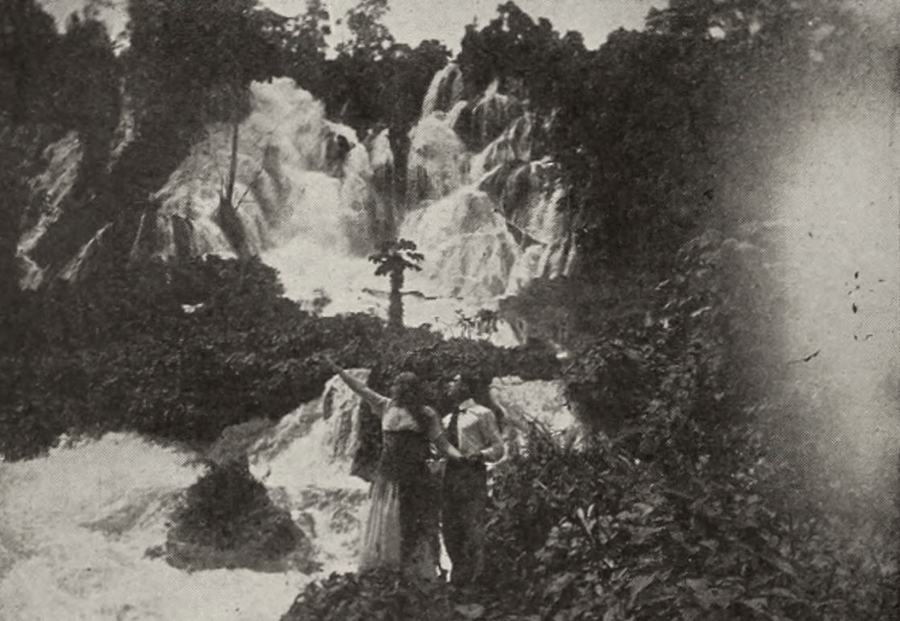
Tom Terriss, a prolific director and writer of the era, was tasked with bringing this complex narrative to life. His direction would have been pivotal in establishing the mood, pacing the suspense, and ensuring the clarity of the storyline. In silent cinema, the director's vision was paramount in shaping the audience's understanding and emotional response. Terriss would have utilized various cinematic techniques then available – shot composition, intertitles, editing rhythms, and the strategic use of close-ups – to guide the viewer through Lorient's perilous journey. The contrast between the sophisticated, if stifling, environment of New York and the wild, untamed beauty of Jamaica would have been a key visual motif, emphasizing Lorient's transition and the moral choices he faces. The depiction of 'rushing waters' and 'fires of hell' would have demanded creative visual solutions, whether through location shooting, special effects (primitive by today's standards but effective for the time), or symbolic imagery. Terriss’s role was akin to that of a conductor, orchestrating every element – from the actors' movements to the camera's gaze – to create a cohesive and compelling narrative. His understanding of the burgeoning language of cinema would have been crucial in translating the written plot into a visually engaging experience. Films of this period, like Marc'Antonio e Cleopatra, often leveraged grand visual spectacle and dramatic intensity, and Terriss would have aimed for a similar impact, albeit on a more personal, character-driven scale. The visual aesthetic of the film would have been carefully crafted to enhance the emotional stakes, using lighting to create mood, and framing to draw attention to key dramatic moments. The director's ability to imbue the Jamaican setting with a sense of both allure and danger would have been critical to the film's success, making the exotic locale a character in itself, influencing Lorient's choices and trials. This careful attention to visual detail, even in an era of technological constraint, underscores the artistic ambition of early filmmakers like Terriss. He wasn't just recording a story; he was crafting an experience, using the nascent tools of cinema to transport his audience to another world, another set of dilemmas. The success of a silent film often rested on the director's ability to transcend the lack of sound, creating a narrative so visually compelling that dialogue was almost an afterthought. This is the challenge Terriss faced, and by all accounts of the plot, one he met with considerable dramatic flair.
Beyond its thrilling plot, The Flame of Passion delves into timeless themes that continue to resonate. The most prominent is the age-old conflict between duty and desire. Dick Lorient is engaged to Dulcie, a union of societal expectation and familial obligation. His encounter with 'The Woman' represents a potent, almost primal, challenge to this established order. This moral dilemma forms the emotional backbone of the film, exploring the seductive power of forbidden passion and its potential for both ecstasy and destruction. It’s a narrative that probes the very nature of personal responsibility versus individual yearning, a conflict that remains eternally relevant. The film also touches upon the corrupting influence of greed, embodied by John Stark. His conspiracy to usurp Lorient’s inheritance highlights the darker side of human nature, a timeless struggle between good and evil that provides the narrative with its external conflict and much of its suspense. This theme of avarice and betrayal is a perennial favorite in storytelling, from ancient myths to modern thrillers, and its depiction here, in the raw, unadorned style of silent film, would have been particularly impactful. Furthermore, the film implicitly explores themes of transformation and redemption. Lorient's journey through 'rushing waters and fires of hell' is not just a physical ordeal but a spiritual one, forcing him to confront his own weaknesses and ultimately emerge stronger and wiser. His escape from the 'siren's deadly fascination' and Stark's 'villainous scheming' signifies a triumph of character, a redemption from his earlier, perhaps naive, existence. This arc of personal growth is a powerful narrative device, offering audiences a vicarious journey of self-discovery. The depiction of the West Indies also brings forth subtle undertones of colonialism and exoticism, common in early 20th-century narratives. The plantation setting, the 'native' overseer (Stark) vying for control, and the 'exotic' allure of 'The Woman' all contribute to a narrative landscape that reflects the prevailing attitudes and fascinations of the time. While not overtly political, these elements provide a rich cultural context for the drama unfolding. Films of this period, like The Tiger or Escaped from Siberia, often utilized far-flung locales to heighten drama and offer a sense of grand adventure, and The Flame of Passion certainly capitalizes on the allure of its tropical setting. The film, in its silent grandeur, thus serves as more than just entertainment; it's a social commentary, a psychological study, and a testament to the enduring power of archetypal storytelling. Its themes, though presented through the lens of a bygone era, remain deeply human and universally understood, contributing to its lasting, if niche, appeal for those who delve into the rich history of cinema. The narrative's ability to encapsulate such multifaceted ideas within the constraints of a silent film speaks volumes about the ingenuity of its creators and the profound communicative power of visual media.
The Flame of Passion stands as a compelling artifact from a pivotal period in cinematic history. It showcases the burgeoning sophistication of narrative filmmaking, demonstrating how directors and actors, working without synchronized sound, could still craft intricate plots and convey profound emotions. The film’s strength lies in its potent blend of thrilling suspense, romantic entanglement, and moral introspection. It's a reminder that even in its infancy, cinema was capable of transporting audiences to distant lands and immersing them in tales of high drama and personal struggle. While perhaps not as widely known as some of its contemporaries, its narrative ambition and thematic depth make it a valuable piece for anyone interested in the evolution of storytelling on screen. The film, through its very existence and its detailed plot, invites us to appreciate the foundational elements of cinematic language that were being developed and refined during this era. It’s a testament to the sheer creative force that propelled the industry forward, laying the groundwork for the complex narratives and character studies we see today. The ingenuity required to convey such a rich tapestry of human experience through silent visuals alone is truly remarkable. For those of us who cherish the history of film, The Flame of Passion offers a fascinating, albeit silent, dialogue with the past, revealing the enduring power of a well-told story, regardless of the technological limitations of its time. It’s not merely a historical curiosity; it’s a vibrant example of early cinema’s capacity to captivate, to provoke, and to entertain, proving that the language of film, even without words, can speak volumes. The enduring allure of such a film lies in its ability to connect us to the roots of cinematic expression, demonstrating that the fundamental principles of dramatic storytelling are indeed timeless. It’s a journey back to a time when every flicker of light and shadow, every grand gesture, and every carefully composed frame had to carry the weight of an entire narrative, a challenge that filmmakers like Terriss met with remarkable artistic vision and dedication. And for that, The Flame of Passion deserves its place in the spotlight, reminding us of the rich and diverse heritage of the silent screen.

IMDb 6
1919
Community
Log in to comment.