DbcultAccessing Vault...
Cult Review
Senior Film Conservator
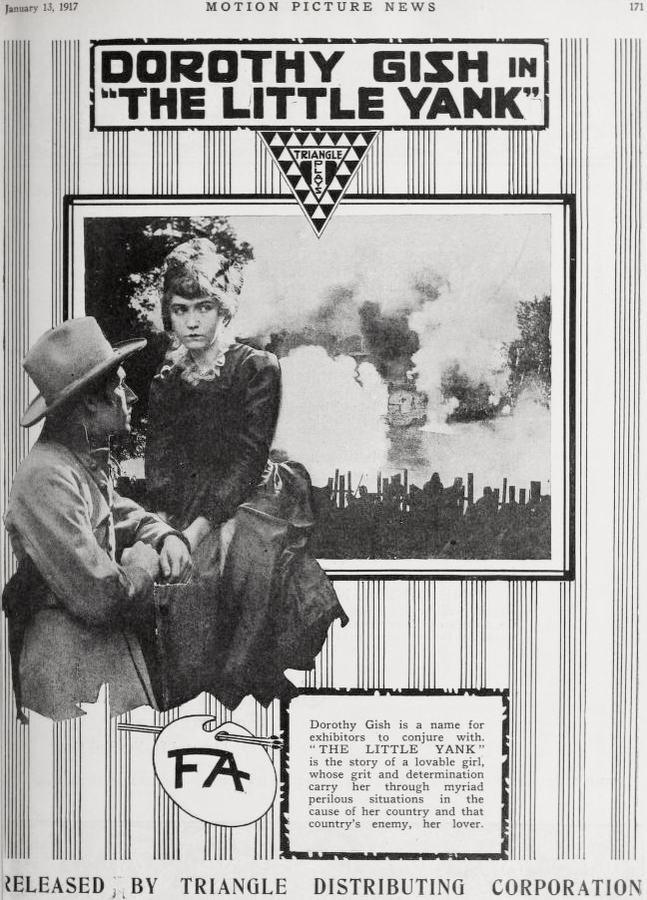
In the grand tapestry of early cinema, where narratives often soared with melodramatic fervor and human emotions were writ large across the screen, ‘The Little Yank’ emerges as a fascinating, albeit often overlooked, artifact. Released in 1917, this silent drama plunges viewers into the tumultuous heart of the American Civil War, not merely as a historical tableau, but as a crucible for personal loyalties, burgeoning affections, and the moral ambiguities inherent in any conflict. It’s a film that, even a century later, speaks volumes about the enduring power of love to transcend the most formidable divisions.
At its core, the picture is a testament to the spirited resilience of its protagonist, Sallie, portrayed with a compelling blend of pluck and vulnerability. She is introduced as a quintessential Southern belle, yet one whose convictions firmly align with the Union cause – a detail that immediately sets her apart from many conventional portrayals of women in Civil War narratives. Her family, particularly her brother, Lieutenant James Castleton, anchors her allegiance, underscoring the deeply personal nature of the war that cleaved families and communities alike. When Lieutenant Castleton brings Major Rushton, his superior officer, to their Kentucky home, the stage is set for a classic romantic entanglement, albeit one fraught with the peril of wartime. Rushton’s immediate infatuation with Sallie, whom he affectionately dubs ‘the little Yank,’ is palpable, yet it carries an undercurrent of possessiveness that will later spiral into something far darker.
Sallie isn’t merely a passive object of affection; she’s an active participant in the war effort, albeit from a domestic sphere, diligently crafting hospital supplies for the wounded. This act of quiet heroism quickly escalates into direct involvement when their home is suddenly surrounded by Confederate soldiers. It’s in these moments of immediate danger that Sallie’s ingenuity truly shines. Her quick thinking, employing a simple clover ruse, allows her brother and Major Rushton to make a narrow escape, showcasing a resourcefulness that belies her seemingly delicate demeanor. This early sequence establishes her as a character of considerable agency, a trait that will be continually tested throughout the film’s unfolding drama.
Her subsequent journey through Confederate lines, laden with vital supplies, is a visual metaphor for her crossing of conventional boundaries, both physical and emotional. It’s here, amidst the very forces she is ostensibly working against, that she encounters Captain Johnny, a handsome young Confederate officer. Their initial interaction is a delicate dance of wartime courtesies and burgeoning mutual respect, subtly hinting at the profound connection that will soon blossom between them. This narrative arc, where a Union sympathizer finds love with a Confederate soldier, is a potent exploration of the human capacity for connection that defies political allegiance. It’s a theme that resonates deeply, reminding us that shared humanity often triumphs over manufactured divisions, a sentiment that might even draw parallels to the complexities of loyalty and love seen in films like The Valentine Girl, where personal desires often clash with societal expectations or familial pressures.
The narrative gains significant emotional weight when Lieutenant Castleton is injured and captured. Sallie’s unwavering devotion to her brother leads her directly into the enemy camp, where she selflessly nurses him back to health. It is within these intimate confines, surrounded by the enemy, yet in close proximity to Captain Johnny, that her heart truly makes its allegiance known. The quiet moments shared, the glances exchanged, the unspoken understanding that develops between them, are masterfully conveyed through the nuanced performances typical of the silent era. Dorothy Gish, in particular, imbues Sallie with an expressive depth that allows her internal conflict and burgeoning love to shine through without the need for dialogue. Her portrayal captures the essence of a woman torn between her established loyalties and an undeniable, powerful affection.
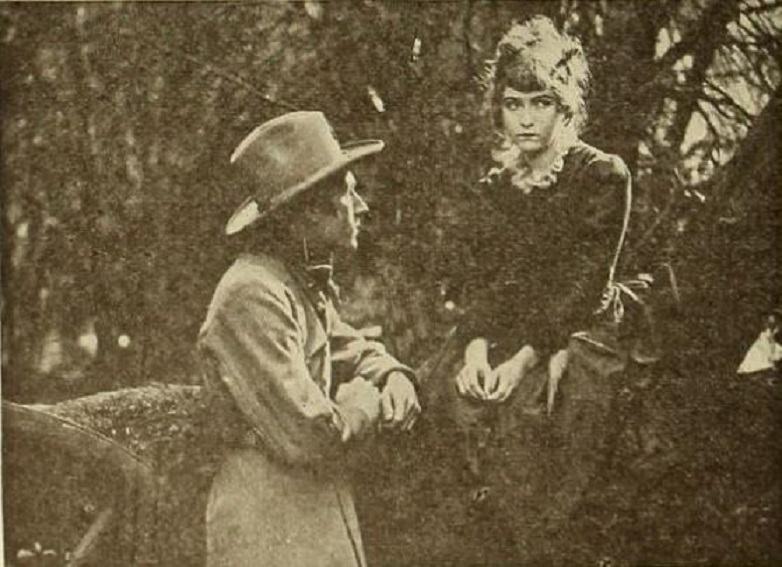
This forbidden romance forms the emotional core of the film, elevating it beyond a simple wartime drama. It's a testament to the idea that love, in its purest form, cares little for uniforms or battle lines. The film dares to suggest that even in the most polarized environments, human connection can find a way to flourish. This daring thematic choice, particularly for a film made during World War I, when nationalistic fervor was high, speaks to a desire to explore the universal aspects of human experience. The film’s ability to navigate such delicate territory, portraying a Confederate officer with empathy and charm, is noteworthy.
The idyllic, albeit perilous, romance between Sallie and Captain Johnny is abruptly shattered by the re-entry of Major Rushton into the narrative, this time in a far more sinister capacity. Having assumed the guise of a sutler – a civilian merchant who follows armies – Rushton operates as a spy within Confederate territory. His discovery of Sallie’s affection for Captain Johnny ignites a furious jealousy, transforming his initial infatuation into a malevolent obsession. This shift in Rushton’s character from a somewhat benign suitor to a vengeful antagonist adds a layer of psychological complexity to the plot. He is not merely a rival; he is an embodiment of the destructive power of unrequited love and resentment.
Rushton’s subsequent machinations are both cunning and cruel. He orchestrates a deceitful plot, forging a note ostensibly from Sallie, luring Captain Johnny to a pre-arranged trysting place. The scene where Johnny, expecting a clandestine romantic encounter, is instead captured, with incriminating evidence conveniently ‘planted’ upon him, is a moment of profound betrayal and injustice. This sequence, with its focus on false accusations and the imminent threat of execution, might evoke memories of other silent dramas where characters face dire consequences due to political machinations or personal vendettas, perhaps even hinting at the desperate plights seen in films like A Fight for Freedom; or, Exiled to Siberia, where the stakes are life and death, and escape is the only hope.
The film masterfully builds tension during Johnny’s condemnation, utilizing close-ups and dramatic intertitles to convey the gravity of his situation. The audience is left in no doubt of his perilous fate, setting the stage for Sallie’s ultimate heroic intervention. This is where the narrative truly pivots, transforming Sallie from a resourceful helper into a proactive savior, willing to risk everything for the man she loves.
Upon learning of Captain Johnny’s desperate plight, Sallie’s resolve hardens. Her visit to Rushton’s headquarters is not one of pleading, but of calculated manipulation. She understands Rushton’s weakness – his unwavering, albeit twisted, affection for her. What follows is a remarkable display of feminine guile and strategic flirtation, a performance within the performance. Sallie, with every expressive gesture and captivating glance, diverts Rushton’s attention, drawing him into a web of false hope and desire. This audacious charade is not without its emotional cost to Sallie, but her unwavering focus on Johnny’s rescue empowers her to play the part convincingly.
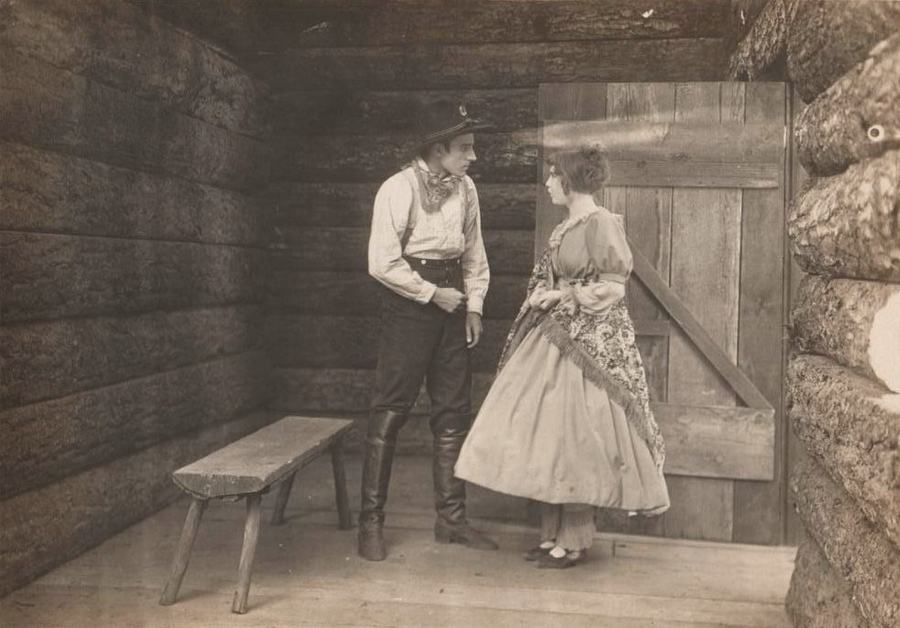
Her distraction proves successful, creating a crucial window of opportunity for Captain Johnny to escape his imminent execution. The tension during this sequence is palpable, a silent ballet of deception and daring. The film excels in conveying the high stakes through visual storytelling, relying on the actors' physicality and the judicious use of suspenseful editing. The relief, both for the characters and the audience, upon Johnny’s successful evasion of capture, is immense. It’s a powerful moment that underscores the triumph of love and quick wit over malevolent intent.
The resolution of ‘The Little Yank’ is as hopeful as it is poignant. Shortly after the dramatic escape, hostilities cease, bringing an end to the brutal conflict that had threatened to tear Sallie and Johnny apart. The film concludes with the promise of a long lifetime of happiness for the couple, a powerful symbolic ending that transcends their individual story. It suggests a broader theme of reconciliation, of healing after profound division, mirroring the nation’s own journey post-Civil War. Their union, a Union sympathizer and a Confederate officer, becomes a microcosm of a reunited country, finding peace and common ground after years of bitter strife.
From a cinematic perspective, ‘The Little Yank’ showcases the strengths of early silent filmmaking. The direction, while perhaps lacking the elaborate set pieces of later epics, focuses on clear storytelling and character-driven drama. The performances, particularly Dorothy Gish’s, are expressive and nuanced, communicating complex emotions through gesture and facial expression, a hallmark of the era’s finest actors. The use of intertitles is effective, providing necessary exposition without disrupting the visual flow. The cinematography, even in its black-and-white simplicity, captures the mood and setting, from the quiet domesticity of Sallie’s home to the stark realities of the battlefield and the tense atmosphere of the enemy camp.
While it may not possess the grand scale or revolutionary techniques of some of its contemporaries, ‘The Little Yank’ stands as a compelling example of how silent cinema could weave intricate narratives of love, loyalty, and betrayal against a backdrop of historical upheaval. It’s a film that reminds us that human drama, in all its complexity, remains eternally fascinating, regardless of the era in which it is told or the medium through which it is conveyed. It's a charming, heartfelt, and surprisingly suspenseful journey into the heart of a bygone era, proving that sometimes, the greatest battles are fought not on the battlefield, but within the human heart, and the greatest victories are found in forging connections across divides.
The enduring appeal of such narratives lies in their ability to strip away the noise and focus on fundamental human experiences: love, loss, courage, and the pursuit of happiness against insurmountable odds. ‘The Little Yank’ captures these elements with a sincerity and dramatic flair that continues to captivate, making it a valuable piece in the mosaic of early American cinema. It’s a quiet triumph, a testament to the fact that even in films without spoken words, the most profound stories can be eloquently told.
IMDb 3.6
1926
Community
Log in to comment.