DbcultAccessing Vault...
5.8/10
Senior Film Conservator
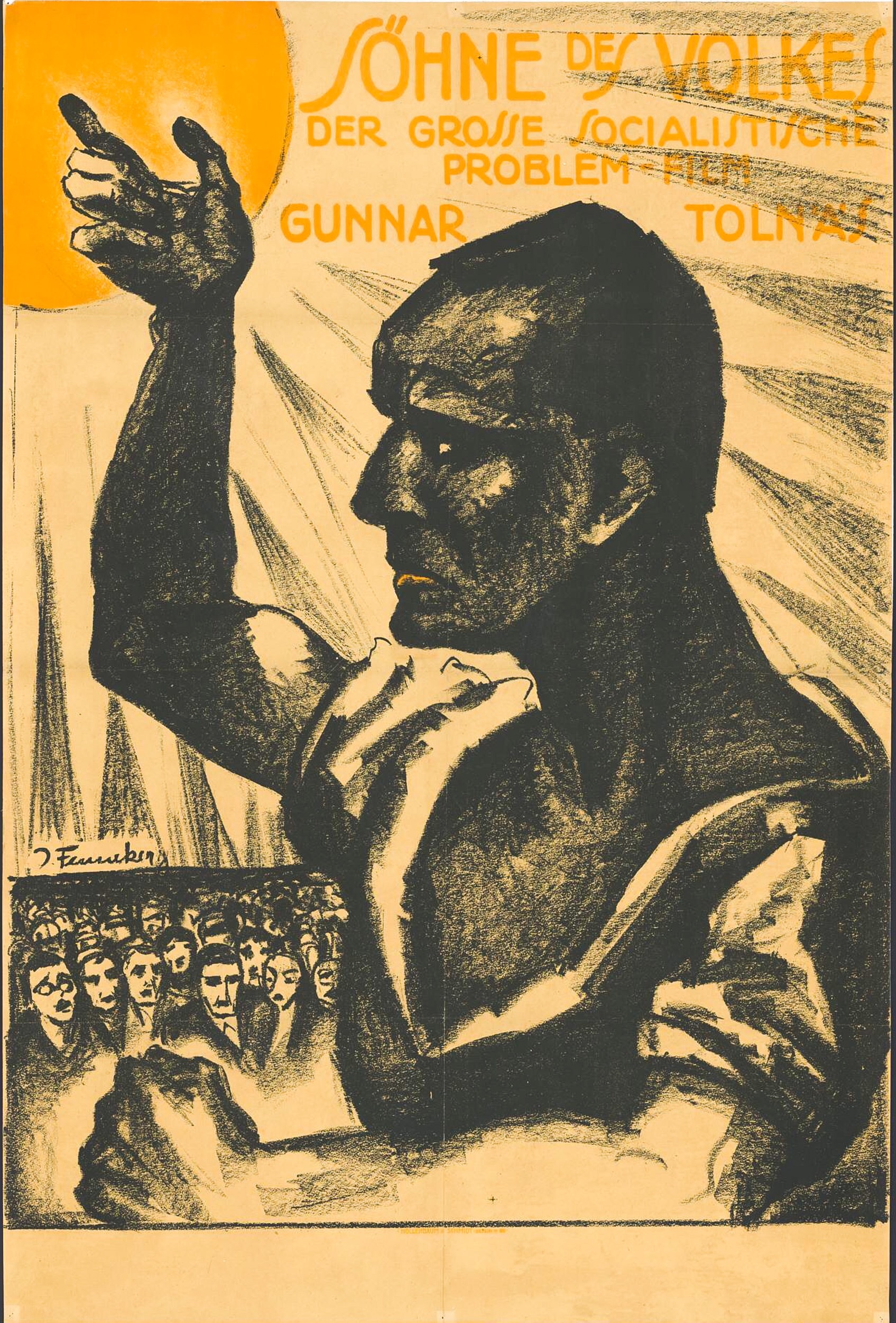
A definitive 5.8/10 rating for a film that redefined the boundaries of cult cinema. A Friend of the People remains a cornerstone of transgressive art.
There are films you watch and films that watch you—A Friend of the People belongs to the latter caste, a 1919 Danish fever dream that crawls under the epidermis of civic complacency and festers there. Ninety-something minutes of nitrate prophecy, it feels less like a period curio than tomorrow’s headlines smuggled inside yesterday’s grammar.
Director Holger-Madsen, once hailed for mystical melodramas, now wields montage like a bayonet. Notice the repeated motif of windows: every frame within a frame reminds us that witnessing is itself a political act. Axel’s print shop is photographed from a bird’s-eye angle—rows of lead type glisten like ammunition belts. Later, when police boots stomp across them, the letters scatter into abstract poetry, a futurist manifesto penned by violence itself.
Cinematographer Gunnar Tolnæs bathes post-war Copenhagen in chiaroscuro so thick you could slice it with a palette knife. Streetlamps become Corinthian columns of light; snowflakes swirl through gaslight like tiny subpoenas from heaven. The color tinting—amber for interiors, cadaverous blue for exteriors—mirrors the film’s moral thermostat: warmth exists only in collective action, while the public sphere remains cryogenic.
Carl Lauritzen’s Axel carries the thousand-yard stare of someone who has aimed artillery at names he never learned. Watch the micro-twitch of his left cheek when Agnes speaks of ballots—it’s the moment an ideology fractures like ice underfoot. Lilly Jacobson, all cheekbones and conviction, turns the thankless “lover-pleader” archetype into a centrifugal force; her final walk toward the factories is a rebuke to every patriarchal revolution that forgets the uterine labor underpinning it.
As Mads, Svend Kornbeck channels the ecstatic vulnerability of a young Kazan. His voice—rendered only through emphatic pantomime and the occasional title card—could sell sand in Sahara. When he collapses on the quay, throat crushed, the camera dollies back as if even the apparatus itself cannot bear witness. It’s a death scene that refuses catharsis; instead of closure, we inherit the hollow resonance of a song we’ll never hear.
Sophus Michaëlis’s intertitles eschew the usual Victorian floral fluff. They crackle like wireless dispatches from a civil war that hasn’t happened yet. One card reads: "Profit has the persistence of vermin and the morals of mercury." You could silkscreen that onto a protest banner tomorrow morning and march straight into a climate summit.

Context is everything: Denmark emerged from the Great War politically intact yet economically hemorrhaging. Inflation turned middle-class savings into wallpaper; returning soldiers found their jobs automated or exported. The film channels this discontent through the brothers’ diverging tactics, anticipating splits that would later fracture European leftism into social-democratic reform and revolutionary vanguardism. Viewers in 1919 would have recognized the councillor as a composite of real-life profiteers who grew fat on Allied contracts; viewers in 2024 will spot the same silhouette in every tech bro who privatizes public data then funds a vanity space program.
The recent restoration by the Danish Film Institute pairs the visuals with a newly commissioned score—piano, viola, and found objects (typewriter bells, shipyard hammers). During the crypt-screening scene, the composer lets the projector’s mechanical clatter serve as percussion, blurring diegesis and accompaniment. The result is so uncanny you’ll glance toward the booth half-expecting a celluloid phantom to stare back.
If you crave more silents that detonate class dynamics, queue up Tigre reale—where aristocratic decadence masks proto-feminist revolt—or Ingeborg Holm, whose maternal suffering indicts welfare systems with scalpel precision. For contrast, Yankee Pluck offers capitalist optimism so unbridled it feels like champagne forced through your nostrils—proof that American cinema responded to post-war trauma with entrepreneurial fairy tales rather than insurrectionary pamphlets.
The 4K restoration mines two surviving nitrate prints—one held in Copenhagen, the other discovered in a Riga basement after roof-collapse rumors sent archivists scrambling. Faded Dutch intertitles were reconstructed via back-translation of a 1923 French censorship log, yielding a text both faithful and sprightly. Streaming platforms are bidding as we speak; meanwhile, cine-clubs can access DCP through the institute’s loan program. Don your warmest coat and catch it on the big screen—streaming compresses those charcoal shadows into mush.
Masterpiece is a word blunted by overuse, yet A Friend of the People rekindles its edge. It is the rare agit-prop that refuses to flatter its audience. You will leave shaken, unsure whether to riot, weep, or write your local representative—probably all three. The film’s ultimate coup lies in its refusal to depict revolution as climax; instead, it presents uprising as grammar, the only syntax by which democracy can periodically reinvent itself. That the brothers fail in conventional terms feels truer than any triumphalist montage Hollywood would later spoon-feed us.
Watch it, argue with it, screen it in a union hall, project it onto the façade of a bank at midnight. Just don’t mistake it for a museum relic—this is living nitrate, and it still burns.
IMDb 5.8
1928
Community
Log in to comment.