DbcultAccessing Vault...
Cult Review
Senior Film Conservator
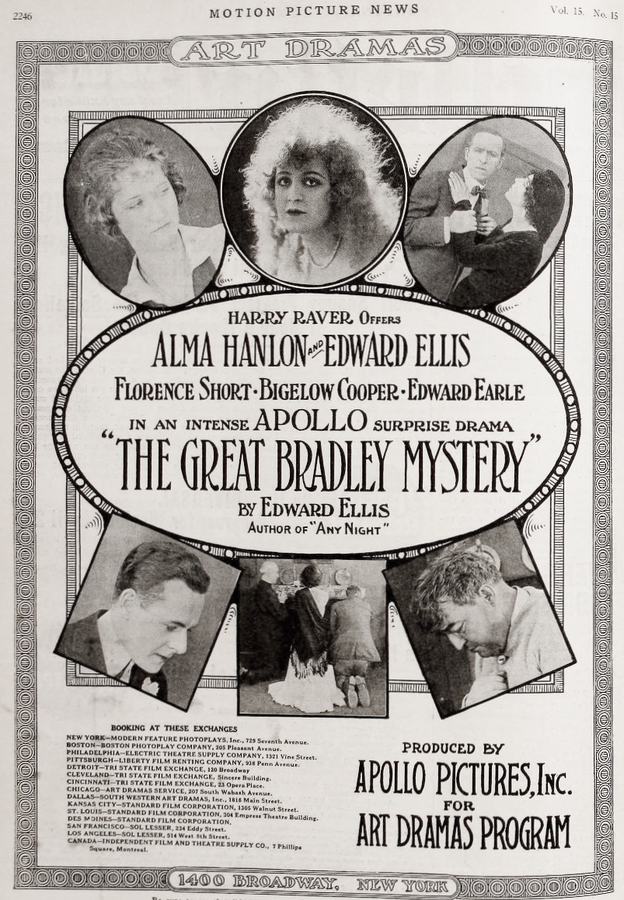
Stepping back into the annals of early cinema, one often encounters narratives that, while perhaps melodramatic by contemporary standards, resonate with an enduring power, laying bare the rawest human emotions. 'The Great Bradley Mystery' is precisely such a cinematic artifact, a compelling silent film that masterfully weaves a tapestry of love, deceit, and the arduous journey towards justice. It's a testament to the storytelling prowess of its era, demonstrating how complex psychological dramas could be conveyed without a single spoken word, relying instead on the nuanced performances of its cast and the evocative power of visual narrative. Directed with a keen understanding of suspense and emotional crescendo, this film is far more than a simple period piece; it’s a profound exploration of human frailty and resilience.
At its heart, the film is a harrowing examination of ambition's corrupting influence and the devastating ripple effects of manipulative behavior. Bradley, portrayed with a chilling blend of charm and ruthlessness by Edward Earle, stands as the central antagonist, a man whose moral compass is utterly shattered by his desire for Mary. His machinations begin subtly, a whispered fabrication of an engagement designed to deter his unsuspecting business partner, Collier, from pursuing the woman they both love. This initial deception sets in motion a chain of events so convoluted and tragic that it leaves a lasting impression, akin to the intricate web of lies spun in other compelling dramas of the period, such as The Hidden Scar, where concealed truths invariably lead to ruin.
The narrative gains considerable momentum with the introduction of Lola, a character whose tragic plight serves as the catalyst for much of the film's unfolding drama. Lola, a young Italian woman betrayed by Bradley, arrives at his office, desperate and pleading for him to fulfill his promise of marriage. This scene is a masterclass in silent film acting, with Florence Short imbuing Lola with a heart-wrenching vulnerability that immediately draws the audience into her suffering. It’s here that the film’s central misunderstanding takes root, a classic dramatic device employed with devastating effectiveness. Mary, overhearing Lola's tearful entreaty, misconstrues a chance encounter between Lola and Collier, believing him to be the cad who has wronged the Italian girl. This pivotal moment, orchestrated by Bradley's swift and cowardly exit, is a testament to the script's cleverness in twisting perceptions and fanning the flames of suspicion. The emotional weight of this misapprehension is palpable, reminiscent of the profound miscommunications that drive the plot in films like Honor's Altar, where reputations are irrevocably tarnished by false assumptions.
Mary, played by Alma Hanlon with a poignant blend of innocence and conviction, is utterly devastated by what she perceives as Collier's betrayal. Her refusal to speak to him, fueled by Bradley's insidious encouragement, is heartbreaking. One can almost feel the weight of her misplaced trust, the agony of believing the worst in the man she truly loves. Collier, portrayed by Andy Clark with a stoic nobility that belies his inner turmoil, is left heartbroken and bewildered, retreating to the American West in a futile attempt to mend his shattered spirit. His departure provides Bradley with the perfect opportunity to further his wicked scheme, culminating in the chilling fabrication of Collier's death via a falsified telegram. This act, so utterly devoid of conscience, underscores Bradley's depravity and his single-minded pursuit of Mary, regardless of the ethical cost. The sheer audacity of this deception rivals the cunning plots seen in films such as Zagadochnyy mir, where characters navigate treacherous landscapes of hidden motives and calculated lies.
The film then transitions into a period of apparent calm, a false dawn for Mary, who, after a suitable period of mourning for the supposedly deceased Collier, succumbs to Bradley's persistent advances and marries him. This union, however, is built on a foundation of sand, destined to crumble under the weight of unearthed truths. The moment of revelation is expertly handled, a powerful scene where Mary encounters a dying Lola in a hospital. Lola’s deathbed confession, revealing Bradley’s paternity of her child and his monstrous deceit, shatters Mary’s world. It's a moment of profound recognition, a tragic awakening to the horrifying reality of her husband's true nature. Alma Hanlon's portrayal of Mary's dawning horror and subsequent fury is incredibly impactful, conveying a maelstrom of emotions without a single line of dialogue. This dramatic unveiling of a hidden past, which utterly reshapes the protagonist's understanding of their reality, mirrors the shocking disclosures that often drive the tension in films like The Last Egyptian, where ancient secrets hold the key to contemporary dilemmas.
Mary’s return home to confront Bradley is charged with an almost unbearable tension. Her denunciation is a powerful moment of righteous anger, a woman scorned and betrayed finally finding her voice. Bradley, recognizing that the scandal is now inevitable, reacts with characteristic self-preservation, ordering Mary to prepare for an immediate trip to Europe. His subsequent act of selling off both his and Collier's shares in their company reveals his true priorities: escaping accountability and preserving his ill-gotten gains. This ruthless financial maneuver further solidifies his image as a man utterly devoid of empathy, willing to sacrifice anyone and anything for his own benefit. The film, in this regard, offers a stark commentary on the avarice that can drive individuals to commit unspeakable acts, a theme echoed in the morally ambiguous business dealings often depicted in silent dramas of the era, though perhaps less overtly than in a film like Checkers, which focuses more on financial intrigue.
The climax of 'The Great Bradley Mystery' is both sudden and profoundly impactful. Lola's father, driven to the brink of madness by his daughter's death and Bradley's perfidy, seeks his own form of justice. His clandestine entry into Bradley's office through a basement window is a moment of quiet dread, a foreboding hint of the violence to come. The discovery of Bradley's lifeless body the next day, and the subsequent arrest of Tony, a seemingly peripheral character, adds another layer of intrigue to an already complex narrative. The audience is left to ponder the true perpetrator, mirroring the investigative suspense found in similar mystery titles of the period, albeit without the more overt detective work seen in, for example, Les gaz mortels.
It is at this crucial juncture that Collier makes his dramatic return, a deus ex machina that not only resolves the immediate mystery but also sets the stage for the film's emotional resolution. His reunion with Mary is understated yet deeply moving, a quiet acknowledgment of shared suffering and enduring affection. Together, they seek to clear Tony's name, leading to Collier's confession to the police. His account of confronting Bradley over the sale of the company, the ensuing struggle, and the accidental discharge of Bradley's own revolver, killing him, is a gripping explanation. Collier's initial attempt to stage the scene as a suicide, driven by a desire to avoid further entanglement, speaks volumes about the desperate circumstances in which he found himself. His willingness to step forward and accept responsibility, even for an accidental death, underscores his inherent integrity and contrasts sharply with Bradley’s deceitful nature. The police's swift assurance of Collier's innocence brings a sense of relief, a moment where the intricate threads of justice finally align.
The performances across the board are commendable, especially considering the constraints of silent film acting. Edward Earle as Bradley is particularly memorable, crafting a villain who is both despicable and disturbingly plausible. His expressions, subtle shifts in posture, and calculated glances convey a depth of malice that transcends the lack of dialogue. Andy Clark's Collier is the embodiment of the wronged hero, conveying heartbreak, determination, and ultimately, a quiet strength. Alma Hanlon's Mary navigates a vast emotional landscape, from blissful ignorance to shattering despair and finally to a newfound resolve. The supporting cast, including Edward Ellis (who also wrote the screenplay, a remarkable feat of dual talent), Florence Short, and Bigelow Cooper, all contribute to the film’s rich emotional texture, each character serving a vital purpose in propelling the complex narrative forward. Their collective efforts create a believable world, despite the exaggerated expressions often characteristic of the era, allowing the audience to fully invest in the characters' fates.
From a technical standpoint, 'The Great Bradley Mystery' showcases the evolving artistry of early cinema. The cinematography, while perhaps not as groundbreaking as some of its contemporaries, is effective in establishing mood and directing the viewer's eye. The use of intertitles is judicious, providing necessary exposition without overwhelming the visual storytelling. The pacing is deliberate, allowing moments of tension to build gradually, punctuated by dramatic revelations. The film's ability to sustain suspense and emotional engagement over its runtime, relying purely on visual cues and the power of narrative, is a testament to the skill of its creators. One might draw parallels to the narrative sophistication found in other silent films that rely heavily on character internalities and visual suggestion, such as Die Frau mit den Karfunkelsteinen, where the dramatic weight is carried by subtle gestures and mise-en-scène.
Ultimately, 'The Great Bradley Mystery' concludes with a powerful sense of catharsis and the promise of a brighter future for Mary and Collier. Their shared ordeal, marked by profound suffering and injustice, has forged an unbreakable bond. The final scene, as they face the future together, imbued with the knowledge that their long-deferred happiness is finally within reach, provides a satisfying, if hard-won, resolution. It’s a classic triumph of good over evil, but one that acknowledges the immense cost of such a victory. The film serves as a potent reminder that truth, no matter how deeply buried or cunningly disguised, will always find a way to surface, and that genuine love and integrity can withstand even the most insidious betrayals. Its enduring appeal lies not just in its intricate plot, but in its timeless exploration of morality, consequence, and the enduring human spirit, much like the thematic fortitude evident in Happiness, which also delves into the eventual rewards of perseverance through adversity. This film, though a product of its time, speaks to universal experiences, making it a valuable piece of cinematic history and a compelling watch for anyone interested in the foundational narratives of film.
IMDb —
1918
Community
Log in to comment.