DbcultAccessing Vault...
Cult Review
Senior Film Conservator
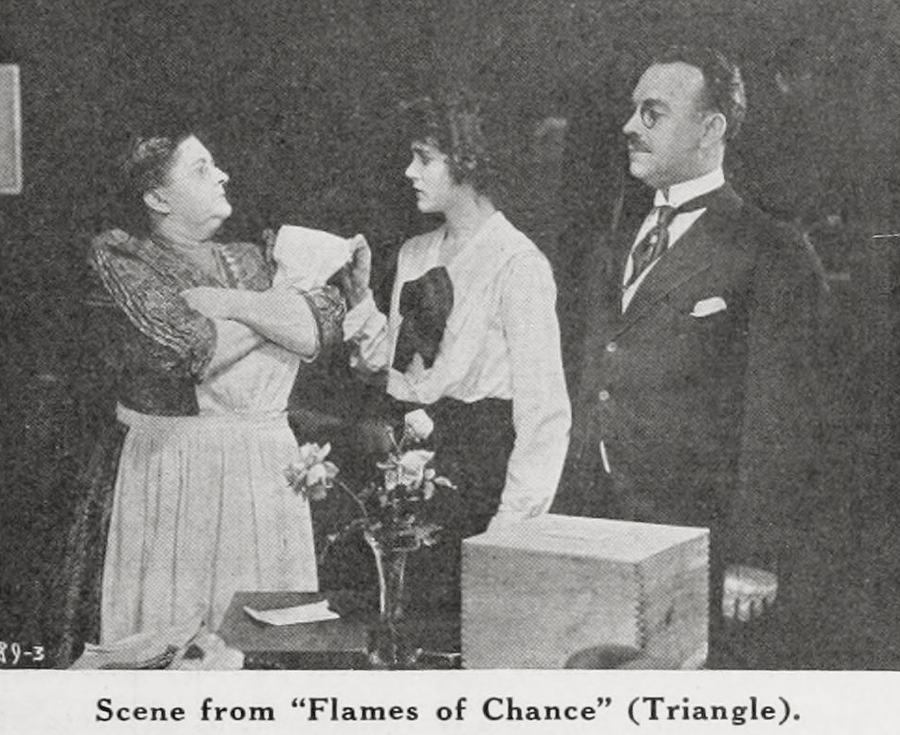
When the screen flickers to life with the stark imagery of a World War I prison camp, The Flames of Chance establishes its tone with a blend of desolation and quiet resilience. The film’s protagonist, Jeanette Gontreau, emerges not as a warrior or a martyr, but as a figure of quiet subversion, her correspondence with Allied POWs a balm to their fractured spirits. The narrative’s ingenuity lies in its use of silence—not merely as an absence of sound, but as a language of its own. Jeanette’s letters, laden with coded sentiment, become both a lifeline and a liability, weaving a tapestry of duality that mirrors the film’s central conflict.
Director Elizabeth Haas and co-writers Francis William Sullivan and Harvey Gates craft a story that thrives on the interplay between public persona and private truth. Jeanette’s disguise as an elderly benefactor is more than a plot device; it’s a metaphor for the societal roles women were expected to occupy during the era. Her wig and spectacles are armor, shielding her from the consequences of her compassion. Yet, as the film unfolds, these props take on a tragicomic quality, underscoring the fragility of identity when confronted by the rawness of human connection.
The chemistry between Jeanette and Harry Ledyard is a masterclass in silent film acting. Percy Challenger’s portrayal of Harry captures a boyish earnestness that masks a burgeoning maturity, while Margery Wilson’s Jeanette is a study in restrained intensity. Their interactions—whether through letters or the fateful encounter in New York—are charged with unspoken tension. The film’s most striking sequence is their first meeting: Jeanette, her hands trembling beneath a paper-thin wig, musters a stooped posture and rasping voice to maintain her ruse. The camera lingers on her face as Harry’s admiration melts into affection, a testament to the power of visual storytelling.
What elevates The Flames of Chance beyond a simple romance is its nuanced handling of espionage. When coded messages in Jeanette’s letters attract the attention of secret service agents, the film pivots from personal drama to political thriller. Harry’s selfless act of taking the blame for her actions—a gesture that borders on the absurd yet feels deeply human—highlights the era’s gendered expectations. His willingness to sacrifice himself, despite knowing her deception, speaks to a naivety that is both endearing and tragic. The resolution, in which Jeanette’s employer confesses to the espionage, serves less as a plot twist than as a commentary on the fragility of trust in times of war.
The film’s exploration of identity is particularly resonant in the context of the 1920s. Jeanette’s deception—her adoption of an elderly persona—can be read as a critique of the constraints placed on women, particularly those who sought autonomy. Her eventual revelation of her true self to Harry is not a triumph but a negotiation: she offers him the choice to accept her on her own terms. This moment, delivered with minimal dialogue and maximum emotional clarity, is a cornerstone of the film’s enduring appeal.
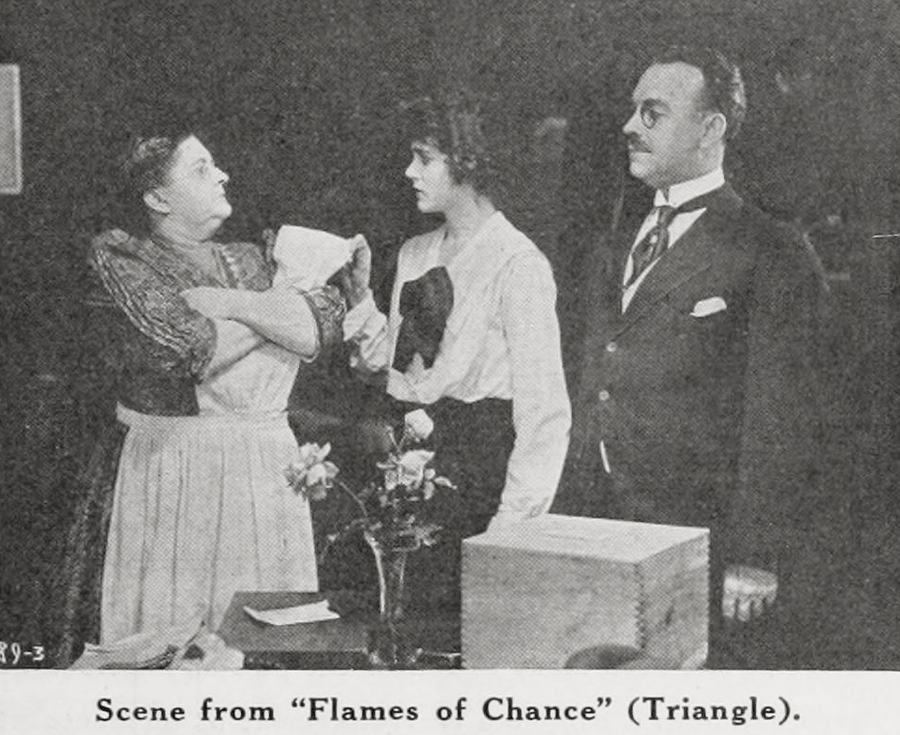
Visually, the film is a feast of contrasts. The stark black-and-white cinematography amplifies the emotional tenor of each scene. Shadows play a crucial role, with Jeanette often framed in half-light, her face partially obscured—a visual echo of her dual existence. The prison camp sequences are rendered with a haunting simplicity, the barbed wire and muted tones evoking the grim reality of war. Yet, the film never loses its sense of hope; even in its darkest moments, there is a shimmer of light, a reminder that humanity persists amid chaos.
While The Flames of Chance stands on its own merits, it invites comparisons to other silent-era dramas. Like The Heart of a Painted Woman, it grapples with themes of societal expectation and personal liberation. Both films use the silent medium to amplify their protagonists’ internal struggles, though The Flames of Chance diverges by grounding its narrative in the immediacy of war. Similarly, the espionage subplot echoes the tension in For Liberty, but with a more intimate focus on the human cost of deception.
Where The Flames of Chance truly shines is in its emotional authenticity. Unlike the grandiose melodramas of the period, it avoids over-the-top theatrics in favor of subtle, everyday gestures. The film’s climax—Jeanette’s confession to Harry—is not marked by fireworks or dramatic collapse, but by a quiet understanding between two people who have chosen each other despite the odds. This understated approach, coupled with the film’s sharp direction, ensures that The Flames of Chance remains a standout in the silent film canon.
Though the 1920s have long since faded into history, The Flames of Chance continues to resonate with modern audiences. Its themes of identity, sacrifice, and the search for truth in a world of facades are as relevant today as they were a century ago. The film’s enduring appeal lies in its ability to balance historical specificity with universal emotional truths, making it a bridge between eras.
For film enthusiasts, The Flames of Chance is a reminder of the power of the silent medium. Without the crutch of dialogue, the actors and directors relied on physicality, expression, and composition to tell their story—a challenge that the film meets with remarkable grace. It is a testament to the ingenuity of early 20th-century cinema and a precursor to the more nuanced character studies that would define later decades.
In an age where digital noise overwhelms our senses, The Flames of Chance offers a refreshing return to the quiet strength of storytelling through silence. Its legacy is not just in the film itself, but in the conversations it sparks about love, duty, and the masks we wear to navigate a world that demands we choose between who we are and who we must pretend to be.
IMDb —
1928
Community
Log in to comment.