DbcultAccessing Vault...
6/10
Senior Film Conservator
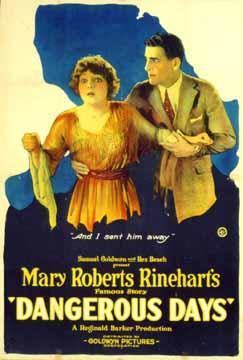
A definitive 6/10 rating for a film that redefined the boundaries of cult cinema. Dangerous Days remains a cornerstone of transgressive art.
The camera opens on a cavernous foundry at twilight, orange slag cascading like liquid sunrise; in that instant we sense we are not in for polite parlor melodrama but inside a myth-making crucible. Director J.G. Hawks and scenarist Thompson Buchanan compress Mary Roberts Rinehart’s serialized wartime potboiler into 78 minutes of nitrate fever dream, yet every frame feels chiseled rather than cut. Girders bisect the screen like prison bars, while shadows of rivet guns jitter across walls as if the building itself were having second thoughts about its complicity in slaughter. The Spencer Works becomes a Gesamtkunstwerk of clang and hiss—a living, clanking organism whose heartbeat is measured by pneumatic hammers.
Rudolph, essayed with serpentine charisma by Bertram Grassby, slinks into scenes like cigarette smoke under a doorway. His monocle isn’t an affectation but a signaling device: the monocle’s flash often coincides with a match-cut to the factory’s blast furnace, suggesting moral equivalence between optical and industrial glare. Watch how he plants rumors—never with raised voice but by whispering into ambient noise, letting the clamor of industry mask his sedition. The performance is silent-film villainy elevated to geopolitical puppetry; he could teach Appearance of Evil’s conspirators a masterclass in plausible deniability.
Milton Ross plays Herman as a titan lashed to the machinery he serves; shoulders perpetually stooped from years of leaning over drafting tables, eyes flickering with the same orange glow as the open-hearth furnace. His arc—devoted craftsman to familial avenger to self-condemned Cain—unfolds in a triptych of lighting schemes: the warm amber of the workplace, the sickly green of parlor gas-lamps, the stark white of the detonation he engineers. The film’s most chilling moment isn’t the blast itself but the second before: Herman’s hand trembles over the plunger as if it were a communion wafer, and Ross lets us see every contradictory beat of a man who realizes theology has lied to him about the ease of damnation.
Pauline Starke’s Anna enters wearing innocence like a shawl, yet by the finale she is transfigured into a flaming angel whose death catalyzes every remaining life. The actress navigates the transition with minimal intertitles; instead her spine straightens incrementally across reels, pupils dilate as if inhaling the world’s ugliness, and ultimately she runs toward doom in a series of cross-cut shots that splice her sprint with artillery pieces being hoisted onto railcars. The explosion—rendered through double-exposure and hand-tinted red flames—freezes on a single frame of her silhouette before it disintegrates, a visual quotation of early Christian martyrology updated for the industrial age.
Cinematographer Rowland V. Lee (doubling as an actor here) wields German-expressionist DNA while remaining stubbornly American in his pragmatism. Oblique angles tilt the foundry’s catwalks until they resemble trench systems; low-key lighting carves the Klein brothers’ faces into topographies of guilt. Rapid montage sequences—some as short as four frames—intercut factory gauges with ticker-tape headlines announcing the war, compelling the viewer to equate productivity statistics with body counts. Yet the film never succumbs to the kinetic chaos of, say, Like Wildfire; Hawks allows tension to pool in long, contemplative takes where the only motion is steam curling like restless ghosts.
Though released two years before the Vitaphone revolution, Dangerous Days anticipates sonic storytelling by visualizing noise. When the plant’s whistle screams, the intertitle simply reads “—” a blank glyph that forces the audience to hallucinate the shriek. Later, the absence of musical accompaniment during Anna’s death run turns the theater itself into a resonating chamber; you become hyper-aware of seat creaks, your own pulse, the collective inhale of strangers. The filmmakers weaponize silence the way later war poets would weaponize white space on the page.
Natalie Spencer, in Clarissa Selwynne’s glacial portrayal, is a society sphinx who treats motherhood as an IPO. She floats through mansions in gowns armored with bugle beads, each bead catching light like a miniature breastplate. Her refusal to let Graham enlist is less pacifist than protective of brand equity—sons are heir-apparent, not cannon fodder. Contrast Audrey Valentine (Barbara Castleton), the widow whose mourning attire seems woven from night itself; she speaks little but her body language suggests someone who has already paid the cosmic bill and now quietly demands solidarity. When Natalie finally exits the narrative—her silhouette receding into fog aboard a luxury liner—the film performs a transference of maternal authority: Audrey’s scarred womb becomes the new emotional center, proving that the home front is itself a front.
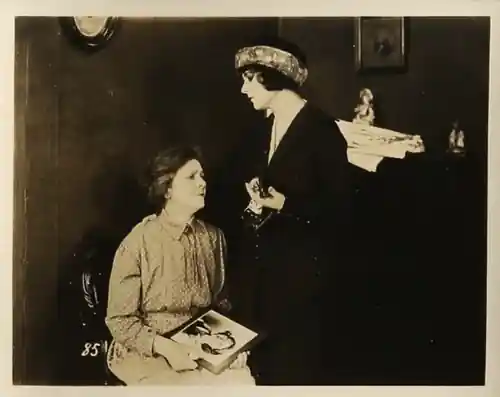
Read today, Anna’s arc is a cautionary fable about the limits of female agency in wartime cinema. She is commodified by both bloodline and class: Herman sees her as vessel of purity whose honor demands dynastic vengeance; Rudolph weaponizes her sexuality to goad Herman; Graham idealizes her as the untainted antithesis of his mother. The film grants her the power of revelation—she alone uncovers the conspiracy—yet metes out capital punishment for her temerity. Still, her fiery sprint across the factory yard, skirts hitched like a Valkyrie, predates the sacrificial heroines of Fruits of Desire or The Nightingale, suggesting early Hollywood’s ambivalence: women can foresee the apocalypse, but not survive it.
Stack this film beside The Unbroken Road and you’ll notice both trade in explosive iconography yet diverge in moral arithmetic: the latter frames war as redemptive pilgrimage, whereas Dangerous Days treats every detonation as a moral overdraft. Against Beware!—another Rinehart adaptation—it is less interested in drawing-room schematics and more in the metallurgical smell of danger. Its DNA even echoes through later espionage classics: the fratricide motif anticipates Fritz Lang’s Man Hunt, while the factory-as-battlefield visual conceit resurfaces in The Crowd Roars and How Green Was My Valley.
Released only five years after the Armistice, the picture walked a propaganda tightrope. Regional censor boards—particularly in Pennsylvania steel towns—demanded deletion of shots showing blueprint close-ups, fearing they could coach real saboteurs. The film’s marketers countered by rebranding it “a plea for preparedness,” erecting lobby displays of local Gold Star mothers alongside melted shell casings. The gambit worked: it became the 17th highest-grossing film of 1923, though modern historians argue its cautionary thesis was undercut by its own pyrotechnic spectacle, turning trauma into thrill the way Ashes of Love romanticized post-war disillusion.
For decades the film languished in the Library of Congress’s 28mm catalog, erroneously labeled Danger Daze due to a secretary’s typo. A 2019 4K restoration by the San Francisco Silent Film Society—funded partly by a steelworkers’ union hungry for historical validation—unearthed a French inter-negative with alternate takes. Most revelatory: a 45-second extreme close-up of Anna’s hand sifting through blast debris, discovering a locket containing baby teeth—her own, kept by Herman since childhood. The shot reframes the entire explosion as a twisted filial baptism, a visual footnote that haunts long after Graham’s regiment boards its train beneath fluttering flags.
I first encountered this film on a 16mm print in a Pittsburgh church basement; the projector’s carbon arc spat ozone that mingled with the metallic tang of rain on parish pipes. When Anna’s silhouette ignited, a veteran in the front row—Korea, judging by the cap—unfolded a handkerchief and wept without sound. The moment clarified cinema’s unholy covenant: it can transmute private grief into public ritual, then hand the ashes back as if they were still warm. Ever since, whenever I hear the clang of a railroad coupling or smell coal smoke in autumn, I think of Herman’s trembling palm hovering above the plunger, of Anna’s calico dress becoming a comet, of how nations and families alike finance their futures with the tender collateral of their daughters.
Verdict: A molten core of betrayal, sacrifice, and industrial sublime, Dangerous Days forges pre-Code Hollywood’s most searing indictment of war’s domestic front. It demands to be seen not as antiquated curiosity but as a cinematic shrapnel still hot enough to scorch contemporary complacency.
Referenced for context: The Ticket of Leave Man, M'Liss, The Way Back, Il giardino incantato, Her Second Husband, Little Speck in Garnered Fruit, Secret Strings, The Wild Rider.
IMDb —
1917
Community
Log in to comment.