DbcultAccessing Vault...
Cult Review
Senior Film Conservator
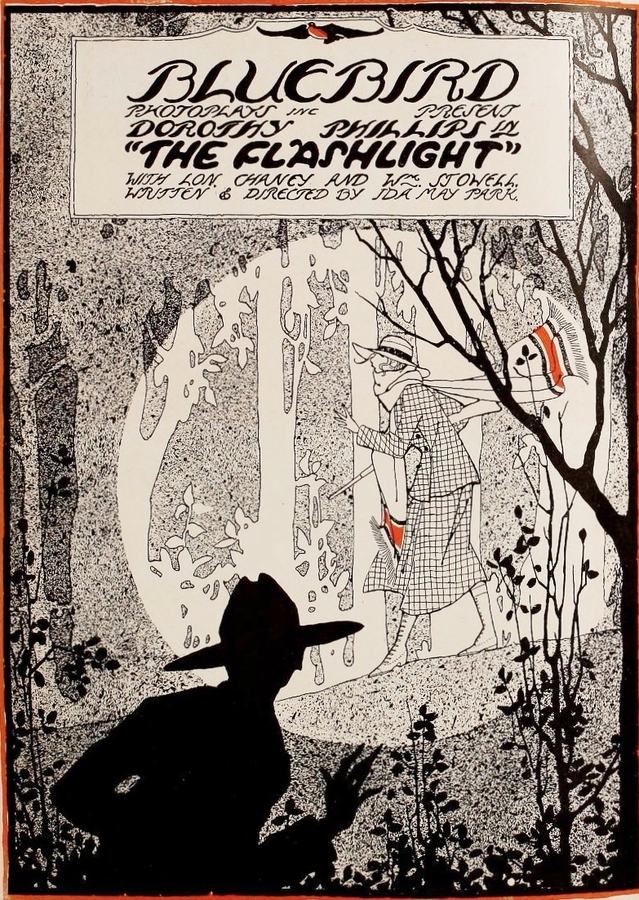
Venturing into the often-overlooked annals of early cinema, one occasionally unearths a gem that, despite its age, still gleams with a compelling narrative and surprisingly nuanced performances. Such is the case with 1917's The Flashlight, a silent film that, through its intricate plot and atmospheric setting, manages to transcend its era, offering a gripping mystery that keeps audiences, even a century later, on the edge of their seats. This isn't just a simple crime drama; it's a fascinating exploration of technology's unexpected role in justice, the treacherous nature of circumstantial evidence, and the often-blurry lines between innocence and guilt.
At its core, The Flashlight introduces us to Jack Lane, portrayed with a commendable blend of earnestness and youthful ambition by Orin Jackson. Lane is no ordinary protagonist; he's a nature photographer, an innovator, pushing the boundaries of his craft by developing a novel process involving a specialized 'flashlight' to automatically capture images of wildlife in their natural habitat. This premise, in itself, is remarkably forward-thinking for a 1917 production, hinting at the burgeoning fascination with technology and its potential to reveal hidden truths. The mountain setting, with its inherent isolation and untamed beauty, serves as a magnificent, almost character-like backdrop, reminiscent of the rugged landscapes often seen in contemporary Westerns or adventure serials, providing both a sense of grandeur and an undercurrent of peril.
The narrative's true thrust begins when Lane's scientific endeavor takes an unforeseen, sinister turn. One tranquil night, his slumber is violently interrupted by the sharp crack of gunshots echoing through the wilderness. The next morning, as he diligently processes his photographic plates, a chilling image emerges: a woman, shotgun in hand, caught in the act of fleeing. This single, damning piece of evidence, captured by his ingenious device, immediately elevates the film from a pastoral drama to a taut mystery. It's a testament to the script by Albert Treynor and Ida May Park that this pivotal moment feels both organic and utterly shocking, setting the stage for a spiraling descent into suspicion and intrigue.
Driven by a potent cocktail of curiosity and an unwitting desire to understand the scene his camera has immortalized, Jack makes the fateful decision to visit the cabin of Porter Brixton, the presumed victim of the recent violence. This act of investigative zeal, however, backfires spectacularly. Instead of uncovering answers, Jack finds himself apprehended, becoming the primary suspect in Brixton's murder. The swiftness of his arrest, based largely on his proximity to the crime and his own peculiar photographic equipment, underscores the precariousness of justice in an era reliant heavily on witness testimony and often misleading circumstantial evidence. It's a dramatic irony that the very tool designed to reveal nature's secrets instead implicates its wielder in a human tragedy.
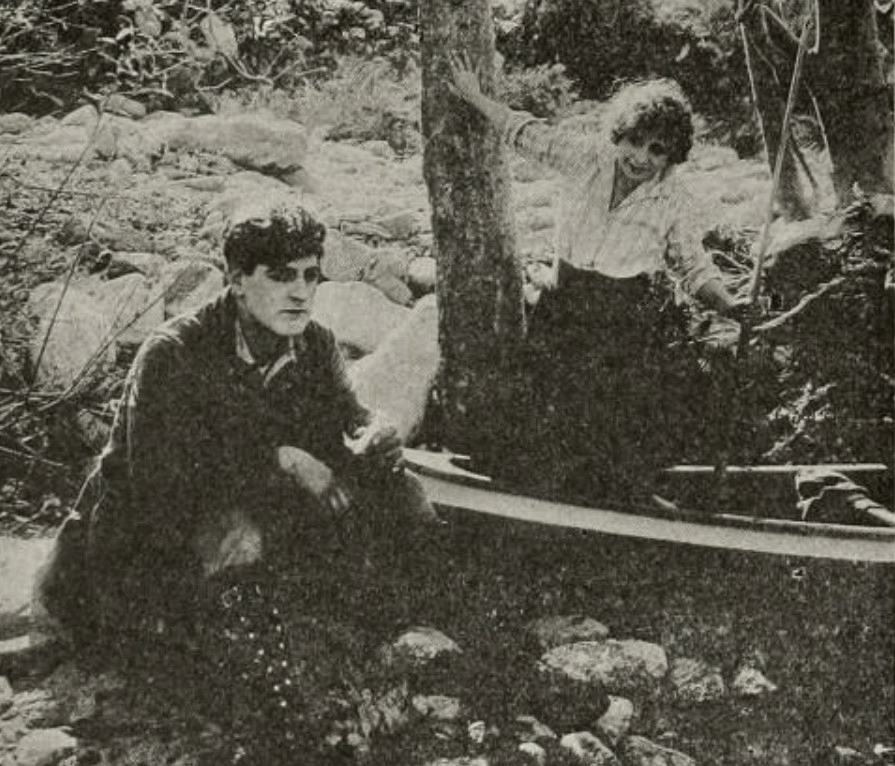
Jack's subsequent escape from custody is a thrilling sequence, demonstrating his resourcefulness and desperation. This break for freedom, while necessary for the plot's progression, also adds another layer of complication to his already precarious situation, painting him further as a fugitive rather than an innocent man. It is during this period of flight that he encounters Delice Brixton, played by Nora Dempsey. Dempsey brings a compelling intensity to Delice, a character shrouded in enigma and, crucially, the very woman captured by Jack's flashlight camera. Their initial interactions are charged with a palpable tension; both are wary, both suspect the other, yet a strange, almost magnetic, connection begins to form between them. This dynamic, where two individuals are bound by a shared crisis and mutual suspicion, forms the emotional core of the film, adding a layer of psychological complexity often absent in simpler genre pieces of the time.
The casting of Nora Dempsey opposite Orin Jackson creates an interesting on-screen chemistry, an interplay of fear, suspicion, and a nascent understanding. Dempsey's portrayal of Delice is particularly noteworthy; she manages to convey a range of emotions – from fear and defiance to a subtle hint of vulnerability – without the aid of spoken dialogue, relying solely on expression and gesture. This mastery of silent acting is a hallmark of the era, and Dempsey rises to the challenge admirably. Their forced alliance, born out of necessity rather than affection, pushes the narrative forward, transforming a simple manhunt into a more intricate character study.
No discussion of The Flashlight would be complete without acknowledging the formidable presence of Lon Chaney. While his role here might not be as central or as grotesquely transformative as his later iconic performances in films like The Hunchback of Notre Dame or The Phantom of the Opera, his portrayal as Henry Norton, the dead man's half-brother, is nonetheless impactful. Chaney, even in a supporting capacity, possesses an unparalleled ability to command the screen, conveying deep emotional currents with minimal gestures. His eventual appearance at trial, admitting to the killing in self-defense, is the film's climactic revelation, a moment of profound dramatic weight that hinges entirely on his performance. It’s a powerful reminder of his early talent, even before he fully embraced his moniker as ‘The Man of a Thousand Faces.’ His presence elevates the film, adding a layer of gravitas and ensuring that the final twist lands with maximum impact.
The film masterfully weaves together several compelling themes. The most apparent is the fallibility of justice and the danger of relying solely on circumstantial evidence. Jack Lane's predicament serves as a poignant illustration of how easily an innocent person can be ensnared by appearances. His innovative flashlight, meant to capture beauty, instead becomes an instrument of his potential undoing. This theme resonates strongly even today, reminding us of the critical importance of due process and thorough investigation. Furthermore, the film subtly explores the evolving relationship between humanity and technology. Jack's camera, a marvel of its time, is both a tool for scientific advancement and a catalyst for personal disaster, highlighting technology's dual capacity for good and ill.
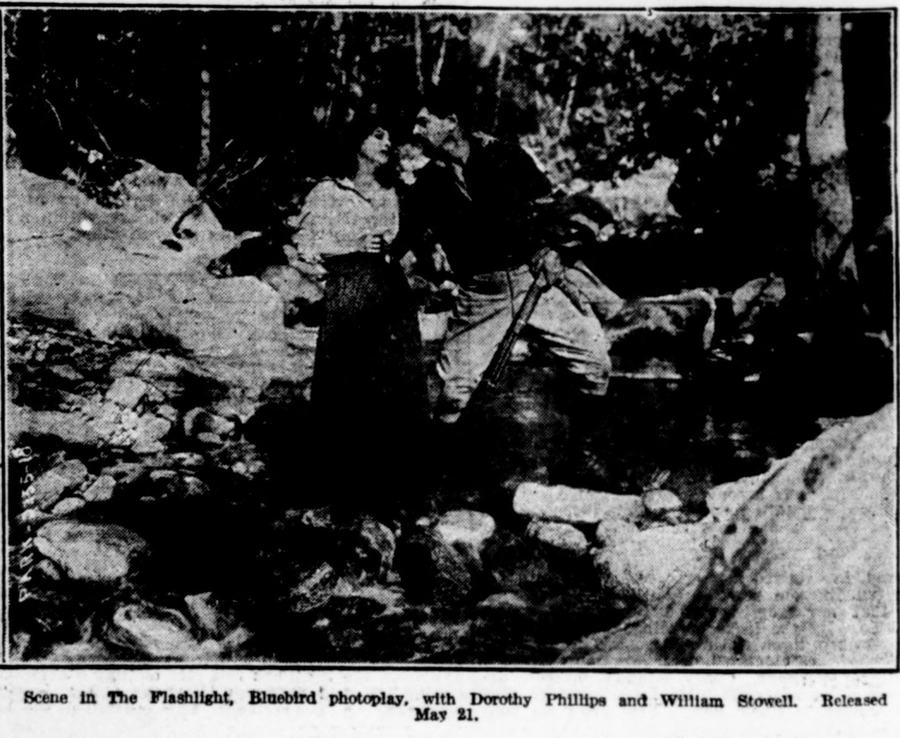
Beyond the immediate mystery, The Flashlight touches upon deeper moral questions. What constitutes self-defense? How far can one go to protect oneself or one's loved ones? Henry Norton's confession, rather than being a simple plot device, forces the audience to confront the complexities of human motivation. It's not a clear-cut case of villainy but a desperate act born of necessity, adding a layer of moral ambiguity that enriches the narrative. This nuanced approach to character motivation sets it apart from many contemporary films that often relied on more simplistic good-versus-evil dichotomies.
From a technical perspective, The Flashlight showcases the maturing artistry of silent cinema. The cinematography, while perhaps not as groundbreaking as some of D.W. Griffith’s epic works, effectively utilizes the natural grandeur of the mountain locations, creating a sense of both isolation and breathtaking beauty. The use of intertitles is judicious, providing necessary exposition without overwhelming the visual storytelling. The pacing is remarkably effective, building suspense gradually, punctuated by moments of intense action and dramatic revelation. The direction, by an uncredited hand (as was common for many early films, focusing more on the studio or stars), demonstrates a clear understanding of how to engage an audience through visual narrative alone. The film's ability to maintain tension and clarity without spoken dialogue is a testament to the skill of its makers.
Comparing The Flashlight to other films of its period further illuminates its strengths. While it lacks the intricate social commentary of a film like The Market of Vain Desire or the broad comedic strokes of The Barnstormers, it holds its own as a compelling mystery. Its focus on a murder in a secluded setting, where the natural world plays a significant role, might draw parallels to the atmospheric dread of something like Der Hund von Baskerville, though perhaps without the supernatural undertones. The pursuit and escape elements, coupled with the struggle against false accusation, share thematic echoes with films like The Road o' Strife or Vengeance of the Wilds, which often depicted protagonists battling against overwhelming odds in rugged environments. The psychological drama between Jack and Delice, where suspicion and attraction intertwine, could even be seen as a precursor to the complex relationship dynamics explored in films such as Fedora or Sapho, albeit in a more nascent form.
Ultimately, The Flashlight stands as a noteworthy entry in the silent film canon, particularly for fans of early mystery and crime dramas. It’s a film that leverages its central premise—a piece of technology inadvertently capturing a crime—to propel a narrative rich in suspense and character development. The performances, especially by Jackson, Dempsey, and the ever-magnetic Lon Chaney, anchor the story, imbuing it with emotional depth and credibility. While it may not possess the grand scale of an epic or the profound social commentary of a melodrama, its strength lies in its tight plotting, effective suspense, and the enduring power of its central mystery. It reminds us that even in the nascent days of cinema, filmmakers were capable of crafting compelling, thought-provoking stories that continue to resonate. For those seeking to explore the nuanced storytelling of the silent era, The Flashlight offers a brilliant, if sometimes shadowed, path into the past, illuminating a fascinating chapter in cinematic history.
IMDb —
1918
Community
Log in to comment.