DbcultAccessing Vault...
Cult Review
Senior Film Conservator
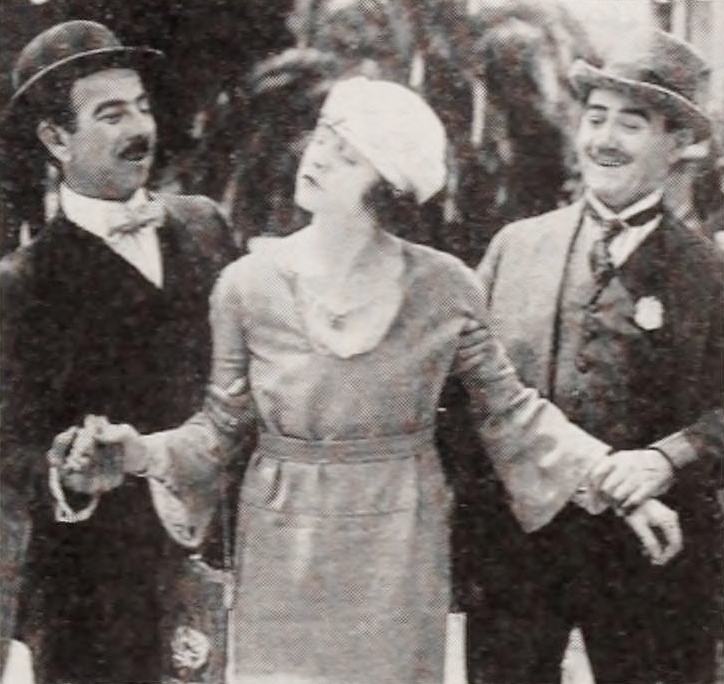
Imagine, if you will, the telephone as voltaic umbilical cord: on one end Bobby Vernon’s moon-struck tenor, on the other Helen Darling’s crystalline giggle—an acoustic lovers’ lane stretched across the copper veins of a still-young metropolis. Into this lovers’ tele-realm scuttles a mouse, a squeak no bigger than a dropped pearl, yet potent enough to detonate a chain-reaction of civic paranoia. The scream that erupts is not horror but humiliation, the sort of girlish shriek that in 1921 signals both virtue and vulnerability; still, through the black bakelite receiver it arrives as death-knell. Bobby’s imagination, already a fertile hothouse of valiant delusions, instantly grafts gangsters, white-slavers, and basement torture onto that single sound. One transatlantic game of Telephone later, Caroline’s parents—tea cups trembling in porcelain hands—summon the law, and the picture tips headlong into a slapstick noir where every act of protection multiplies peril.
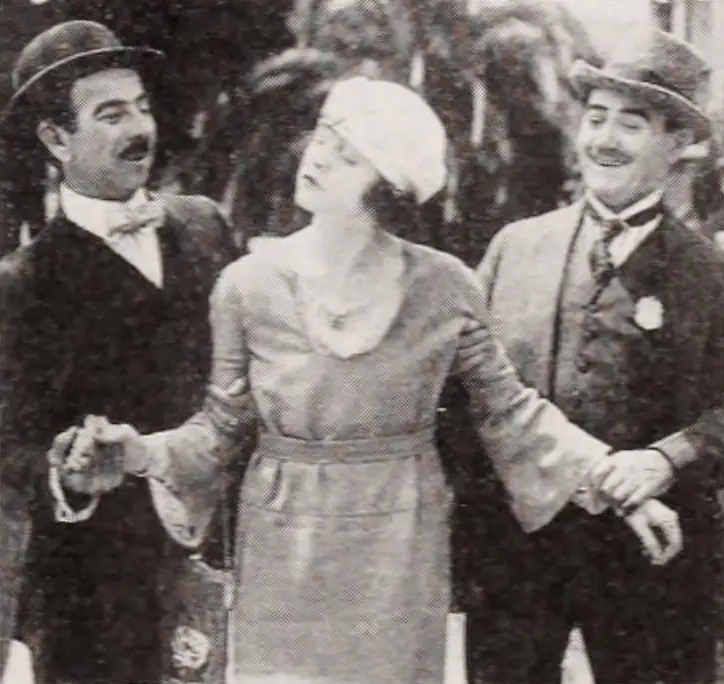
The detectives who answer the call are straight from a Sunday comic: bowler hats like twin anvils, magnifying glasses brandished like pistols, feet that pivot with cartoon sqeaks. Their mission: to shadow the Darling ingenue wherever she may roam. Roam she does, sashaying down sun-dappled boulevards in a drop-waist dress that flutters like a surrender flag. Two collegiate dandies—sweater-vested, roadster-idling—offer her a lift, their motive as innocent as a soda-float. Yet the gumshoes, conditioned by pulp weeklys to equate automobile with abduction, swoop in, a whirl of trench-coat wings. Caroline is rescued straight into the back seat of the detectives’ sedan, an irony the film savors with a close-up on her baffled dove-eyes.
Enter Bobby, breathless astride a sputtering motorcycle that thinks itself a charger. Misapprehension stacks upon misapprehension: the detectives become kidnappers, the collegiates become victims, Bobby becomes the vigilante savior who kidnaps Caroline from her kidnappers. Cue the keystone chase: brick piles, laundry lines, a runaway goat, an open manhole that swallows dignity whole—all rendered in brisk two-reel syntax, each gag a Rube Goldberg contraption powered by romantic anxiety. Director Unknown—the film wears anonymity like a carnival mask—relies on velocity rather than intertitle clutter; you can almost hear the crackle of the cameraman’s hand-crank racing the slapstick entropy.
Silent shorts of this vintage often collapse under the weight of their own frenzy, yet Kidnapping Caroline pirouettes on a tightwire of spatial coherence. Note the repeated visual motif of doors: parlor doors flung open by panic, roadster doors slammed by opportunists, paddy-wagon doors clanged shut by misguided justice. Each threshold marks a redefinition of liberty; Caroline’s passage through them becomes a comic stave on which the score of female agency is both mocked and, slyly, affirmed. She is not merely parcel to be re-kidnapped ad infinitum; her eyebrow arches, her heel stomps, her slap lands with the crisp percussion of a snare drum. In an era when the Resurrezione tragedies of the world wallow in saintly suffering, this flapper flips the script and insists on surviving the plot’s contortions with lipstick intact.
Comparative cinephiles will detect DNA shared with The Primrose Path’s moral vertigo, yet Caroline opts for centrifugal whimsy rather than moral gravity. Where Halálítélet wields fate like a guillotine, this picture brandishes it like a custard pie. Even Salome’s lascivious pageantry finds its inverse here: eros not as doom-laden choreography but as park-bench flirtation that triggers municipal meltdown. The film’s tonal sibling is closer to Half a Rogue: both understand that courtship is essentially a heist where hearts are the loot.
Visually, the print survives in 16mm dupe tones—milky blacks, pewter grays, the occasional champagne flare where the nitrate original bloomed. Yet within those limitations the cinematographer wrings poetry: observe the silhouette sequence where Bobby and Caroline, framed by the yawning mouth of a tunnel, become twin cameos of dread and desire, their profiles nearly kissing the darkness. It’s a tableau worthy of A vörös Sámson’s chiaroscuro, repurposed for chuckles rather than Biblical wrath.
Performances oscillate between the frontally posed tableau style of early-teens cinema and the emerging verismo of the twenties. Helen Darling—her nom de screen as marketably syrupy as her persona—delivers reaction shots that deserve a master-class: watch her shift from coquette to terror to flirtatious complicity within a single continuous take, the corners of her mouth conducting a miniature symphony. Bobby Vernon, a Mack Sennett alumnus, brings gymnastic elasticity; his leap from motorcycle to fire-escape ladder is animated by the same rubber-band physics that propel Greased Lightning’s stuntmen, yet his eyes never surrender that glaze of moonstruck sincerity.
The screenplay—attributed to no one, perhaps ashamed of its own effervescence—balances the three-act economy of farce: setup saturated with innocence, midpoint saturated with chaos, resolution saturated with matrimonial innuendo. If it lacks the sardonic bite of The Faded Flower or the urban existentialism of Die Narbe am Knie, it compensates through velocity and spatial ingenuity. Every minute costs a nickel and earns a belly-laugh; the picture knows its station in life and revels in it.
One could, of course, read darker undertones. The ease with which authority figures misinterpret female autonomy speaks volumes about Jazz-Age patriarchy; the detectives’ paternalistic zeal foreshadows the surveillance culture that will one day choke the freedoms flappers are beginning to taste. Yet the film refuses to sermonize. Its politics are buried so deep beneath pratfalls they emerge only as aftertaste, the way The Blues smuggles melancholy inside its twelve-bar levity.
As for the purported kidnapping—the word is a red herring, a marketing hook. The true subject is communication and its malfunctions. Telephones mislead, headlines terrify, gossip metastasizes; only face-to-face contact, the film argues, can untangle the snafu. The closing shot—Bobby and Caroline sharing a single party-line receiver, their ears touching, listening together to the dial-tone’s hollow purr—suggests a proto-modern romance: two souls syncing through technology, triumphant over the static of misunderstanding. It’s a moment so quietly tender it retroactively rewrites the preceding bedlam as courtship ritual, an anarchic tantrum necessary to burn away societal fog.
Contemporary viewers, raised on the narrative sophistication of peak-TV, may scoff at the film’s velocious contrivance. Let them. Fossilized within these two reels is the DNA of every romantic screwball that would follow—from It Happened One Night to Game Night. The DNA may be flattened by the archival press, but the chromosomes of gendered panic, urban velocity, and erotic misalignment remain legible. To watch Kidnapping Caroline is to witness the American subconscious learning to laugh at its own neuroses, a full decade before the Hays Code would scrub such neuroses squeaky clean.
Restoration-wise, the print housed at Library of Congress is serviceable though speckled; a 2K scan could resurrect the shimmer of the original day-for-night tinting. Until then, festival goers huddle around 16mm projectors, the clatter of sprockets providing percussive counterpart to on-screen pandemonium. One hopes some streaming giant—perhaps the same that resurrected The Return of O'Garry—will license it for wider eyes. The marketplace certainly hungers for compact, pre-code chaos to fill TikTok attention spans.
In the final calculus, Kidnapping Caroline is less a relic than a rogue chromosome: a scrap of cinematic RNA bouncing forward through history, replicating in the romantic comedies we binge, in the meme-storms we retweet, in the late-night text misreadings that send lovers spiraling. It reminds us that every era believes its own technology has monopoly on miscommunication, yet the scream across the telephone line—or the tweet across the timeline—remains the same ancient yelp of longing. Speed may increase, but the human firmware updates far slower than we flatter ourselves to think.
So here’s to Caroline, flapper prototype, perpetual kidnappee of our collective imagination. May her shriek echo through the annals, may her kidnappers keep mistaking rescue for ransom, may Bobby keep stealing her from the stealers until the wires of history finally quiet. And may we, jittery spectators that we are, recognize ourselves in every frame—hapless detectives of our own desires, forever mistaking the mouse for the monster.
IMDb 6.3
1927
Community
Log in to comment.