DbcultAccessing Vault...
Cult Review
Senior Film Conservator
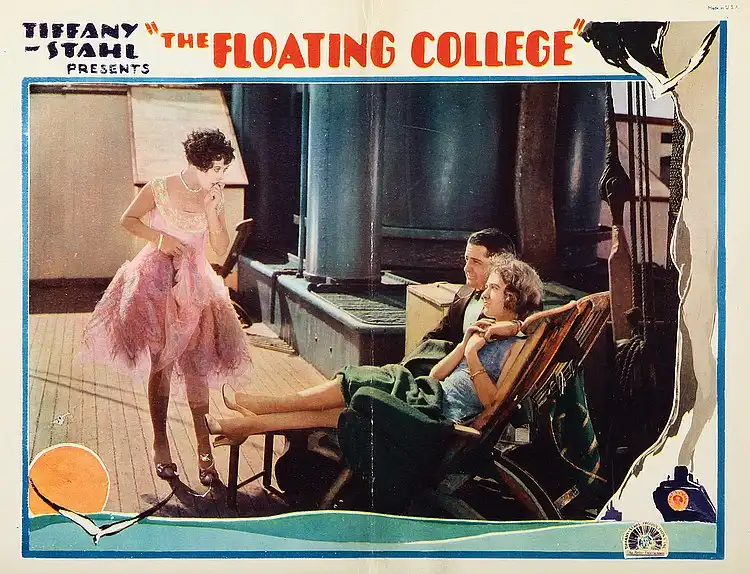
If you are looking for a deep cinematic experience or a groundbreaking narrative, The Floating College is not it. However, if you have a soft spot for the 'collegiate' subgenre of the late 1920s—a brief window where every movie studio was obsessed with flappers, ukeleles, and varsity sweaters—this film is a charming, if lightweight, diversion. It is worth watching today primarily for the energy of its lead performances and as a visual record of 1920s youth culture, but those who dislike broad slapstick or the 'annoying younger sister' trope will likely find it grating.
The film hinges entirely on the friction between Sally O'Neil and Georgia Hale. O'Neil plays Pat, the quintessential 'Jazz Baby.' She is a whirlwind of kinetic energy, constantly moving, fidgeting, and breaking rules. Her performance is loud even in a silent medium; she uses her entire body to convey a sense of uncontainable mischief. In contrast, Georgia Hale (best known for her role in The Gold Rush) plays the straight-laced Frances. Hale has the harder job here, playing the 'boring' sister, but she handles it with a poised, slightly icy dignity that makes the eventual breakdown of her composure quite satisfying.
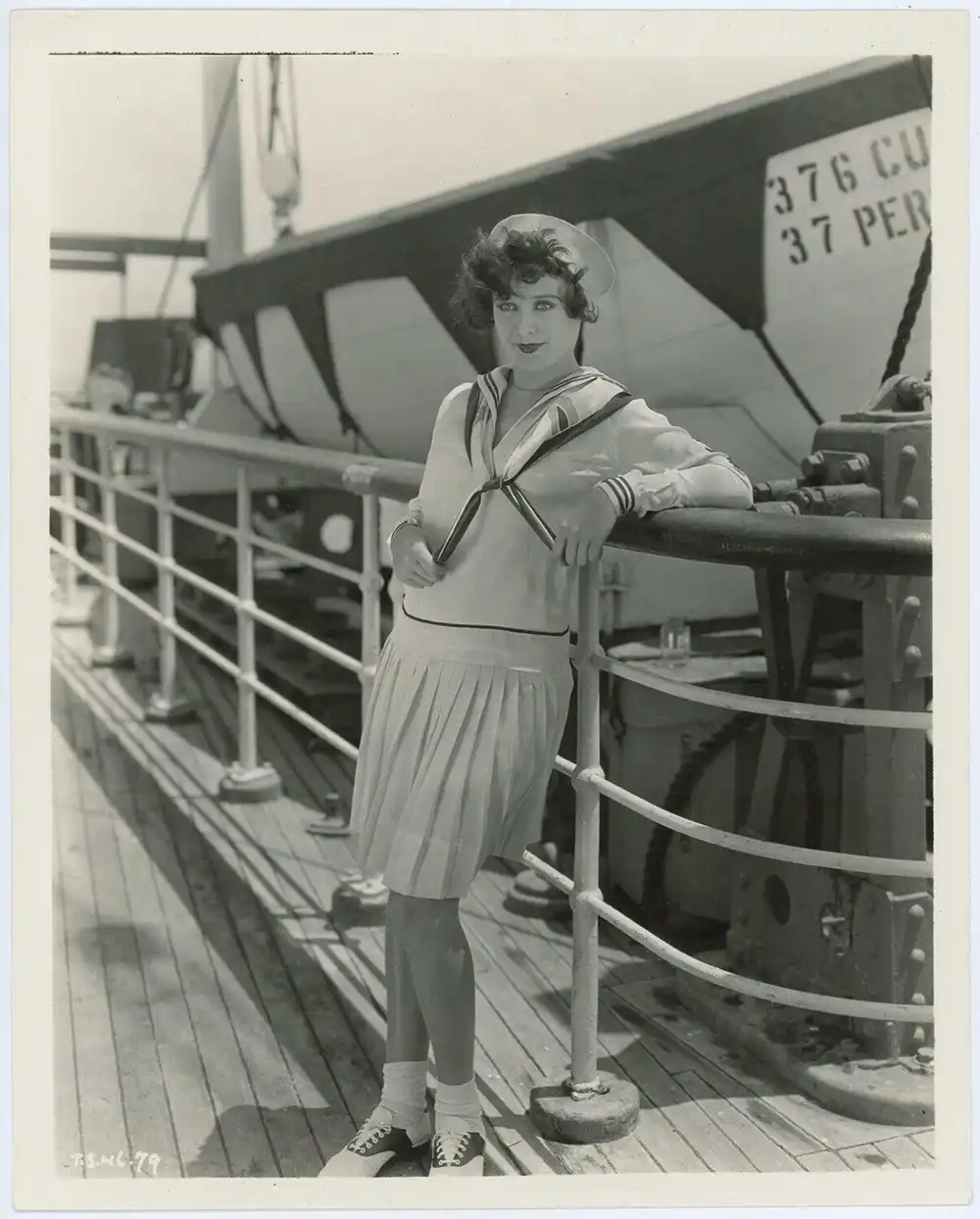
The chemistry between the two feels genuine in its hostility. There is a specific scene in their shared cabin where the physical business of unpacking reveals everything you need to know about them: Frances neatly arranging her books while Pat tosses her flimsy silk undergarments and sports gear everywhere. It’s a small, concrete detail that grounds the sibling rivalry better than any of the intertitles do.
The 'floating college' premise is really just an excuse to get the characters into bathing suits and onto a boat. We see very little actual studying. Instead, the film focuses on the social hierarchy of the ship. One of the standout sequences involves a gym session where Pat attempts to use the mechanical exercise equipment to impress the leading man, played by William Collier Jr. The sight of O'Neil being bucked around by a primitive mechanical horse is classic silent-era slapstick—it's predictable, but her timing is impeccable.

The pacing is generally brisk, though it hits a snag in the second act when the romantic misunderstandings become repetitive. There are only so many times Frances can catch Pat in a compromising position before the gag wears thin. However, the film regains its footing during a frantic finale that utilizes the ship's layout well, moving from the cramped lower decks to the expansive upper deck with a sense of genuine urgency.
Visually, the film is a product of 1928’s polished studio system. The lighting is bright and even, typical of comedies of the era, which ensures that every facial expression is crystal clear. The director, George Crone, doesn't experiment much with the camera, but he has a good eye for framing the crowded deck scenes. You can see the influence of the 'flapper' aesthetic in every frame—the cloche hats, the drop-waist dresses, and the bobbed hair are all on full display, making the film feel like a moving fashion plate for the era.
One oddity that only someone watching closely would notice is the background movement of the 'extras' playing the other students. In several scenes, they seem remarkably uncoordinated, with a few individuals in the back of the frame clearly unsure of whether they should be looking at the camera or the main actors. It adds a strange, slightly chaotic energy to the 'college' atmosphere that feels more like a real chaotic school trip than a choreographed movie set.
The Floating College is a 'programmer' in the truest sense—a film made to fill a slot in a theater's schedule and entertain a crowd for an hour. It succeeds at that. It doesn't have the intellectual weight of the films being produced in Europe at the time, nor the poetic grace of something like That Royle Girl, but it possesses a scrappy, American charm. If you can tolerate the frantic energy of the late silent era, it’s a fun trip. If you prefer your cinema with a bit more substance, you might find yourself wanting to jump overboard before the ship reaches port.

IMDb 6.3
1936
Community
Log in to comment.