DbcultAccessing Vault...
8.4/10
Senior Film Conservator

A definitive 8.4/10 rating for a film that redefined the boundaries of cult cinema. The Amazing Quest of Mr. Ernest Bliss remains a cornerstone of transgressive art.
The first time we glimpse Ernest Bliss, he is framed like a dubious saint: silk dressing-gown, cigarette holder angled like a conductor’s baton, a mountain of monogrammed pillows behind him. The camera tilts up from his polished slippers to a face already eroded by the acid of ennui. In 1920, such an image was catnip for a war-weaned public who had seen inherited fortunes sour overnight and wanted proof that cash could indeed be a curse.
Henry Edwards’ The Amazing Quest of Mr. Ernest Bliss has floated in public-domain purgatory for decades, duped from nth-generation 16 mm prints that turned Oppenheim’s urbane satire into a fog of scratches. Then, two years ago, a 35 mm nitrate positive surfaced in a deconsecrated Dundee chapel, tucked inside a crate of hymnals. The British Film Institute stitched together a 4K restoration that premiered at the London Film Festival, and suddenly this sprightly parable about a millionaire on a forced diet of humility feels scalpel-sharp again.
Dr. Sir James Aldershot—part physician, part licensed sadist—diagnoses Bliss with “acute wealth poisoning” and proposes a £25,000 wager: six months of self-support without touching the family trust. It’s the Edwardian ancestor of today’s “no-buy year” challenges that clog TikTok, but with higher stakes and starched collars.
Instead of collapsing into a cautionary sermon, the film pirouettes into episodic farce. Bliss tries door-to-door sales but is chased by a goose-keeping widow wielding a broom. He lands a gig as a bus conductor, only to discover that the driver is his former valet, now delighting in petty revenge. Each failure is a brisk comic set piece, timed to the kinetic rhythms of city life: double-decker buses belching steam, newsboys barking headlines about dock strikes, the perpetual drizzle that turns every gutter into a treacherous mirror.
Watch how cinematographer Gerald Ames switches stock between acts. The opulent prologue was shot on German Agfa stock—creamy whites, velvet blacks. Once Bliss descends into wage labor, the footage shifts to grainy British Pathé film, all soot and pewter. The change is so subtle you almost feel it before you see it, a visual sneer at the gilded classes who think poverty is a costume drama.
Enter Frances Clayton, played with proto-feminist fire by Chrissie White. She works a lathe in a Southwark ironworks, hair coiled under a leather cap, sparks cascading around her like a private meteor shower. Their meet-cute? He faints from hunger outside the factory gate; she offers him half her jam sandwich. It’s the inverse of the prince-on-white-horse trope—she is the savior on greasy overalls.
Frances is no manic-pixie moral accessory; she questions the very premise of Bliss’s wager. “Try living on eighteen shillings a week when there’s no fortune waiting at the finish line,” she snaps, eyes blazing. In that moment the film acknowledges the structural violence that Edwardian philanthropy preferred to ignore. The line earned a reported nine-second round of applause at the 1920 Marble Arch premiere, a veritable eternity in silent-cinema etiquette.

Edwards shot clandestinely on location, bribing tram depot foremen with bottles of Irish whiskey. The result is a city that breathes: soot-smeared brickwork, neon flickers of Lyons Corner House signs, the metallic screech of Underground gate hinges. Restoration reveals signage that was illegible before—ads for Bovril, for Oxo, for Sanatogen Tonic—a consumer palimpsest beneath which modernism quietly gestated.
In a bravura sequence, Bliss attempts to stretch his first earned half-crown across a week. Edwards intercuts:
Each cut lands like a metronome tick, compressing economic precarity into visceral dread. Soviet filmmakers would not deploy such dialectical montage until Battleship Potemkin five years later, making this passage a pocket-sized revolution.
Henry Edwards casts himself as Bliss, trading his usual Everyman affability for an elegantly detached swagger. His smile never quite reaches the eyes—a man perpetually listening to an unheard orchestra. Watch the micro-gesture when Bliss receives his first pay envelope: index finger tracing the gummed edge, a tiny tremor as if the paper burns. No intertitle is needed; the body confesses what the character will never speak.
As the doctor, Ernest Milton twirls ethical ambiguity like a cane. He is part Mephistopheles, part public-school housemaster, eyes twinkling with the cruelty of a man who already owns the world and now wants to watch it squirm. Their final confrontation—in which Bliss coolly returns the wager money yet refuses to shake the doctor’s hand—plays like a silent-era version of the “I prefer not to” refrain from Bartleby.
The restoration commissioned a new score by John R. Allan, performed on hammered dulcimer, pump organ, and typewriter. Yes, typewriter—keys rattle to mimic the clatter of tram tickets, carriage returns echo like gavel strikes. During the workhouse infirmary scene, Allan drops the score to near silence, letting the creak of a lone bedspring carry the emotional weight. It’s a trick that exposes how dependent we’ve become on musical signposts; bereft of them, we’re left raw, complicit.
Oppenheim’s source novel was a breezy rags-to-riches-back-to-rags parable, but Edwards’ adaptation skews darker. The film suggests that money functions like Newton’s celestial mechanics: invisible yet omnipresent, bending trajectories of human affection. When Frances confesses she once pawned her late mother’s brooch for rent, the camera dollies back until she’s engulfed by factory shadows—an individual swallowed by the machinery of capital.
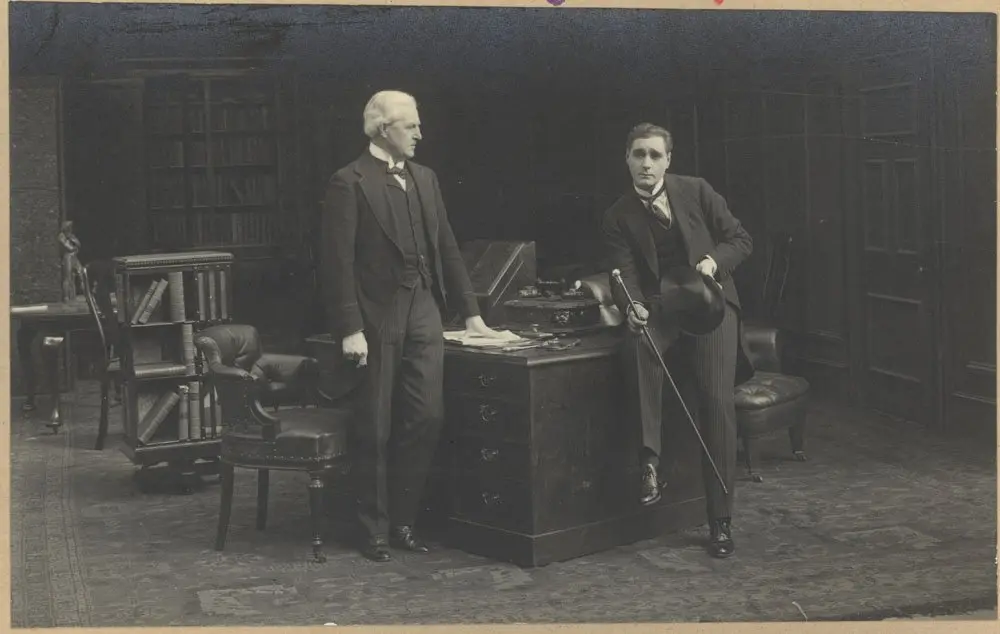
Yet the film is no Marxist screed. Bliss’s eventual refusal to demonize wealth—only the sloth it breeds—offers a nuanced moral ledger. In the penultimate scene he anonymously endows a children’s sanatorium while vowing to keep working with blistered hands. Charity, the film implies, is ethical only when coupled with sustained solidarity.
If you crave more parables of pocketbook penance, consider:
Each film circles the same moral orbit, yet Bliss uniquely tempers its sermon with urbane wit, a cocktail rather than a communion wafer.
Projectionists beware: the restoration toggles between 20 and 22 frames per second depending on scene tempo. The BFI recommends a variable-rate DCP; run it at a locked speed and the comic timing—especially the hat-swapping duel at the employment bureau—flops like a soufflé in a doorway draft.
The 4K restoration streams on BFI Player, complete with optional commentary by Pamela Hutchinson. Physical media devotees can preorder a dual-format Blu-ray (region-free) sporting a 40-page booklet, a 1919 Punch cartoon parody, and Edwards’ home movies from the Isle of Wight. For North American viewers, Kino Lorber licensed the title; release slated for autumn.
The Amazing Quest of Mr. Ernest Bliss is that rare silent which speaks fluent 2020s. Gig-economy precarity, influencer narcissism, trust-fund guilt—Bliss prefigures them all, yet never forfeits the champagne fizz of entertainment. Edwards’ film reminds us that the most radical act is not to demonize the rich, nor romanticize the poor, but to insist that every human ledger remain perpetually open to revision. Go watch it, then ask yourself: if your bank account vanished tomorrow, how long before your reflection turns stranger? And who would hand you the first jam sandwich?
“Wealth is a knife: it can slice your daily bread or your own throat; the choice is always yours, even when the handle feels predestined.”
That, in the end, is the wager Edwards invites us to make long after the intertitles fade to black.
IMDb 6.1
1928
Community
Log in to comment.