DbcultAccessing Vault...
Cult Review
Senior Film Conservator
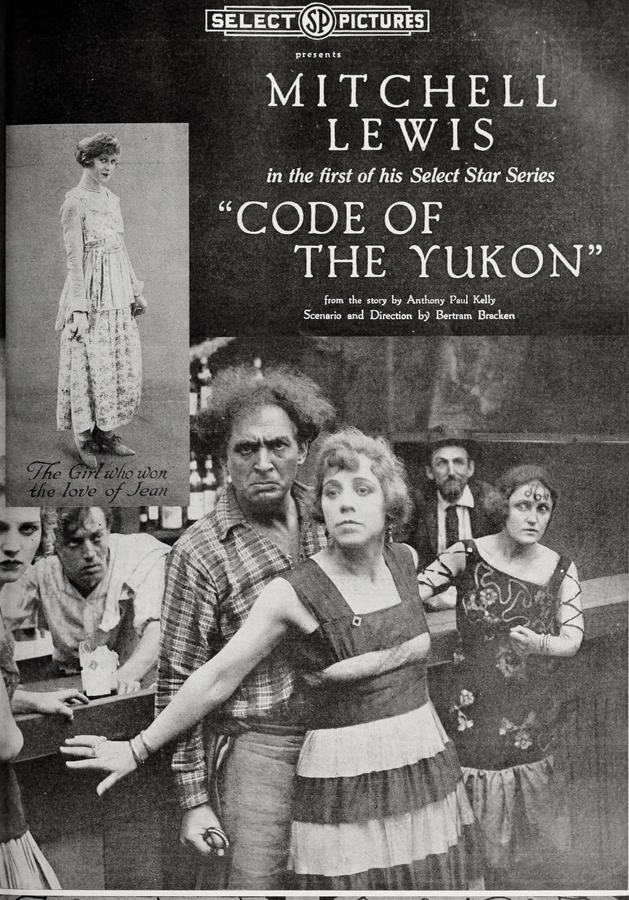
Code of the Yukon emerges as a masterclass in economical storytelling, where the vastness of the Canadian wilderness mirrors the protagonists' inner turmoil. William Ehfe's Jean Dubois is less a traditional hero and more a tragic figure, his every action steeped in the duality of righteous anger and self-destructive obsession. The film’s opening sequence—a slow pan across a gold-streaked river—sets the tone: this is a world where fortune and ruin are two sides of the same coin.
The narrative’s first act hinges on a brilliant misdirection. Jean’s alliance with Faro Telford (Mitchell Lewis) is framed as a pragmatic partnership, yet Lewis imbues the gambler with a sly, almost paternal charm. This choice reframes the film’s power dynamics: who is manipulating whom? The answer crystallizes in the second act when Jean’s wife (Margaret Landis) abandons him for a gang member. Her betrayal is not just personal but symbolic, a reflection of Jean’s own duplicity in enlisting criminals to achieve his ends.
Goldie Colwell’s pivotal revelation—that Dan Cregan, not Telford, is responsible for Jean’s sister’s downfall—acts as both plot twist and thematic keystone. The lightning strike that kills Cregan is more than a convenient deus ex machina; it is a metaphor for nature’s indifference to human moralizing. Director Bertram Bracken (and his collaborators) wield this moment with precision, letting the storm’s fury dwarf the characters’ petty squabbles. The scene’s raw energy contrasts sharply with the film’s otherwise muted palette, a visual reminder that true justice in this world is neither served nor denied by men.
What elevates Code of the Yukon beyond its B-movie trappings is its nuanced handling of redemption. Jean’s final act—forgiving his wife and choosing to rebuild—is not a narrative cop-out but a weary acceptance of life’s imperfections. The film rejects Hollywood’s typical binaries, instead presenting a gray zone where villains have sympathetic motives and heroes are flawed. This ambiguity is best embodied by Arthur Morrison’s Dan Cregan, whose brief moments of vulnerability before his death humanize him rather than vilify him.
Cinematographically, the film leans into the Yukon’s stark beauty to amplify its themes. Wide shots of snow-laden forests and icy rivers create a sense of isolation, while the cramped interiors of the mining camp heighten tension. The color palette—dominated by whites, grays, and the occasional flash of gold—echoes the characters’ emotional states: cold, calculating, yet capable of sudden warmth. This visual strategy is reminiscent of Station Content, though Code of the Yukon deploys its imagery with greater subtlety.
Performances across the board are understated but potent. William Ehfe’s portrayal of Jean is a masterclass in restrained acting; his face betrays more than his dialogue ever could. Margaret Landis’ transformation from jilted wife to repentant partner is equally compelling, her final scene with Ehfe tinged with the quiet desperation of two people grasping at second chances. Even bit players like Tom Santschi (as a twitchy gang member) leave indelible impressions, their brief moments of screen time carefully calibrated to add texture to the narrative.
The film’s pacing, though occasionally leisurely, serves its thematic ends. The slow burn allows the audience to absorb the bleakness of the Yukon setting and the moral decay of its inhabitants. When the lightning strikes and Cregan dies, the sudden violence feels both shocking and inevitable—a lightning bolt as both literal and metaphorical reckoning. This moment is where the script’s true genius lies: it uses the natural world as an impartial judge, a concept that resonates deeply in an era where audiences were grappling with the rise of fascism and the fragility of civilization.
Comparisons to The Defeat of the City are inevitable, given both films’ focus on societal collapse and individual morality. However, Code of the Yukon distinguishes itself through its tighter focus on personal rather than political failure. While The Defeat of the City uses its setting to critique urban decay, Code of the Yukon finds its decay within, in the human heart’s capacity for both cruelty and redemption.
The score—a blend of somber piano melodies and ambient nature sounds—further cements the film’s mood. It avoids the bombast typical of adventure films, instead opting for a haunting minimalism that lets the silence speak volumes. This approach mirrors the restraint seen in The Child of Paris, though Code of the Yukon’s score feels more organic, as though it were born of the wilderness itself.
In its final act, the film resists the temptation to offer easy answers. Jean and his wife’s reconciliation is not marked by grand declarations but by a shared glance and the unspoken understanding that they are both damaged, yet capable of love. This quiet resolution is more powerful than any fireworks-lit finale could be, a testament to the script’s maturity and the director’s confidence in his audience’s intelligence.
Technically, the film holds up remarkably well. The use of deep focus in key scenes (particularly the mine interiors) adds a layer of visual depth that belies its modest budget. The editing, too, is crisp, with transitions that respect the narrative’s rhythm without calling attention to themselves. These elements, combined with the performances, create a cohesive whole that feels both timeless and disturbingly relevant in our era of moral relativism.
For modern viewers, Code of the Yukon offers more than just period-piece charm. It’s a meditation on the cyclical nature of revenge and the futility of seeking purity in a world defined by compromise. The film’s message—that justice is often an illusion, and redemption a matter of perspective—is as pertinent now as it was when the film was made. This philosophical depth, wrapped in the trappings of a pulp adventure, is what elevates it from mere entertainment to something resembling art.
In the pantheon of 1940s dramas, Code of the Yukon occupies a unique space. It shares DNA with Samson in its exploration of personal sacrifice, but differs in its colder, more clinical tone. The film also echoes Des Goldes Fluch in its portrayal of gold as both a literal and metaphorical curse, though Code of the Yukon’s take is more grounded in human psychology than supernatural forces.
Ultimately, Code of the Yukon succeeds because it never patronizes its audience. It trusts viewers to sit with ambiguity, to find meaning in the silences as much as in the dialogue. This trust is reciprocated in the film’s final moments, where the camera lingers on Jean as he gazes at the mine, no longer a place of greed but of memory. The Yukon, vast and unyielding, remains indifferent to the dramas played out on its soil—a fitting metaphor for a film that understands the limits of human control.
IMDb —
1914
Community
Log in to comment.