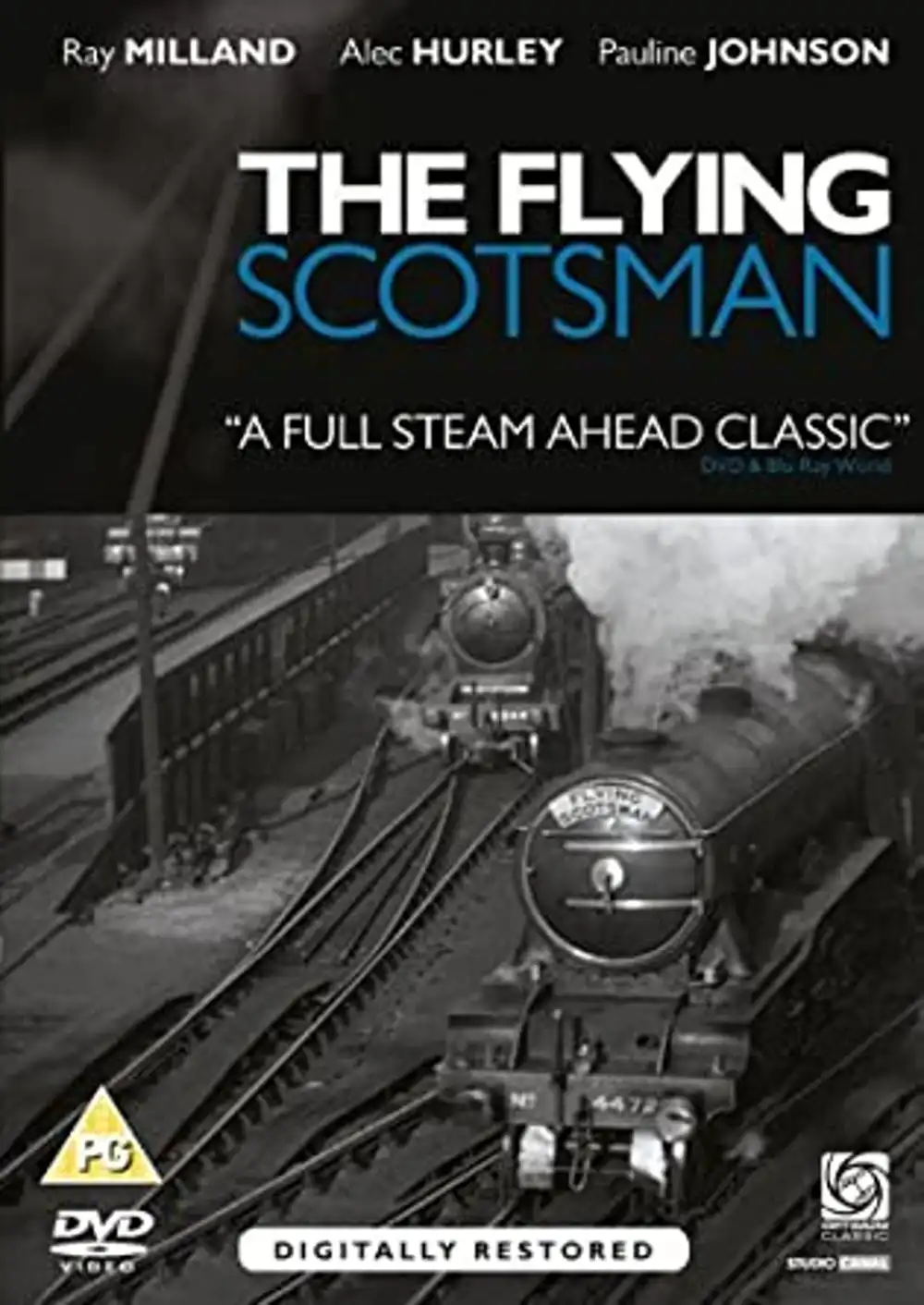
The Flying Scotsman: A Roaring (Sometimes Mumbling) Piece of History
If you're into old films, *really* old films, or just have a deep love for trains, then 1929's
The Flying Scotsman might just be a charming diversion. It's not going to blow anyone away with its storytelling or acting, not by today's standards anyway. But for those curious about what cinema was like right at the cusp of the talkie revolution, it’s quite a thing. If you need crisp audio or fast-paced plots, you'll probably find this a bit of a snoozer. 😴
The movie’s got this simple setup: a fireman, Jim (Bill Shine), has a thing for the driver's daughter, Joan (Pauline Johnson). Her dad, Bob (Moore Marriott), is about to retire after one last trip on the famous Flying Scotsman express.
Of course, there’s a villain. This disgruntled fellow named Crow (Moore Marriott again, doing double duty!) was fired by Bob and is itching for some revenge. His plan? Sabotage the train. It’s all very straightforward.
The real star here is, without a doubt, the train itself. The camera work, when it focuses on the locomotive, is genuinely impressive for the era. You get these shots of it thundering down the tracks, steam billowing, wheels spinning, and you can *feel* the power. They clearly loved filming that machine. 🚂💨
The sound quality, though. Oh boy. It's a proper snapshot of early sound technology. Some lines come through okay, but then others are just a muffled mess, like someone's talking into a bucket in another room. You really have to lean in sometimes. It's a reminder of how far we’ve come.
Pauline Johnson, as Joan, has this very earnest, wide-eyed look about her. Her acting style is still quite theatrical, a holdover from the silent era. You see a lot of big gestures, almost as if she’s still trying to convey emotion without words, even though she's speaking.
Bill Shine as Jim is the classic clean-cut hero. He’s very *upright* and proper. The romance feels a bit tacked on, honestly. It’s there, it moves things along, but it doesn't really simmer.
Moore Marriott as the villain, Crow, is where things get a bit more interesting. He’s got this intense, almost manic stare. He’s not exactly subtle, but there’s a definite menace to him. You really believe he’s up to no good, even if his motivations seem a little over-the-top for a firing. The way he just *looms* in scenes is pretty effective.
There's a moment when Crow is messing with the tracks, and the scene just… goes on. And on. You're watching him fiddle, and it feels like it could've been cut by half. It kind of tests your patience a little.
Keep an eye out for a very young Ray Milland in a small, uncredited role. He's only on screen for a blink, but even then, you can spot that certain something. A future star in the making, just lurking in the background. ✨
The final confrontation, with a fight happening on top of the moving train, is surprisingly ambitious. It’s a bit clunky, sure, but it generates a genuine sense of danger. For 1929, that’s pretty cool.
The ending wraps everything up quite tidily, perhaps a little *too* neatly for modern tastes. No lingering questions, which is fine, but it doesn’t leave much to chew on afterwards. It’s just… done.
This isn't a film you watch for deep character studies or philosophical insights. It's more of a window into what cinema was becoming. It’s a little creaky, a little loud when it shouldn't be, and a little quiet when it should be clear. But it’s got heart, and a fantastic train. And for that, it's worth a look.