DbcultAccessing Vault...
Cult Review
Senior Film Conservator
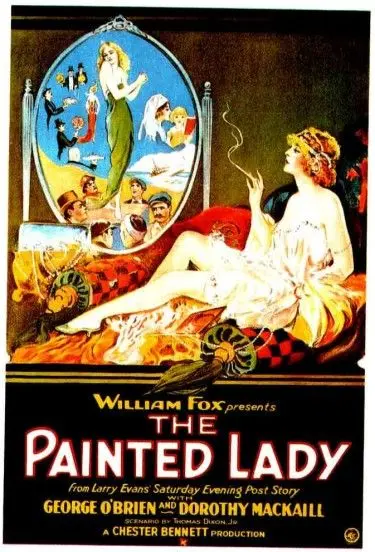
The 1924 iteration of The Painted Lady stands as a staggering monument to the silent era's obsession with the fallen woman trope, yet it elevates the discourse through a visceral, almost tactile exploration of social ostracization. Directed with a keen eye for the chiaroscuro of human emotion by Chester Bennett, the film serves as a vehicle for Dorothy Mackaill, who delivers a performance of such nuanced fragility that it transcends the melodramatic conventions of its time. Unlike the more whimsical explorations of femininity found in Her Five-Foot Highness, this narrative plunges into the stygian depths of sacrifice and the subsequent ignominy that shadows a woman’s reputation once it has been stained by the ink of a criminal record.
The film’s inciting incident—Violet’s decision to shoulder her sister’s crime—is not merely a plot point; it is a theological statement on the nature of grace and the cruelty of the legal apparatus. Mackaill portrays Violet not as a pathetic victim, but as a woman of iron-clad resolve whose eventual descent into sex work is framed as a systemic failure rather than a personal moral collapse. The cinematography during the prison release sequence captures a sterile, hostile world that mirrors the bleakness of The Whistle, though it lacks that film’s industrial grime, replacing it with a more intimate, domestic claustrophobia. As Violet navigates her new reality, the camera lingers on the judgmental gazes of the townspeople, creating a sense of social surveillance that feels remarkably modern.
The transition from the gray, oppressive urban environments to the lush, saturated landscapes of the South Seas provides a visual reprieve that is almost jarring. Here, the film flirts with the escapist tendencies seen in Robinson Crusoe Hours, yet it never allows the audience to forget that this paradise is merely a temporary stage for a much larger spiritual conflict. The ocean is not just a setting; it is a character—a vast, indifferent witness to the collision of two broken lives. The maritime atmosphere is rendered with a technical proficiency that rivals the ruggedness of The Alaskan, grounding the melodrama in a tangible, salt-crusted reality.
Enter George O’Brien as Luther Smith. O’Brien, with his burgeoning screen presence, provides a grounding force to the film’s more ethereal emotional beats. His Luther is a man defined by a singular absence—the loss of his sister—and his quest for vengeance gives him a kinetic energy that contrasts with Violet’s static despair. Their initial meeting is a masterclass in silent storytelling; the way Mackaill averts her eyes, burdened by her perceived unworthiness, while O’Brien searches for a purity he believes is lost to the world, creates a tension that is palpable even a century later. This is not the lighthearted romance of Her First Kiss; this is a desperate, drowning grasp for connection between two souls adrift in a sea of trauma.
"The Painted Lady is not merely a title; it is a brand, a scarlet letter of the jazz age that Dorothy Mackaill wears with a heartbreaking dignity. The film asks if a woman can ever truly be 'unpainted' once society has applied its judgmental brush."
The introduction of Captain Sutton, played with a chilling, calculating menace by Harry T. Morey, shifts the film from a character study into a high-stakes thriller. Sutton represents the parasitic nature of the predatory male, a figure who has profited from the destruction of both Luther’s family and Violet’s autonomy. The narrative’s decision to link these two disparate tragedies through a single antagonist is a classic melodramatic flourish, yet it works effectively here because it forces a confrontation between Luther’s desire for revenge and his capacity for love. In many ways, Sutton is the dark mirror to the protagonists in A Gentleman from Mississippi, embodying the corruption that lies beneath a veneer of authority.
Technically, The Painted Lady is a sophisticated piece of filmmaking. The use of natural light in the island sequences creates a sense of openness that serves as a visual metaphor for the potential of redemption. The editing, particularly during the climactic rescue, utilizes a rhythmic pacing that was becoming increasingly common in the mid-20s, moving away from the static tableaus of the previous decade. We see echoes of the tension found in The Bargain, though Bennett’s direction is more concerned with the psychological impact of violence than the physical spectacle itself.
The film also grapples with the concept of the 'halfbreed'—not in a racial sense, as in The Halfbreed, but in a social one. Violet is a hybrid of the innocent girl she once was and the 'painted' woman she has been forced to become. This duality is central to the film’s pathos. When she stands on the deck of the ship, looking out at the horizon, we see the struggle between her desire for a new life and the gravity of her past. It is a moment of profound cinematic beauty, captured with a clarity that belies the age of the celluloid.
In comparing this work to contemporary films like The Little Fool, one notices a distinct lack of sentimentality in the way The Painted Lady treats its protagonist’s plight. There is no easy out for Violet. Her redemption must be earned through fire and water. The screenplay, adapted by Larry Evans and Thomas Dixon Jr., avoids the didacticism often found in silent dramas, instead allowing the imagery to carry the moral weight. The film questions the very foundations of 'virtue'—is it an inherent quality, or is it a social currency that can be stolen by the actions of others? This thematic depth is what keeps the film relevant, distinguishing it from more formulaic fare like In Bad or the somewhat lighter Devil McCare.
The supporting cast, including John Miljan and Lucille Ricksen, provides a solid framework for the central duo. Ricksen, in particular, offers a haunting presence that underscores the film’s preoccupation with the vulnerability of youth. The ensemble work creates a lived-in world, one that feels as rugged and unpredictable as the terrain in Nan of Music Mountain. Every character, from the smallest bit part to the leads, seems to be chasing a version of Golden Dreams that is perpetually just out of reach.
As we look back at the career of Dorothy Mackaill, The Painted Lady remains a high-water mark. It captures a moment in film history where the medium was maturing, finding ways to tell complex, adult stories with visual panache and emotional honesty. The film’s exploration of a woman’s social death and subsequent resurrection is as powerful today as it was in 1924. It shares a certain DNA with The Career of Katherine Bush in its focus on female agency within a restrictive society, but it trades that film’s ambition for a more primal, redemptive arc.
For those who find the silent era to be a distant, dusty relic, this film offers a vibrant rebuttal. It is a story of vengeance and grace, played out against the backdrop of an unforgiving sea. It reminds us that while the 'paint' of society’s judgment might be hard to wash off, the human spirit has a remarkable capacity for renewal. Like the protagonist in Blind Man's Holiday, Violet eventually finds a way to see through the darkness of her past toward a horizon that is finally, mercifully, clear.
Article by The Silver Screen Critic | © 1924 Cinema Retrospective
IMDb —
1927
Community
Log in to comment.