
DbcultAccessing Vault...
Cult Review
Senior Film Conservator
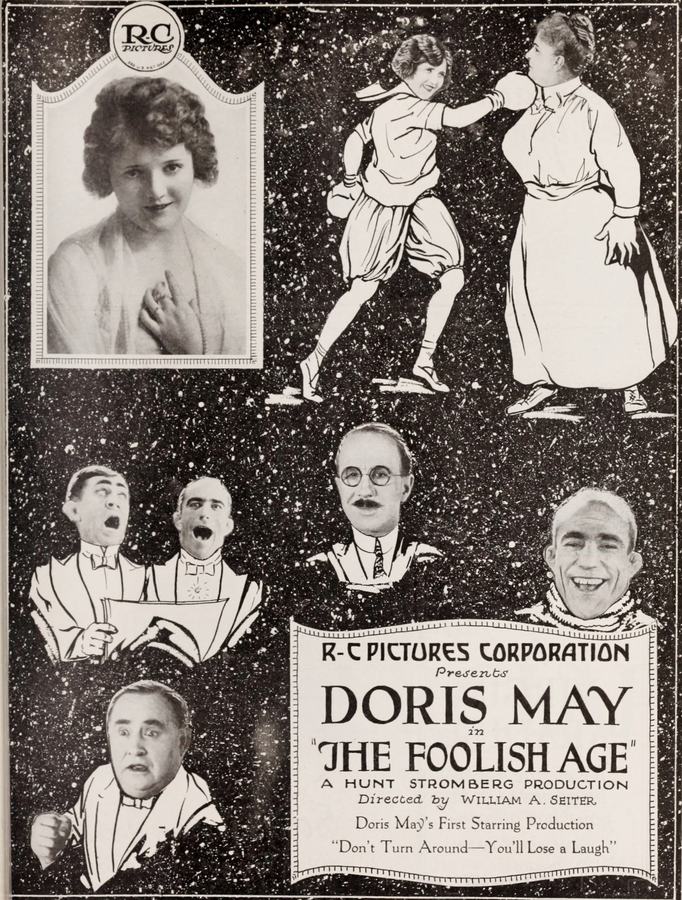
Stepping back into the cinematic tapestry of 1921, one encounters 'The Foolish Age,' a silent film that, while perhaps not as widely celebrated as some of its contemporaries, offers a remarkably insightful and often uproarious commentary on the societal mores and burgeoning philanthropic trends of the era. Directed with a deft touch by William A. Seiter and penned by the collaborative efforts of Violet Clark and Hunt Stromberg, this film transcends mere slapstick to deliver a nuanced, if lighthearted, critique of well-intentioned but often misguided charity.
The narrative unfurls around Margie Carr, portrayed with an endearing blend of idealism and naiveté by Doris May. Margie, the privileged scion of the affluent Tom 'Old Top' Carr (Otis Harlan), finds herself at a crossroads following an impassioned commencement speech. The rhetoric of social uplift and aiding the less fortunate ignites within her a fervent, if somewhat unexamined, desire to make a tangible difference. This immediate, almost impulsive, call to action is a brilliant stroke of characterization, perfectly encapsulating the youthful zeal that often precedes practical wisdom. It's a journey from abstract empathy to the messy realities of human interaction, a path fraught with comedic pitfalls and eventual enlightenment.
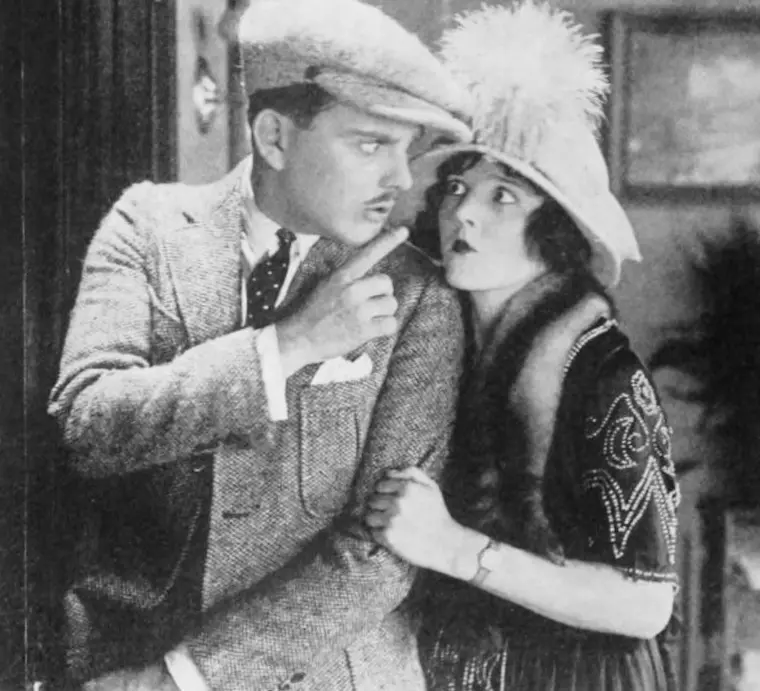
Margie's solution to society's ills manifests in the creation of the 'Cheer Society,' an organization whose very name suggests a superficial understanding of deep-seated problems. Her decision to enlist a 'ruffian' named Bubbs (William Elmer) as her secretary, along with three of his equally unrefined comrades (James Quinn, Bull Montana, and W.C. Robinson), is where the film truly leans into its comedic potential and social satire. This unlikely administrative team, culled from the very strata Margie wishes to 'uplift,' serves as a constant source of friction and misunderstanding. It's a classic fish-out-of-water scenario, but inverted; here, the 'fish' are brought into the 'water' of high society, exposing the inherent absurdities of both worlds. The humor doesn't merely arise from their lack of decorum, but from the clash of their pragmatic, street-wise sensibilities against Margie's sheltered, theoretical benevolence.
The film cleverly contrasts Margie's earnest but ill-conceived efforts with the more grounded, albeit vengeful, actions of her jilted fiancé, Homer Dean Chadwick, played with a charming mix of indignation and cunning by Hallam Cooley. Homer, wounded by Margie's sudden pivot from romance to altruism, concocts his own charitable endeavor: a society for impoverished chorus girls. This retaliatory act, while petty, serves a dual purpose. Firstly, it highlights the ego-driven undercurrents that can sometimes fuel even seemingly noble pursuits. Secondly, it provides the perfect vehicle for Homer to spark Margie's jealousy, particularly when he begins to conspicuously court a former chorine named Flossy (Lillian Worth). This romantic rivalry, interwoven with the philanthropic farce, elevates 'The Foolish Age' beyond a simple comedy of manners into a more intricate exploration of human motivations.
Doris May's portrayal of Margie is particularly noteworthy. She navigates the character's transition from wide-eyed idealist to slightly exasperated social reformer with grace and comedic timing. Her expressions, crucial in silent cinema, convey a nuanced understanding of Margie's internal struggles – the genuine desire to do good battling against her own inexperience and the chaotic consequences of her actions. Hallam Cooley, as Homer, provides an excellent foil. His character isn't a villain, but a man driven by wounded pride and a desire to win back the woman he loves, even if it means resorting to slightly underhanded tactics. The chemistry between May and Cooley, though largely expressed through grand gestures and knowing glances, is palpable and forms the emotional core of the film.
The supporting cast, especially William Elmer as Bubbs, adds considerable texture. Bubbs and his gang are not mere caricatures; they embody a certain working-class authenticity that clashes humorously with the refined world of the Carrs. Their presence at social events, particularly the disastrous one that serves as the film's climax, is a masterclass in comedic disruption. The visual gags, often stemming from their unfamiliarity with societal norms, are executed with precision, reminding us of the enduring power of physical comedy in the silent era. Lillian Worth's Flossy, though a catalyst for jealousy, is also portrayed with a certain dignity, avoiding the trap of becoming a one-dimensional antagonist. Her role underscores the film's subtle commentary on the precarious position of women in certain professions during that period.
William A. Seiter's direction is light-footed and efficient, ensuring the plot moves at a brisk pace, a vital element in silent comedies. He understands the rhythm of comedic escalation, building towards the inevitable crescendo of chaos that forces Margie's epiphany. The screenplay by Violet Clark and Hunt Stromberg is remarkably astute for its time, tackling themes of class disparity, the superficiality of certain philanthropic gestures, and the often-comical misunderstandings that arise when different social strata collide. It's a film that doesn't preach but rather invites the audience to laugh at the follies of human nature, particularly those born from privilege and good intentions lacking genuine understanding.