DbcultAccessing Vault...
Cult Review
Senior Film Conservator
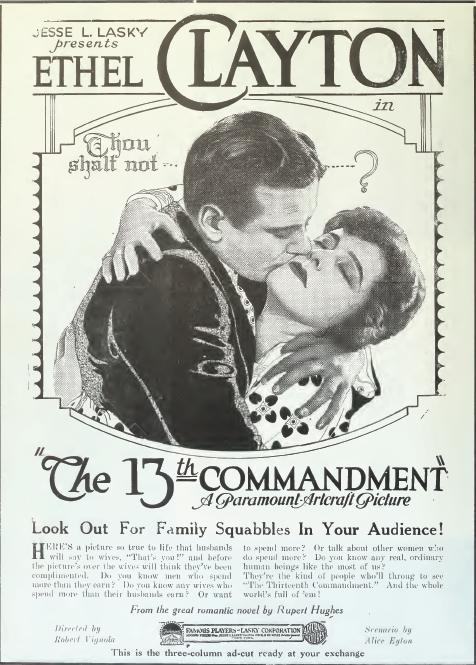
In an era often romanticized for its opulent facades and rigid social conventions, a cinematic gem emerged to challenge the very foundations of societal expectation. Rupert Hughes and Alice Eyton’s "The 13th Commandment," a silent film starring the compelling Jane Wolfe, is far more than a mere period piece; it's a prescient exploration of female agency, financial independence, and the inherent worth of self-reliance. This is not a story of damsels in distress awaiting rescue, but rather a compelling narrative charting one woman’s determined ascent from the precarious gilded cage of inherited wealth to the sturdy edifice of earned prosperity. It’s a film that, even a century later, resonates with a surprising modernity, offering a poignant commentary on the true cost of dependency and the liberating power of economic autonomy.
At the heart of this compelling drama is Daphne Kip, portrayed with a nuanced blend of vulnerability and burgeoning resolve by Jane Wolfe. Daphne initially inhabits a world of comfortable affluence, a life seemingly without want. Yet, beneath the veneer of luxury, a profound disquiet brews. The source of her unease isn't a lack of material possessions, but a growing awareness of their transience. Her father's bank balance, once a seemingly infinite wellspring, begins to recede, threatening the very foundation of their family's posh lifestyle. This revelation alone might have merely sparked anxiety in a lesser character, but in Daphne, it ignites a deeper, more fundamental questioning of her own position in the world. She observes the fragility of wealth, how easily it can dissipate, leaving those reliant upon it adrift in uncertainty.
Further cementing this burgeoning disillusionment is her fiancé, Clay Wimborn (Charles Meredith). Clay, a man of good intentions but questionable financial acumen, showers Daphne with presents, each gift a symbol of his affection, yet each also a silent testament to his growing indebtedness. This isn't the grand, secure love she might have once envisioned; it's a love built upon a precarious foundation of borrowed extravagance. The realization that her future husband, too, is ensnared in the very financial instability she fears, crystallizes Daphne's determination. She cannot, and will not, tether her destiny to such a fragile economic existence. Her path, she decides, must diverge sharply from the conventional trajectory of a woman marrying for security; she resolves to forge her own financial independence.
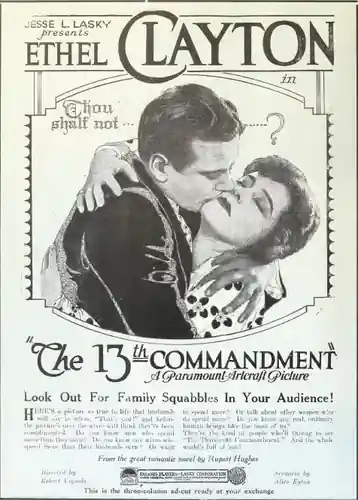
The narrative masterfully employs a parallel storyline involving Daphne’s brother, Bayard (Monte Blue), to underscore the perils of financial imprudence and superficiality. Bayard’s impulsive marriage to an extravagant chorus girl, a character embodied by Ethel Clayton, serves as a stark, cautionary tableau. This union, driven by fleeting attraction and a disregard for long-term fiscal stability, rapidly devolves into a quagmire of debt and unhappiness. The chorus girl, a symbol of the very consumerism and dependence Daphne is striving to escape, epitomizes the destructive potential of living beyond one’s means. Watching her brother’s rapid descent into financial ruin and marital discord solidifies Daphne’s conviction. It reinforces the idea that true security and happiness are not found in outward displays of wealth or in marrying for convenience, but in an intrinsic, self-generated stability. This pivotal event acts as the final catalyst, pushing Daphne to strike out on her own, severing ties with the expectations of her social milieu and embarking on a truly independent path.
Daphne's initial foray into self-sufficiency is not without its missteps, a narrative choice that lends realism to her journey. Her first attempt to carve out a name for herself is on the stage, a profession often associated with glamour but also immense precarity. This venture, however, proves to be an unmitigated failure. It’s a crucial moment, demonstrating that independence isn't simply about escaping one's past, but about discovering one's true aptitudes and passions. Her resilience, however, shines through. Undeterred by this setback, Daphne pivots with remarkable pragmatism, identifying a tangible need in the market. She channels her entrepreneurial spirit into opening a lingerie business, a choice that, while perhaps surprising for a woman of her social standing at the time, proves to be a stroke of genius.
This business venture is not merely a means to an end; it becomes a powerful symbol of her burgeoning autonomy. With each stitch, each sale, Daphne weaves a new identity for herself, one defined by competence, self-reliance, and genuine achievement. The success of her lingerie enterprise is a direct reflection of her hard work and acumen, a stark contrast to the inherited or borrowed wealth she once knew. As her business flourishes, Daphne takes another decisive step towards her liberation: she breaks off her engagement with Clay. This act is not born of malice or spite, but of a profound understanding that she can no longer compromise her newfound principles for the sake of societal expectation or a love that, however well-intentioned, once threatened her independence. Clay, perhaps recognizing the necessity of his own transformation, heads West, a conventional cinematic trope for seeking new fortunes and a fresh start.
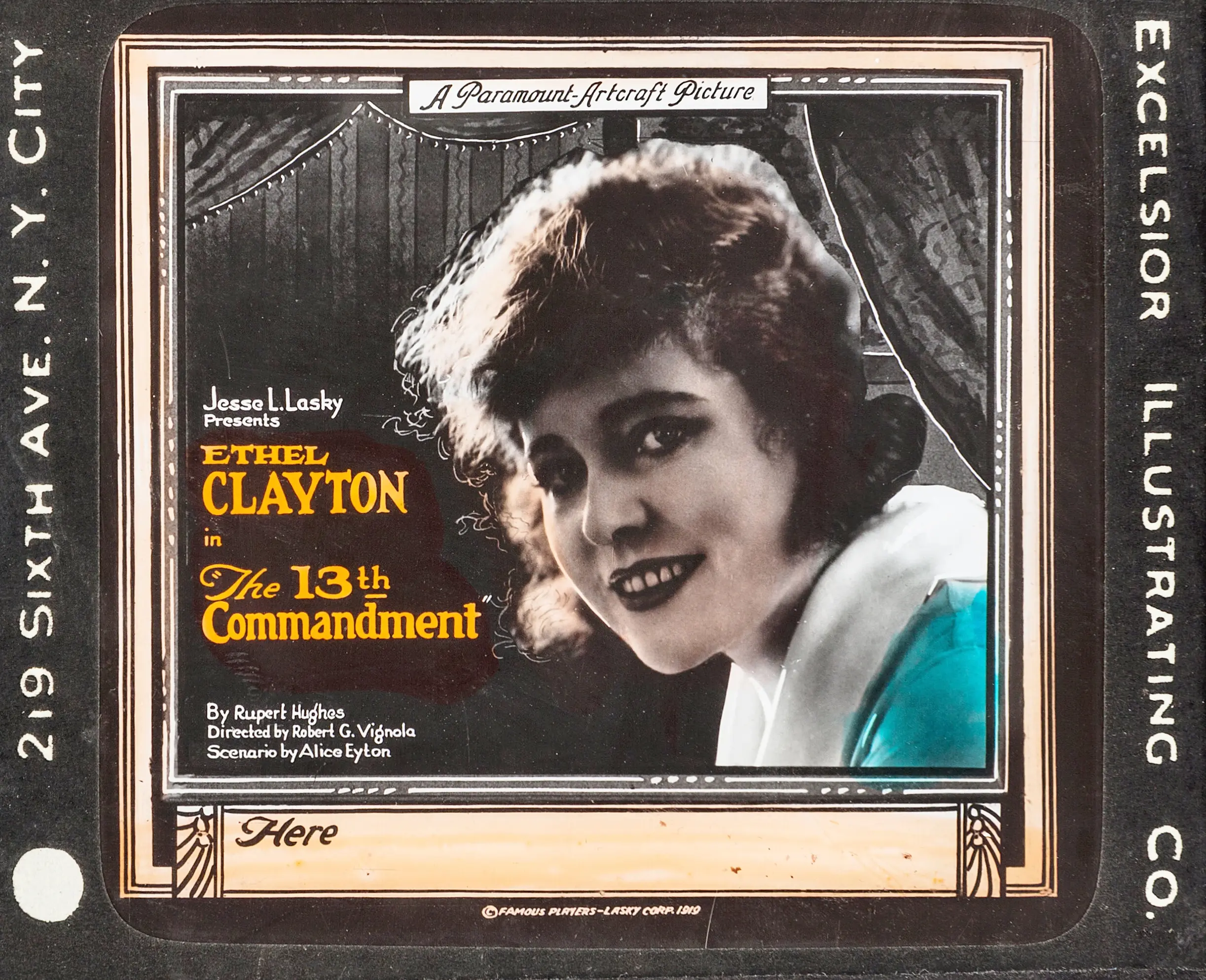
Just as Daphne's venture solidifies into a thriving success, having firmly established her as a self-made woman, Clay Wimborn makes his return. But this is not the same Clay who departed in debt. He, too, has undergone a transformation, having made his fortune out West. His return marks a pivotal moment in the narrative, setting the stage for a re-evaluation of their relationship. The dynamic between them has fundamentally shifted. Daphne is no longer the dependent socialite; she is a formidable businesswoman, secure in her own capabilities and financial standing. Clay, having experienced his own journey of earning and self-reliance, now approaches her as an equal, not as a provider or a suitor burdened by debt.
The film culminates in a profoundly progressive resolution. Daphne, having achieved the self-reliance she so ardently sought, agrees to wed Clay, but on a revolutionary condition for its time: they will share all expenses. This is not a merger of assets or a traditional patriarchal arrangement; it is a partnership of equals, a testament to their individual journeys and their mutual respect. It’s a quiet, yet powerful, declaration that love and marriage, to be truly robust, must be built on a foundation of shared responsibility and reciprocal independence, rather than the antiquated notions of one party being solely responsible for the other’s financial well-being. This final agreement elevates "The 13th Commandment" beyond a simple romance, transforming it into a manifesto for modern partnership.
The success of "The 13th Commandment" owes much to its skillful direction and the nuanced performances of its ensemble cast. Jane Wolfe, in the central role of Daphne Kip, delivers a performance that is both subtle and emotionally resonant. Her portrayal masterfully conveys Daphne’s evolution, from an initially naive, albeit observant, young woman to a confident, self-possessed entrepreneur. Wolfe's ability to communicate complex internal states through expression and gesture, without the aid of dialogue, is a testament to her talent and the power of silent film acting. Charles Meredith, as Clay Wimborn, provides an excellent foil, depicting a character arc that mirrors Daphne’s in its journey towards maturity and responsibility. His initial charming irresponsibility gives way to a more grounded, admirable figure, making their eventual union feel earned and authentic.
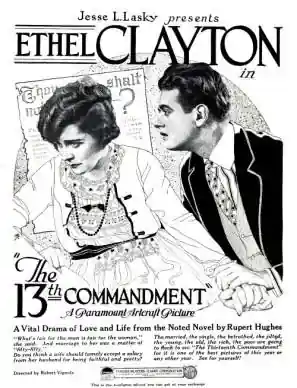
Supporting players like Anna Q. Nilsson, Ethel Clayton, and Monte Blue round out the cast, each contributing to the film's rich tapestry. Ethel Clayton's portrayal of the extravagant chorus girl is particularly effective, serving as a vivid contrast to Daphne's pragmatism and highlighting the pitfalls of a life lived solely for superficial pleasures. The direction, likely a collaborative effort given the silent era's production methods, effectively utilizes visual storytelling to convey character motivations and plot developments. Rupert Hughes and Alice Eyton’s screenplay is remarkably forward-thinking, demonstrating a keen understanding of social dynamics and a willingness to explore themes that were, at the time, considered quite radical. Their writing imbues the narrative with a sense of purpose and intelligence, making the film feel less like a melodrama and more like a social commentary.
At its core, "The 13th Commandment" is a powerful treatise on the illusion of inherited wealth and the intrinsic value of earned prosperity. It challenges the deeply ingrained societal notion that a woman’s security is inextricably linked to a man’s financial standing. Daphne’s journey is a microcosm of the larger societal shifts occurring in the early 20th century, particularly the burgeoning women’s rights movement and the increasing demand for female suffrage and economic autonomy. The film subtly argues that true independence is not merely political but profoundly economic. It's about the ability to stand on one's own two feet, to chart one's own course, and to define one's own worth outside the traditional confines of marriage or familial status.
The titular "13th Commandment" itself, though never explicitly stated within the narrative, implicitly refers to the unspoken societal rule that women must secure their financial future through marriage, or perhaps, the breaking of this very commandment by seeking self-sufficiency. This film stands in fascinating contrast to other contemporary portrayals of women. While many silent films of the era, such as The Woman or The Glorious Lady, might have explored strong female characters, "The 13th Commandment" grounds its protagonist's strength in a uniquely economic and entrepreneurial context. It moves beyond mere romantic rebellion to a practical, actionable blueprint for self-determination. It suggests that true liberation comes not just from defying social norms, but from building a tangible foundation of personal achievement.
Furthermore, the film offers a subtle critique of the prevailing economic attitudes. While certain films like The Four-Flusher might have delved into the darker, more deceptive aspects of wealth acquisition, "The 13th Commandment" champions an honest, industrious path to prosperity. It's a celebration of hard work, ingenuity, and the dignity of earned success, rather than a condemnation of wealth itself. The journey of both Daphne and Clay underscores a crucial message: that financial stability, when built on integrity and effort, is a laudable goal, and a shared responsibility within a partnership can only strengthen it.
"The 13th Commandment" is more than just a historical curiosity; it is a vital piece of cinematic history that speaks volumes about the evolving social landscape of its time and offers enduring lessons for our own. Its narrative, penned by Rupert Hughes and Alice Eyton, is remarkably progressive, presenting a vision of partnership and female autonomy that was arguably ahead of its era. The film’s quiet defiance of convention, its championing of individual initiative, and its intelligent portrayal of complex human relationships make it a compelling watch even today.
It reminds us that true wealth lies not in bank balances or inherited fortunes, but in the resilience of the human spirit, the courage to forge one's own path, and the wisdom to seek partnerships built on mutual respect and shared endeavor. For cinephiles and cultural historians alike, "The 13th Commandment" stands as a powerful testament to the transformative potential of silent cinema and a timeless ode to self-determination. It’s a film that commands attention, not just for its historical significance, but for the universal truths it so eloquently conveys without uttering a single word.
IMDb 5.6
1921
Community
Log in to comment.