DbcultAccessing Vault...
Cult Review
Senior Film Conservator
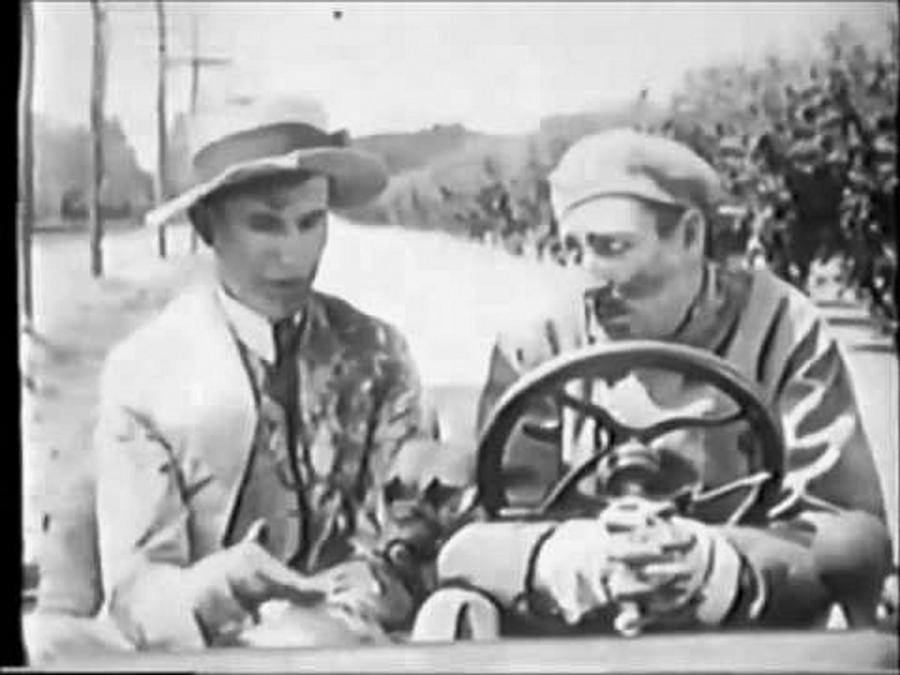
Stepping into the flickering glow of early 20th-century cinema, one often encounters narratives that, by today's standards, might seem disarmingly simple. Yet, within these seemingly straightforward vignettes, a profound tapestry of societal change, human aspiration, and evolving culture often lies hidden. Such is the case with 'Give Her Gas,' a film from an era when the very concept of moving pictures was still a marvel, and the automobile was rapidly shifting from an eccentric luxury to a symbol of burgeoning modernity. This isn't merely a tale of a Sunday drive; it's a fascinating, albeit brief, anthropological study of an epoch in transition, viewed through the lens of a newly acquired mechanical wonder.
The premise is deceptively unassuming: Lee and his family, basking in the glow of their shiny new motorcar, extend an invitation to Eddie and his wife for a leisurely ride. On the surface, it’s an act of neighborly camaraderie, a shared experience of a novel pleasure. Dig a little deeper, however, and the 'new car' transmutes into a potent symbol. It's not just a means of transportation; it's a testament to upward mobility, a declaration of status, and a harbinger of personal freedom that was, until then, largely unimaginable for the average citizen. The act of 'giving her gas' becomes more than a literal instruction; it embodies the very spirit of the age – an acceleration into a future powered by invention and ambition.
To fully appreciate 'Give Her Gas,' one must situate it within its historical context. The 1910s witnessed an explosion in automobile ownership. Henry Ford's Model T, introduced in 1908, had made cars accessible to the middle class, transforming cities, leisure activities, and even social etiquette. Roads were evolving, gasoline stations were emerging, and the open road beckoned with promises of adventure and escape. This film, therefore, captures not just a domestic scene, but a cultural phenomenon in its nascent stages. The car itself, likely a gleaming, perhaps slightly temperamental, machine, would have been a character unto itself, commanding attention and admiration from all who beheld it. The very act of taking friends for a ride would have been an event, a spectacle of shared privilege and technological wonder.
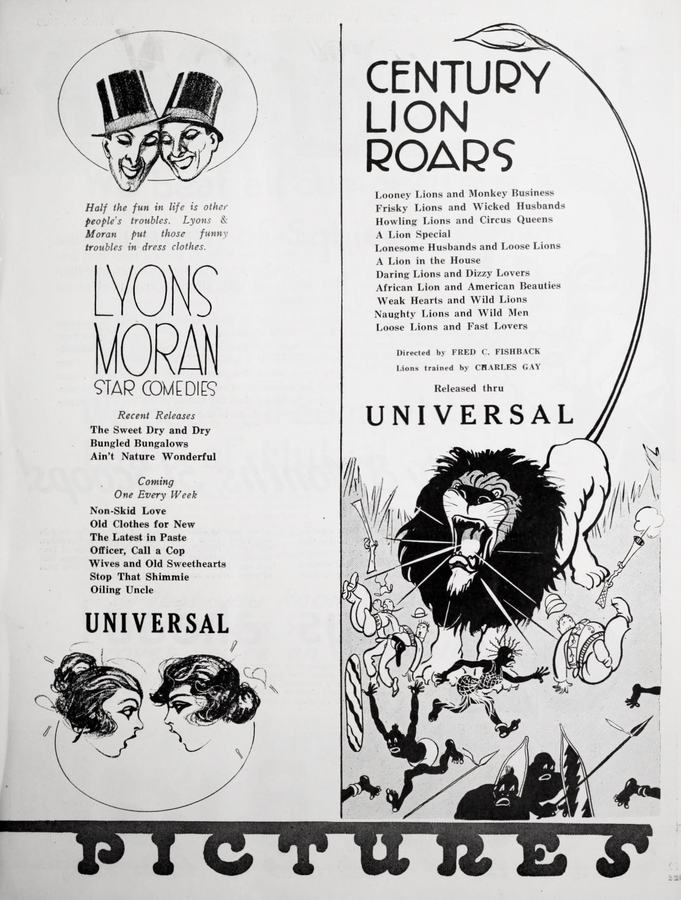
The film's brevity, common for shorts of this era, necessitates a reliance on visual storytelling and the expressive capabilities of its cast. Lee Moran, a prolific actor, director, and writer of countless shorts during this period, likely imbues Lee with a blend of paternal pride and perhaps a touch of comedic anxiety over his new possession. Moran was known for his comedic timing and relatable everyman persona, which would have perfectly suited the role of a man navigating the joys and minor perils of early motoring. His co-star and co-writer, Eddie Lyons, another stalwart of early Hollywood, would have brought his own distinctive flair to Eddie, perhaps playing him as a slightly envious friend, or an enthusiastic companion eager to partake in the novelty. The dynamic between these two seasoned performers, who frequently collaborated, would have been the emotional engine of this cinematic journey, driving its subtle humor and human observation.
Magda Lane, Edith Roberts, and Grace Marvin, though perhaps relegated to supporting roles as the wives and family members, would have been crucial in grounding the narrative in domestic reality. Silent film acting, often characterized by exaggerated gestures, also demanded a nuanced ability to convey emotion through facial expression and body language. Lane, Roberts, and Marvin, each with their own filmographies, would have contributed to the film's texture, perhaps illustrating the excitement, the apprehension, or the sheer delight of a ride in a horseless carriage. Their reactions, whether a gasp at a sudden bump or a serene smile at the passing scenery, would have amplified the experience for the audience, inviting them to share in the simple pleasures of the journey. The synergy between the leads and their supporting cast would have been pivotal in transforming a simple plot into a vivid slice of life.
The writers – Frederick Palmer, Eddie Lyons, and Lee Moran – undoubtedly crafted a scenario that, while lighthearted, tapped into universal themes of social interaction, technological fascination, and the evolving nature of leisure. Their collective experience in creating short, engaging narratives would have ensured that every moment counted, every gesture conveyed meaning. It's plausible that the script wove in minor comedic mishaps, the kind of gentle humor that arises from unfamiliarity with new technology, or the subtle social awkwardness of being a guest in someone else's prized possession. The title itself, 'Give Her Gas,' hints at both the literal mechanics of driving and a more metaphorical sense of exhilaration and forward propulsion, a common double entendre often employed in early comedic shorts to add a layer of playful suggestion.
Comparing 'Give Her Gas' to other films of its era helps to contextualize its place in cinematic history. While it lacks the grand scope of a production like Defense of Sevastopol, which aimed for epic historical reenactment, 'Give Her Gas' finds its strength in its intimate focus on everyday life. It shares a common thread with films like The Laugh on Dad, which similarly explored domestic humor and the gentle absurdities of family dynamics. Both films, in their unpretentious charm, offer a window into the lighter side of early 20th-century existence, providing audiences with a much-needed respite from the complexities of a rapidly industrializing world.
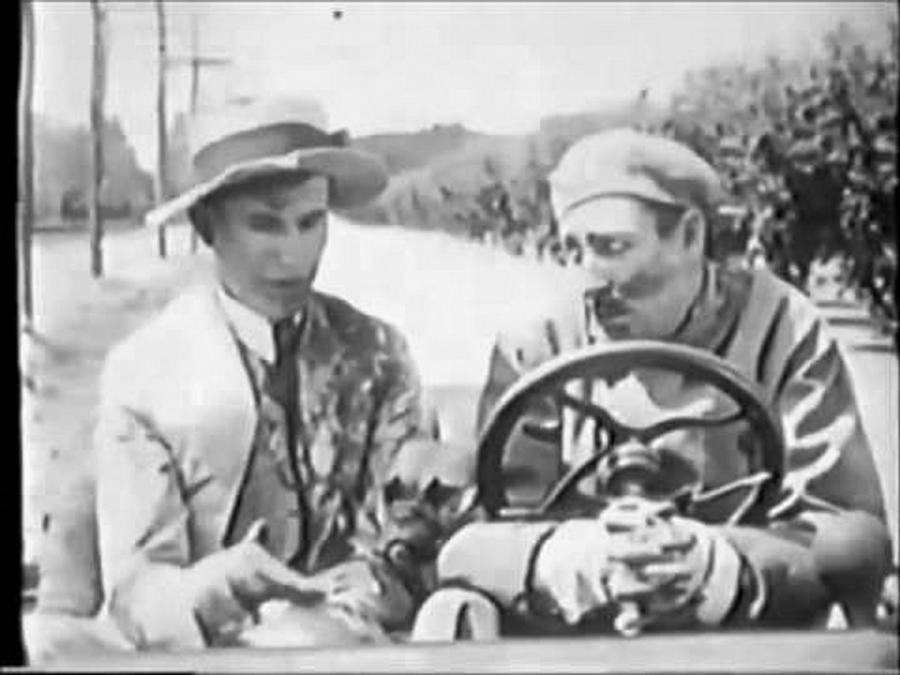
The theme of status conveyed through possessions or social standing is a perennial one in cinema, from the intricate class critiques found in a film like The Barricade to the more subtle aspirations seen here. However, 'Give Her Gas' approaches this not with overt conflict, but with a sense of shared wonder. The new car isn't a divisive force; rather, it's a catalyst for connection, an object of communal enjoyment. One might even draw a parallel, however tenuous, to the communal spirit, albeit under vastly different circumstances, depicted in Gems of Foscarina, where shared experiences, whether of luxury or hardship, bind characters together. The car, in this instance, is the jewel, admired by all.
Moreover, the film's depiction of a leisurely outing contrasts sharply with the more structured or dramatic narratives prevalent in other genres. It’s a moment of respite, a break from routine, much like the escapism offered by Le Cirque de la Mort, though the latter delves into more fantastical realms. Here, the 'escape' is simply the open road, the wind in one's hair, and the thrill of speed. The freedom symbolized by the automobile, a theme that would resonate throughout the century, finds one of its earliest expressions in such simple cinematic gestures. This nascent exploration of individual liberty through mobility would later be amplified in countless road movies and tales of youthful wanderlust, but its origins are humble, rooted in films like this.
Given the skeletal plot, much of the film's true impact lies in its subtext and what it implicitly communicates about the era. The decision to invite friends for a ride speaks volumes about the social conventions of the time. It’s an act of sharing, but also perhaps a subtle display of prosperity. How do Eddie and his wife react to this new marvel? Is there admiration, a touch of envy, or pure unadulterated joy? The silent performances, relying heavily on pantomime and expressive faces, would have conveyed these nuanced emotions. One can imagine a scene where Eddie subtly inspects the car’s features, or his wife marvels at the upholstery, their unspoken thoughts adding layers to the simple narrative.
The concept of 'giving her gas' itself, beyond its literal meaning, could also hint at the burgeoning energy of the era. Society was accelerating, not just mechanically, but culturally and industrially. The film, in its own small way, reflects this broader societal momentum. It's a snapshot of a world moving forward, embracing innovation with an infectious optimism. This sense of progress, sometimes fraught with its own challenges, is a recurring motif in cinema, often explored in more dramatic terms as seen in the societal shifts hinted at in Human Driftwood, where characters grapple with changing tides. Here, the struggle is minimal, the embrace of the new almost entirely joyful.
While 'Give Her Gas' may not possess the dramatic weight or intricate plotting of later cinematic masterpieces, its enduring charm lies in its authenticity as a historical document and its simple, relatable human element. It reminds us that cinema, from its very inception, has been a mirror reflecting not just epic tales, but the quiet, everyday moments that define an era. The film, like a treasured old photograph, offers a nostalgic glimpse into a time when a car ride was an adventure, and sharing that adventure with friends was a profound gesture of companionship.
The legacy of films like 'Give Her Gas' is not measured in box office receipts or critical accolades, but in their ability to transport us back to a foundational moment in both cinematic and social history. They are the building blocks upon which the grand edifice of film was constructed, each short offering a unique perspective on the human condition as it evolved alongside technology. The simple act of Lee and his family taking Eddie and his wife for a spin in their new car is more than just a plot point; it's a celebration of innovation, friendship, and the enduring human desire for connection and shared experience. And in that, 'Give Her Gas' offers a surprisingly potent and delightful ride, reminding us that sometimes, the simplest stories carry the most profound reverberations.
As we reflect on the film's unassuming narrative, it becomes clear that its strength lies in its ability to encapsulate a transitional moment. It's a testament to the power of early filmmakers like Moran and Lyons, who, with limited resources and nascent techniques, managed to capture the essence of their time. The sheer joy of the open road, the camaraderie among friends, and the pride in a new possession – these are timeless sentiments. 'Give Her Gas' doesn't just show a car ride; it invites us to feel the excitement, the subtle social dynamics, and the quiet revolution that the automobile brought to everyday life. It's a humble yet invaluable piece of cinematic archaeology, offering a window into the past that continues to resonate with contemporary audiences curious about the roots of our motorized world. It reminds us that even the most advanced technologies, at their core, serve to connect us, to facilitate shared experiences, and to propel us, quite literally, forward.
IMDb —
1920
Community
Log in to comment.