DbcultAccessing Vault...
Cult Review
Senior Film Conservator
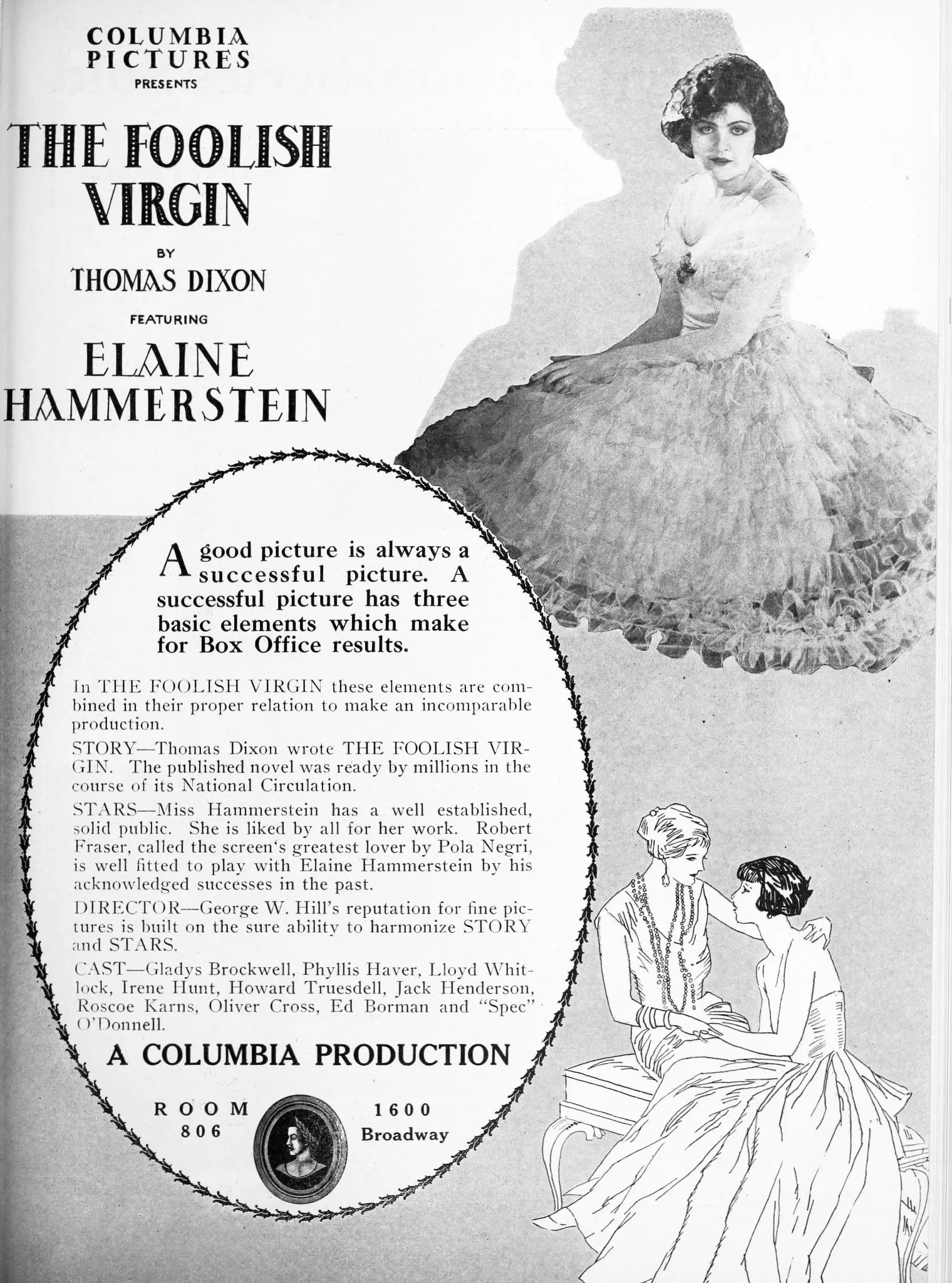
In the realm of silent cinema, The Foolish Virgin (1924) stands as a testament to the transformative power of love and redemption. This romantic drama, directed by Lois Zellner and Thomas Dixon Jr., weaves a complex narrative that explores the human condition, morality, and the capacity for forgiveness.
The film centers around Jim Owens, portrayed by Robert Frazer, a reformed thief who has reinvented himself as a successful inventor. His life takes a dramatic turn when he meets Mary Adams, played by Elaine Hammerstein, a quiet, meek, and refined woman, at a lively jazz party. Their chance encounter blossoms into a romance, with Jim seemingly leaving his troubled past behind.
However, their relationship is put to the test when Mary discovers Jim's sordid history, forcing her to confront the harsh realities of his past transgressions. This revelation creates a rift between them, with Mary struggling to reconcile her feelings with the knowledge of Jim's checkered past.
The turning point in their relationship comes when Jim bravely rescues Mary from a raging forest fire, showcasing his courage and unwavering commitment to her. This heroic act not only proves his redemption but also reconfirms his love for Mary, ultimately winning her forgiveness and rekindling their romance.
A critical analysis of The Foolish Virgin reveals a nuanced exploration of themes that were prevalent in the cinematic landscape of the 1920s. The film's portrayal of a reformed individual seeking redemption and love echoes the sentiments of The Blue Bonnet, another silent film that explores the complexities of human nature.
The cinematography in The Foolish Virgin is noteworthy, with the silent film era's characteristic use of high-contrast lighting and dramatic camera angles effectively capturing the intensity of the forest fire scene and the emotional turmoil experienced by the protagonists.
The performances of the cast, particularly Robert Frazer and Elaine Hammerstein, bring depth and authenticity to the narrative. Their on-screen chemistry is undeniable, and their portrayal of Jim and Mary's tumultuous relationship is both captivating and heart-wrenching.
In comparison to other films of the era, The Foolish Virgin shares thematic similarities with Es werde Licht! 4. Teil: Sündige Mütter, which also explores the complexities of morality and redemption. However, The Foolish Virgin distinguishes itself through its unique narrative and the standout performances of its cast.
The film's exploration of love, forgiveness, and redemption is both thought-provoking and emotionally resonant, making it a compelling watch for fans of silent cinema. As a cinematic artifact, The Foolish Virgin provides a fascinating glimpse into the early days of film and the ways in which filmmakers used the medium to explore complex themes and emotions.
In conclusion, The Foolish Virgin is a masterful silent film that explores the complexities of human relationships, morality, and redemption. Through its nuanced narrative, captivating performances, and effective cinematography, the film provides a compelling watch for audiences interested in the silent film era. As a testament to the power of love and forgiveness, The Foolish Virgin remains a poignant and thought-provoking cinematic experience.
Rating: 4.5/5 stars
Recommendation: For fans of silent cinema, romantic dramas, and films exploring themes of redemption and forgiveness.
IMDb 3.6
1907
Community
Log in to comment.