DbcultAccessing Vault...
Cult Review
Senior Film Conservator
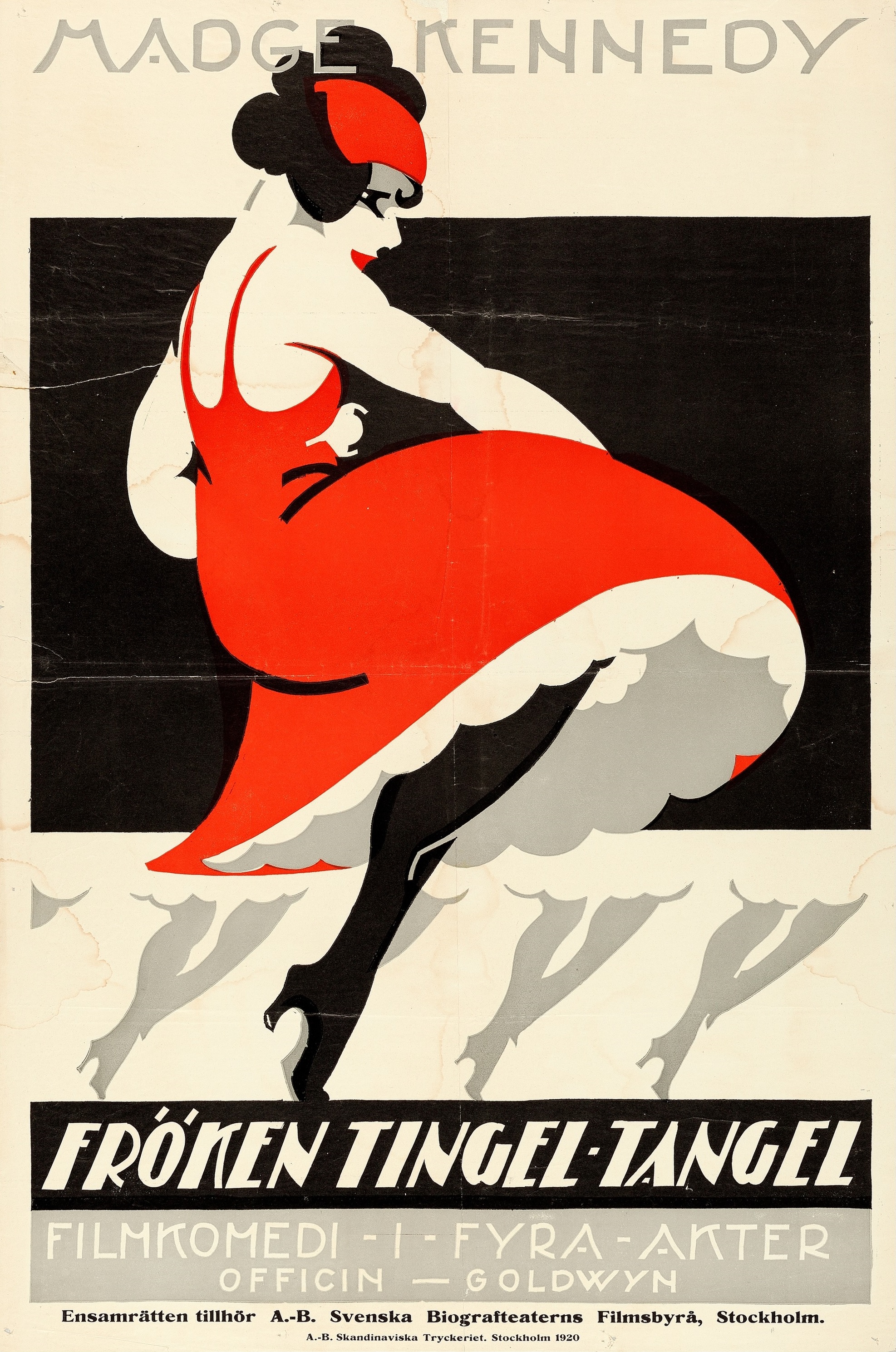
The first time we see May McAvoy’s Désirée Valéry—ankle-deep in locomotive soot, skirt hiked to reveal a garter stitched from discarded theater tickets—she is already mid-laugh at the cosmic joke of American modesty. The camera, timid as a deacon’s wife, cranes upward rather than pan, as though the lens itself fears scandal. Yet within that single oblique frame, director Walter Law inscribes the entire thesis of A Perfect Lady: repression is merely desire wearing a starched collar backward to choke on its own sermons.
Cinephiles weaned on the lurid kinks of Golden Rule Kate or the gothic hysterics of The Wolf and His Mate might anticipate a straightforward morality play—virtue rewarded, vice inflamed. Instead, screenwriters Channing Pollock and Rennold Wolf deliver a palimpsest: every supposed sin is overwritten by communal hunger, every hymn inverted into a blues refrain. The film’s structure mirrors a striptease—layers drop not to expose flesh but to reveal the scaffolding of fear beneath.
Unlike the continental melancholia of Dernier amour or the Napoleonic bombast of War and Peace, A Perfect Lady locates epicness in a single Main Street boardwalk. Its budgetary modesty becomes aesthetic audacity: painted shadows double for night, a hand-cranked iris shot spirals like burlesque tassels, and the same papier-mâché moon reappears so insistently it achieves totemic status. The economy of means breeds an ecology of suggestion; when Désirée unhooks her corset, the camera cuts to a close-up of Rod La Rocque’s Adam’s apple bobbing—a metonym so erotic it makes modern nudity feel clinical.
Note the sound design—yes, sound in a 1919 silent. Orchestral shards of La Vie en Rose (played off-screen by a three-piece saloon band) bleed into the sanctified organ of the Methodist chapel, creating a contrapuntal duet that argues, without subtitle, that sacred and profane share the same chord progression. The intertitles, penned by polymath Harry R. Durant, refuse neutrality. When the deacon thunders, “Harlotry is the gateway to Gehenna!” the next card retorts in Désirée’s lilting cursive, “Then Gehenna must have better champagne.”
Walter Law’s Deacon Thorpe is no monocled villain; his temples twitch with genuine eschatological terror. In the scene where he secretly sniffs Désirée’s abandoned silk scarf, Law performs a minute spasm of nostril and lip that compresses decades of suppressed libido into three seconds—an eternity in 24 fps. Compare this to Ben Hendricks Sr.’s portrayal of Mayor Gray, whose pomp is so aqueous it seeps into his gait—he walks as if continuously adjusting slippery suspenders beneath invisible trousers.
May McAvoy radiate intelligence through kinetic wit. Watch her pupils dilate when she spots the town’s segregated cemetery: within that micro-expression she drafts the evening’s routine—an mock-resurrection tableau that forces the audience to confront the unmarked graves of Black townfolk. Her performance is not exhibition but exorcism.
And then there is Rod La Rocque as Cyril Thorpe, a man whose cheekbones could slice communion bread. La Rocque weaponizes stillness; while others gesticulate in grandiloquent semaphore, he shrinks into the corner of frames, sketchbook like a fig leaf, eyes devouring the negative space around Désirée. His eventual declaration of love arrives via charcoal: he draws her portrait on the sole of her shoe—an image literally walked upon, yet forever facing upward toward her. In that single gesture, the film posits devotion as something both trampled and transcendent.
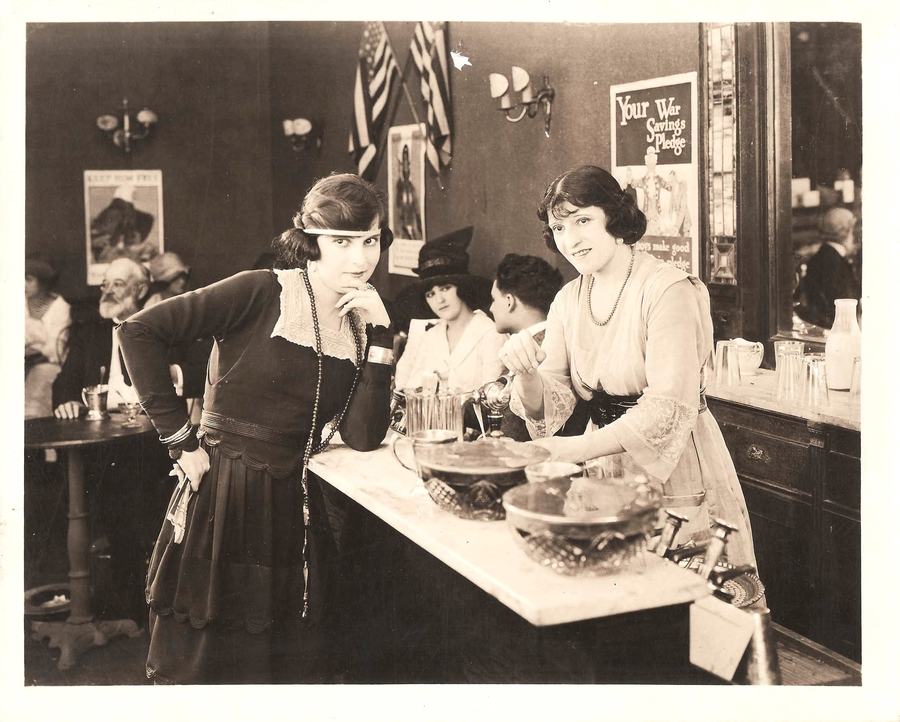
Cinematographer Jere Austin employs chiaroscuro like a pickpocket—light steals attention while darkness keeps the loot. In the climactic rooftop scene, Désirée stands haloed by dawn’s magnesium flare, Union flag billowing crimson against cobalt sky. The flag’s stars are hand-painted, some askew, creating a constellation of deliberate error—national myth undone by artisanal fallibility. Below, townsfolk clutch Bibles upside-down, discovering that scripture read inverted still spells salvation, only louder.
Color, though monochromatic, becomes conceptual: tinting shifts from sepia indoors to cerulean exteriors, implying that open air is morally bluer, freer. When the courthouse burns—accidentally ignited by a knocked-over lantern meant for a witch-hunt—the flames are hand-tinted amber, the sole chromatic indulgence. Fire here is not apocalypse but aurora, a borealis announcing the birth of a less cowardly tomorrow.
Where contemporaneous films like Jealousy traded in femme fatale pathology, A Perfect Lady grants its heroine authorial prankishness. Désirée’s routines parody masculine panic: she dons a beard of ostrich feathers, struts like a mustachioed Victorian, then whips it off to reveal the grinning woman beneath—gender as quick-change, identity as vaudeville. The camera participates; double-exposure shows her shadow continuing to dance after she has exited frame, suggesting performance outlives performer, a prophecy of drag culture decades avant-garde.
Men, meanwhile, are costumed by anxiety. Deacon Thorpe’s black coat elongates each frame he occupies, a vertical slash of moral absolutism; yet when he ascends the pulpit, the camera looks up from floorboards, revealing moth-nibbled hem and frayed cuff—authority literally unraveling. Note the symmetry: Désirée’s costumes shrink across the narrative—each act sees fewer feathers, sparser sequins—until the final rooftop scene where she is draped only in the flag, a stripping that paradoxically accres power. Nudity here is not submission but coronation.
Durant’s intertitles deserve anthologizing. When the deacon cites 1 Corinthians 6:19—“Your body is a temple”—Désirée’s retort card appears superimposed over an image of the deacon’s own bloated silhouette: “Then mine must be a cathedral—open at odd hours, all welcome.” The scripture burns away like nitrate emulsion, replaced by a doodle of stained-glass pasties. Such sacrilege is not juvenile edginess but theological rigor: the film insists incarnation demands embodiment, that spirit cannot be divorced from the jiggle of thigh, the hiccup of breath.
This satire skewers not merely Protestant prudery but the broader American habit of outsourcing morality to the body of the Other. The town’s economic survival depends on the railroad that brings Désirée, yet they pretend she is the contaminant rather than the lifeblood. In one blistering montage, Austin cuts between parishioners dropping coins into collection plates and farmers slipping identical coins into G-strings—same currency, different incense. The edit equates tithing and tipping, worship and voyeurism, until the distinction collapses into a single compulsive expenditure of shame.
Modern viewers will flinch at the marginalization of Opaline Jefferson, portrayed with dignified understatement by Agnes Marc. Her screen time is scant, yet she weaponizes every second. When she sells Désirée a pie, she insists payment be a sequin—“So I can patch the hole in my curtain, let some of that light you peddlin’ into my kitchen.” The line, delivered via intertitle over a medium-shot of Marc’s steady gaze, indicts the narrative’s own whiteness. The film cannot transcend its era’s reticence, yet it gestures toward intersectional solidarity: the final flag-draped dance is punctuated by Opaline humming Swing Low off-screen, a sonic bridge between burlesque liberation and Black spiritual resistance.
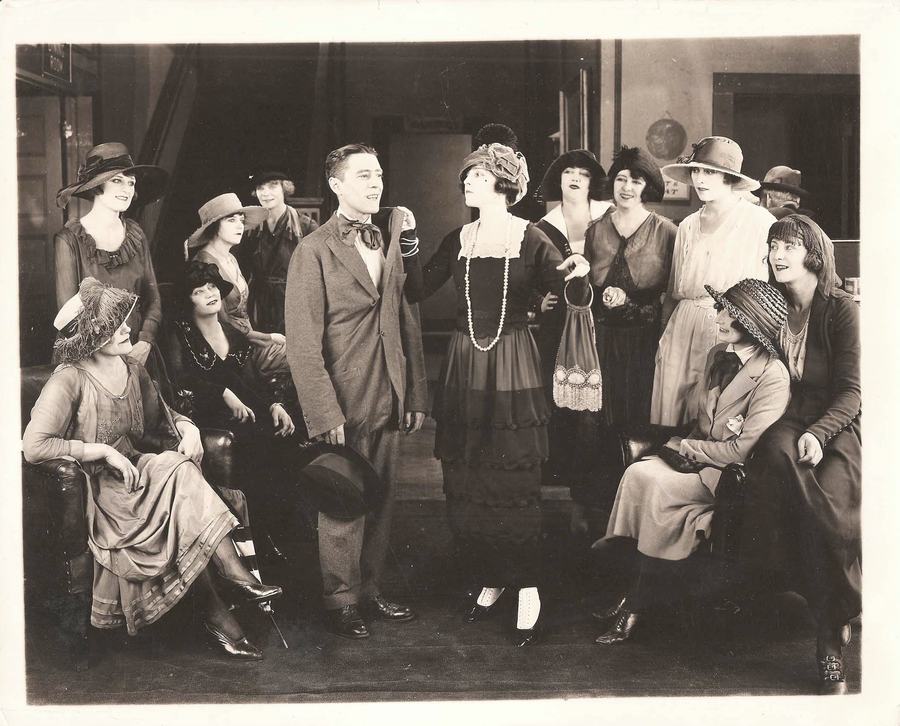
Archival tragedy: Marc’s contribution was censored in several Southern states, her scenes literally excised by projectionists under Ku Klux scrutiny. Consequently, most extant prints run 67 minutes instead of the original 78, leaving a lacuna that mirrors the historical erasure of Black women’s labor. The missing footage is cinema’s scar tissue, reminding us that rebellion onscreen still contends with bigotry offscreen.
The film omits Désirée’s backstory—no flashback to abusive father, no sentimental orphanage. This elision is strategic; she arrives sui generis, a cipher upon which the town projects its fantasies. Our hunger for origin becomes complicit with their voyeurism. When Cyril finally asks her real name, the camera cuts to the train steaming away, answer literally vanishing into smoke. Refusing biography, the narrative insists identity is performance, not pathology—a radical stance even now when every antihero demands trauma justification.
Likewise, the film never shows the burlesque act in full. Austin cuts away to spectator faces—ecstasy, disgust, bewilderment—forcing us to assemble the dance in our mind’s eye. We become co-conspirators, filling the gap with our own thresholds of titillation. This Brechtian lacuna anticipates postmodern fragmentation decades before Godard wrenched narrative limb from limb.
For decades, A Perfect Lady was presumed lost, a canister condemned to nitrate bonfires. Then in 1998, a mislabeled reel turned up inside a Norwegian church organ—apparently smuggled by a minister who wanted evidence for congregational censorship but succumbed to curiosity. The restoration by the George Eastman House stitched fragments like a quilt, seams visible, scars celebrated. The result is less pristine resurrection than palimpsestic conversation with history.
Watch A Perfect Lady beside The Impostor and you’ll notice both films weaponize masquerade, yet where the latter punishes deception, the former celebrates it as survival. Pair it with A Wild Girl of the Sierras and see dueling visions of female freedom—nature versus neon, pastoral versus performative.
Academics now cite the rooftop flag-dance in seminars on queer nationalism; drag performers reenact it with updated flags—rainbow, trans, nonbinary—turning antique sedition into futurist manifesto. The film’s DNA lurks in Busby Berkeley kaleidoscopes, in Madonna’s Vogue militarism, in Beyoncé’s Formation reclamation of Southern iconography. Every artist who glues rhinestones to politics owes a debt to Désirée’s sequined insurgency.
The greatest thrill isn’t the dance, the fire, or the absconding train—it’s the final close-up of Opaline’s pie cooling on the piano. Steam curls like phantom tassels, ascending into rafters where sparrows nest. The birds chirp a tune that mimics the earlier burlesque rhythm, nature plagiarizing art, or perhaps acknowledging that the distinction has always been arbitrary. Hold this image long enough and you’ll feel the room tilt, morality sliding off the table like a misplaced garter.
That tilt, that delicious vertigo, is why A Perfect Lady refuses to stay shelved. It whispers that prudery is just desire wearing a frock too tight, that every small town is a stage waiting for its spotlight, that liberation arrives not by petition but by performance—one sequin, one laugh, one pie at a time. The film doesn’t end; it exits, hips swaying into the rumor of smoke, leaving us—audience, reader, cinephile—perpetually catching the next train, perpetually ready to strip the next layer of our own sanctimony.
Stream it if you can find it. Project it if you’re brave. Discuss it before someone else decides you shouldn’t.
IMDb 7.6
1924
Community
Log in to comment.