DbcultAccessing Vault...
6.8/10
Senior Film Conservator
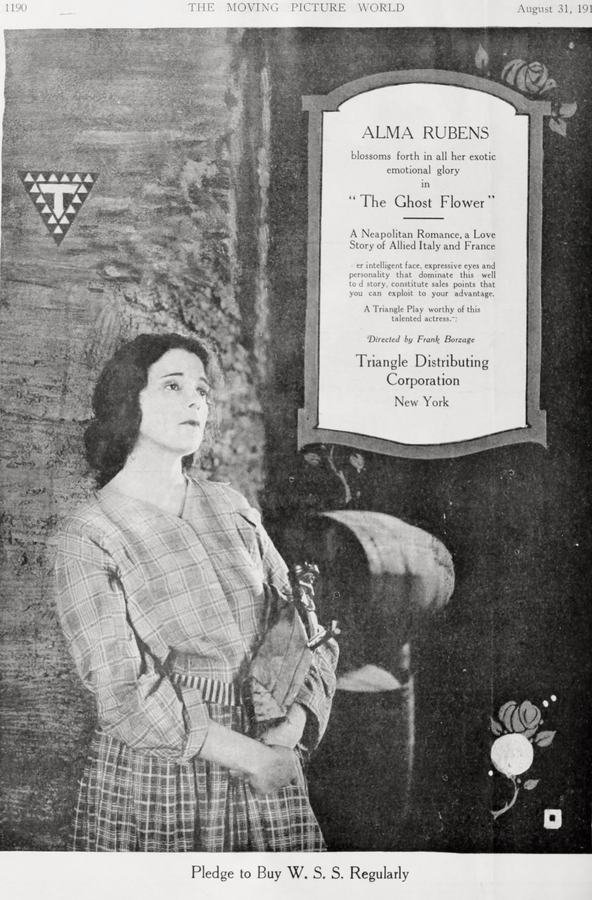
A definitive 6.8/10 rating for a film that redefined the boundaries of cult cinema. The Ghost Flower remains a cornerstone of transgressive art.
In the vast, often forgotten archive of silent cinema, certain narratives bloom with an enduring, if melancholic, beauty. The Ghost Flower emerges as one such cinematic rarity, a compelling melodrama from an era defined by grand gestures and unbridled emotion. Far from a mere historical curiosity, this film, penned by Madeline Matzen and Catherine Carr, and featuring the luminous Alma Rubens, offers a potent exploration of fate, identity, and the destructive power of obsessive love. It’s a testament to the period’s storytelling prowess, weaving a tapestry of vibrant Neapolitan life, sophisticated Parisian artistry, and the ever-present shadow of past transgressions. As critics and enthusiasts increasingly turn their gaze to the silent era, films like The Ghost Flower demand re-evaluation, not just for their technical merits, but for their profound human drama that resonates even a century later. It’s a narrative that eschews easy answers, plunging its heroine into a maelstrom of choices, each more perilous than the last, culminating in a heartbreaking denouement that lingers long after the final frame.
At the heart of this intricate narrative is Giulia, portrayed with remarkable depth by Alma Rubens. Her initial predicament—a young Neapolitan woman forced into the role of a wealthy gangster's mistress—establishes a stark dichotomy between her inherent spirit and her constrained reality. Rubens, a titan of silent screen emoting, imbues Giulia with a palpable sense of internal struggle, conveying both her vulnerability and an underlying resilience. This is no passive victim; her reluctance is a silent rebellion, a testament to a soul that refuses to be entirely consumed by her gilded cage. The arrival of Tony, her passionate musician lover, acts as a catalyst, shattering her imposed stability with an act of raw, visceral violence. Francis McDonald’s portrayal of Tony is a study in untamed, almost feral, devotion. His hot-headedness is less a character flaw and more a defining, dangerous trait, marking him as a force of unpredictable nature that will perpetually haunt Giulia’s journey. The murder of the gangster is not merely a plot point; it is the original sin, the indelible mark that binds Giulia to a destiny she desperately tries to outrun.
Her subsequent flight to the villa of French playwright La Farge marks a pivotal turning point, a metamorphosis not unlike a chrysalis shedding its former self. La Farge, a figure of refinement and artistic sensibility, becomes her unlikely mentor. Under his tutelage, Giulia doesn't just find refuge; she discovers a dormant talent, transforming from a reluctant moll into a celebrated actress. This arc of artistic awakening is beautifully rendered, suggesting that true potential can blossom even from the most barren of circumstances. La Farge's guidance is not merely professional; it is an act of profound compassion, seeing beyond her troubled past to the luminous woman within. This period of artistic and personal growth offers a fleeting glimpse of hope, a promise of self-reinvention that feels both earned and precarious. Rubens’ subtle shifts in demeanor, from the haunted girl to the confident stage presence, are a masterclass in silent acting, conveying a journey of self-discovery that is both exhilarating and deeply fragile.
The development of Giulia's character is inextricably linked to the men who orbit her, each representing a different facet of her tumultuous existence. La Farge, more than just a mentor, embodies a selfless, intellectual love. His quiet devotion to Giulia, his willingness to nurture her talent and stand aside when she finds happiness with the Duke De Chaumont, speaks volumes about his character. He is the antithesis of Tony, offering not possessiveness, but liberation; not violence, but cultivation. His love is a silent sacrifice, a profound act of benevolence that sets him apart from the more tempestuous figures in Giulia’s life. His noble restraint in the face of his own affection underscores the film’s exploration of different forms of love – a stark contrast to the destructive passion of Tony.
The Duke De Chaumont represents a chance at genuine societal acceptance and a tranquil future. His attraction to Giulia is born of admiration for her talent and charm, untainted by her past. He offers stability, respect, and a pathway to a life free from the shadows that have perpetually pursued her. For Giulia, accepting his proposal is not merely an act of romantic love, but a desperate grasp at normalcy, a profound desire to escape the cyclical violence and uncertainty that has defined her existence. This impending union symbolizes her triumph over adversity, a hard-won peace that feels almost too good to be true. The film skillfully builds this sense of impending happiness, making the subsequent intrusion of Tony all the more devastating. It is a cruel twist of fate, or perhaps an inevitable consequence, that the very peace Giulia so desperately seeks is precisely what reawakens the dormant fury of her past. The narrative masterfully crafts this tension, presenting the Duke as a pure, almost innocent figure, whose presence inadvertently draws the malevolent forces back into Giulia's orbit.
The true antagonist, and arguably the most compelling character in his relentless, terrifying way, is Tony. Francis McDonald crafts a performance that is both magnetic and chilling. His love for Giulia is not affection; it is an all-consuming, pathological obsession, a force of nature that brooks no rivals, tolerates no boundaries. Tony is the embodiment of destructive passion, a man whose entire existence is predicated on possessing Giulia, regardless of her desires or the lives he must shatter to achieve his aim. This unyielding pursuit transforms him into a figure of tragic inevitability, a dark echo of the classical furies. His actions are not merely criminal; they are symbolic of a love so twisted it becomes a weapon, perpetually poised to strike at Giulia's newfound happiness. The film paints him not as a simple villain, but as a man utterly consumed by a singular, dangerous idea of love, making his every reappearance a moment of profound dread.
Tony's murderous spree, first against La Farge and then his determined targeting of the Duke, transforms the romantic drama into a harrowing suspense thriller. The murder of La Farge is particularly poignant, as it extinguishes the light of selfless love and artistic patronage, leaving Giulia once again adrift in a sea of violence. This act solidifies Tony as an almost supernatural force, impervious to reason, driven solely by his twisted desires. His plan to assassinate the Duke during the wedding ceremony is the ultimate act of possessive malevolence, a final, desperate attempt to reclaim what he believes is his. In this aspect, The Ghost Flower shares a thematic kinship with tales of fated, destructive romance, echoing the tragic passion found in a work like Romeo and Juliet, though here, the passion is entirely one-sided and weaponized. Tony’s character arc, or rather his lack thereof, is a stark reminder that some destinies are inescapable, some obsessions incurable.
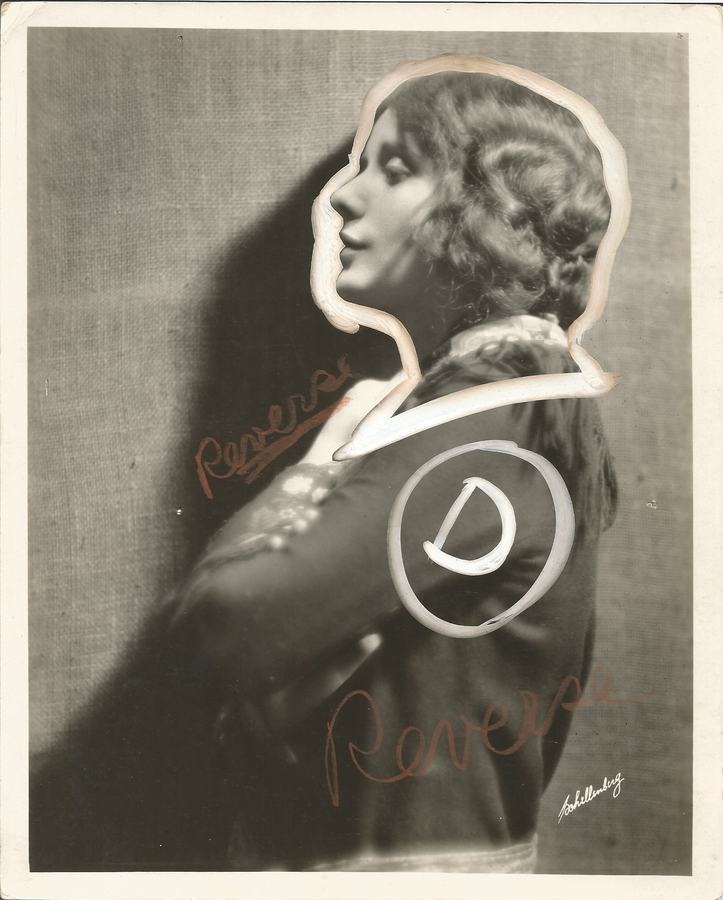
Giulia's final, desperate act – feigning a return to Tony to save the Duke – is the ultimate sacrifice, a poignant self-immolation. It is an act of profound love and courage, choosing to re-enter her personal hell to protect the innocent. This moment elevates the film from a mere melodrama to a profound tragedy, showcasing Giulia's strength and capacity for selflessness. It is a heartbreaking resolution, leaving the audience to ponder the true cost of freedom and the indelible marks left by the past. Her choice is not a surrender but a strategic retreat, a temporary capitulation designed to avert a greater catastrophe. This complex resolution avoids the simplistic happy ending, opting instead for a bittersweet conclusion that emphasizes the enduring power of sacrifice.
The Ghost Flower is more than just a thrilling narrative; it’s a rich tapestry of thematic explorations. At its core, the film delves into the perennial struggle between fate and free will. Giulia constantly strives to forge her own path, to escape the circumstances thrust upon her, yet the past, personified by Tony, relentlessly drags her back. This relentless pursuit suggests an almost predestined tragedy, a sense that certain chains cannot be broken. Her journey mirrors the existential angst of characters in more philosophical works, highlighting the Sisyphean task of escaping one's origins when those origins are steeped in violence and possessiveness. The film doesn't offer easy answers, instead forcing viewers to confront the uncomfortable truth that some scars never truly heal, and some shadows perpetually loom.
The stark contrast between La Farge's selfless, nurturing love and Tony's destructive, obsessive passion forms the emotional backbone of the film. La Farge's love is liberating, fostering growth and independence, while Tony's is possessive, stifling, and ultimately murderous. This dichotomy provides a powerful commentary on the nature of love itself, questioning whether true affection can exist without respect for the beloved’s autonomy. Giulia's plight also touches upon themes of identity and societal perception. Her transformation into a celebrated actress allows her to shed her past identity, but the film subtly suggests that such reinvention is fragile, always vulnerable to exposure. The society that embraces her as a star is quick to judge her past, creating a constant tension between her public persona and her private torment. In this regard, it shares a certain resonance with films like The Sin Woman, where a woman's past continuously threatens to undo her present triumphs, emphasizing the unforgiving societal norms of the era.
The film's title, The Ghost Flower, itself is evocative. A ghost flower, or Monotropa uniflora, is a parasitic plant that lacks chlorophyll, drawing its sustenance from fungi attached to tree roots. It grows in darkness and is often seen as a symbol of rebirth, but also of the unseen, of things hidden beneath the surface. This metaphor profoundly reflects Giulia's journey – her survival in the shadows, her reliance on others (the gangster, La Farge), and the spectral presence of her past (Tony) that continuously haunts her attempts at a new life. The flower blooms in the shadows, much like Giulia finds her strength and artistry in the dark corners of her life, yet remains tethered to a hidden, often sinister, source.
Alma Rubens delivers a performance that is nothing short of captivating. Her ability to convey a vast spectrum of emotions—from fear and desperation to burgeoning hope, artistic triumph, and ultimately, profound resignation—without uttering a single word is a testament to her mastery of silent acting. Her eyes, her posture, her subtle gestures communicate more eloquently than dialogue ever could. She anchors the film, making Giulia's impossible choices and her harrowing journey entirely believable and deeply affecting. Rubens was a star of her era for good reason, and The Ghost Flower showcases her remarkable range and emotional intelligence. Her portrayal of Giulia's metamorphosis is particularly compelling, demonstrating a nuanced understanding of character development that transcends the often broad strokes of silent film acting.
Francis McDonald, as Tony, is equally compelling in his portrayal of unhinged obsession. He avoids caricature, instead presenting a man whose violent actions stem from a deeply rooted, albeit warped, sense of love and entitlement. His intensity provides the necessary counterpoint to Rubens' more nuanced performance, creating a dynamic tension that propels the narrative forward. The supporting cast, while less prominent, effectively fills their roles, particularly in establishing the contrasting worlds Giulia inhabits. The screenwriters, Madeline Matzen and Catherine Carr, deserve commendation for crafting a narrative that, despite its melodramatic flourishes, maintains a gripping pace and explores complex psychological terrain. Their ability to structure such a detailed and emotionally resonant story within the visual language of silent film speaks to a profound understanding of cinematic storytelling. The film's visual style, typical of the era, uses dramatic lighting and carefully composed shots to enhance the emotional impact, drawing the audience into Giulia's world of beauty and despair.
The direction skillfully navigates the shifting tones of the story, from the gritty realism of Naples to the refined elegance of Parisian society, and back into the dark undercurrents of crime and obsession. The pacing is deliberate, allowing moments of quiet introspection to punctuate the more explosive dramatic sequences, ensuring that the audience remains invested in Giulia's personal journey. The visual storytelling techniques, characteristic of silent cinema, are employed effectively, using intertitles judiciously to clarify plot points while relying heavily on the actors' expressive physicality and facial expressions to convey the narrative’s emotional core.
The Ghost Flower stands as a powerful example of silent cinema’s capacity for profound emotional storytelling. It transcends its period trappings to deliver a timeless tale of love, obsession, sacrifice, and the enduring human struggle for autonomy against the forces of fate. Alma Rubens' performance alone makes the film worth seeking out, but the compelling narrative, rich thematic depth, and potent portrayal of destructive passion solidify its place as a significant, albeit perhaps underappreciated, work of early cinema. It invites us to reflect on the nature of our own choices, the indelible marks of our pasts, and the extraordinary lengths to which individuals will go for love, or to escape it. This film is a reminder that the silent era was anything but quiet in its exploration of the human condition, offering narratives that resonate with a haunting clarity. For those interested in the intricacies of silent film melodrama and the power of a truly tragic romance, The Ghost Flower offers a compelling and unforgettable experience, a delicate yet resilient bloom in the cinematic garden.
IMDb —
1915
Community
Log in to comment.