DbcultAccessing Vault...
Cult Review
Senior Film Conservator
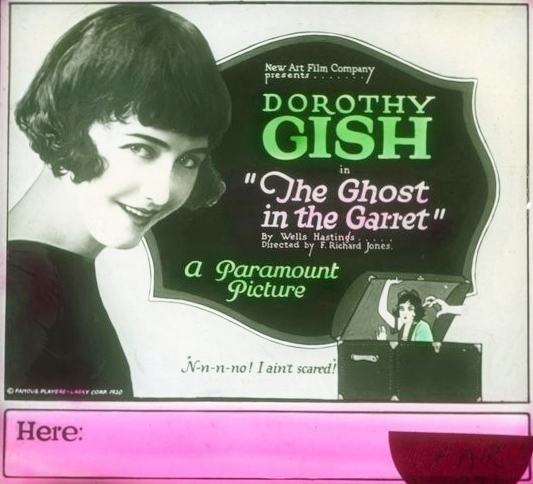
Stepping back into the hallowed, flickering glow of early 20th-century cinema, one often encounters narratives that, despite their age, resonate with an almost startling modernity. Such is the case with the 1921 silent comedy-mystery, The Ghost in the Garret. A delightful vehicle for the effervescent talents of Dorothy Gish, this film, penned by Fred Chaston and Wells Hastings, transcends its simple premise to deliver a surprisingly intricate and endlessly entertaining romp. It’s a testament to the enduring power of wit, resilience, and a well-timed shriek in the dark, all played out against a backdrop of misplaced trust and righteous indignation.
The narrative unfurls with a classic cinematic injustice. Our protagonist, Delsie O'Dell (Dorothy Gish), finds herself ensnared in a web of deceit, framed for the theft of valuable pearls while residing in the seemingly benevolent country home of her aunt and uncle, the Dennison's. This initial setup is crucial, establishing Delsie not as a damsel in distress, but as a young woman whose reputation is unfairly sullied, igniting within her a fierce resolve. The swift banishment from her relatives' house, though a moment of profound humiliation, serves as the catalyst for her extraordinary adventure. It’s a trope that still finds echoes in contemporary storytelling, the innocent outcast forced to clear their name, but here, it’s imbued with a particular silent-era charm, relying heavily on Gish’s expressive pantomime to convey the depth of her shock and indignation.
What truly elevates Delsie’s plight beyond mere melodrama is her unwavering spirit. Instead of succumbing to despair, she embarks on a solo quest for vindication, a journey made all the more endearing by the companionship of her loyal bulldog, Violet. This canine companion is more than just a prop; Violet acts as both a source of comedic relief and a symbol of unwavering loyalty in a world that has otherwise betrayed Delsie. Their bond is a heartwarming counterpoint to the shadowy machinations of the villains, offering moments of genuine tenderness amidst the burgeoning suspense. This devotion to her pet highlights Delsie's inherent goodness, making her fight for justice all the more compelling.
The plot thickens as Delsie and Violet track Oscar, the actual perpetrator of the pearl heist, to an old, dilapidated house. This isn't just any old house; it's the notorious hideout for a gang of thieves, a classic cinematic lair replete with shadowy corners and creaking floorboards. The writers, Chaston and Hastings, masterfully transform a potentially terrifying setting into a playground for comedic antics. The 'haunted house' trope, a staple of early horror and mystery, is here cleverly subverted, becoming less a place of genuine supernatural dread and more a stage for human folly and ingenious trickery. The atmosphere is less chilling, more conducive to a delightful game of cat and mouse, with Delsie as the surprisingly cunning feline.
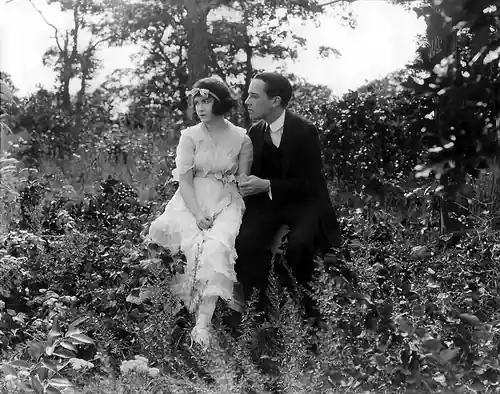
The gang of thieves, portrayed by an ensemble including Porter Strong, William Nally, and Frank Hagney, among others, are not formidable masterminds but rather a collection of bumbling, superstitious ruffians. Their collective ineptitude is crucial to the film’s comedic success. They are easily startled, prone to panic, and utterly unprepared for the unique brand of terror Delsie is about to unleash. This contrast between Delsie’s sharp wit and their dull-witted villainy forms the bedrock of the film’s humorous escapades. Their reactions to the 'ghost' are priceless, a testament to the physical comedy prevalent in the silent era and Gish's ability to orchestrate such reactions through her character's actions.
The true genius of The Ghost in the Garret lies in Delsie's audacious transformation. Initially, she merely hides from the criminals, a vulnerable figure trapped within their lair. However, recognizing the gang's inherent fear and superstition, she pivots from prey to predator, adopting the guise of a spectral entity. This is where Dorothy Gish truly shines, demonstrating a remarkable range that effortlessly shifts from delicate innocence to mischievous spectral menace. Her 'ghost' isn't a terrifying ghoul but a playful, unsettling presence, utilizing simple theatrical techniques – rustling curtains, disembodied noises, fleeting shadows – to create maximum psychological impact.
The series of humorous escapades that follow are a pure delight. Delsie's methods are both ingenious and slapstick, perfectly timed to exploit the thieves' credulity. Each jump scare, each whispered moan, each unexplained movement serves to escalate their fear, pushing them closer to revealing their secrets and, more importantly, the location of the stolen pearls. This section of the film is a masterclass in comedic tension, building anticipation not for a fright, but for the inevitable, uproarious collapse of the criminals' composure. It's a clever inversion of the horror genre, where the 'monster' is not only benevolent but actively working for justice.
Dorothy Gish, often overshadowed by her more dramatic sister Lillian, possessed a distinct and formidable talent for comedy. In The Ghost in the Garret, her performance is a vibrant display of physical comedy, expressive facial work, and an innate understanding of character. She imbues Delsie with a captivating blend of vulnerability and audacious courage. Her eyes, capable of conveying a spectrum of emotions from wide-eyed terror to mischievous glee, are central to her portrayal of the 'ghost.' She doesn't just act the part; she embodies the spirit of an era where broad gestures and nuanced expressions were the sole language of the screen. Her ability to command both sympathy and laughter within the same scene is a testament to her skill, solidifying her status as one of silent cinema's most underrated stars.
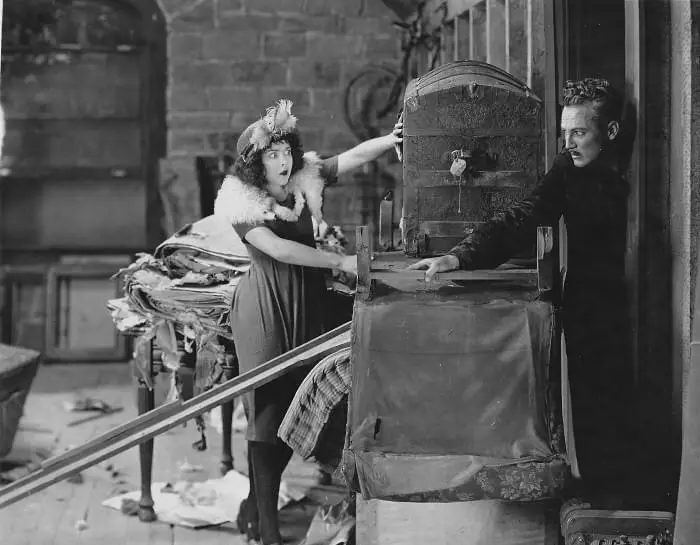
Gish’s performance also highlights the agency of her character. Delsie is not passively waiting for rescue; she actively engineers her own salvation and vindication. This portrayal of a resourceful, independent woman, even within the confines of a comedic narrative, speaks volumes about the evolving roles for female characters in early cinema. She is a woman of action, intellect, and surprising bravery, proving that a 'daring' spirit can overcome even the most daunting odds. One might draw a parallel to the spirited protagonist in The Daring of Diana, where a woman's courage is similarly central to the narrative's drive, though perhaps with different stakes and tones. Both films celebrate a woman's ability to take charge of her destiny, albeit through distinct genre lenses.
The climax of the film sees Delsie successfully retrieving the pearls, a tangible symbol of her cleared name and restored honor. The relief is palpable, not just for Delsie but for the audience who has rooted for her throughout her ordeal. Her reunion with Bill, Dennison's secretary, provides the satisfying romantic closure often expected in films of this period. Bill’s steadfast belief in her, even when others doubted, underscores the theme of loyalty and discernment. It’s a clean, crisp resolution that leaves the viewer with a sense of justice served and wrongs righted.
The enduring appeal of The Ghost in the Garret lies in its seamless blend of genres. It's a comedy that uses elements of mystery and light horror to create its laughs. It’s a testament to the imaginative storytelling of Fred Chaston and Wells Hastings, who crafted a script that allowed for both suspense and abundant humor. The film doesn't rely on elaborate special effects but on clever staging, character reactions, and the sheer charisma of its star. In this regard, it shares a spirit with other comedic triumphs of the era, such as A Milk Fed Hero, which similarly explores the transformation of an underdog into a resourceful protagonist through humorous means. Both films demonstrate that heroism isn't always about brute strength, but often about wit and a willingness to defy expectations.
Beyond its immediate entertainment value, The Ghost in the Garret offers a fascinating glimpse into the cultural anxieties and comedic sensibilities of the early 1920s. The fear of ghosts, the allure of stolen riches, and the enduring belief in ultimate justice are all woven into its fabric. The film also showcases the incredible talent pool of supporting actors from the era, whose exaggerated reactions and distinct characterizations contribute significantly to the overall comedic effect. From the bumbling Oscar to the various members of the gang, each actor plays their part in creating a believable, if absurd, criminal underworld.
The film's exploration of Delsie's journey to clear her name resonates with the thematic underpinnings found in films like An Honest Man, where the struggle for vindication forms the core of the narrative. While 'An Honest Man' might lean more towards drama, the fundamental human desire to restore one's reputation after unjust accusation is a powerful, universal motivator explored in both. Moreover, the element of investigation and uncovering the truth, albeit in a farcical manner, finds a distant echo in the more serious mystery of films such as The Tell-Tale Step, demonstrating how even light comedies can touch upon narrative structures common to thrillers.
In conclusion, The Ghost in the Garret stands as a vibrant, often overlooked gem in the silent film canon. It’s a testament to Dorothy Gish’s magnetic screen presence and the clever storytelling of its creators. For anyone seeking a dose of good-natured humor, ingenious plotting, and a refreshing portrayal of female agency from a bygone era, this film remains an absolute must-see. It reminds us that sometimes, the most effective way to confront our fears, and indeed, our foes, is to become the very thing that haunts them. A delightful spectral confection that continues to charm nearly a century after its initial release, proving that a good ghost story, especially a funny one, never truly fades away.
IMDb 5.6
1934
Community
Log in to comment.