DbcultAccessing Vault...
7/10
Senior Film Conservator

A definitive 7/10 rating for a film that redefined the boundaries of cult cinema. The Scarlet Pimpernel remains a cornerstone of transgressive art.
Somewhere between the first crack of the guillotine’s descent and the last flutter of a silk handkerchief, The Scarlet Pimpernel (1917) carves out a space where melodrama becomes clandestine poetry. Dusty Farnum’s Sir Percy does not stride so much as saunter—an exquisite insult to the very idea of peril—while Winifred Kingston’s Marguerite watches him with eyes that sharpen from bored obsidian to flinted revelation. Their pas de deux is conducted in intertitles that feel like whispers you accidentally overhear in a dream.
Shot when Europe still reeked of gunpowder, the film’s Calais exteriors are matte paintings drenched in chiaroscuro so aggressive it borders on propaganda for shadows. Cinematographer Bert Hadley treats torchlight like liquid mercury, letting it pool across faces until even a grin feels conspiratorial. Compare this to the sun-baked austerity of The Witch or the nocturnal carnival of Filibus: here, darkness is not an absence but an accomplice.
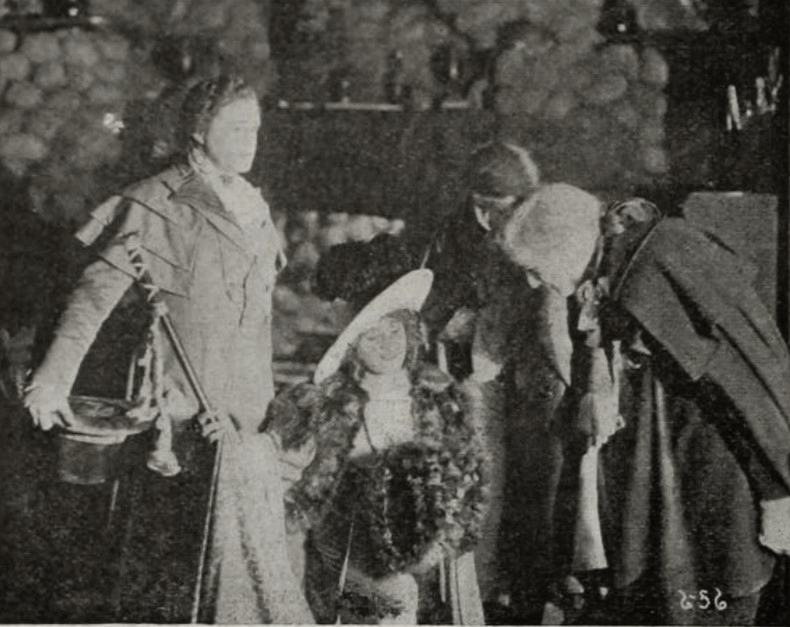
Farnum’s greatest trick is that he never winks. His foppery is so methodical—every shrug of the brocaded shoulder a cadenza of vapidity—that when the mask finally slips, the reveal feels less like unmasking than metaphysical surgery. Watch him toy with a snuffbox while Chauvelin’s net tightens; the gesture is a sonnet about underestimation. The performance sits in uncanny dialogue with later pulp masquerades from Big Jim Garrity to Bond, yet predates them all, an origami swan folded from war-era dread.
Too often silent-era heroines are marionettes of distress; Kingston refuses the strings. Her Marguerite is introduced through a single, languid close-up—lips pursed in ennui so luxurious it feels weaponized. Once she deciphers the scarlet cipher inked into her husband’s life, her body language switches from languor to electric curiosity. The moment she tears the letter with trembling fingers, the tear itself becomes a mise-en-abyme: the rupture of certitude, the birth of complicity. It is as if The Woman in the Case merged with the proto-feminist self-possession of A Daughter of Australia.
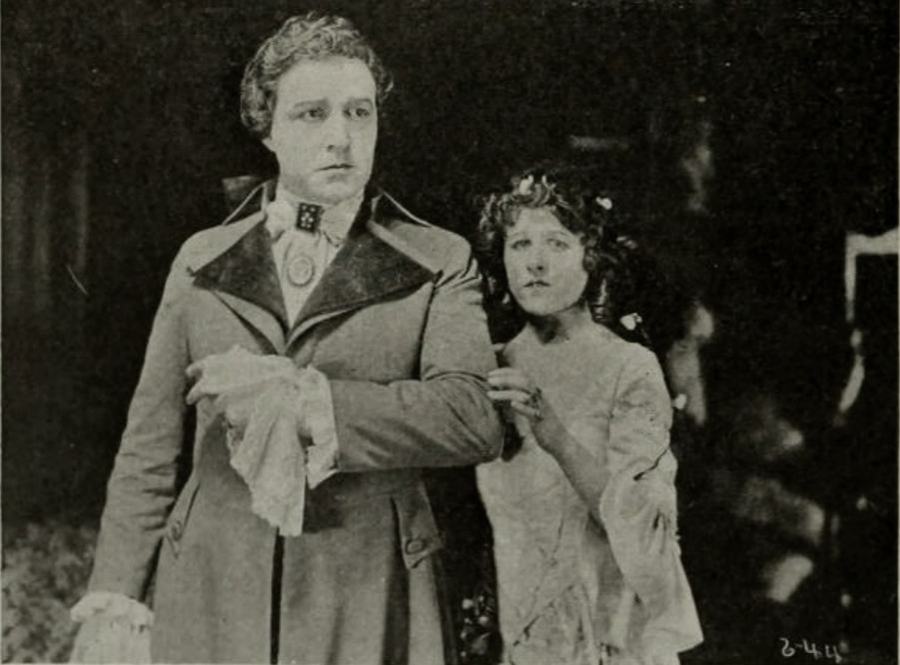
Bertram Grassby’s Chauvelin stalks frames like a priest who has misplaced his soul yet preserved his liturgical grace. The camera fetishizes his tricorn, the brim casting a sickle-shaped shadow that seems to harvest faces. In the tavern standoff, he lights a candle with the slow reverence of a satanist baptism; the flame’s reflection in his eye is the only warmth he will ever radiate. Grassby understands that villainy, to be memorable, must flirt with self-loathing—an insight later echoed in the ideological corrosion of The Genet.
The climax—skiff fading into Channel fog—was filmed in a tank no larger than a ballroom, yet Hadley layers diffusion filters until horizon dissolves into metaphysical watercolor. The lovers do not clutch; instead, their fingertips graze as if touching might collapse the miracle. The final intertitle card reads: “They seek him here, they seek him there…”—a nursery rhyme turned epitaph for surveillance. Cue the iris-out, not on a kiss, but on Marguerite’s profile silhouetted against a rising dawn the color of arterial blood. It is the rare silent ending that audibly gasps.
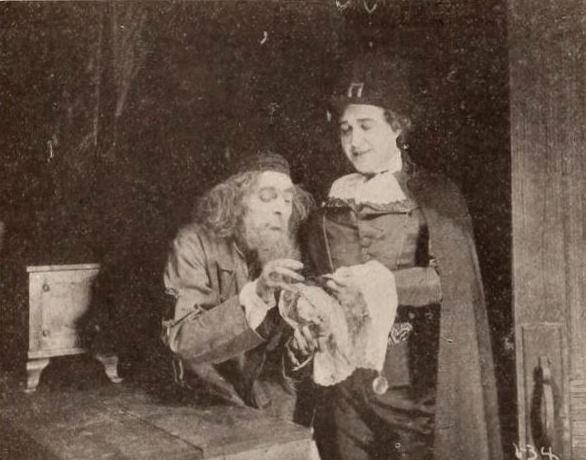
Modern viewers may bristle at Percy’s patriarchal benevolence, yet the film slyly subverts its own hierarchy. Marguerite’s discovery is not passive; she decrypts the code by stitching together gossip, stage-whispers, and the tell-tale absence of her husband’s silhouette at key midnight hours. The power inversion peaks when she, not Percy, negotiates Armand’s release, trading Chauvelin a counterfeit letter so convincing it fools even the camera. In that instant, the Pimpernel emblem migrates from Percy’s cravat to Marguerite’s gaze—an heirloom passed without consent.
Bennett Cohen’s adaptation condenses a 300-page novel into 59 minutes without amputating its moral marrow. Intertitles retain Orczy’s baroque cadence—“the boundless folly of fashion—yet beneath the brocade beat the heart of a lion”—delivering exposition that feels like epigrams whispered at a masked ball. The screenplay anticipates the pulp minimalism of The Loyal Rebel yet preserves the novelist’s fascination with performative identity, a theme revisited decades later in the identity kaleidoscope of Anime Buie.
Surviving prints are silent, but archival evidence hints at regional exhibitors hiring quartets to premiere a ‘Pimpernel Suite’—a pastiche of Haydn and revolutionary hymns. Contemporary festivals often commission new scores; the most revelatory paired the on-screen gallop with a prepared-piano soundscape, each note dampened by felt so the escape feels smothered in velvet. The result weaponizes absence: every time Chauvelin’s boots strike cobblestone, the piano exhales, letting terror seep into negative space.
A 4K restoration by the Cinémathèque franco-anglaise surfaced in 2021, scanned from a 35mm tinted print discovered in a Normand granary. The tints—amber for London soirées, cyan for Channel crossings, rose for the climactic dawn—restore emotional cartography that black-and-white dupes had flattened. Streaming rights remain fragmented, but boutique label CarbonArc released a region-free Blu-ray replete with audio essay by baroness-scholar Dr. L. Verity. Avoid the public-domain rips on algorithmic tubes; they reduce Hadley’s candlelit chiaroscuro to mushy grays.
To watch this 1917 artefact is to witness modern fandom’s urtext: secret identities, shipping angst, trench-coat morality long before capes codified the trope. Yet its deepest thrill is existential—the realization that every mask leaves a tan-line of truth somewhere on the wearer’s soul. Percy and Marguerite sail into pixelated fog, but the pimpernel keeps blooming, petal by petal, on the edge of each new frame we are yet to invent.
IMDb —
1929
Community
Log in to comment.