DbcultAccessing Vault...
Cult Review
Senior Film Conservator
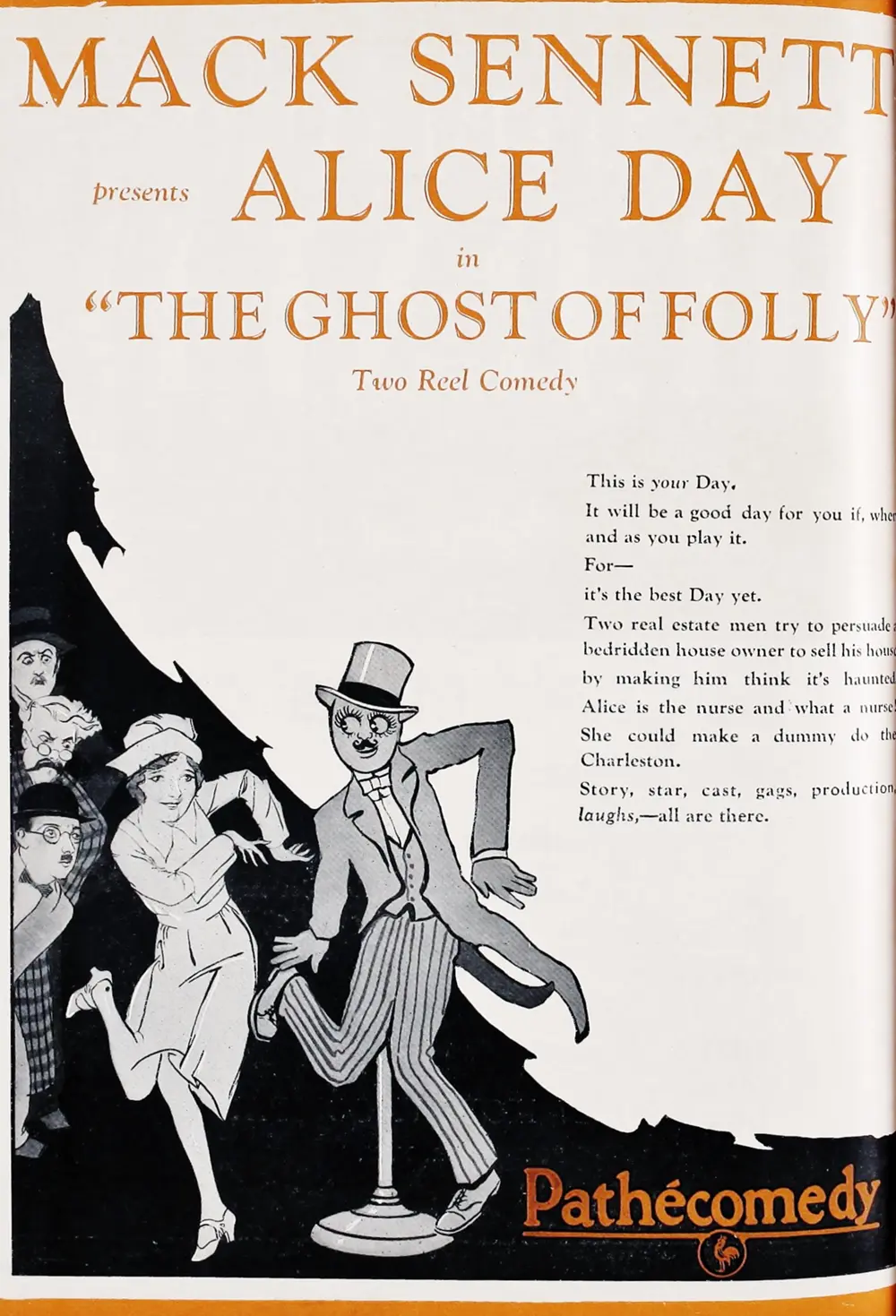
Is 'The Ghost of Folly' worth watching today? For fans of silent-era slapstick and the foundational mechanics of cinematic comedy, absolutely, but those seeking narrative depth or polished humor might find its charms elusive. This film is undeniably for cinephiles and historians keen to observe early comedic techniques; it is decidedly not for the casual modern viewer accustomed to rapid-fire gags and intricate plots.
Stepping back into the 1920s, one encounters a different beast of entertainment. Cinema was still finding its voice, and Mack Sennett, the architect of Hollywood comedy, was at the forefront, orchestrating chaotic ballets of pratfalls and exaggerated expressions. 'The Ghost of Folly' emerges from this vibrant, nascent period, a short feature that encapsulates much of what made Sennett’s work both groundbreaking and, to modern eyes, occasionally quaint. It’s a film that demands a certain historical empathy from its audience, a willingness to appreciate the rudimentary artistry that paved the way for everything that followed.
The narrative core of 'The Ghost of Folly' is charmingly simple, a testament to the era's preference for premise over intricate plotting. We are introduced to the decrepit Wilkins house, a property ripe for sale but, crucially, also ripe for exploitation. Two unscrupulous individuals, masquerading as real estate professionals, have no intention of seeing the house change hands. Instead, they’ve co-opted its empty halls for their own nefarious, if unspecified, schemes. Their chosen method of deterrence is a classic: convince prospective buyers that the house is unequivocally haunted.
What follows is a series of rigged gags – creaking doors, moving objects, shadowy figures – all designed to cultivate an atmosphere of supernatural dread. Yet, the film possesses a delightful meta-awareness, a wink to the audience that these 'ghosts' are entirely man-made. The true genius, and indeed the film’s most endearing element, lies in the character of young Alice. Unburdened by adult credulity or fear, she sees through the elaborate charade with an almost disarming clarity. Her presence transforms the typical haunted house trope into a playful game of cat and mouse, where the 'ghosts' are the prey of a child’s sharp intellect, rather than the predators.
Mack Sennett’s influence on 'The Ghost of Folly' is palpable, a signature blend of physical comedy, broad characterizations, and a healthy dose of chaos. This film serves as a fascinating artifact, a window into the foundational techniques of a genre still in its infancy. It’s less about intricate storytelling and more about the immediate, visceral punch of a well-timed fall or an exaggerated scare.
The brilliance of early cinema often lies not in its polish, but in its raw inventiveness. Sennett’s studio was a laboratory of laughter, and 'The Ghost of Folly' is one of its more modest experiments. It’s a film that plays directly to the audience’s expectations of a spooky setting, only to subvert them with human trickery, a common but effective trope that continues to resonate in comedy horror today.
This film works because of its historical significance as a vibrant example of early Mack Sennett slapstick, offering a clear blueprint for subsequent comedic endeavors. It fails because its rudimentary plot and repetitive gags can feel thin and dated to a contemporary audience, lacking the narrative depth expected today. You should watch it if you possess an academic interest in silent cinema, an appreciation for the origins of physical comedy, or a nostalgic fondness for the era's unique charm.
The simplicity of its premise allowed for maximum comedic exploitation, a hallmark of Sennett’s approach. He understood that a clear setup—crooks trying to scare people—provided a robust framework for a cascade of visual gags. This film, like many of its contemporaries such as Cuckoo Love, prioritizes immediate laughter over character development or thematic depth, a trade-off that was perfectly acceptable, even celebrated, in the 1920s.
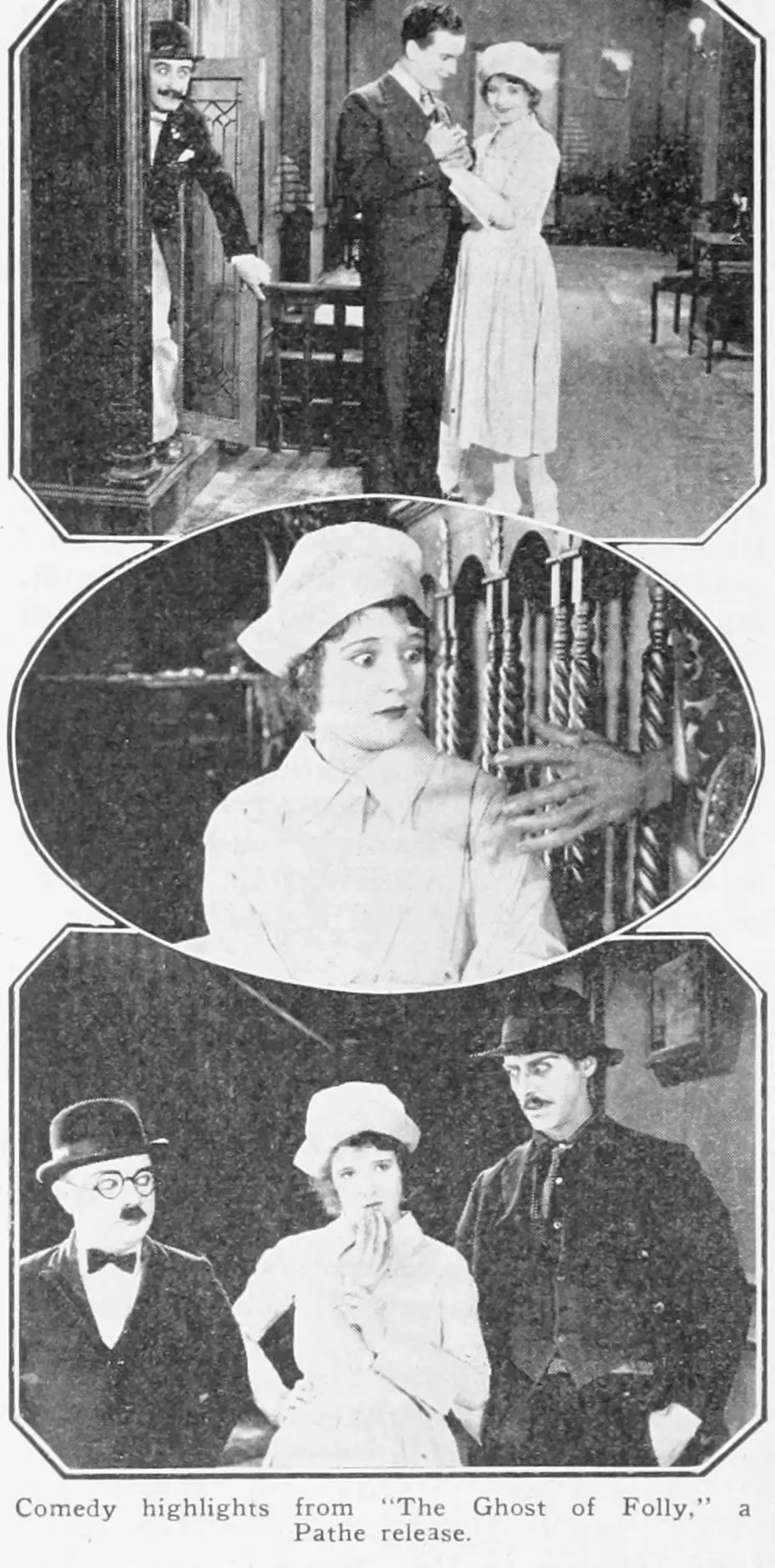
The cast of 'The Ghost of Folly' delivers performances perfectly calibrated for the silent era’s demands: expressive, physical, and often exaggerated. Marvin Loback and Danny O'Shea, as the conniving real estate agents, are the primary architects of the film’s comedic chaos. Their portrayals are less about nuanced character arcs and more about embodying archetypal villains who are just competent enough to be a nuisance, but ultimately destined for failure. Their physical comedy, from clumsy scare tactics to frantic reactions, is the engine of the film’s humor.
Loback, with his imposing frame, often plays the bumbling strongman, while O'Shea provides the more agile, albeit equally inept, partner. A particular scene where they attempt to manipulate a sheet ghost, only to become entangled themselves, highlights their synchronized yet clumsy dynamic. It’s a classic example of slapstick timing, where the humor derives from the characters’ own efforts to maintain control while rapidly losing it.
However, the true standout performance, and indeed the film’s quiet revelation, comes from Alice Day. As little Alice, she embodies the film’s most modern sensibility. While the adults engage in theatrical frights and farcical deceptions, Alice remains grounded, her wide-eyed observation a stark contrast to the histrionics around her. Her intelligence isn't overtly comedic; rather, it's a subtle, almost subversive force that undercuts the adults’ foolishness. She is the audience's surrogate, the one who sees the strings behind the puppets, and her quiet determination to expose the hoax is genuinely compelling.
It's also worth noting the presence of a 'Roger Moore' in the credits. Given the film’s vintage, it is almost certainly not the iconic British actor who would later don the mantle of James Bond, but rather a namesake from an earlier generation of performers. This small detail serves as a curious footnote, a reminder of how names echo through cinematic history, sometimes with surprising coincidences.
Supporting players like Irving Bacon and Eddie Quillan fill out the ensemble, adding to the general atmosphere of playful panic. Their reactions to the 'hauntings' are predictably over-the-top, serving as perfect foils for Alice’s calm skepticism. The collective energy of the cast, even in its broad strokes, contributes to the film’s enduring, if niche, appeal.
The direction in 'The Ghost of Folly,' likely overseen by Mack Sennett himself or one of his trusted lieutenants, is focused entirely on maximizing comedic impact through visual means. The camera work is utilitarian, designed to capture the physical gags clearly, often employing static wide shots to allow the actors to perform their full range of movements within the frame. There's a deliberate lack of fancy camera tricks, mirroring the simplicity of the 'haunted' effects themselves.
The ‘haunted’ sequences are where the film truly showcases its era-specific charm. We see crude but effective rigs: ropes pulling curtains, hidden wires moving objects, and actors in rudimentary ghost costumes. The charm lies in the transparency of these illusions. The audience is in on the joke, aware that these are not real ghosts, but rather the clumsy attempts of two conmen. This self-awareness elevates the film from a mere trick to a comedic commentary on human gullibility. A similar playful approach to manufactured scares can be seen in other early comedies, such as The Speed Spook, which also revels in the absurdity of human-made spectral phenomena.
The setting of the old Wilkins house is itself a character. Its decaying architecture and shadowy corridors provide a perfect backdrop for both genuine suspense (however brief) and comedic mayhem. The cinematography, while basic, effectively conveys the atmosphere of a deserted, perhaps sinister, abode. The use of available light, or simple stage lighting, creates deep shadows that are exploited for jump scares and hiding places, even if the 'ghosts' are ultimately revealed to be human.
Editing is straightforward, designed for comedic timing rather than narrative complexity. Cuts are made to emphasize a punchline or to transition between different areas of the house where gags are unfolding. There’s a certain rhythm to silent comedy, a beat that dictates the pace of the action and the delivery of the visual jokes. It’s a craft that required precision, even in its apparent chaos, and 'The Ghost of Folly' demonstrates a solid understanding of this foundational cinematic language.
The pacing of 'The Ghost of Folly' is brisk, as is typical for silent comedies of this length. Gags unfold rapidly, one after another, leaving little room for introspection or lingering emotional beats. This constant forward momentum is crucial for maintaining audience engagement in a film without spoken dialogue. The film doesn’t dwell; it moves from one setup to the next, aiming for a consistent stream of chuckles rather than belly laughs.
The tone is overwhelmingly lighthearted and mischievous. Despite the presence of crooks and the implied threat of haunting, the film never veers into genuine menace. It’s a playful romp, a comedic exploration of fear and deception. The humor stems from the sheer absurdity of the situation and the bumbling incompetence of the 'ghosts,' rather than any real sense of danger. This tonal consistency is one of its strengths, ensuring a comfortable, fun viewing experience.
Perhaps the most unconventional charm of 'The Ghost of Folly' lies in its subversion of the typical horror narrative through the eyes of a child. Young Alice isn't merely a witness; she's the film's true detective, its rational core. While the adults are easily fooled by the simplest of tricks, Alice’s unwavering skepticism and quiet investigation provide a refreshing counterpoint. Her character suggests that true wisdom often resides in an unclouded perspective, unburdened by adult anxieties or preconceived notions. It’s a surprisingly insightful touch for a film primarily focused on physical comedy.
This makes the film more than just a series of gags; it’s a subtle commentary on perception and reality. It works. But it’s flawed. The charm is in its simplicity, its unpretentious delivery of a straightforward comedic premise. It’s a slice of cinematic history that, while not groundbreaking in its narrative, offers a valuable look at the evolution of film comedy.
Yes, but with significant caveats. This film is a historical document. It offers immense value for film students and enthusiasts of silent-era cinema. It provides insights into the comedic stylings of Mack Sennett. It reveals the rudimentary special effects of the time. However, for a casual viewer, its humor may feel dated. The pacing can be challenging. Its narrative is thin. It is not designed for a modern audience seeking polished, fast-paced entertainment.
'The Ghost of Folly' is undeniably more of a historical curiosity than a timeless comedic masterpiece. Its laughs are gentle, its plot rudimentary, and its technical execution a product of its time. Yet, to dismiss it entirely would be to overlook its charm and its significant place in the lineage of cinematic comedy. It’s a film that asks you to adjust your expectations, to appreciate the raw energy and foundational ingenuity of an era long past. While it won't elicit uproarious laughter from a contemporary audience, it offers a valuable glimpse into the playful spirit that built the bedrock of Hollywood humor. For those willing to engage with its historical context, it offers a quietly resonant chuckle, a testament to the simple power of a well-executed, if transparent, trick.
IMDb 5.9
1931
Community
Log in to comment.