DbcultAccessing Vault...
Cult Review
Senior Film Conservator
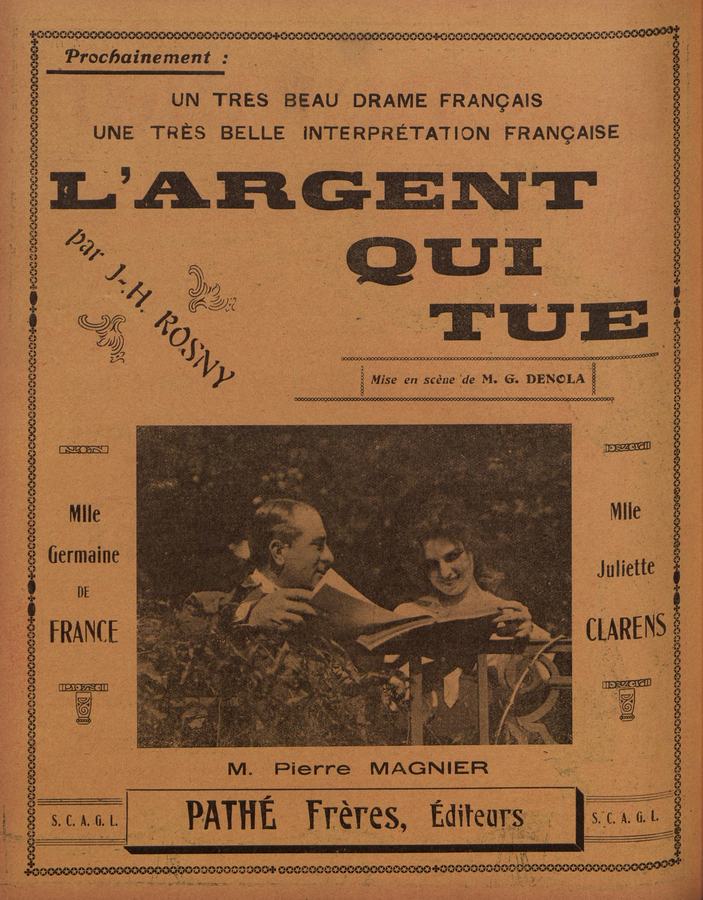
There are films that merely tell a story, and then there are those that etch themselves into the very fabric of one’s cinematic consciousness, resonating with a profound, almost primal truth. L'argent qui tue (Money Kills) belongs unequivocally to the latter category, a chilling, exquisitely crafted morality play that dissects the corrosive power of wealth with surgical precision. This is not merely a tale of crime and consequence, but a deeply psychological exploration of human frailty, ambition, and the seductive whisper of illicit gain. Its narrative, unfolding against the richly textured backdrop of early 20th-century Paris, feels as fresh and relevant today as it must have upon its initial release.
From the outset, the film establishes a palpable tension between aspiration and desperation. We are introduced to Pierre Magnier, portrayed with a captivating blend of idealism and burgeoning cynicism by Pierre Magnier himself. His character is a painter of immense, almost prodigal talent, yet one shackled by the brutal realities of poverty. His canvases, though brilliant, gather dust in a cramped atelier, while the glittering promise of Parisian high society, with its opulent salons and extravagant lifestyles, mocks his artistic purity from afar. The film masterfully paints his internal conflict: the hunger for recognition and comfort battling against the innate integrity of his creative spirit. It's a struggle many artists, then and now, would find agonizingly familiar.
Pierre's fateful encounter with Madame Dubois, brought to life with chilling composure by Germaine de France, marks the turning point. Dubois is not the archetypal villain; rather, she is a figure of sophisticated menace, cloaked in an aura of cultural philanthropy. Her salons are a crucible where art, ambition, and corruption subtly intertwine. De France's portrayal is a study in understated power, her every gesture and glance radiating an unsettling blend of charm and ruthless calculation. She doesn't coerce with brute force but with the irresistible allure of opportunity, offering Pierre a path out of penury through commissions that, unbeknownst to him, serve a far more sinister purpose: the forging of masterpieces for a vast, international counterfeiting ring. Here, the film begins to question the very essence of art – when does creation become destruction? When does imitation become a weapon?
The moral descent of Pierre is painstakingly charted. Initially, he rationalizes his involvement, convinced he is merely replicating, not corrupting. Yet, with each stroke of his brush, each meticulously crafted forgery, a piece of his authentic self seems to chip away. The vibrant hues of his earlier, honest work are slowly replaced by the muted tones of complicity. This narrative arc finds echoes in other cinematic explorations of moral compromise, though perhaps none so starkly tied to the act of creation itself. One might draw a thematic parallel to the internal struggles depicted in The Making of Maddalena, where a woman's journey through societal judgment tests her spirit, but Pierre's battle is uniquely internal, a corruption of his very gift.
Amidst the shadows of deceit, Juliette Clarens shines as Isabelle, a spirited dancer whose vivaciousness initially seems at odds with the film's somber undercurrents. Clarens imbues Isabelle with a captivating blend of vulnerability and resilience. She is not merely a love interest but a crucial moral compass, albeit one herself caught in Dubois's intricate web. Her connection to Pierre is immediate and profound, a fragile beacon of genuine human connection in a world increasingly defined by transactional relationships. Isabelle’s own coerced involvement in the counterfeiting network, perhaps as a courier or a diversion, adds another layer of tragic irony. She understands the true cost of 'easy money' because she has already paid a portion of it. Her attempts to warn Pierre, her silent pleas conveyed through eloquent glances and subtle gestures, are among the film's most poignant moments. One might even compare her quiet strength and agency in a difficult situation to the resourcefulness seen in episodes of Beatrice Fairfax, though Isabelle's plight is far more existentially dire.
The chemistry between Magnier and Clarens is palpable, lending a tragic weight to their burgeoning romance. Their shared dream of an honest life, free from the clutches of Dubois, becomes the emotional core of the film, a desperate aspiration constantly threatened by the encroaching darkness. This relationship elevates L'argent qui tue beyond a simple crime drama, infusing it with a heartbreaking human dimension.
The film's visual storytelling is nothing short of masterful. The cinematography, while reflective of its era, transcends mere documentation, becoming an active participant in the narrative. The Parisian settings are rendered with a stark beauty – the grandeur of the city's architecture juxtaposed with the grimy reality of its back alleys and clandestine workshops. Lighting is used with exceptional skill, casting long, dramatic shadows that mirror the moral murkiness of the characters' actions. The shift from the bright, hopeful light of Pierre’s early scenes to the dim, claustrophobic atmosphere of Dubois’s inner sanctum is a powerful visual metaphor for his spiritual decline. The mise-en-scène, meticulously crafted, speaks volumes, from the decadent furnishings of Dubois’s home to the stark simplicity of Pierre’s studio, each detail contributing to the film’s overarching thematic concerns. The stark contrast between light and shadow, opulence and squalor, vividly underscores the film's central conflict. This visual sophistication reminds one of the dramatic tension created in films like The House of Lies, where secrets fester in dimly lit parlors, but L'argent qui tue elevates it to an art form.
The director (uncredited in the prompt, but deserving of immense praise for their vision) demonstrates a profound understanding of pacing and suspense. The narrative builds with an inexorable momentum, each revelation tightening the screws of tension. The audience is drawn into Pierre’s predicament, feeling his growing desperation and the suffocating pressure of his choices. The film avoids cheap thrills, opting instead for a slow, agonizing burn that culminates in a truly devastating climax. It is a testament to the power of silent (or early sound) cinema that such complex emotional and moral landscapes could be conveyed with such eloquence.
At its core, L'argent qui tue is a searing indictment of unchecked ambition and the illusion of quick wealth. It posits that money, when pursued beyond ethical boundaries, does not merely corrupt; it devours. Pierre's journey is a cautionary tale, demonstrating how easily a noble pursuit – in his case, artistic recognition – can be twisted into a destructive force. The film subtly critiques societal structures that create such disparities, pushing individuals like Pierre to desperate measures. It's a universal theme, explored in various forms across cinematic history, from the moral compromises in The Broken Law to the psychological descent in Die ewige Nacht. Yet, L'argent qui tue distinguishes itself by focusing on the artist's unique vulnerability to this particular temptation.
The climax is a masterclass in tragic narrative resolution. As the counterfeiting operation inevitably unravels, leading to a frantic, perilous confrontation, Pierre is forced to confront the full horror of his choices. The scene is choreographed with a visceral intensity, a desperate ballet of survival and moral reckoning. The choices made in these final moments are not sensationalized but rendered with a brutal honesty that leaves a lasting impression. It’s a moment of profound realization, where the glitter of ill-gotten gains dissolves into the bitter ashes of regret. The 'money' doesn't just kill lives; it annihilates dreams, integrity, and the very essence of what makes one human.
While specific to its historical context, the themes explored in L'argent qui tue are timeless. The allure of wealth, the erosion of ethics, the tragic consequences of moral compromise – these are human dilemmas that transcend eras and cultures. The film’s enduring power lies in its ability to provoke introspection, forcing viewers to consider the price they might be willing to pay for their own ambitions. It’s a stark reminder that some currencies exact a cost far greater than their perceived value.
The performances, particularly by Magnier, Clarens, and de France, are exemplary, embodying the complex emotional landscape of the narrative with remarkable depth. Their subtle expressions, nuanced body language, and powerful screen presence contribute immensely to the film's emotional resonance, allowing the audience to truly empathize with their plights, even as they condemn their actions. The film's brilliance lies in its refusal to offer easy answers or simplistic moral judgments; instead, it presents a nuanced portrait of human fallibility, leaving the audience to grapple with the uncomfortable truths it unearths.
In an era that often glorified heroism or overt villainy, L'argent qui tue dared to delve into the murky waters of moral ambiguity, presenting characters who are neither wholly good nor entirely evil, but tragically human. This nuanced approach sets it apart, allowing it to stand as a powerful cinematic achievement. It’s a film that lingers long after the credits roll, its message echoing in the quiet corners of one’s mind, a poignant reminder that while money may build empires, it can just as easily lay waste to the human spirit. For anyone interested in the psychological depths of early cinema, or indeed, the perennial human struggle against avarice, this film is an essential, if haunting, viewing experience.
It is a testament to the enduring power of cinema to reflect and critique the human condition. L'argent qui tue doesn’t just entertain; it challenges, it provokes, and ultimately, it leaves an indelible mark, solidifying its place as a profound and vital work of art that resonates across generations. The story of Pierre, Isabelle, and Madame Dubois is not merely a historical artifact, but a living, breathing commentary on the eternal dance between desire and destruction.
IMDb —
1926
Community
Log in to comment.